
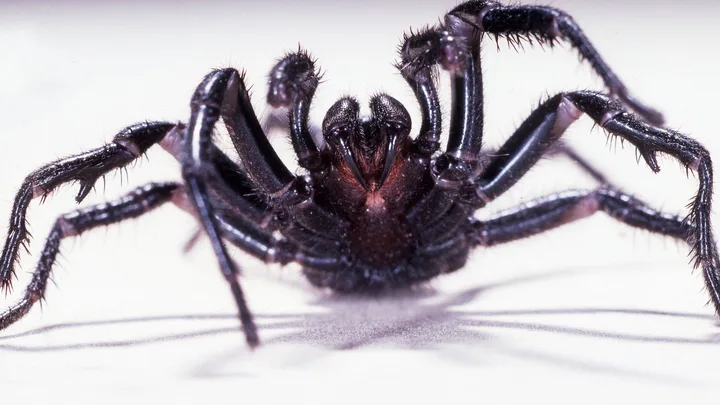
If you feel like there are more funnel-web spiders in your area right now, you aren’t imagining it.
Funnel-web spiders are breeding right now
Emma Teni is a spider keeper at the Australian Reptile Park, located in Somersby near Gosford on the Central Coast. She says we are in peak funnel-web spider season, and the weather conditions are perfect for them.
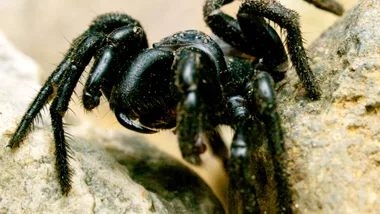
“This time of year, we tend to see the males wandering and looking for a mate. We have also seen extremely hot days, followed by days in between with rainfall.
“It’s the perfect conditions for funnel-web spiders to be wandering.”
Where are funnel-web spiders found
The good news is that funnel-web spiders are shy and nocturnal.
“So during the day, they’re normally hiding,” says Emma. “But when they are spotted in backyards, it’s usually underneath bricks or debris, corrugated iron, pot plants, and anything, really, that’s flat to the surface of the ground.”
She adds, “They’re also quite common in rock walls, and people do encounter them a lot in their swimming pools because they fall into the pool and they can’t get out.”
What to do if you see a funnel-web spider
Like snakes, funnel-web spiders are more afraid of you than you are of them.
“They’re not aggressive,” says Emma. “They’re not going to chase you, and they’re really defensive.”
Despite this, they’re considered the world’s most venomous spiders. The Australian Reptile Park is the sole supplier of venom for antivenom production, making public donations of funnel-webs crucial.
“Particularly this year,” Emma adds.
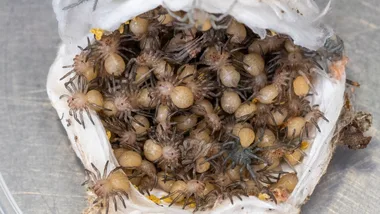
There are two ways funnel-webs reach the park: public donations from people who find them in their backyards, or park staff collecting egg sacs in the wild. Once hatched and raised to maturity, male spiders are entered into the antivenom program.
But COVID lockdowns created a gap. During the pandemic, egg collection was limited, and those spiders would be reaching maturity right now – creating a shortage in the antivenom program.
“So we really need the public to supplement our breeding program with wild-caught spiders at the moment,” Emma explains.
Information on how to safely collect a spider for donation can be found on the Australian Reptile Park’s website.
How to make your backyard less attractive to funnel-web spiders
- Remove or elevate pot plants away from entry points
- Remove hiding spots like wood piles, debris, and corrugated iron
- Keep the grass short and gardens well-maintained
- Clear away fallen leaves and mulch from around the house
- Store firewood away from the house and off the ground
- Seal gaps and cracks under sheds, houses, and decking


Related stories

Native ad body.
Native ad body.

Native ad body.