
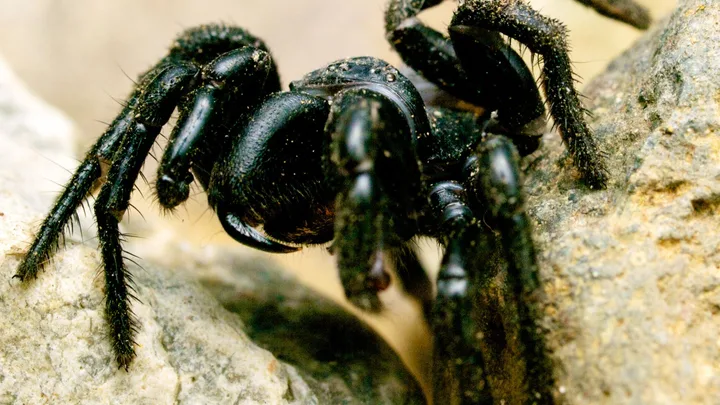
Spiders play an important role in Australia’s ecosystem, and most of the time, spotting one is nothing to worry about. But if there’s one spider every Aussie needs to know how to identify, it’s the funnel-web.
Luckily, there’s one simple rule that changes everything. According to spider expert Helen Smith from the Australian Museum, if it’s glossy and has big fang bases, treat it as a funnel-web and back away.
KEY TAKEAWAYS
- The quickest way to identify a funnel-web spider is to look for a glossy, smooth body with large, powerful fang bases
- Funnel-webs are most commonly found along Australia’s east coast, in moist, sheltered areas like under logs, rocks and leaf litter
- They are most active between October and March, when males leave their burrows searching for a mate
- The most dangerous species are the male Sydney funnel-web and the northern tree funnel-web
- Four spiders are commonly mistaken for funnel-webs: trapdoor spiders, mouse spiders, wishbone spiders and black house spiders
- If you find one, do not touch it — call a pest controller or your local Australian Reptile Park, which accepts live funnel-webs for antivenom production
- Since antivenom was introduced, there have been zero recorded deaths from funnel-web bites in Australia
How to identify a funnel web spider
Identifying a funnel-web spider is crucial, especially during peak breeding seasons or wet weather, when experts advise Australians to remain vigilant around their homes.
With 35 species of Australian funnel-web spiders, distinguishing them from other spiders can be pretty challenging. Although not all species are considered dangerous, the male Sydney funnel-web spider and the northern tree funnel-web spider are probably the most deadly. Since the antivenom was created, no deaths have been recorded; however, it’s still important to know how to identify and avoid them, and what to do if bitten.
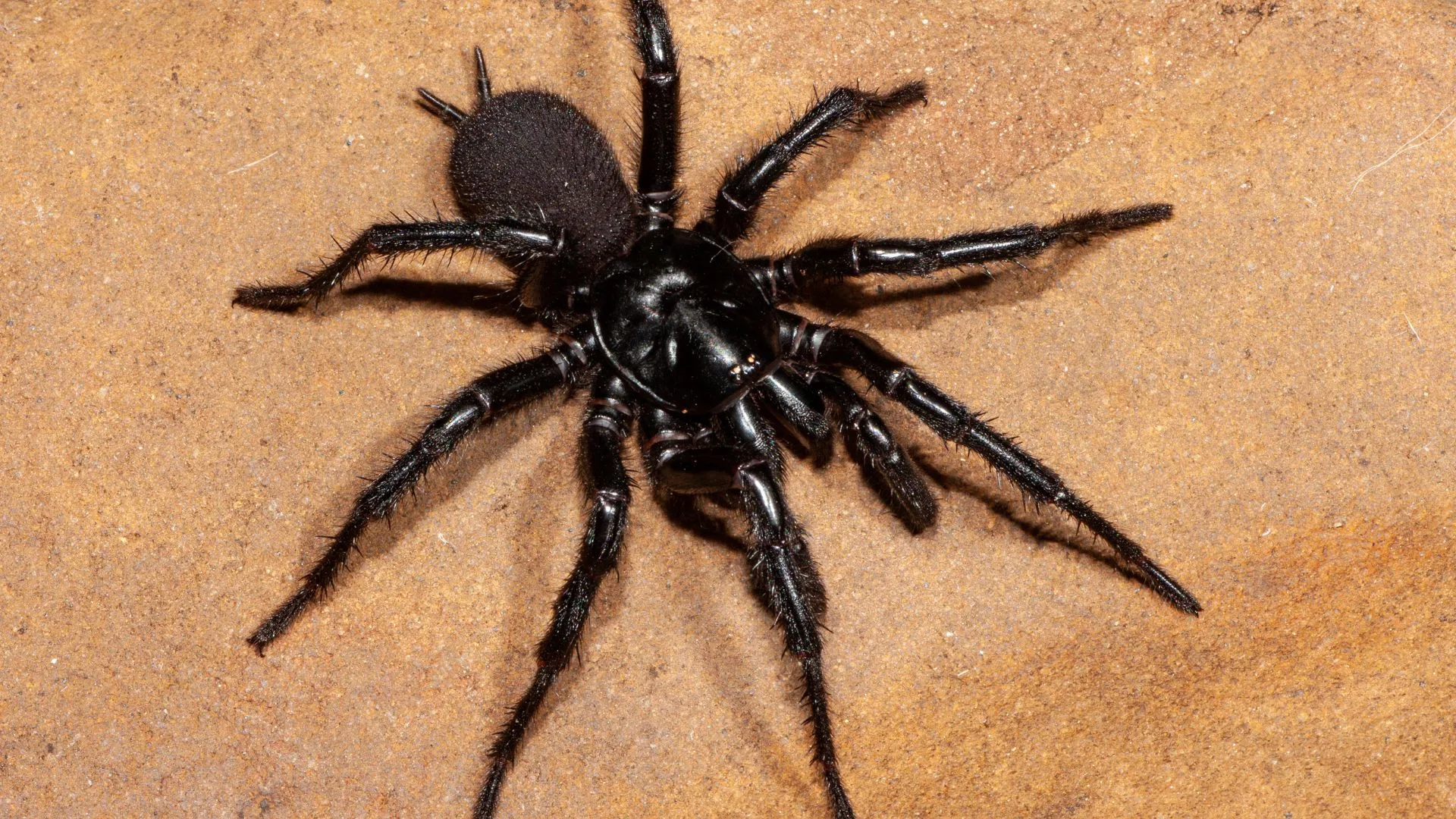
Spider expert Helen Smith from the Australian Museum told the ABC that a funnel web’s key distinguishing feature is its glossy appearance on the front of its body, particularly where its legs attach. This glossiness sets it apart from spiders like the black house spider, which is covered in fine hairs.
Additionally, funnel webs have powerful fangs protruding from substantial bases, which further helps differentiate them from other spiders.
In short, “If it is glossy, with powerful fang bases, beware,” says Helen.
What does a funnel-web spider look like?
- Appearance: Funnel-web spiders are typically giant, robust spiders with shiny, hairless bodies. They can range from brown to black and are glossy, with body lengths ranging from 1 cm to 5 cm.
- Legs: They have thick, muscular legs that aid in their burrowing and hunting.
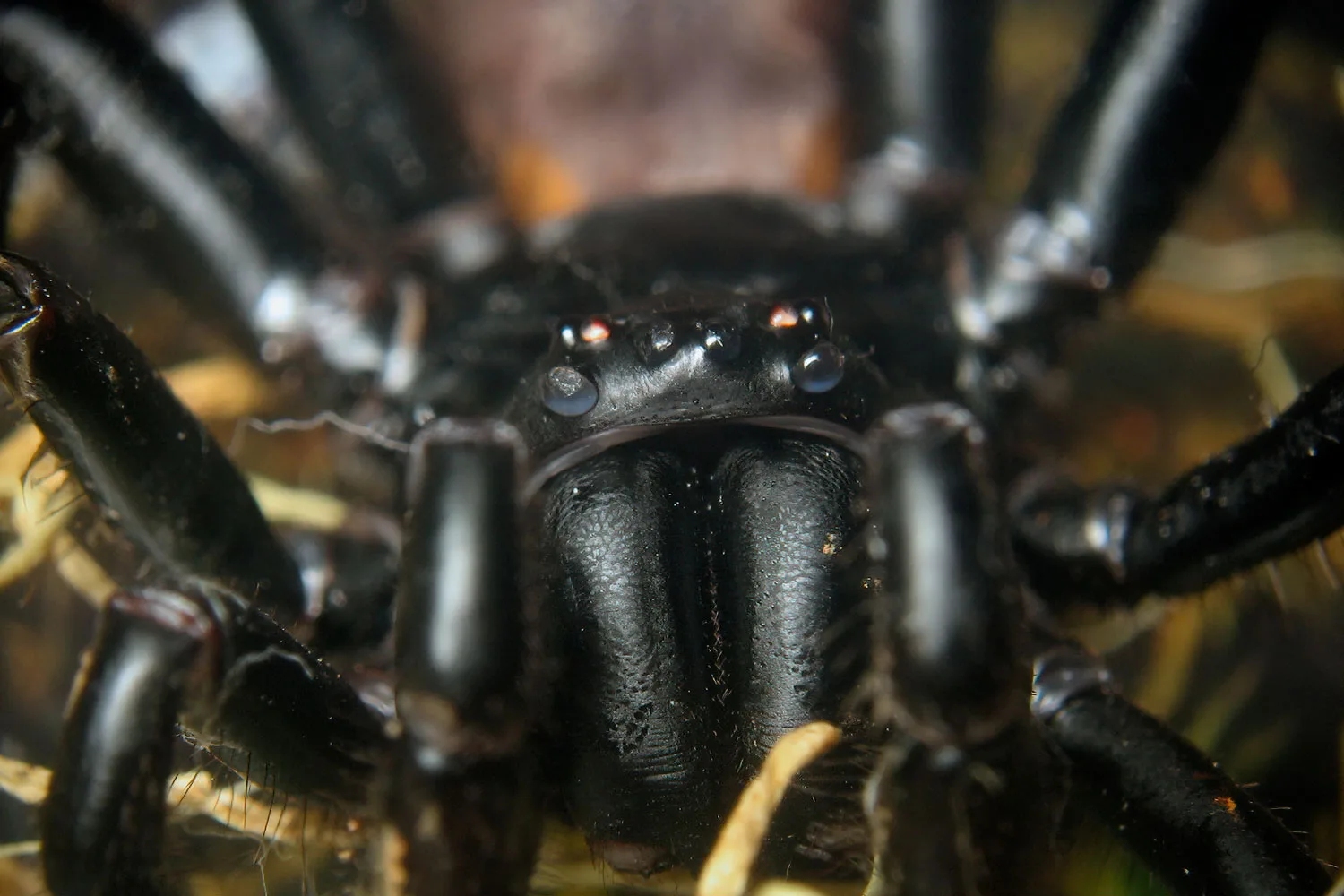
- Eyes: They possess eight small, closely grouped eyes arranged in two rows of four.
If you’re still struggling to identify a funnel-web spider, this spider identification app should be able to help.
What spiders are mistaken for funnel-webs?
- trapdoor spiders
- wishbone spiders
- mouse spiders
- black house spiders
Mouse spiders can be as dangerous as funnel web spiders; here’s how to tell them apart.
- Funnel-web spiders tend to have thicker, stronger legs compared to mouse spiders.
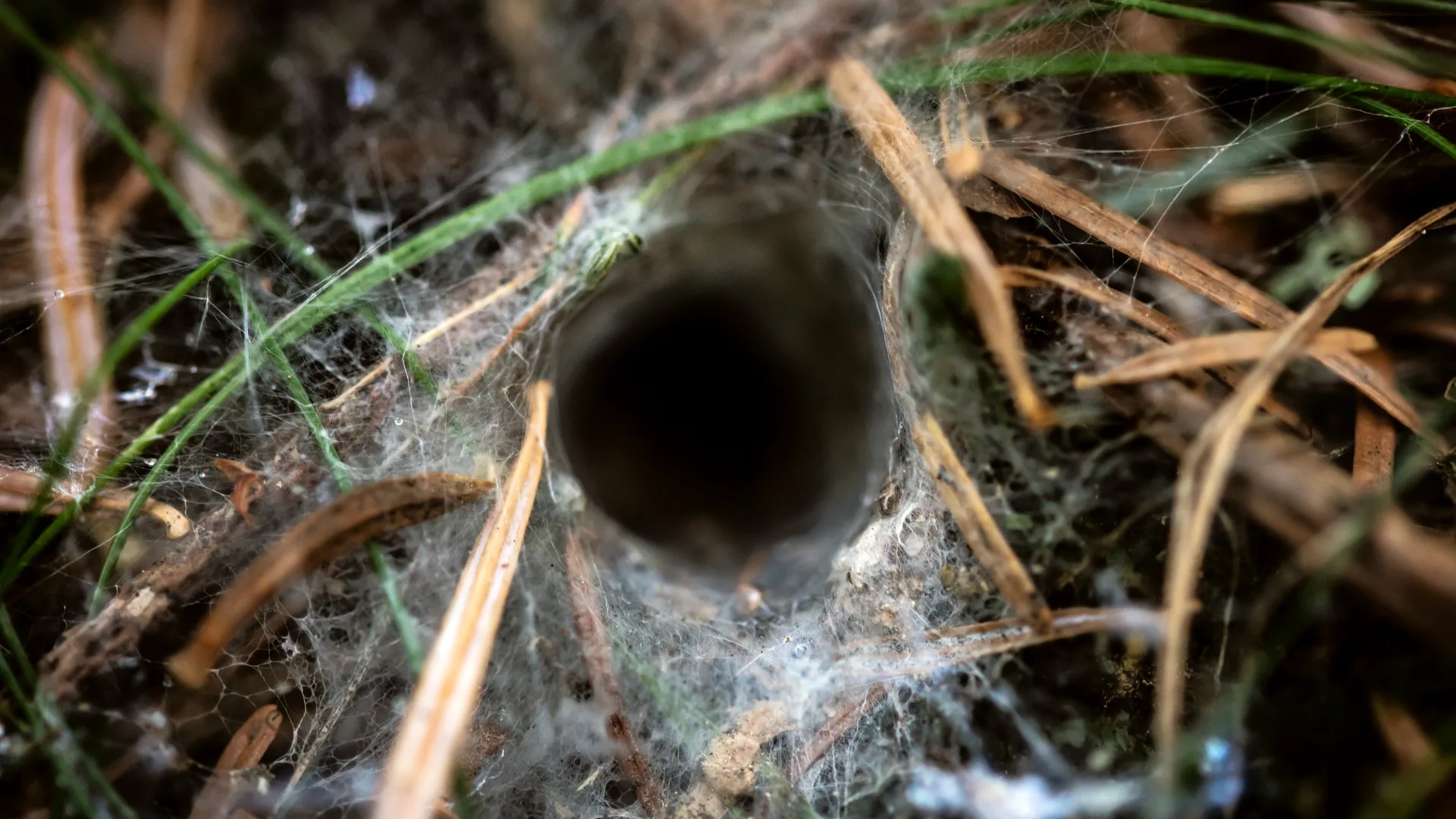
- Both species are burrowing spiders, but they construct different types of burrows. Funnel-web spiders create silk-lined burrows with a distinctive funnel-shaped entrance. Mouse spiders also burrow but typically do not line their burrows with silk, and their burrow entrances may not be as distinct.
- While mouse and funnel-web spiders possess venom, the toxicity levels differ. Funnel-web spider venom, particularly that of the Sydney funnel-web, is highly toxic and can be potentially lethal to humans. Mouse spider venom can also be potent, but it is generally less dangerous to humans.
- Mouse spiders are wandering hunters who do not build webs to catch prey.
How to tell the difference between a funnel-web and a trapdoor?
Funnel-web and trapdoor spiders are often confused, but several key differences help distinguish them. Funnel-web spiders have a shiny, smooth body, especially at the front, and big fangs that point down. Their burrows typically have silk lines extending from the entrance to alert them to potential movement. They like damp, hidden places such as under logs, rocks, or piles of leaves, mostly along Australia’s east coast.
Trapdoor spiders, on the other hand, usually look duller and hairier, with brown or dark colouring and shorter silk-spinning parts. Instead of silk lines, they make burrows with a door made from dirt and silk, which they open and close to catch prey. Both types can appear similar in size and shape, but funnel-webs are much more hazardous because their venom can be deadly, whereas trapdoor bites typically cause only mild pain and swelling.
Do funnel-web spiders live in houses?
While funnel-web spiders may occasionally wander indoors, they are not commonly found inside houses. If they enter a home, they may seek out dark, sheltered areas, such as basements, crawl spaces, or garages. However, they are more likely to be encountered outdoors, especially in areas with suitable habitat.
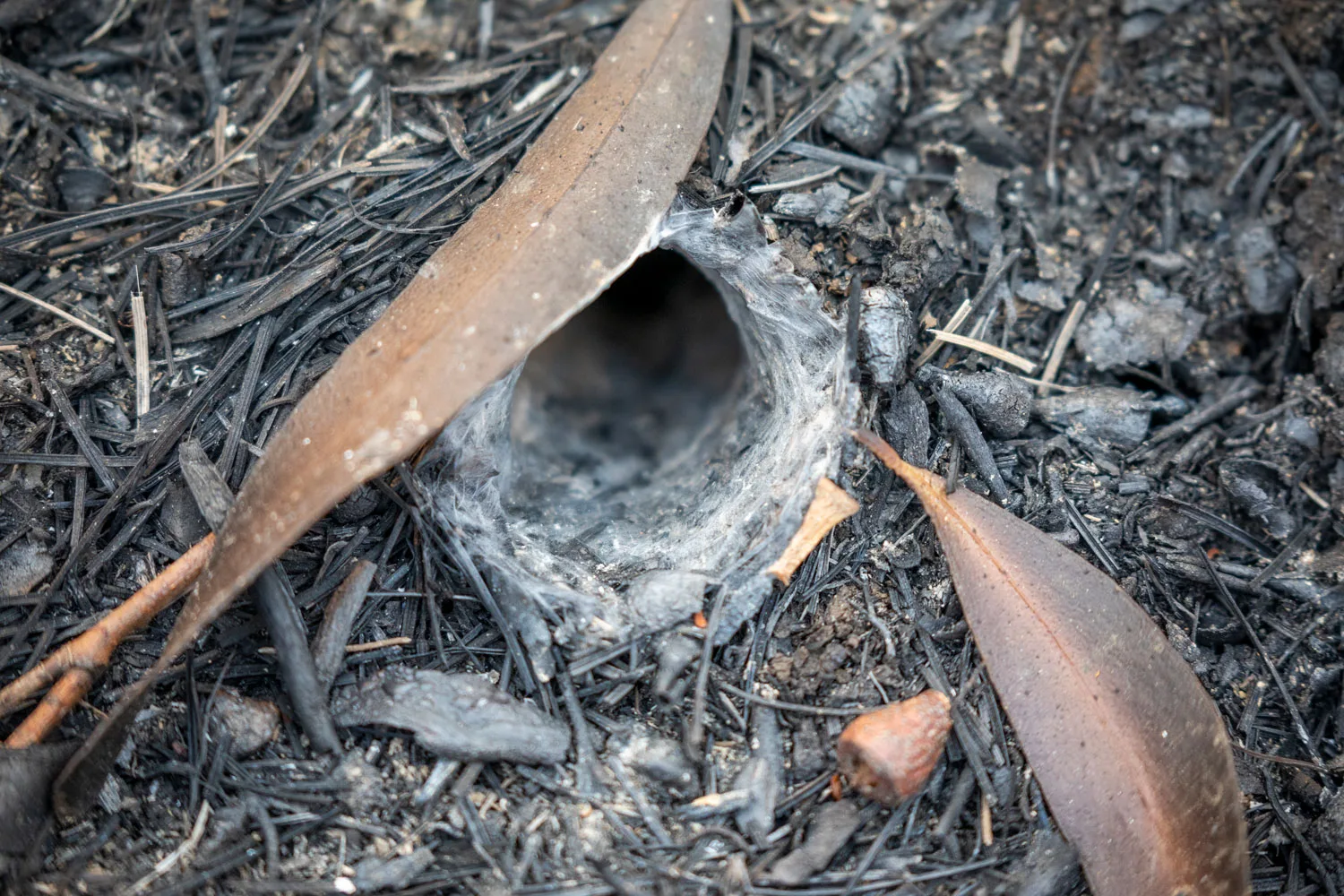
What to do if you find a funnel-web nest
If you spot what looks like a funnel-web spider’s nest, it’s best to keep your distance. Funnel-webs can be defensive if disturbed, especially during their active season from October to March, when males leave their burrows in search of mates.
Here’s what to do:
- Do not poke or dig around the burrow. Disturbing the nest can provoke the spider.
- Keep children and pets away from the area. Funnel-webs are fast movers and can appear suddenly if threatened.
- Mark the spot. Mark the location so you can find it later if you need to show a pest expert.
- Don’t pour water in the nest. Avoid flooding or spraying the burrow — it may drive the spider indoors.
- Call in an expert. If it’s in a high-traffic area, contact a local pest controller or the Australian Reptile Park, which accepts live funnel-webs for antivenom production.
What repels funnel-web spiders?
There’s no guaranteed way to keep funnel-web spiders away completely, but you can make your home and garden less inviting by reducing the conditions they love—moisture, shelter, and easy entry points.
Natural deterrents:
- Citrus peels or essential oils (such as lemon, eucalyptus, and peppermint): These scents may deter spiders from entering small spaces, although results vary.
- Vinegar spray: A mild vinegar-water mix can deter some spiders from returning to entry points.
- Lighting: Keep outdoor lights low or switch to yellow bulbs; bright white lights attract insects—and spiders follow their prey.
Environmental prevention:
- Seal cracks: Including gaps around windows, vents, and doors.
- Clean up your garden: Keep garden beds tidy and remove leaf litter, logs, and rocks from around the house.
- Cover drains and vents with fine mesh to prevent burrowing species from entering.
- Reduce dampness: Funnel-webs thrive in moist, shaded areas, so fix leaks and improve airflow under the house.
Funnel-web spider venom and medical treatment
Funnel-web spider venom is one of the strongest in the world and can cause severe or even deadly symptoms if not treated promptly.
The venom affects the nervous system, causing nerve cells to malfunction and impair normal function. Early signs of a bite can include tingling around the mouth, muscle twitching, sweating, feeling sick, and trouble breathing.
In severe cases, symptoms can worsen rapidly to include restlessness, confusion, and a rapid heartbeat or high blood pressure.
Quick first aid is crucial: wrap the bitten arm or leg with a firm bandage, keep the person as still as possible, and call for emergency help immediately. Do not try to wash or cut the bite.
At the hospital, doctors may give funnel-web antivenom, which has significantly reduced deaths from funnel-web bites in recent years.
With prompt treatment and proper first aid, almost everyone makes a full recovery.
Identifying a funnel-web spider FAQs
The easiest way to identify a funnel-web spider is to look for a glossy, smooth body, particularly at the front where the legs are attached. Unlike the black house spider, which is covered in fine hairs, a funnel-web has a distinctly shiny appearance. They also have large, powerful fang bases that are hard to miss. Spider expert Helen Smith from the Australian Museum sums it up best: if it’s glossy with powerful fang bases, treat it as a funnel-web and back away immediately.
Four spiders are commonly mistaken for funnel-web spiders in Australia: trapdoor spiders, mouse spiders, wishbone spiders and black house spiders. The key difference is that funnel-webs have a distinctly glossy, smooth body and large fang bases, while most lookalikes tend to have duller, hairier bodies. Mouse spiders are the most important to know. They can be just as venomous as funnel-webs and should be treated with the same caution.
Funnel-web spiders can occasionally wander indoors, particularly during summer when males leave their burrows searching for a mate. If one does enter your home, it will typically seek out dark, sheltered spots such as shoes, towels, garages or under furniture. Always shake out shoes and clothing left on the floor during funnel-web season, which runs from October to March.

Related stories

Native ad body.

Native ad body.

Native ad body.