

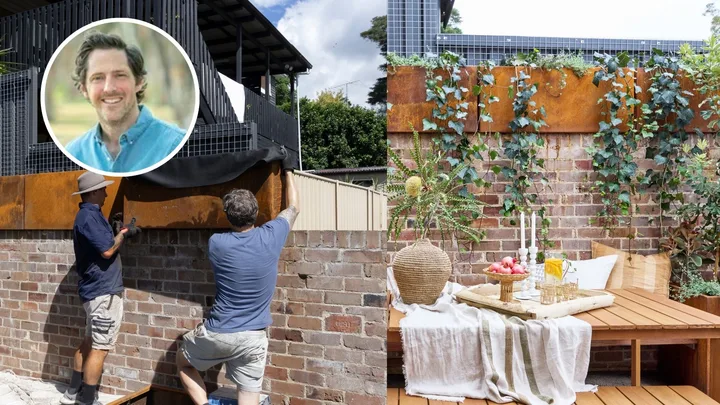
A bare fence is a simple solution to block out your neighbours, but it’s not always nice to look at, especially when metal panels radiate heat right back into your yard during hot summer months.
Landscape designer Charlie Albone has a solution that not only hides an ugly fence and boosts privacy, but also helps keep your outdoor space cool. By pairing raised planters with a simple vertical mesh screen, even the dullest wall can become your garden’s standout feature.
It might be cold outside today, but your garden’s biggest test is only a few months away. Right now is the golden window to install the ‘cooling’ infrastructure—like vertical screens and raised beds—that will save your plants (and your sanity) when the first summer heatwave strikes.
How to use the ‘thriller, filler, and spiller’ method to cool your space
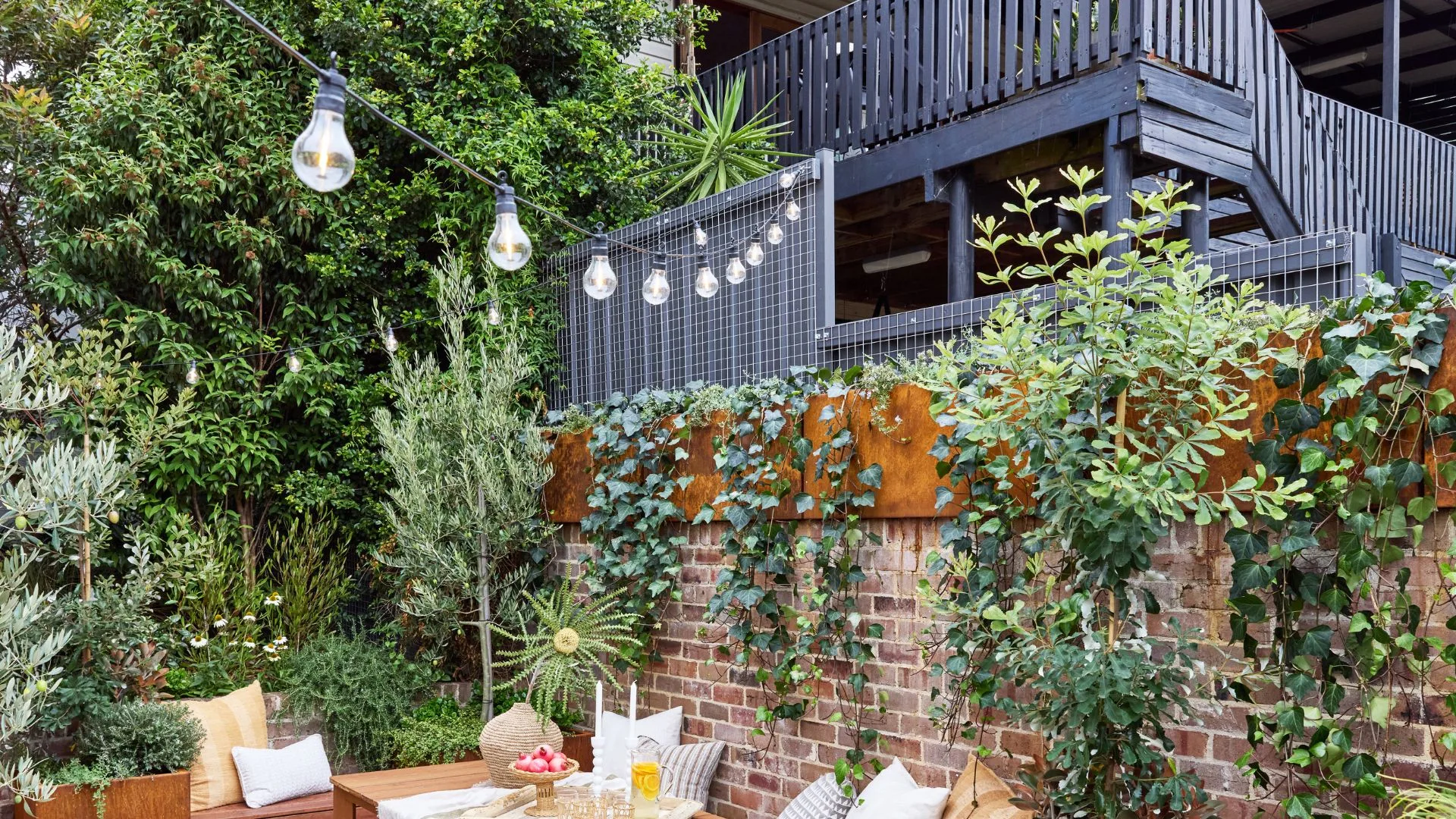
The beauty of large planters is the freedom to play with the thriller, filler, and spiller method—even if you don’t use all three in every container. Every plant in this design was chosen with a purpose: to cool down the space and create a lush, inviting microclimate.
At Eye Level (The Spillers): When containers sit at or above eye level, let spillers take centre stage. Here, Canary Island ivy gently drapes down the wall to soften hard masonry.
Mid-Layer (The Fillers): Aromatic rosemary brings delicate spring and summer blooms. For a functional twist, silver-leafed saltbush (Rhagodia spp.) adds striking metallic foliage and doubles as a ready-made savoury garnish for salads and barbecues.
Overhead Greening (The Thrillers): On the mesh above, existing jasmine naturally weaves its way across the grid. You can also swap in vibrant climbers like clematis, passionfruit, sweet pea, bougainvillaea, pandorea, or Hardenbergia.
On the Ground (Feature Trees): Generous square planters offer plenty of room for hardy anchors like olive or coast banksia (Banksia integrifolia). For smaller footprints, compact alternatives include dwarf citrus, bay tree, Japanese maple, or dwarf magnolias like ‘Teddy Bear’ or ‘Little Gem’.
Pro Tip: Finish the look by fleshing out gaps with dynamic underplantings and groundcovers—think echinacea, boobialla (Myoporum spp.), carissa, rhaphiolepis, coastal rosemary (Westringia fruticosa), and wiry, ground-hugging jade.
How to make a raised planter using vertical mesh
Transform your garden in four simple DIY steps.
Gather your supplies
- Jack 1800 x 1000 x 200 x 7mm reinforcing mesh sheet
- ARC U clips and Tek screws
- Shapescaper steel planter, 400mm wide, with drainage holes
- Geotextile fabric
- Quality potting mix
You’ll also need:
- a drill and bits.
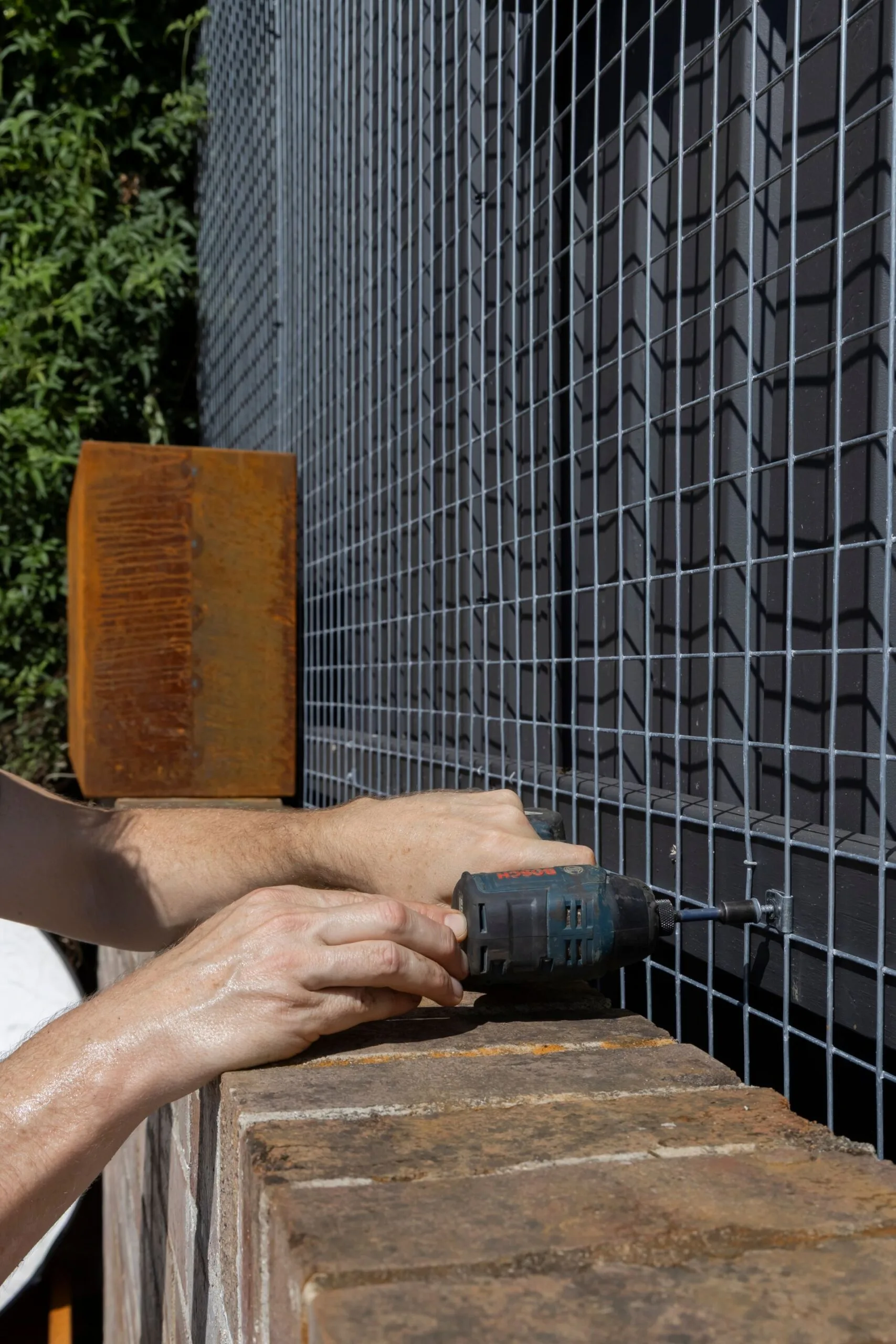
Step. 1
Attach reinforcing mesh to the Colorbond fence with U clips and screws.
Step. 2
Line the steel planters with geotextile fabric so potting mix doesn’t spill through drainage holes.
Step. 3
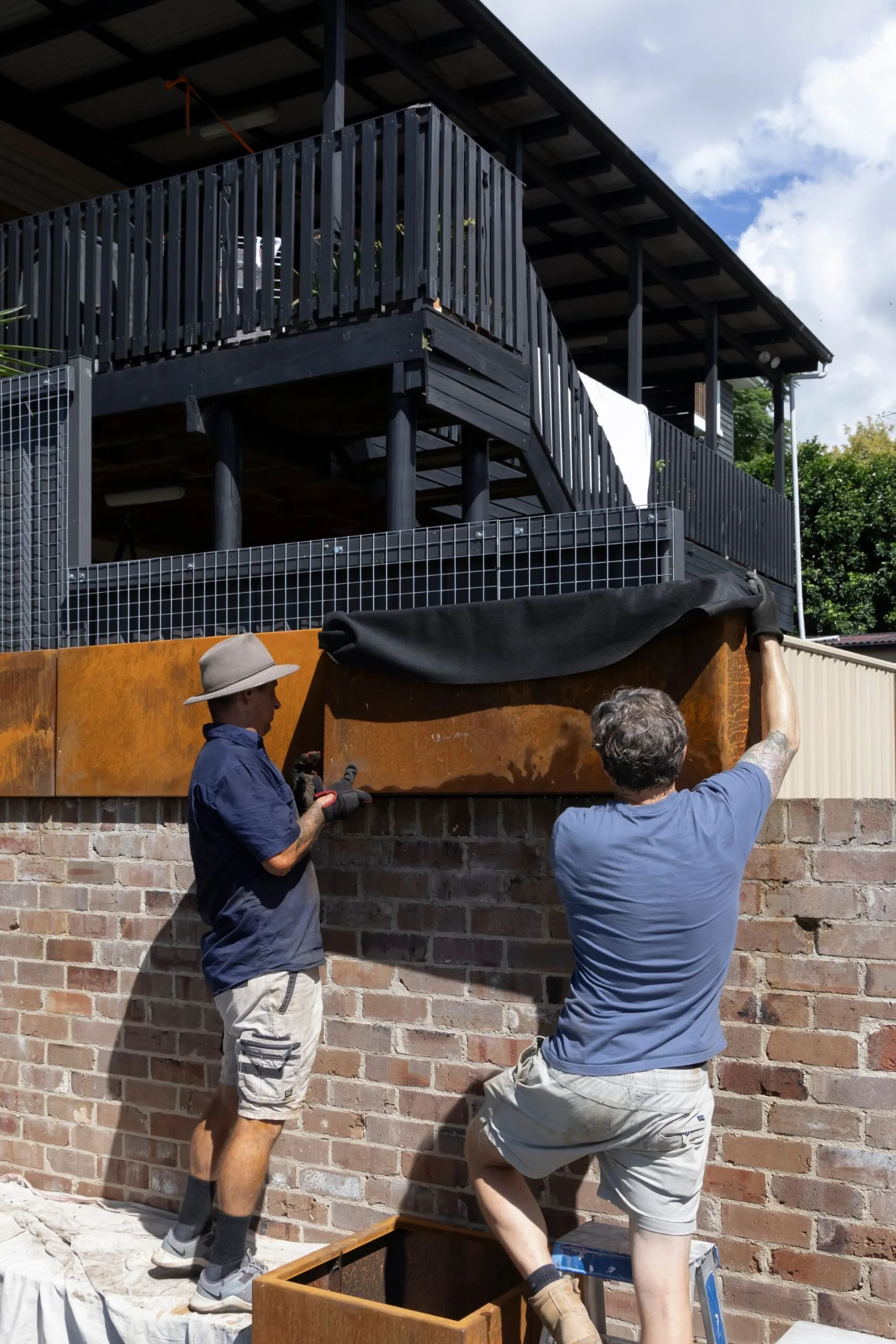
Lift steel planters on top of the brick wall.
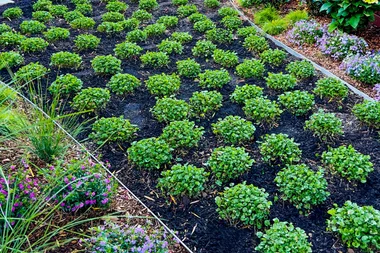

Step. 4
Fill steel planters with quality potting mix.
Why this works for hot yards: Elevating planters onto a wall reduces radiant ground heat, while vertical climbers create a “green wall” effect that insulates your living area from hot, reflective metal fences.
Generally no for a mesh screen and lightweight planters, but check with your local council if you’re on a boundary fence shared with a neighbour, or if the structure is load-bearing.
U clips and screws are the standard fix method and won’t void most fence warranties, but it’s worth checking with the fence manufacturer or installer first, especially if the fence is still under warranty.
This depends on the wall’s construction—get a builder or landscaper to confirm load capacity before filling large steel planters, especially if using heavier feature trees like olive or banksia.
The same mesh-and-planter approach works on timber, brick, or besser block—you’ll just need different fixings (masonry anchors for brick, timber screws for wood).


