With the weather beginning to warm up, it’s time to take a look at your garden and make sure it has all the tools it needs to survive a hot summer. The Bureau of Meteorology has predicted that November and December of 2026 will have extremely hot temperatures due to an extremely strong El Niño. To combat high temperatures and the potential damage it could do to your plants, flowers and vegies, there is a garden addition that could help tremendously – the water feature.
Adding a water feature to your garden doesn’t simply decorate it; it animates it. And it keeps it cool! Water adds a sensory ambience that transforms even the smallest space as it shimmers, trickles or sparkles. It invites wildlife and cools the long, hot summer days. Here are a few different kinds of water features, from the traditional fountain to rain chains, that can all help with the El Niño heat.
KEY TAKEAWAYS
- El Niño is predicted to hit in November and December of 2026.
- You can combat hot weather in your own garden by installing a water feature.
- Water fountains are great at reducing noise, but moving ponds work best for keeping away mosquitoes and providing a haven for local wildlife.
- Rain chains can be used instead of rainwater pipes to collect rainwater for use in the garden.
- Dry creek bed landscaping features reduce erosion and help with drainage issues in a sloping yard.
Include a classic water fountain
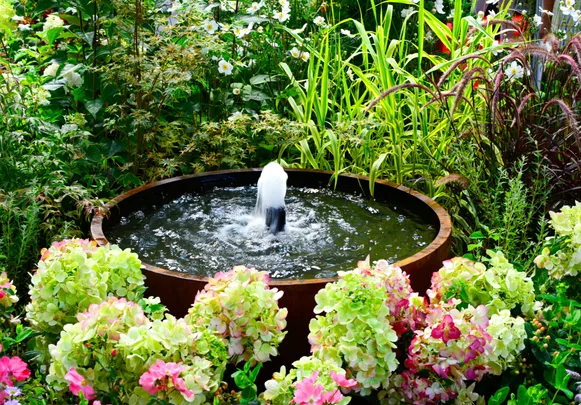
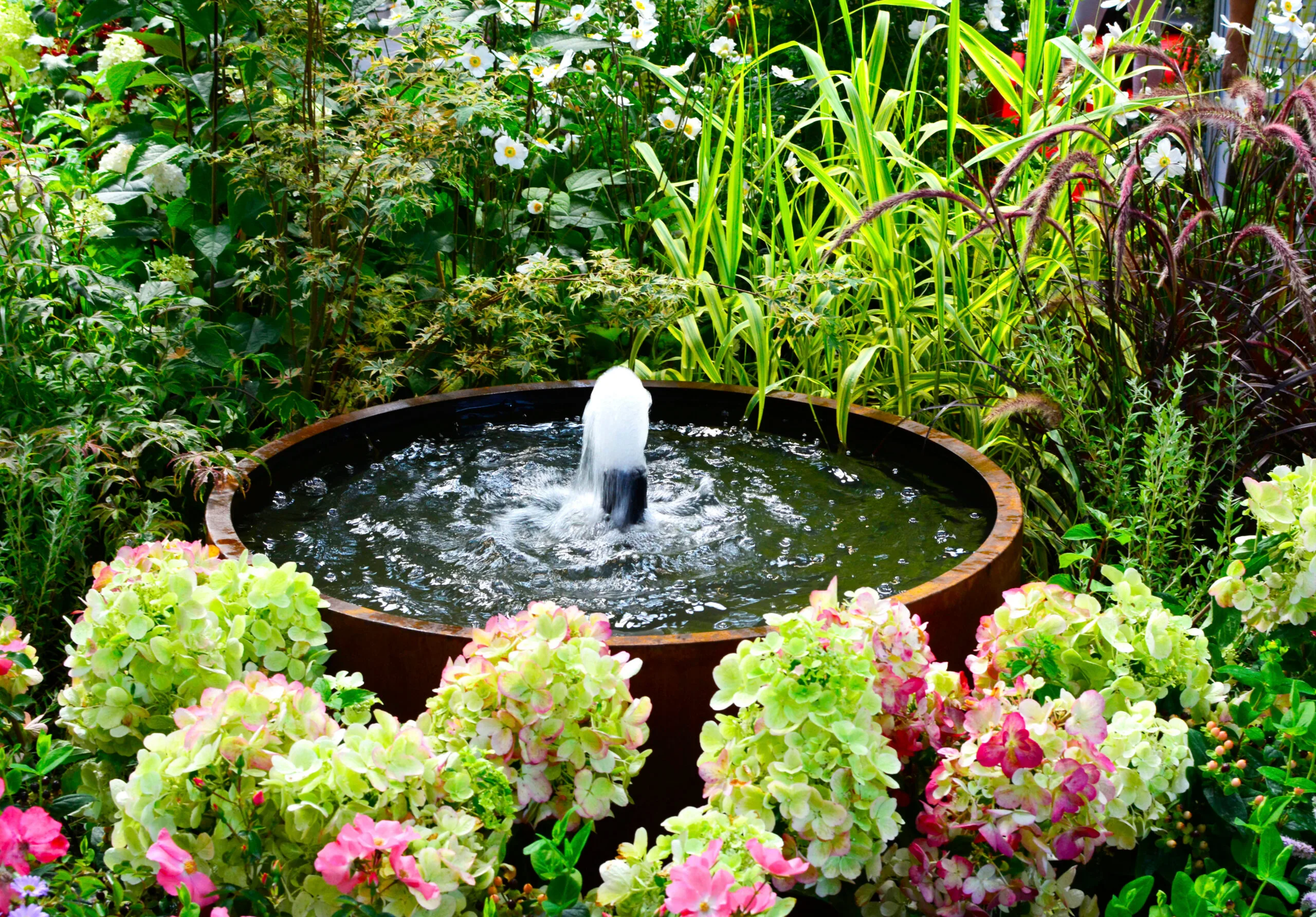
A fountain adds vertical drama as the arcs and cascades of water catch speckles of sunlight, creating sound and sparkle. Then the gentle ripples add to the visual treat, and the splashing serves as a muffle against the noise of traffic or noisy neighbours.
A fountain can be part of a tranquil backyard retreat, or a striking architectural centrepiece. It can be monumentally ornate, turning your backyard into a private park, or simply contained in an old barrel or a large urn.
No room for a fountain? Install a water spout against a wall instead, adding movement without demanding space.
The best plants for a fountain
Most water plants don’t like splashing water. But if your fountain is begging for greenery, try elegant pickerel rush (Pontederia cordata) with its long, glossy leaves and blue or white flower spikes in spring/summer.
Or quirky umbrella grass (Cyperus alternifolius), with long stems topped with umbrella-like leaf clusters and umbels of yellow-green flowers in summer (Though this is an environmental weed in parts of Queensland, the Northern Territory, Western Australia and South Australia).
An ancient garden cooling technique
Originating in ancient Persia as an irrigation and cooling tool, rills have re-emerged as a modern feature, guiding water like a whispered path through the garden. They’re used as a boundary-riding mini-moat, or as a leading line that draws the eye across the landscape to a final destination such as a small pond.
As they’re narrow and shallow, rills are an innovative way to incorporate the luxury of a water feature without needing the wide footprint or maintenance of a traditional pond. They can also be elevated and used as a handrail, as seen at this year’s Chelsea Flower Show in A Garden for Every Parkinson’s Journey (silver medal and People’s Choice award winner).
Moving water reduces maintenance (and mozzies!)
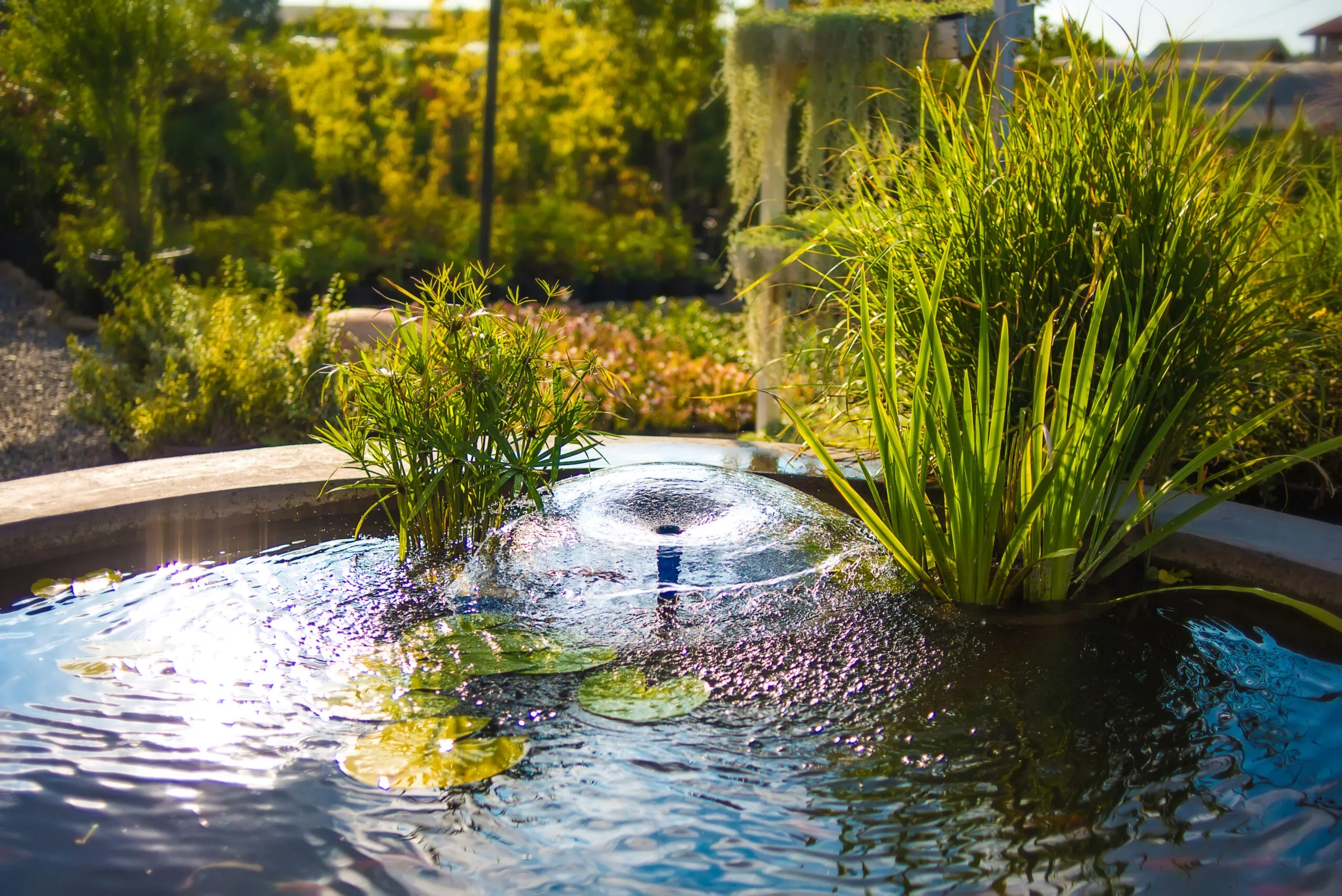
No mosquitoes, more oxygen for plants and fish, less chance of an algae bloom, and soothing, gurgling sounds are the benefits of moving water. A solar-powered pump to move the water around and a filter to clean out fish waste and leaf litter reduce maintenance. Then there are the plants that thrive in and around it.
Water plants fall into several categories. Floaters such as native duckweed (Lemna minor) are great food for fish, tadpoles and birds but can double in size in just weeks in summer. Throw the excess on your compost or use as mulch. The leaves and flowers of deep-water plants sit on the surface while the roots sit on the pond floor where it’s cool.
The best plants for moving water
The pretty native wavy marshwort (Nymphoides crenata) is a delightful option. Submersibles such as the native milfoil (Myriophyllum crispatum) remain underwater and provide oxygen and protection to fish. Marginals steal your heart, growing on shallow pond edges. Japanese or Louisiana irises, canna lilies, native rushes and elephant ears bring height and all-round drama to a pond.
“A trickling fountain creates intimacy. A splashing cascade energises. A still pool whispers as it captures the sky or reflects a full moon. Whether a sculptural fountain, a rock-rimmed pond, or a simple bowl of water, it changes how you experience your garden.” – Jenny Dillon, Garden Editor
Still water ponds are a haven for wildlife
In a spot that’s sunny in the morning but doesn’t get the hot afternoon sun, a still-water pond – whether majestic or modest – can become a reflecting pool, acting as a mirror that doubles the beauty around it. Your pond can be in-ground or a simple ceramic or copper bowl filled with water. It captures the images of foliage circling it or the passing clouds above. It slows the garden down and invites contemplation.
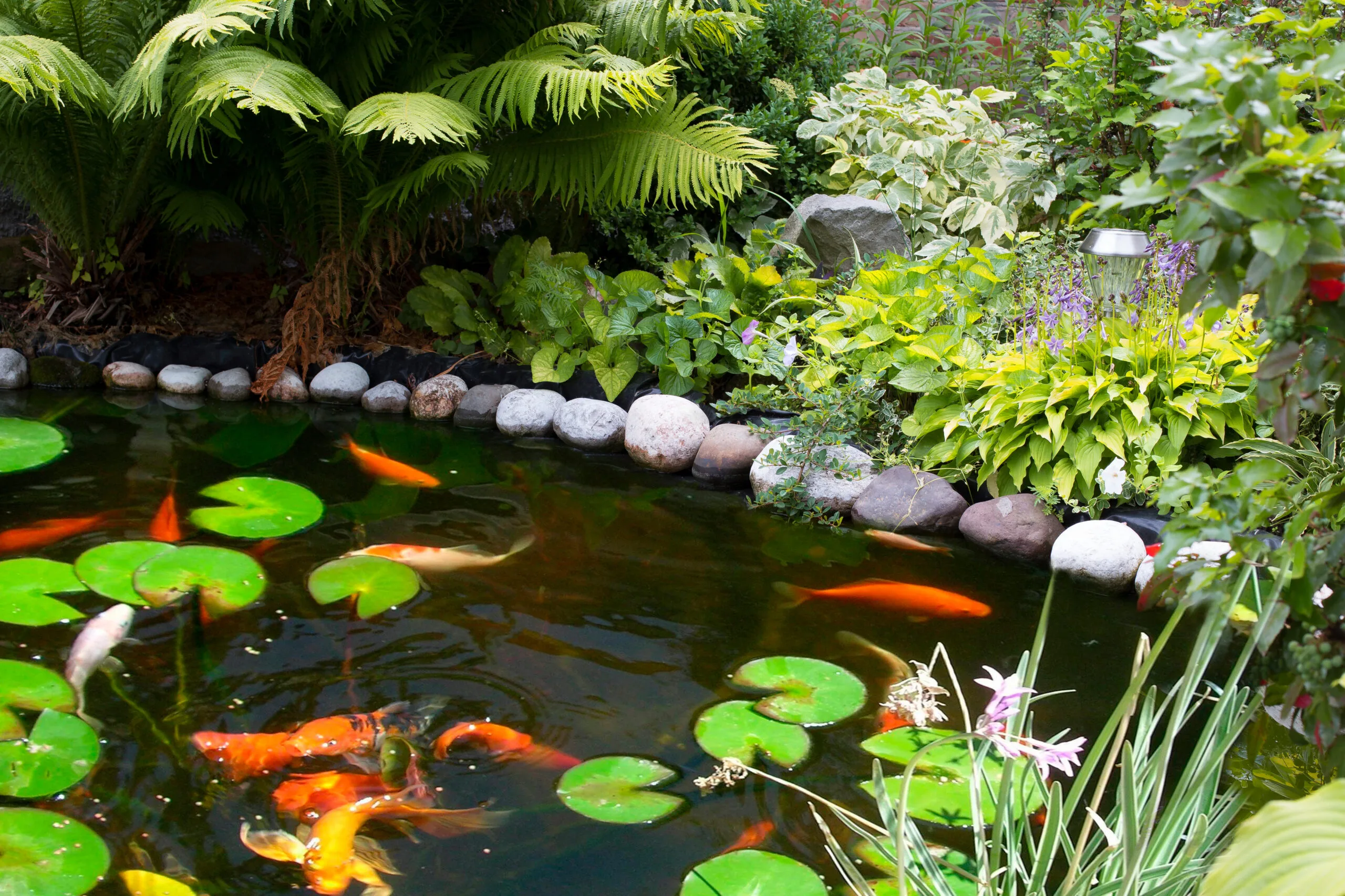
The downside is that still water at a depth of less than 30cm attracts female mosquitoes to lay their eggs, so you should add some mosquito egg-eating fish that love still water. Try mosquito fish (Gambusia affinis), guppies or goldfish.
Add some shade, such as rocks or logs that also serve as a hidey-hole for the fish from predatory birds and cats. Or add plants with huge leaves, such as waterlilies or lotuses. Both thrive in still water in a sunny spot.
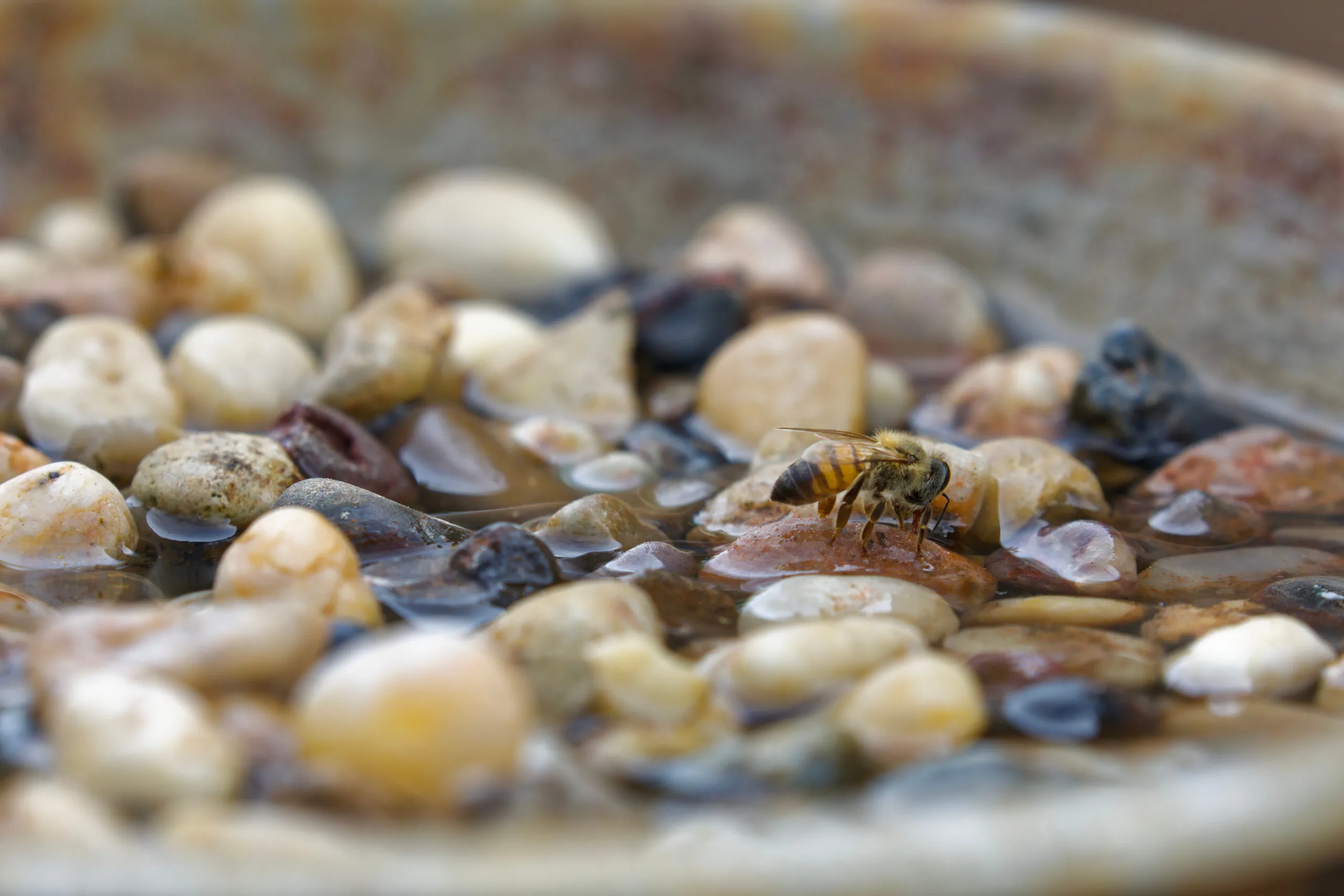
Birds, bees and butterflies also love a garden with a water feature. But while birds adore a water frolic, bees and butterflies don’t – they just want a drink. Bees can drown because they can’t swim, while butterflies struggle in water.
Give them a shallow bowl filled with pebbles that rise above the water surface and serve as a landing pad. Waterlily pads do the same job. Shoo ducks away as their waste is high in nutrients and discolours the water.
Install a rain chain
Originating from Japan, a rain chain is a decorative and artistic alternative to a drainpipe. The chain, often adorned with a series of cups, channels water from a roof gutter to your garden below, or to a barrel or container from which you can scoop water to irrigate other parts of your garden.
When it’s raining and you’re stuck inside, rain trickling down the chains creates a whispering sound as the water glides around the rings. Add cups, and the rainwater makes a soft, bell-like ting as water fills up the cup and spills over to the next one below.
Solve drainage problems with a dry creek bed
This is a budget-friendly solution to drainage issues if you have a slightly sloping yard. During heavy rain, it disperses water that usually forms puddles or bogs and can cause erosion. It also enhances the beauty of your yard, whether the bed is dry or running with water. Simply create a meandering channel, directed away from your home or border fence into a drainage system. Line it with rocks and stones to add texture.


Related stories

Native ad body.
Native ad body.
Native ad body.