
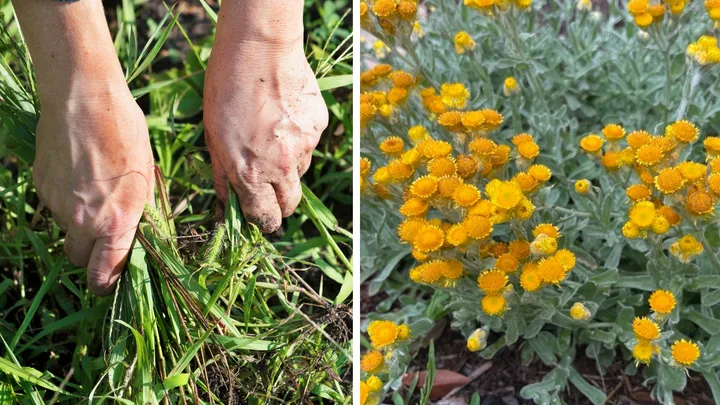
Battling weeds in the garden is a year-round occurrence. As sprouting dandelions, onion weed and nut grass seem to live through weed killer and cardboard mulching, it can feel hopeless. But what if I said that there are plants that can actually help the cause? Native groundcovers can act as great weed suppressants, provided that your garden follows a certain set of rules.
KEY TAKEAWAYS
- Native groundcovers can suppress weed growth, but only if they are healthy and thriving in your garden.
- There are 11 native groundcover plants that experts recommend.
- Choosing the right groundcover comes down to picking the plant that works best with the aspect, soil and climate of your garden.
- Using mulch, cardboard mulch methods, and regular maintenance will keep weeds at a minimum.
After speaking to Narelle Happ from Sydney Wildflower Nursery, I found new motivation to keep on weeding in my own garden, which is always full of dandelions and chicory. Narelle has a list of native groundcovers that are stars at growing quickly, covering lots of ground and keeping the weeds at bay.
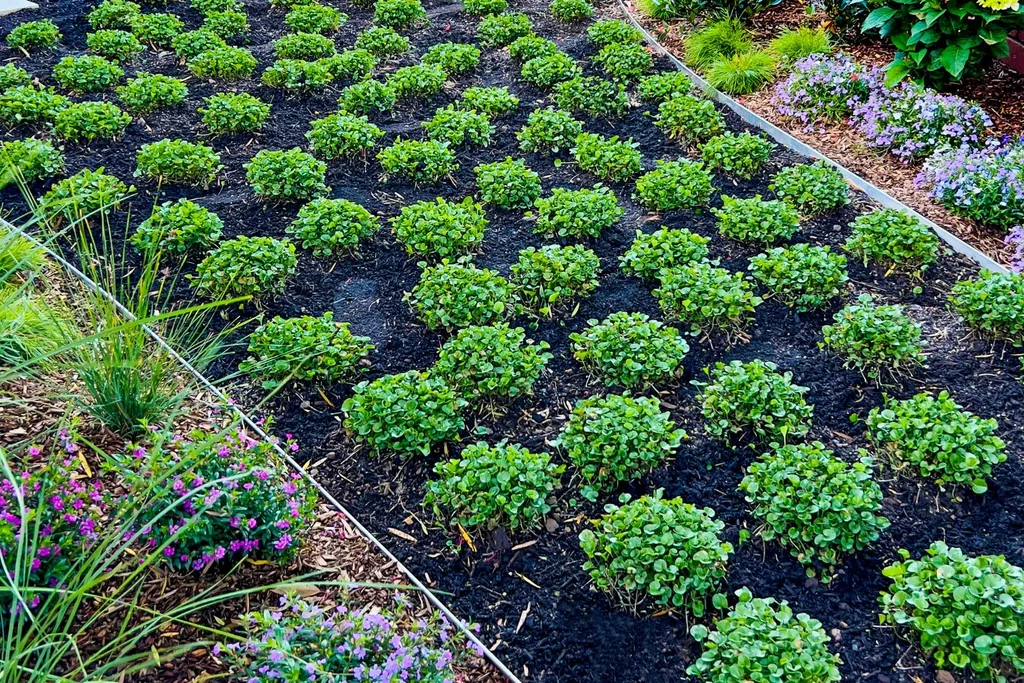
13 native groundcovers that can suppress weeds
Narelle explains that any native groundcover will work wonders at controlling common weeds, but only if they are healthy and happy. This means regular pruning and planting the best plant for your space. She has separated the best low-maintenance and fast-growing options by aspect, or the right position in your garden:
Full sun options
01
Banksia spinulosa ‘Coastal Cushion’
This groundcover flowers in autumn and winter, with large banksia heads in dense scrub. Pruning this plant will make it thicker, perfect for keeping weeds away.
02
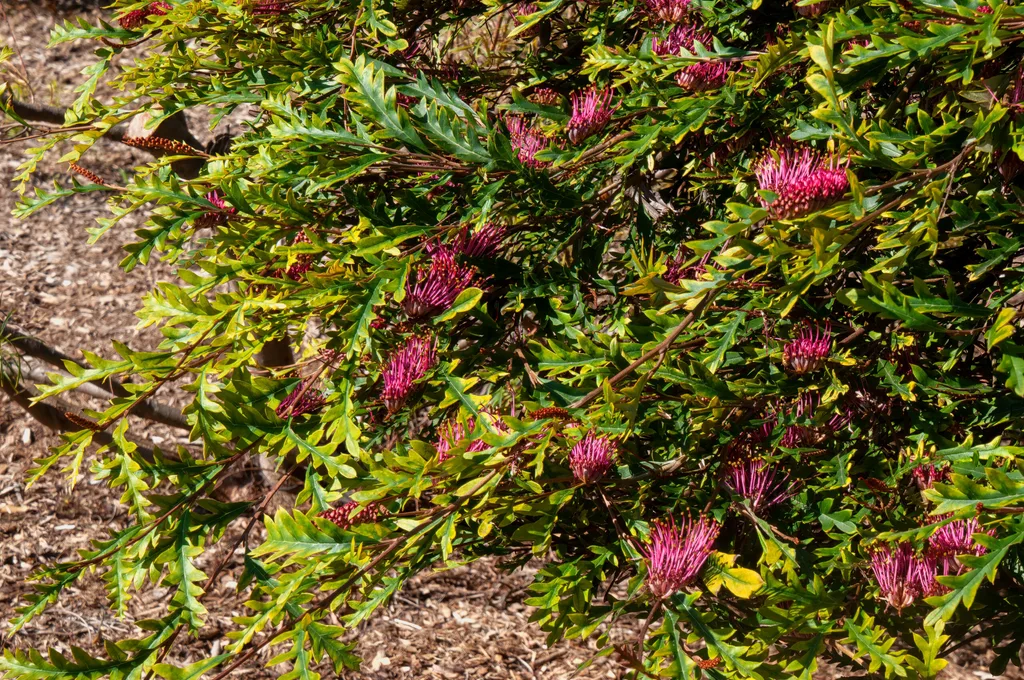
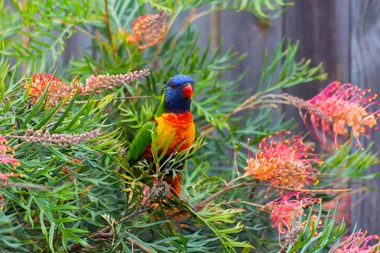
Grevillea poorinda ‘Royal Mantle’
With bright red ‘toothbrush’ flowers and the usual foliage, this grevillea grows prostrate and adds amazing texture to the garden.
03
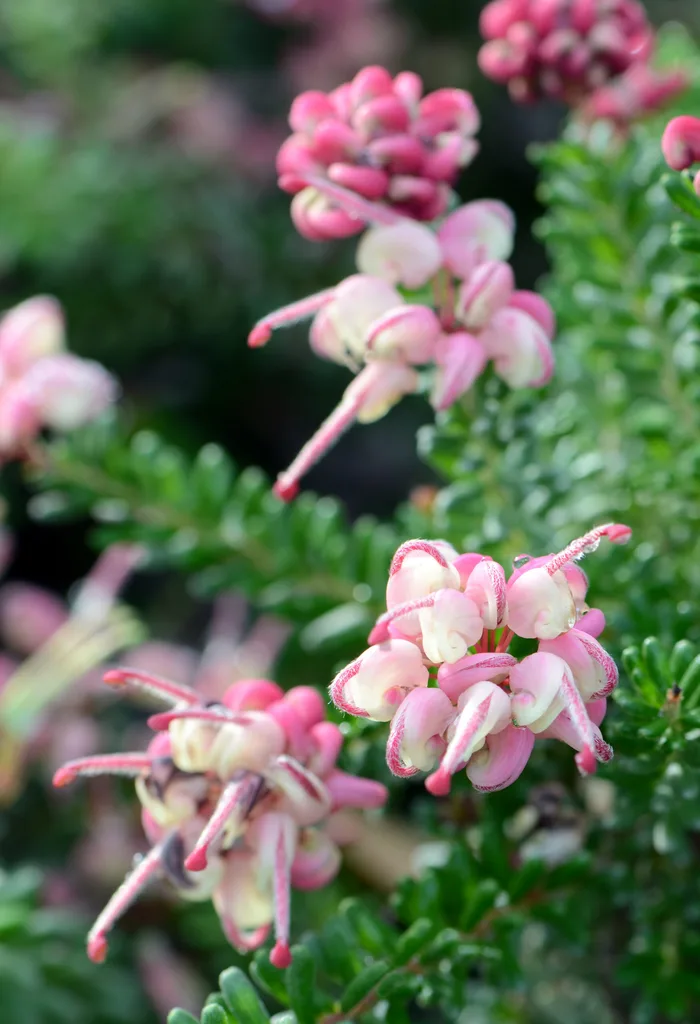
Grevillea lanigera ‘Mount Tamboritha’
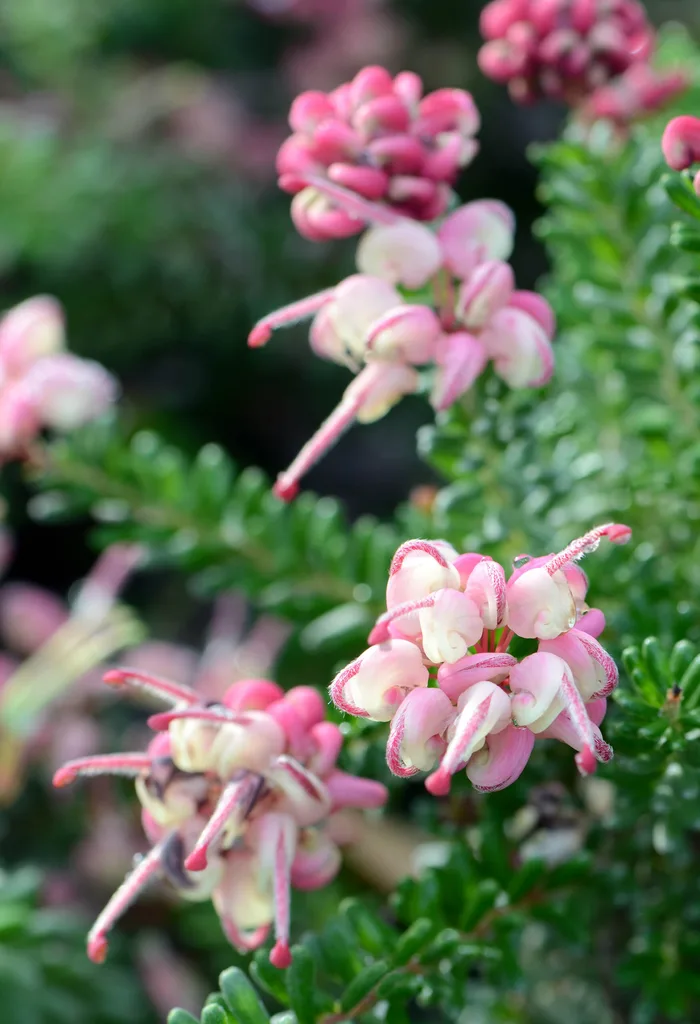
With tiny, close-set leaves and small pink flowers, you’ll love the dense, yet neatly spreading effect this grevillea cultivar brings.
04
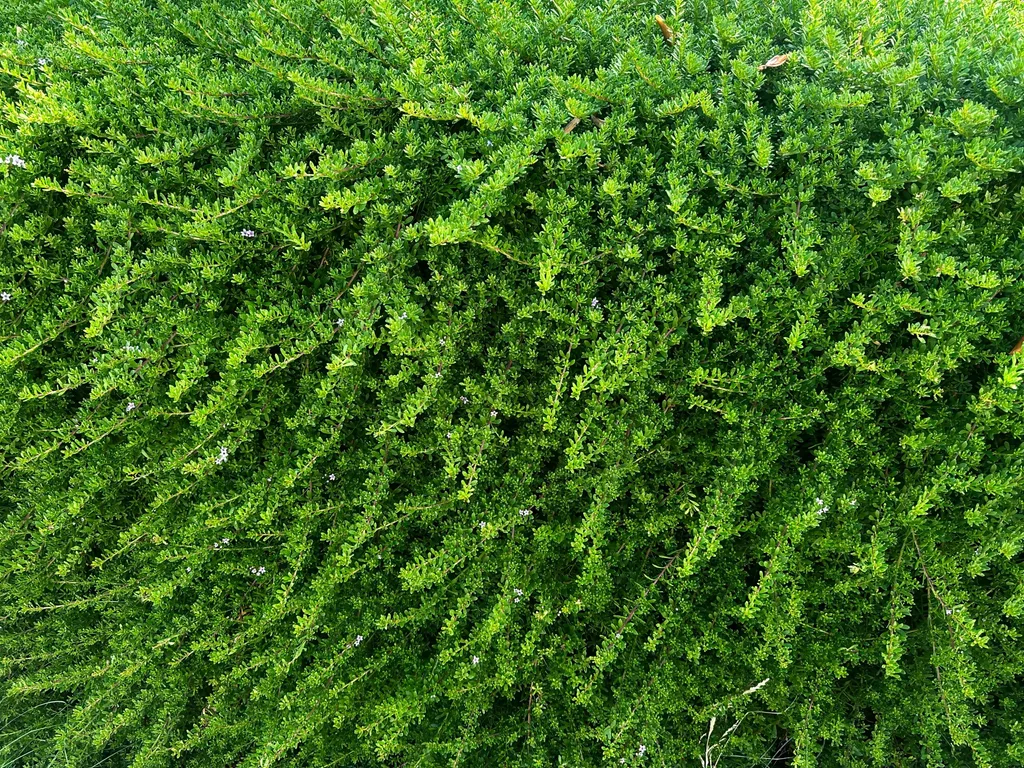
Creeping boobialla
Myoporum parvifolium
This groundcover forms a dense mat that is ideal for a weed deterrent. Pink star-shaped flowers will bloom in summer.
05
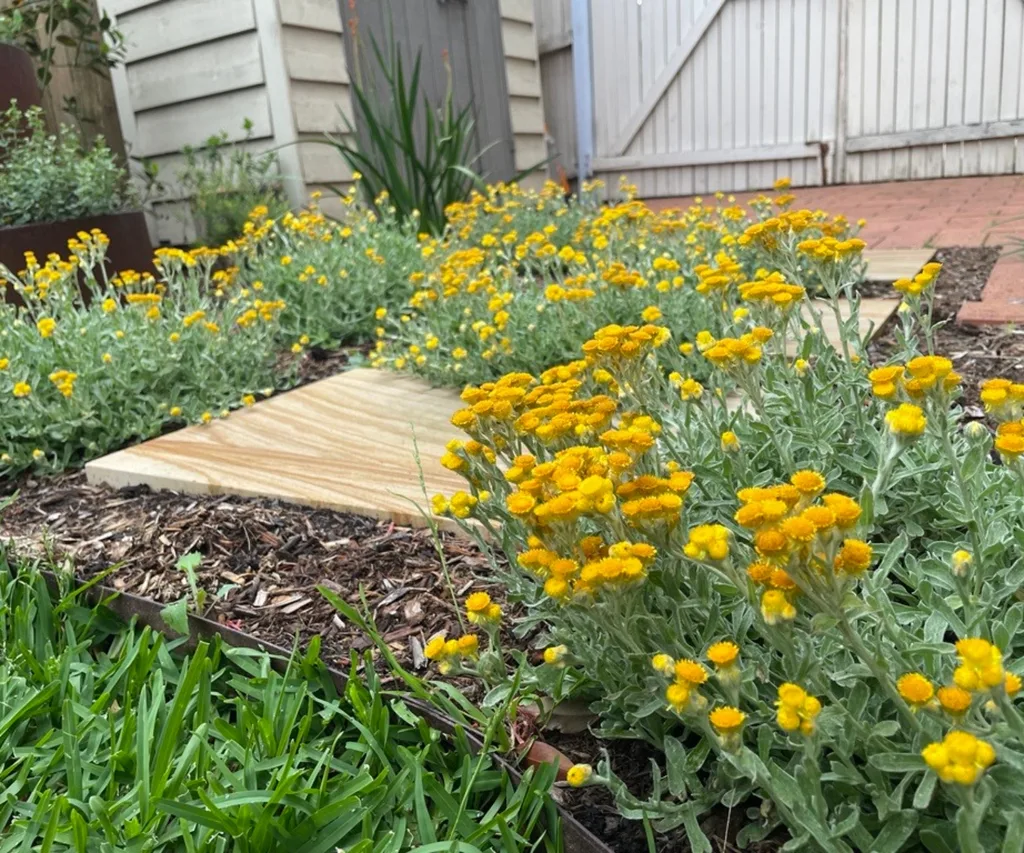
Yellow buttons
Chrysocephalum apiculatum
Tough and a quick spreader, nothing beats a yellow button in the backyard. It’s ideal for rockeries, borders or in pots that are subject to weeds.
Part shade
06
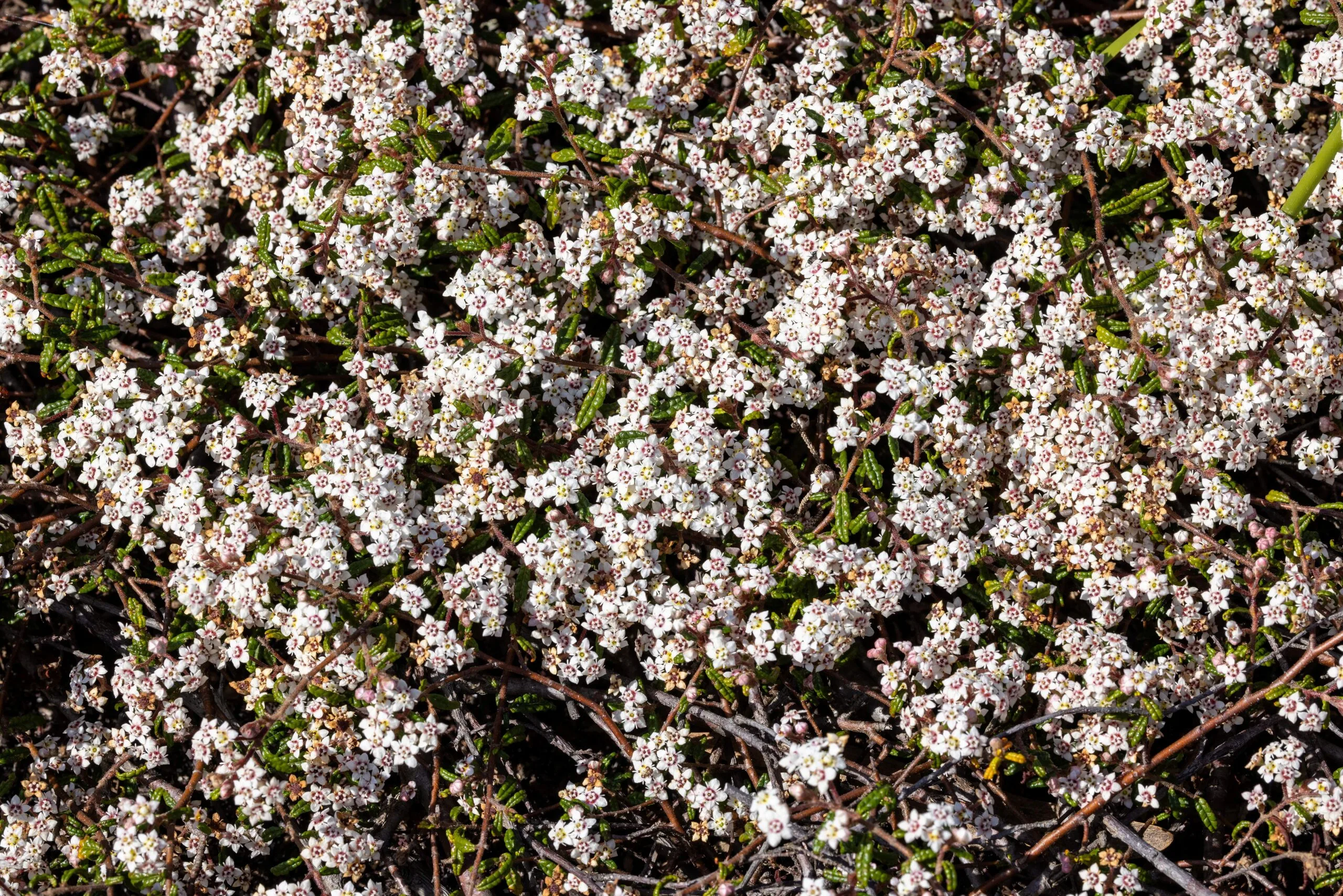
Wrinkled kerrawang
Rulingia hermanniifolia
These tiny white and pink flowers create a beautiful carpet. This specific plant is frost-hardy, making it great for colder regions.
07
Grevillea sericea ‘Pink Midget’
This dwarf variety is great for a slightly shady garden (although it can handle full sun as well), with delightful pink spider flowers.
08
Goodenia ovata ‘Little Goodie’
Very compact and dense, this plant truly is a little goodie. It stands a little higher than most ground covers, but still has a pop of yellow to keep your garden interesting.
Shade
09
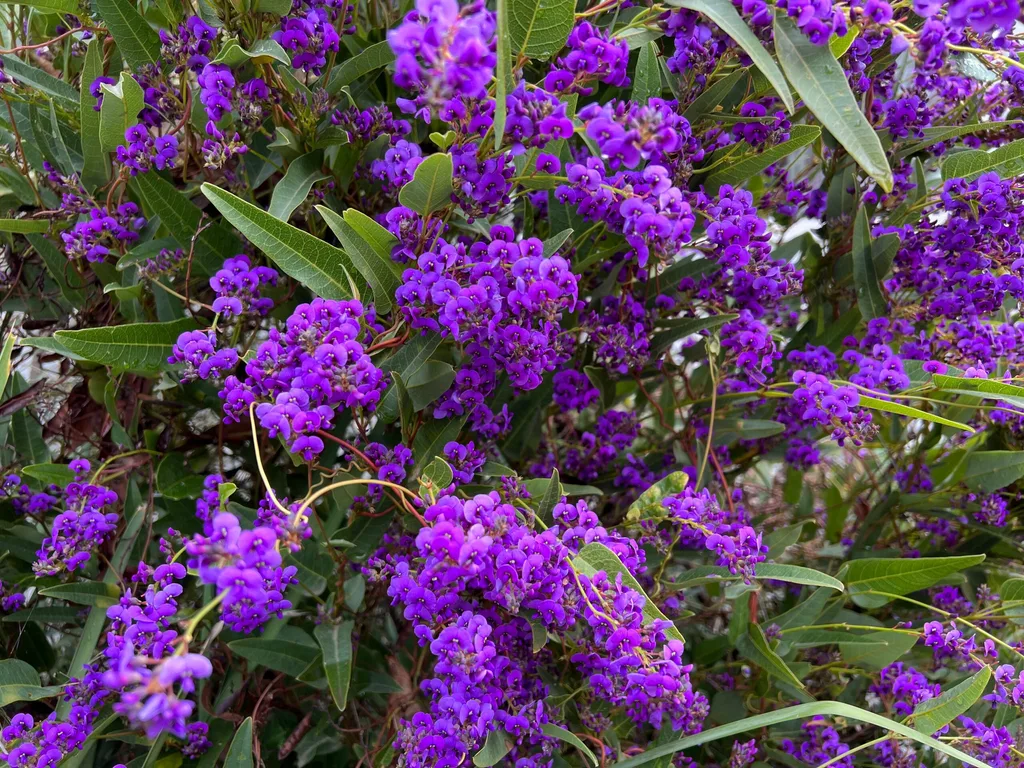
Hardenbergia ‘Sea of Purple’
Hardenbergia violacea
If rich, dark purple is your thing, then this is the plant for you. Flowering from late winter to spring, this plant can spread up to 3m wide in your garden.
10
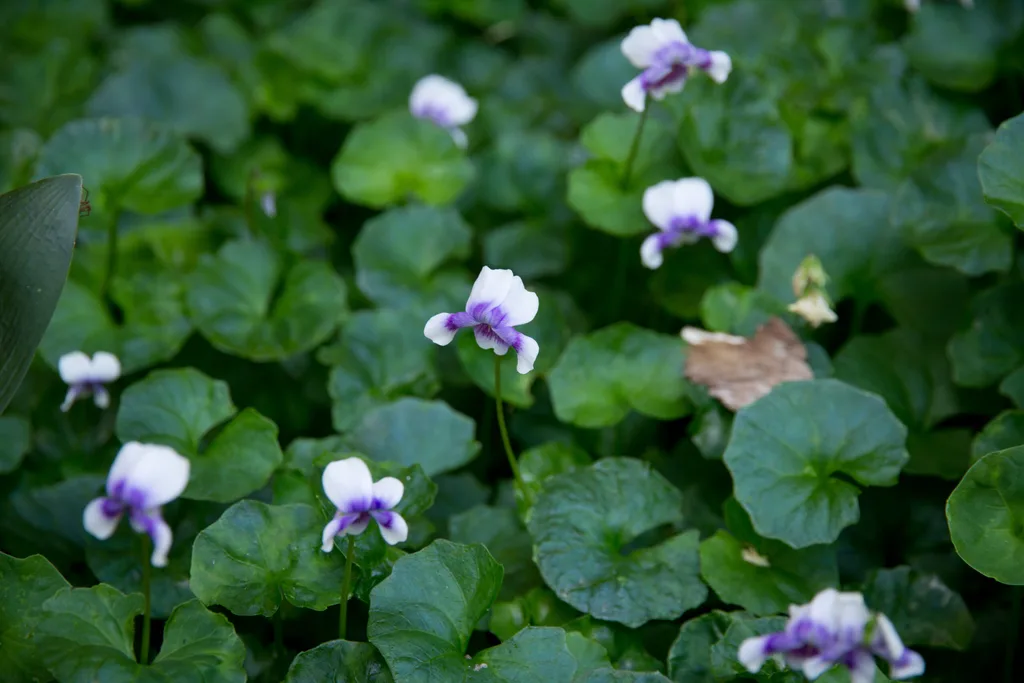
Native violet
Viola hederacea
This is the classic choice for shady gardens. And, who doesn’t love the whimsy effect it brings?
11
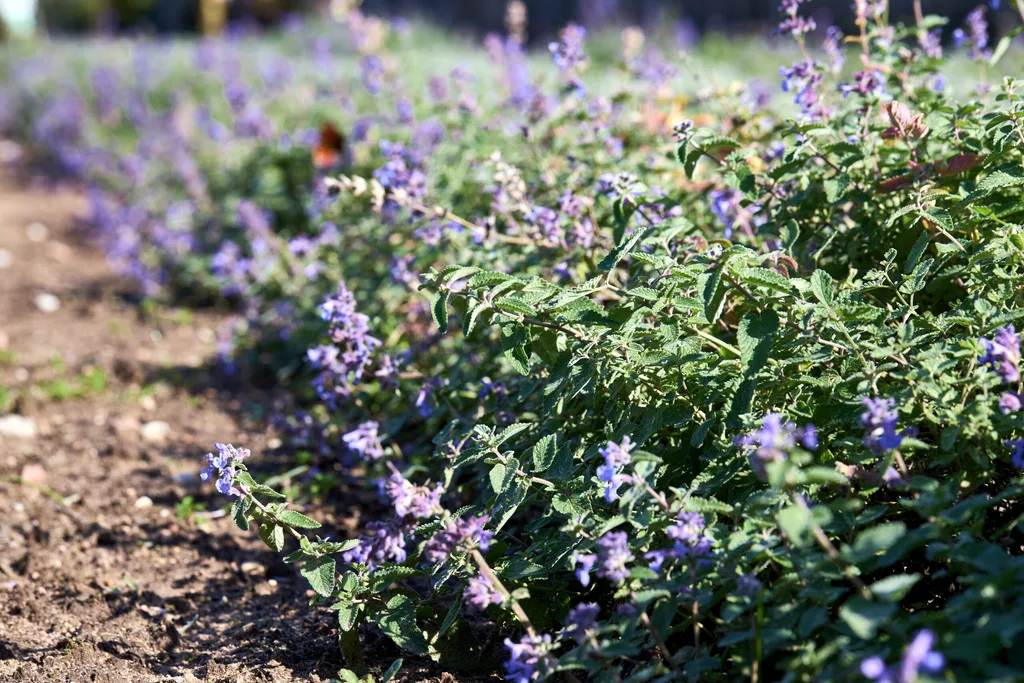
Australian bugle
Ajuga australis
Similar in shape to a small lavender plant, this species is great at forming a mat to deter weeds.
Narelle also recommends trying out native grasses, like Poa or Lomandra. They grow extremely fast and do a great job at smothering weeds. And, they add great texture!
Speaking to horticulturalist Tim Pickles, from Tim’s Garden Centre, there are also a couple of natives that do the work, and are standouts in the garden. Tim loves natives that can add texture and colour, while still keeping up with the weeds.
Causarina – Cousin It is a favourite of his, because they’re ‘tough as’ and ‘just survive’. They’re popular with council planting because of their hardy nature, and for keeping stray weeds at bay. An interesting pick from Tim would be Scleranthus biflorus – Lime Lava, which looks similar to moss and spreads quickly along the top of the ground, like an extra barrier to weeds.
How to find the right groundcover for your garden
As Narelle knows, “We’ve all gone home with a plant where we have no idea where it is going to go, just because we liked the look of it.” Finding a groundcover that works well for your backyard all comes down to positioning, soil type and climate.
Since plants grow differently when you factor these in, Narelle recommends always reaching out to your local nursery to ask about growing conditions and different species. In saying that, native plants tend to work well in most Aussie climates – after all, Australia is where they originate!
Keeping weed growth at a minimum with groundcovers
Although groundcovers can do most of the hard work for you, there’s still a bit of prep and maintenance that you’ll need to do. Before buying, make sure you do your research! And before planting, make sure the area is weeded thoroughly.
Narelle recommends sheet mulching or creating a cardboard weed barrier and mulching after your plants are in place. Ensure your mulch is around 50mm in depth to keep the weeds at bay, and keep a 50mm gap around the base of your plants to prevent collar rot. Every year, new mulch will need to be added.
In terms of maintaining your groundcover plants, that can be done with pruning (and mulching of course!). Pruning after flowering is your best bet, as it will keep your natives bushy and dense, so the weeds can’t get through.


Related stories
Native ad body.
Native ad body.
Native ad body.