
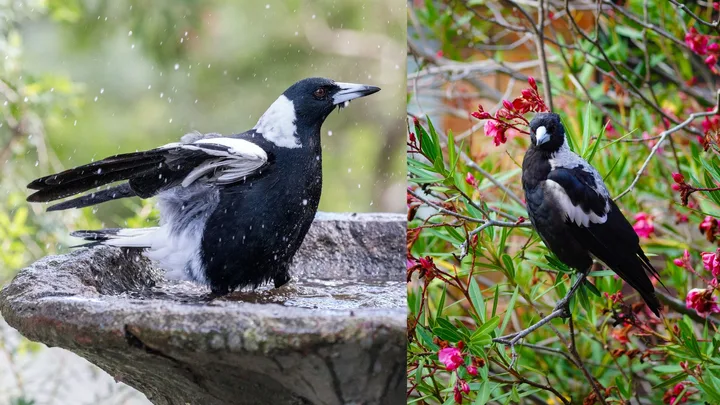
Magpies are one of Australia’s most-loved backyard birds, and they’re known to make friends with humans. But they won’t just take up residence in anyone’s yard. How do you attract a magpie to your garden and establish that trusting relationship? According to garden expert Warren Walker, it all comes down to providing the right space in your garden.
If you do want to attract magpies to your backyard, these 7 simple changes can make all the difference.
KEY TAKEAWAYS
- There are 7 easy ways to attract magpies to your garden, including planting in layers, keeping foraging materials, choosing specific plants and having a safe water source.
- Magpies can recognise people, and will remember you as a friend.
- It takes time to build a relationship with a magpie, and the first place to start is to make your garden magpie-friendly.
- Never feed magpies bread or mince — both can cause serious health problems.
Magpies choose friendly gardens, with trustworthy hosts
Warren Walker is the owner of Wariapendi Native Nursery on the South Coast. After spending the last 40 years designing wildlife-friendly gardens, he knows a thing or two about what magpies want in a home.
“They’re certainly very in tune with people, and they actually recognise people. You’re either a friend or a foe,” says Warren.
Once a magpie decides you’re a friend, that relationship can run deep. “When you really get friendly with them, they’ll start introducing their young to you as well… it takes time, though.” And, as Warren explains, it all starts in how you’ve set up your garden.
7 ways to attract magpies to your garden

Plant in layers, not just one type of shrub
Warren explains different birds use different heights, or “layers,” of a garden. Magpies typically nest high up in the canopy and feed down at ground level, so a garden with a full range of layers gives them everything they need in one place:
- Canopy (8m+): Big, established trees. Magpies love these for nesting and for keeping watch.
- Ground layer (0–1m): Lawn, mulch, ground covers and native grasses. This is where magpies look for insects, grubs and other small prey.
- Understorey (1–3m): Small to medium native shrubs. These give magpies shelter, safe paths to move through, and more food.
- Mid-storey (3–8m): Taller shrubs and small trees that add extra cover and structure.

Leave the ground layer a little “undone”
A loose layer of mulch, instead of one tightly packed, gives magpies room to dig around and forage. Magpies eat a wide range of food, including insects, grubs, worms, and even small lizards. So if you think logs, rocks and leaf litter on the ground look messy, think again. For magpies, that mess is valuable habitat.
“To encourage that lower ground life that magpies, like native mice and rats, you need to have a little bit of structure, as in logs and rocks,” says Warren.

Open up gaps in the understorey
A thick, solid hedge can actually keep magpies away. Warren says they need clear paths to fly in and out of a garden. Additionally, gaps in the understorey give shyer birds room to move around, land, and check things out before they come down to feed.
“You show me a bird that lands into a tightly clipped hedge… birds like to be able to come in and out,” explains Warren.

Choose plants suited to your soil, aspect and climate
There’s no single plant that magpies love best. The right choice depends on your climate, your soil, and how much sun your garden gets. Plus, it comes down to the layers in your garden that we mentioned earlier.
Warren’s bigger piece of advice: pick plants that actually grow well in your local area, not just any plant labelled “native.”
“It’s always best to focus on what works well in the area. If people are uncertain, take a drive around and have a look. Local plants are definitely my preference.”
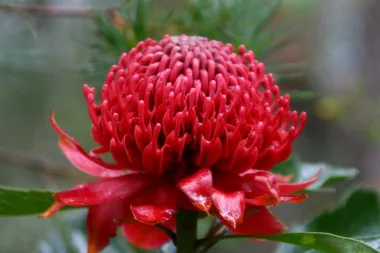
But if he had to pick, Warren says he likes native plants such as dwarf grevilleas and bottlebrush varieties that grow to around a metre tall. For a stand-out flowering shrub in the understorey, his pick is a native wax flower cultivar.
“My favourite would definitely be Philotheca ‘Winter Rouge,’ which flowers for four months of the year.”

Keep a lawn. Just make it a small one
You don’t have to get rid of your lawn to make your garden magpie-friendly. In fact, having some open space is exactly what they’re after.
“Birds need movement, a little space to fly through,” says Warren. “They need flight zones. So you do need open areas.”

Add a safe water source
Water is just as important as food, and it’s an easy detail to overlook.
“If you want to attract magpies and have them feel safe… a good supply of water where it’s not quite out in the open, but they’ve got a good vantage point around it to assess for any threats helps,” says Warren.

Skip the mince and bread
A garden with lots of plant layers and insects will naturally give magpies what they need to feed themselves. It turns out, hand-feeding magpies can actually be quite damaging to their health, depending on what you feed them.
Bread doesn’t provide much nutrition and is tricky to digest. Plain mince has a lot of phosphate, which can pull calcium out of a magpie’s bones, causing serious health problems, especially in young chicks.
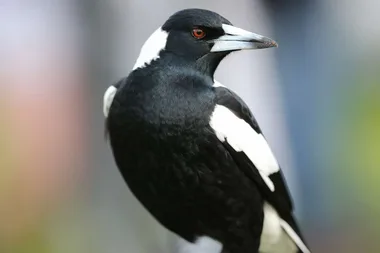
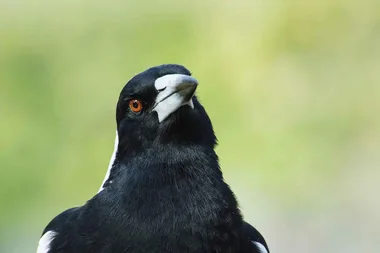
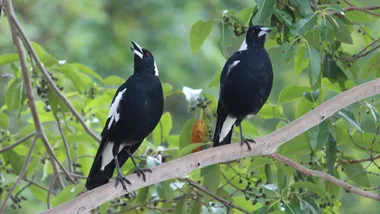
Magpies sleep in trees, usually on a perch close to their nest rather than in the nest itself. Big, established trees are important for this as they give magpies a safe, sheltered spot to roost overnight.

Related stories
Native ad body.
Native ad body.
How to keep your summer lawn pristine
Native ad body.