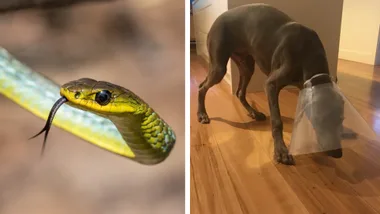
Worried the mysterious droppings in your yard might be snake poo? You’re not alone. As the weather warms up, snakes are on the move, and one strange dropping is enough to make you think twice next time you’re out in the garden. But knowing what snake poo actually looks like can help you work out whether you’re dealing with a snake, a lizard or something else entirely.
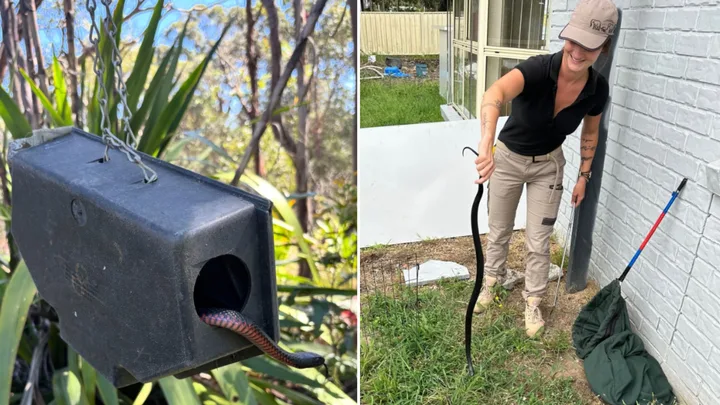
Bronte Hillen is a snake catcher who runs a snake and reptile relocation service in Newcastle, Lake Macquarie, and the Hunter region. She says the tricky part is that snake poo looks a lot like lizard droppings – but don’t worry, there are some signs to look out for. Plus, we tracked down some photos to make identifying snake poo even easier.
KEY TAKEAWAYS
- Snake poo is often dark and irregular, with a distinctive white chalky section.
- Visible fur or feathers in droppings can be a telltale sign of a snake.
- Snake and lizard droppings are notoriously difficult to tell apart.
- Droppings alone are not proof that a snake is currently on your property.
- Safe cleanup is important, as reptile droppings can carry harmful bacteria.
“There is no single appearance that applies to all snake droppings,” says Bronte. “Snake and lizard droppings can be particularly difficult to distinguish, and their appearance varies between species.”
Snake poo varies by species, size, what it ate, and how recently it ate. It can be anything from a firm lump to a soft, shapeless mass.
How to identify snake poo: 5 signs
Here are five signs to look for, plus some photos.
1. There’s fur or feathers in it
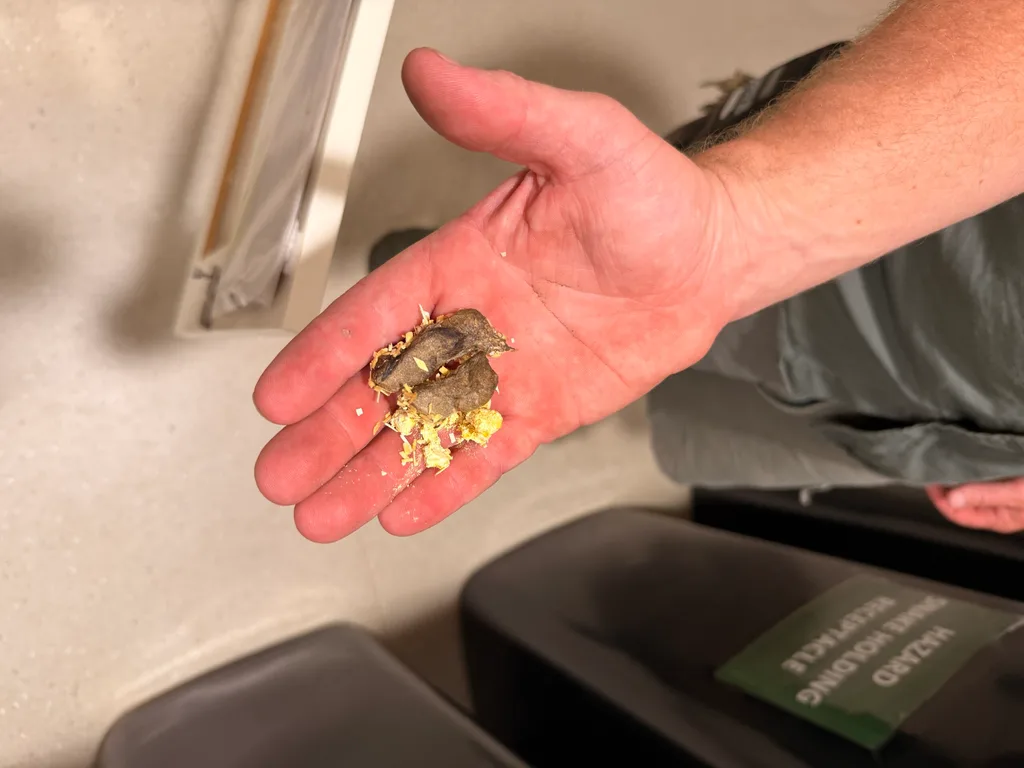
This is your best clue. Since snakes swallow their prey whole, their droppings can sometimes have leftovers from their last meal, usually fur or feathers.
“Some droppings contain visible remnants of the snake’s prey, which can make them look quite different from mammal faeces,” Bronte says.
Snakes digest most of their prey, including a lot of the bone. Bone fragments are “possible, but they should not be expected in every dropping”, she says. If you see insect bits instead, you’re more likely looking at lizard poo.
2. It’s dark and irregular, not neat pellets
Snake poo is usually dark brown, dark grey or black, and it’s often just a weird lump or a long, messy dropping, not a neat little shape.
“Fresh droppings can be soft or moist, while older droppings may dry out and become firm or crumbly,” Bronte says.
If you’re seeing lots of tiny, separate pellets, you can probably relax.
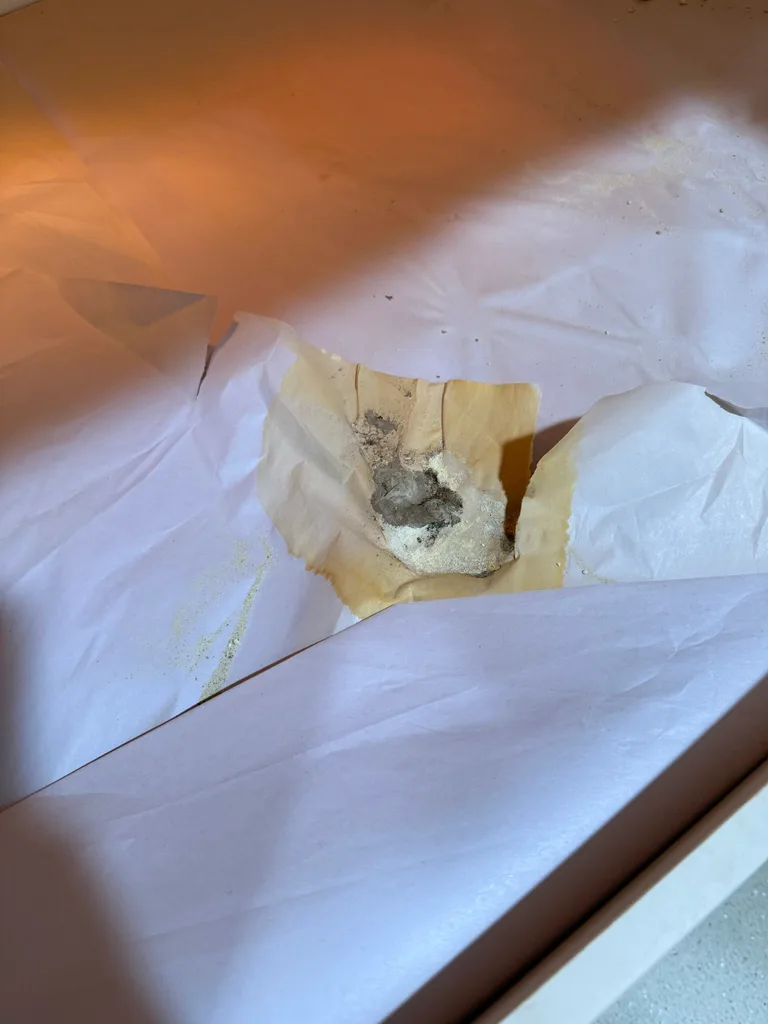
3. There’s a white, chalky blob with it
That white part is urate, a solid waste product that helps snakes save water. Snakes have a cloaca, a single opening shared by the digestive, urinary and reproductive systems, so poo and urates often come out together.
“Urates may look like white chalk, a crumbly solid or a soft, creamy substance,” Bronte says. “Their appearance and consistency can vary with hydration and other factors.”
But here’s the catch: lizards and birds have urates too. So a white blob means you’re probably dealing with a reptile or a bird, but it won’t tell you which.
4. It’s bigger than you’d expect
“Larger snakes will generally produce larger droppings than smaller snakes, although the size of the meal also influences the amount of waste produced,” Bronte says.
Snakes don’t go every day. How often they poo depends on what they’ve eaten and how much, the temperature, and their metabolism.
Lizard droppings, on the other hand, are usually small, dark and stretched out, sometimes with a white tip.
5. It’s somewhere a snake would shelter
You might find snake droppings anywhere a snake has stopped for a rest or found shelter. Think sheds and garages, under shelves, near timber or rock piles, around retaining walls, in compost heaps, garden beds, near chook pens and aviaries, under buildings or even up in the roof.
Even so, a likely spot isn’t a sure sign. “Snakes do not necessarily defecate every time they move through an area,” Bronte says. Finding droppings in one of these places “does not establish that a snake is living there”.
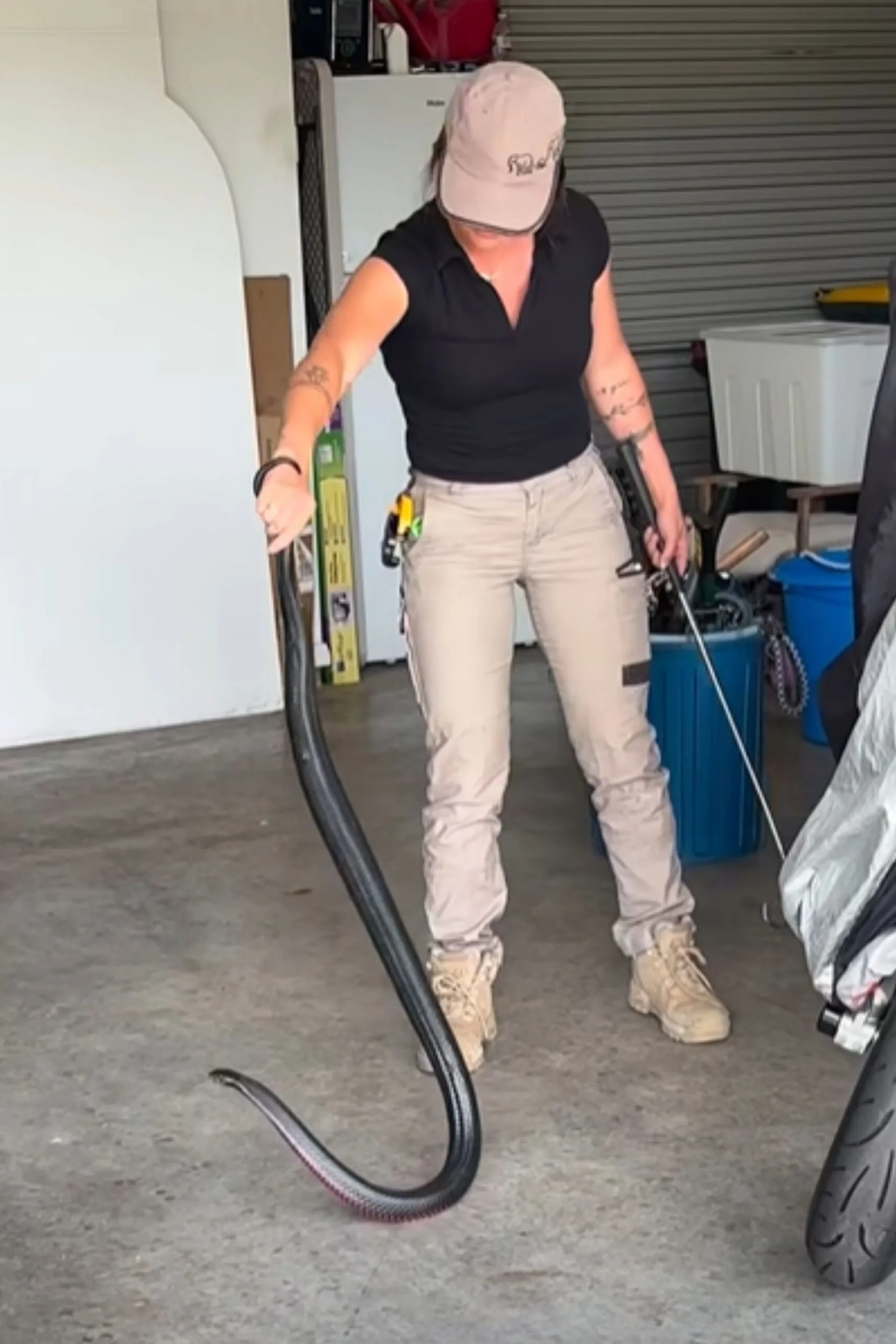
Does this mean a snake is still around?
Not necessarily. Droppings and shed skins can stay put long after a snake has moved on, and other animals leave similar material.
“Droppings can provide a clue, but they are not proof of a snake’s current presence,” Bronte says.
Whatever you do, don’t go poking around trying to find the culprit. Don’t reach into gaps or start moving clutter. If you want to keep a record, just snap a photo from a safe distance.
How to clean up snake poo safely
Reptiles can carry Salmonella, so treat any mystery droppings as contaminated. First, make sure no snake is hanging around, and keep kids and pets away. Put on disposable gloves and skip the broom or vacuum; they just spread dust. Use paper towels to pick up the droppings, seal them in a bag and toss it in the bin.
Clean the spot with detergent and water, then use a household disinfectant and wash your hands well. If the droppings are stuck somewhere tricky, like a roof or wall cavity, don’t try to pull things apart. Call in a professional.
How to make your yard less inviting
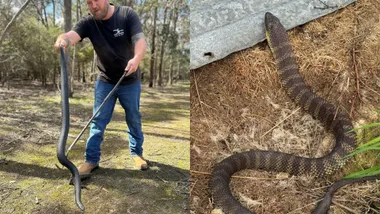
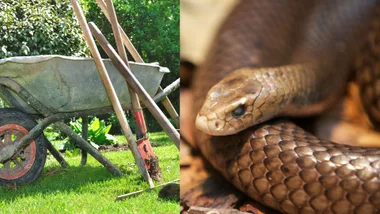
The best way to avoid finding snake poo is to give snakes fewer reasons to visit. South Gippsland snake catcher and horticulturalist Jake Condotta says snakes want three things: food, shelter, and suitable temperatures.
Keep grass short near the house and play areas. Stack firewood off the ground and away from the house, and keep sheds tidy. Store pet food, bird seed and chicken feed in sealed containers so you don’t attract rodents.
“It’s all about sensible garden management,” Jake says.

Snake poo FAQs
Often, yes. Faeces and urates leave through the same opening, so they usually come out together.
It can carry Salmonella and other germs. Never touch it with bare hands.
It can. It’s usually strongest when fresh or when it has built up in a closed space like a shed or roof cavity.
Not every day. It depends on how often and how much they eat, the temperature and their metabolism.

Related stories

Native ad body.
Native ad body.

The low-maintenance guide to getting your backyard summer-ready



Native ad body.