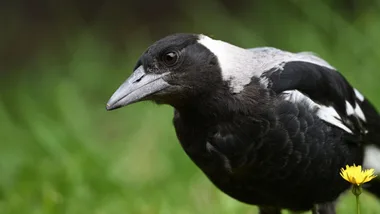

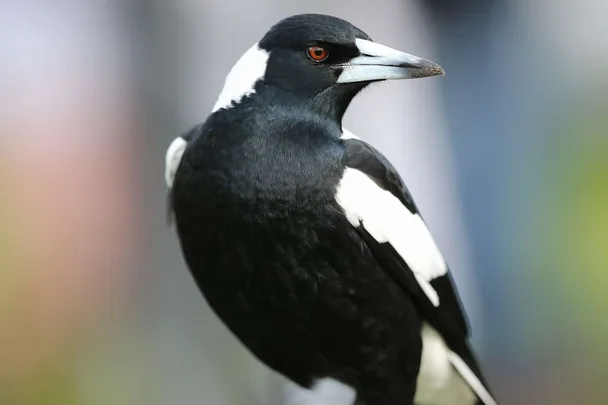
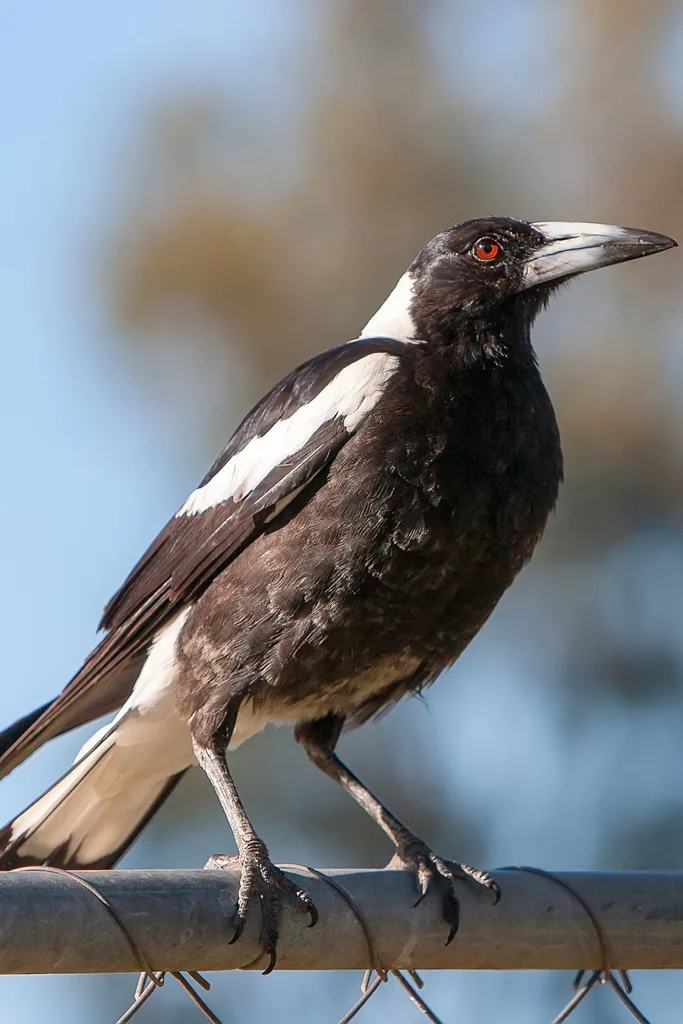
From springtime nesting season to summer, autumn and winter, you can see or hear Australian magpies in cities, country towns and regional areas across the country. In fact, this iconic native bird is found in most parts of Australia and even southern New Guinea, except for areas like dense forests and arid deserts. And if you’ve got a pair or family visiting your yard, you might be wondering what magpies eat and whether you can feed them.
Here’s the lowdown on how magpies find food on their own, their relationship with humans, and whether you should feed them.
KEY TAKEAWAYS
- Never feed magpies bread. It’s nutrient-poor and hard for their sensitive stomachs to digest.
- Avoid mince and dog kibble too, as both lack calcium and can weaken their bones over time.
- If you do feed them, keep it as an occasional snack (like mealworms or crickets), not a regular meal.
- Feeding magpies without a permit is technically against the rules.
Magpies are natural foragers and friends of our gardens
If you’re out in a park, on the golf course or pottering in the garden, particularly during spring, chances are you will spot a magpie or two foraging for food on the ground or hear their unique bird call at dawn and dusk, which experts claim is the most complex call of any bird.
While magpies have a dubious reputation for swooping humans and animals during nesting season, wildlife experts say they are among the most sensitive, intelligent bird species and can develop a close affinity with humans.
Shannon Maguire from the Currumbin Wildlife Sanctuary told Better Homes and Gardens that magpies benefit the garden with their sweet song, their affection for people they know, and their ability to keep pests like snails away from your favourite roses and flowers.
Like most animal species, magpies are susceptible to some types of diseases; however, experts say it is unlikely diseases would ever be transferred to humans.
What do magpies eat?
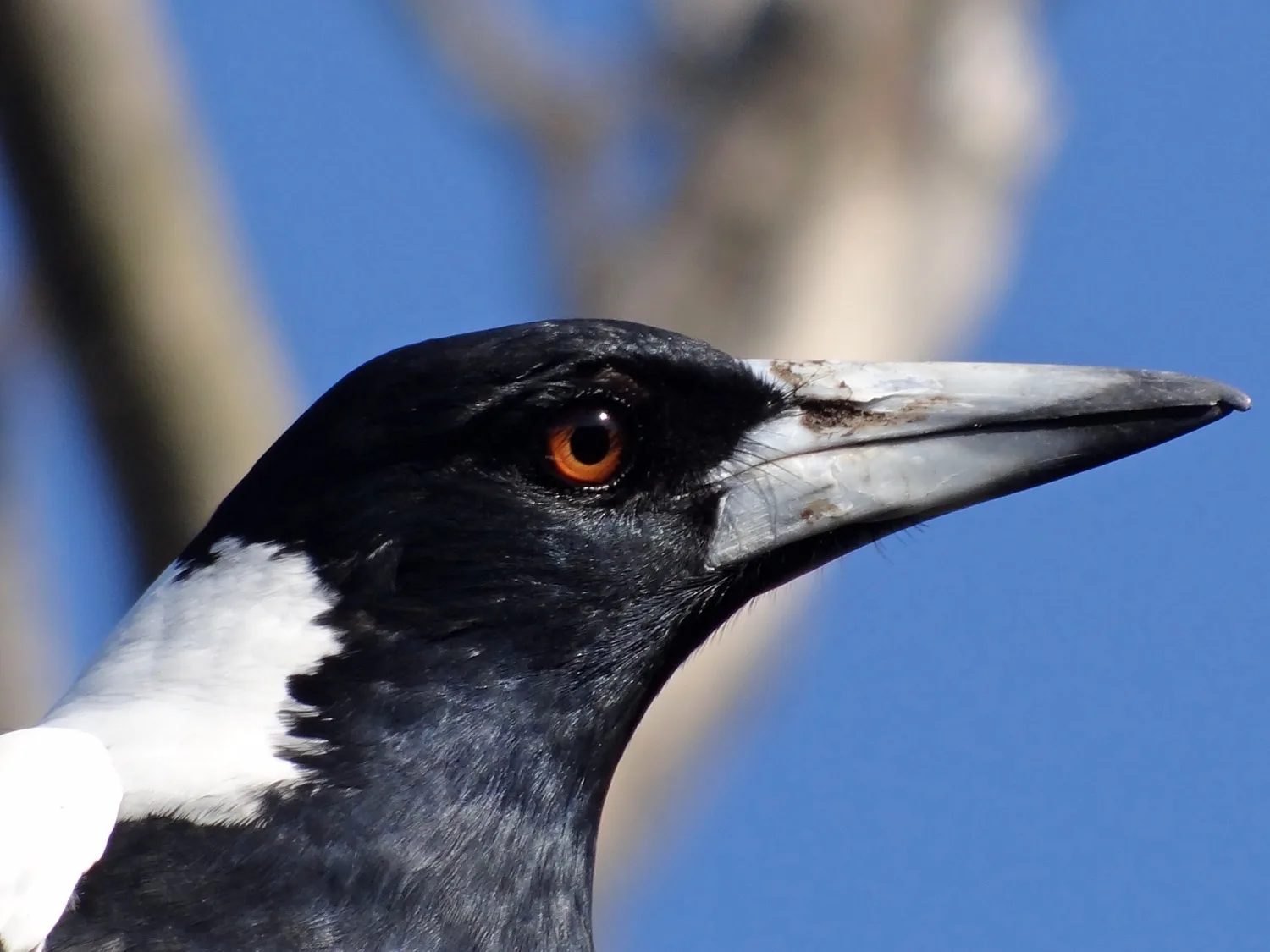
Magpies mostly feed on insects and small animals, including earthworms, spiders, beetles and even small lizards. While they forage well in the wild, they will often approach humans for food too.
Can you feed magpies?
If you want to befriend magpies, feeding them is one option. But make sure the food won’t harm them long term, since some human food isn’t ideal.
It’s also important that the birds don’t become reliant on you. In his book Feeding the Birds at Your Table, Darryl Jones discusses the importance of only feeding them a small amount, so it’s a snack rather than a whole meal. As magpies are similar to kookaburras in their natural diets, you could consider something like mealworms or crickets bought from a pet store.
What you shouldn’t feed magpies
Another view is that people should never feed any wild birds.
In fact, Maguire says people should not feed magpies unless they have a permit.
“People do feed them in their backyards, but technically they are doing the wrong thing,” she explains.
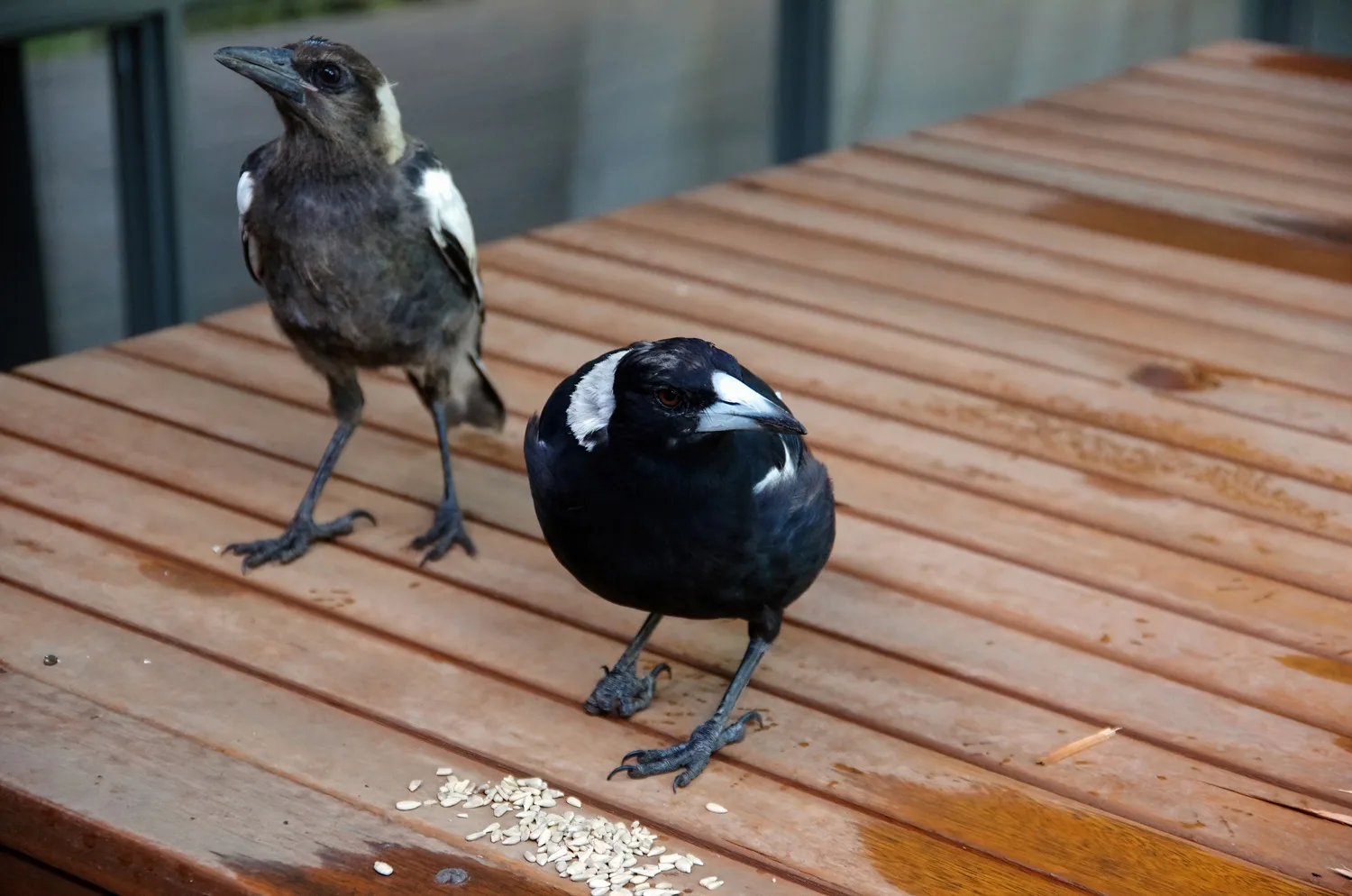
“The main things people will feed them are mince or dog kibble, but both are not good for magpies. Mince is too high in different nutrient levels – often too much fat – as in the wild, they are feeding on leaner foods.”
Jones also says mince is a bad option because it lacks calcium. This can lead to weaker bones in magpies, as they will draw calcium from their own bones to make up for what’s missing in their diet.
One reason he wrote Feeding the Birds at Your Table is to make sure people know how to feed birds in the safest and healthiest way (if you want to feed them).
Can you feed magpies bread?
Feeding magpies bread is definitely not recommended – in fact, it is harmful for most birds (yes, including ducks!) to consume bread. This is because bread lacks nutrients and is very dense, making it hard for a magpie’s sensitive stomach to digest.
What else to keep in mind
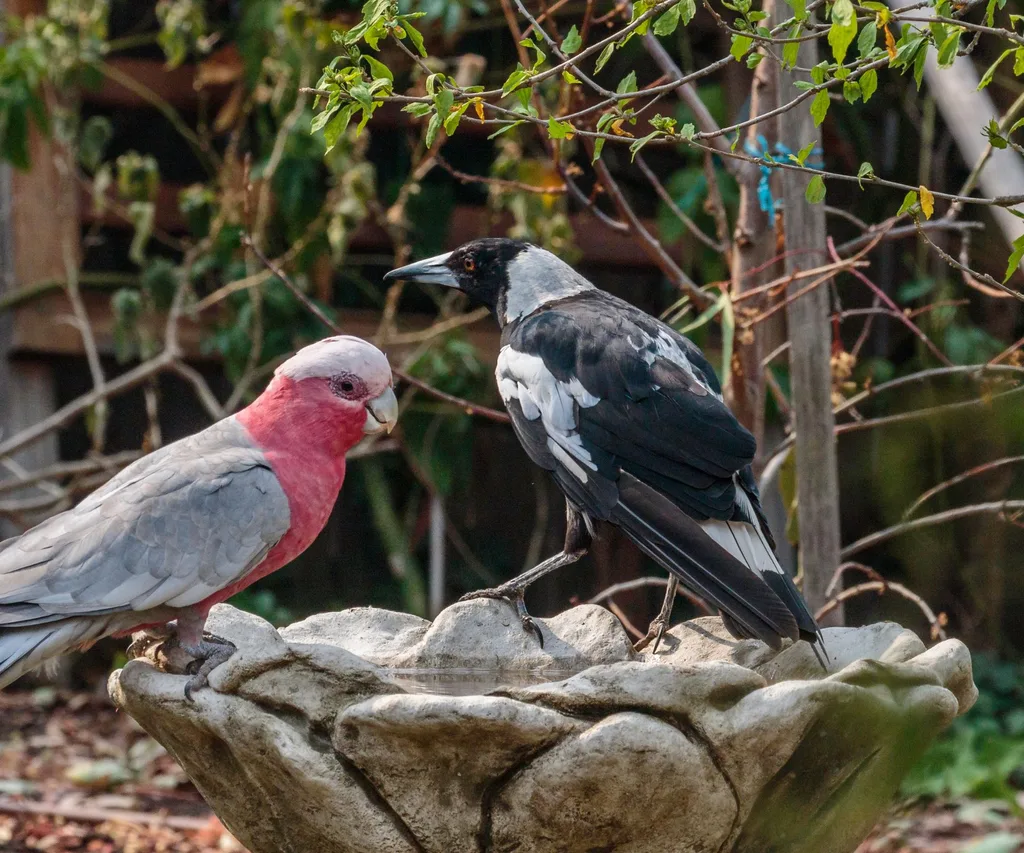
Beyond what you feed them, Maguire says magpies can become territorial around people and other bird species when you regularly encourage them into a garden with food.
So, if you enjoy backyard visits from rosellas, rainbow lorikeets and parrots, it’s not a good idea to encourage the local magpies.
Despite their reputation for swooping on unsuspecting cyclists or dog owners in the parks, Maguire says magpies are mostly non-aggressive and only get territorial when they deem a person or animal is too close to one of their nesting sites.
In fact, Maguire says these Aussie birds are so intelligent, they can reportedly recognise and remember human faces, which they store away as someone who is a threat to their nest or someone who is not.
Even if they don’t see the person until the next breeding season, they will target those ‘threatening’ people.
Maguire says that, generally, magpies will fly low and fast over a person, flap their wings, and clack their beaks as they pass by to issue a warning, but will very rarely strike the intruder or cause physical injury.



Related stories
Native ad body.
Native ad body.

Native ad body.