
Magpies have a reputation as one of Australia’s most feared backyard visitors, thanks to their swooping antics during breeding season. But not every encounter is a warning to back away. Turns out, these clever birds can recognise individual human faces, and singing is often a sign of trust, not aggression. Here’s what your local magpie may really be trying to tell you.
KEY TAKEAWAYS
- Magpies can recognise human faces and remember them for years
- A singing magpie is a sign of trust, not aggression
- Swooping is seasonal (spring) and doesn’t reflect a magpie’s usual temperament
The sounds of the Australian magpie
Magpies rank among the most vocally advanced songbirds in the world, producing an incredible range of complex and varied sounds. Over time, the Magpies’ iconic sounds have been categorised into a few groups. In her book, Dr Gisela Kaplan describes the different magpie sounds into four categories.
- Carolling: Dr Gisela Kaplan describes carolling as “loud, noisy and powerful.”
- Warbling: In contrast, warbling is much softer.
- Alarm calls: These sounds are harsh, staccato squawks to warn off predators.
- Mimicry: Magpies are excellent mimics. Some magpies imitate the calls of other birds or even human-made sounds, such as alarms or ringtones.
Why do magpies sing?
There are several reasons magpies sing.
As Dr Kaplan notes, “Vocalisations can inform about food, can express anxiety or alarm, rivalry, attention, defence, flying away (follow me) and similar short instructions.”
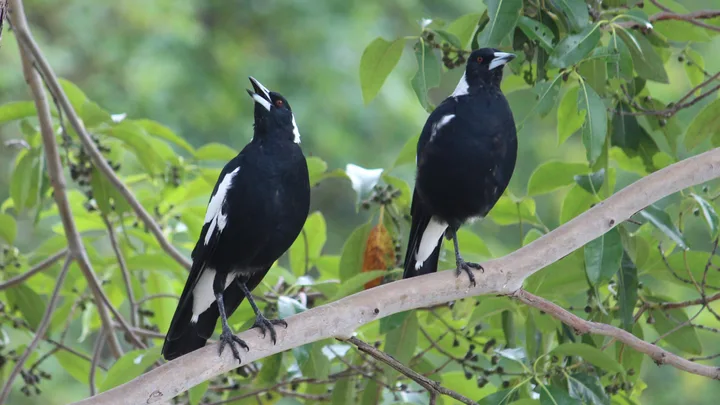
Additionally, magpies will send out a melodious call, warning other birds to defend their space and letting them know that the territory is taken. Magpies also sing to each other to strengthen their social bonds.
If you hear magpies carolling together, this signals a victory for the birds who have most likely just successfully defended their territory.
“When adults come together to carol, we call it a duet when there is a pair of magpies and a chorus if there are more than two,” writes Dr Kaplan. “However, the purpose of the carol is the same: a declaration of victory and/or a reaffirmation of the bonding of the pair or the group.”
But what about magpies singing to humans?
Why do magpies sing to humans?
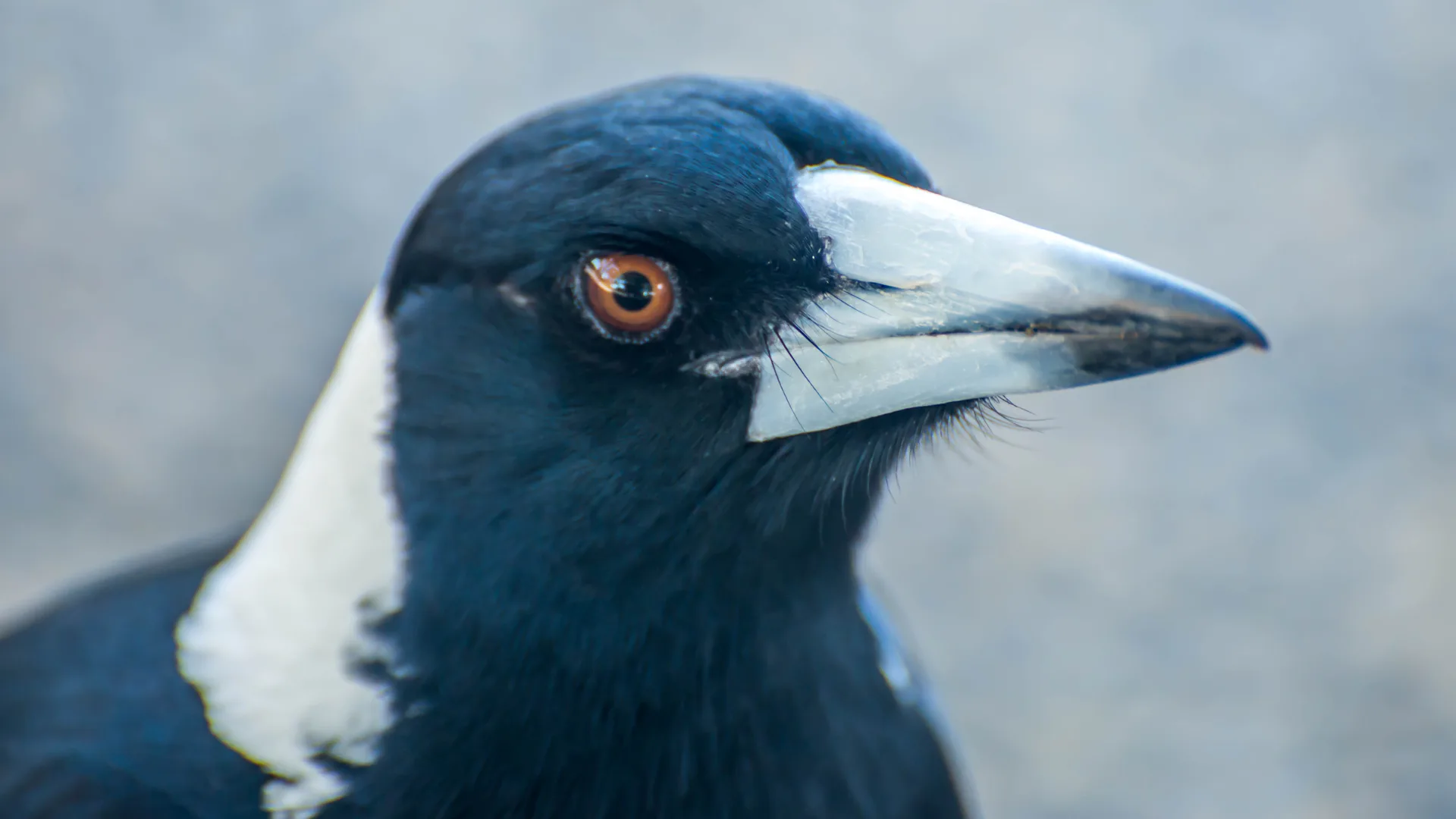
Many Australians report magpies singing while perched nearby or following them. This behaviour isn’t random; it’s a sign of recognition and possibly even affection.
1. Magpies recognise human faces
Magpies are one of the few wild bird species that can recognise and remember individual human faces. Dr Gisela says magpies “can remember humans for years” and can assess individual risk, choosing to either swoop or serenade based on past interactions.
2. A greeting or a bonding song?
In places where magpies are treated well, some birds appear to sing around certain people. This may be their version of a greeting, part recognition, part trust, and perhaps even a way of bonding.
3. Curiosity and communication
Magpies are naturally curious and incredibly intelligent. They may be vocalising to express interest or comfort. In this context, singing can be compared to a dog wagging its tail or a cat purring.
Yes – and no. Australian magpies are infamous for swooping during breeding season, but outside of that period, they can be very friendly and social.
Magpies don’t beat around the bush, so if one doesn’t like you, you will know about it. On the other hand, if a magpie is singing near you, making eye contact or following you around on regular walking routes, it’s safe to say you’ve got a friend in that magpie.
Some magpies have been known to visit the same people daily, responding to their names and even bringing gifts (such as pebbles or leaves).
Not all magpies are swoopers. However, during the spring breeding season (August to October), males may swoop to protect their nests. This behaviour usually lasts around four to six weeks and is often directed at specific individuals perceived as threats. Interestingly, many locals find that forming a relationship with their neighbourhood magpie early in the season by saying “hello” and offering a friendly wave can help avoid conflict and keep the peace.