
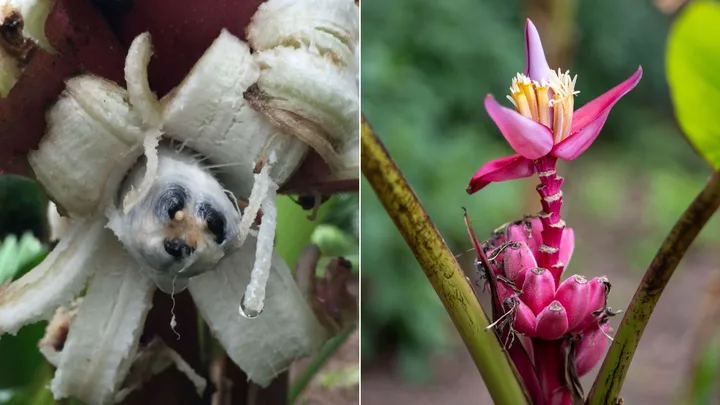
On a recent walk through the Royal Botanic Garden, Sydney, something stopped me in my tracks: a bright pink banana. While it looked edible, pink bananas aren’t grown for eating at all.
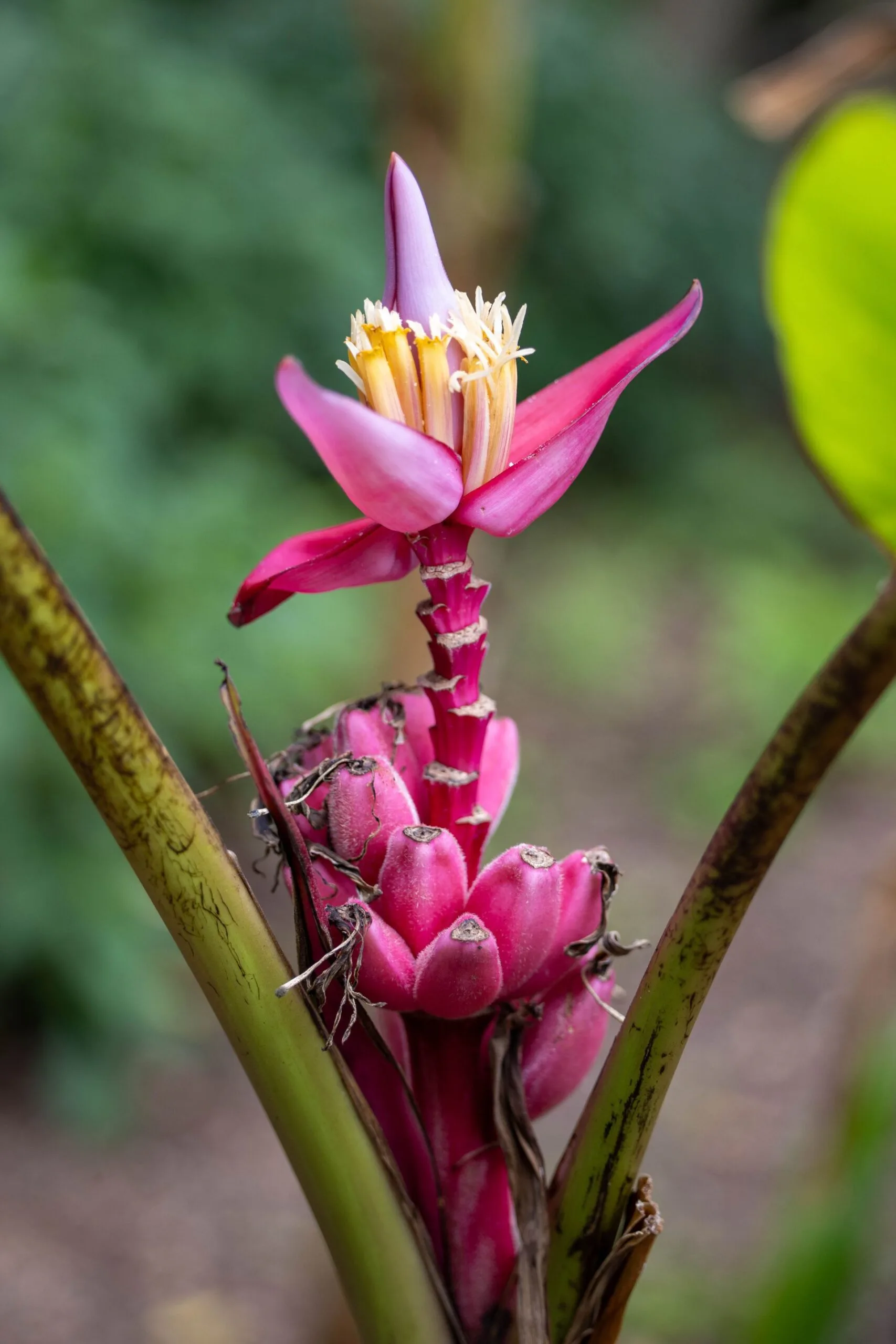
The fruit comes from the pink banana plant (Musa velutina). A striking species known for its fuzzy, pink bananas and fast-growing tropical foliage. Native to parts of India, it’s been quietly growing in gardens for years, often surprising people who spot it for the first time.
While the fruit is technically edible, gardeners don’t grow pink banana plants for eating. Instead, they mainly use them as ornamental features – but there are a few things Australian gardeners should know before planting one at home.
Jarryd Kelly, Curator Manager of the Royal Botanic Garden Sydney, says Musa velutina is prized for its visual impact rather than its fruit.
“It has lush green leaves, pink stalks and bracts, and velvety pink fruit, which add bold colour and texture to gardens,” he explains.
Kelly says the plant grows best in warmer climates and needs good rainfall or irrigation, as well as well-drained soil. However, it’s also prone to pests and diseases, produces smaller fruit than common banana varieties, and can be messy due to the pulp the fruit releases.
“Ultimately, it’s the large, hard seeds that put most people off growing it as a fruiting banana rather than an ornamental one,” he says.
Can you eat pink bananas?
The pink banana is edible, but it contains these hard black seeds that put people off.
Jarryd says, “The flesh and pulp are tangy to sweet and creamy with a soft, smooth texture.”
He adds, “What makes it less palatable is the large number of hard seeds that are present throughout the fruit. The seeds and lack of flesh (mesocarp) make it less appealing to eat compared to commercial bananas.”
Interestingly, the fruit peels themselves back when ripe.
Where to see a pink banana plant
You can spot the ornamental pink velvet banana (Musa velutina) growing in several beds at the Royal Botanic Garden Sydney — including beds 18b, 30 and 43 — where its bright pink fruit and tropical foliage add a splash of colour to the collection.
What gardeners should know before planting one
Pink banana plants thrive in warm conditions and grow quickly once established.
They prefer full sun, well-drained soil and regular watering during the growing season. While smaller than commercial banana plants, they can still reach several metres tall and need space to grow.
Is the pink banana considered a weed in Australia?
Authorities monitor seeded banana species, including Musa velutina, as environmental weeds in parts of Australia, particularly NSW. According to NSW DPI, seeded bananas can spread via seed and may invade bushland if not managed carefully.
That doesn’t mean pink bananas are banned everywhere. Gardeners should check local guidance, prevent self-seeding, and remove fruit where required.

Related stories
Native ad body.
Native ad body.


Native ad body.