
Outdoor space is a precious commodity, especially for gardening enthusiasts. But if you have a small area to work with, square-foot gardening offers an ingenious way to create a productive and vibrant garden.
This method of gardening was developed in the 70s by American gardener and inventor Mel Bartholomew and has become popular in the US, the UK, and even Australia. By using compact, grid-based plots, this method allows you to grow vegetables, herbs, and flowers efficiently. Here’s how it works.
KEY TAKEAWAYS
- Square foot gardening divides a raised bed into 30 x 30cm squares so you can grow more in less space
- Each square holds up to 16 extra-small veggies (like carrots and radishes), 9 small, 4 medium, or 1 large plant.
- Ideal for small yards, courtyards, and gardeners who like a neat, structured layout
So if you have a small space you want to get the most from, or even a bigger garden you want to add some structure to, here’s what you need to know about square foot gardening.
What size is a square foot garden bed in Australia?
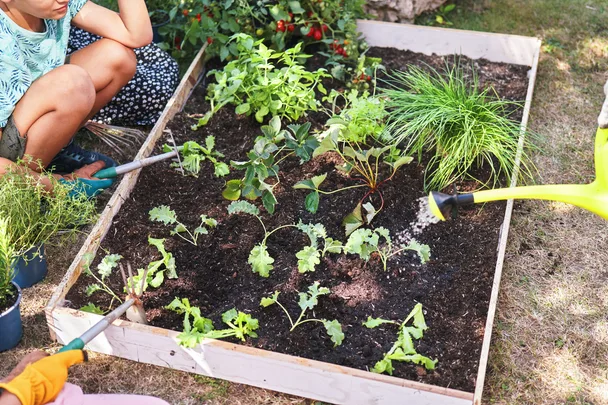
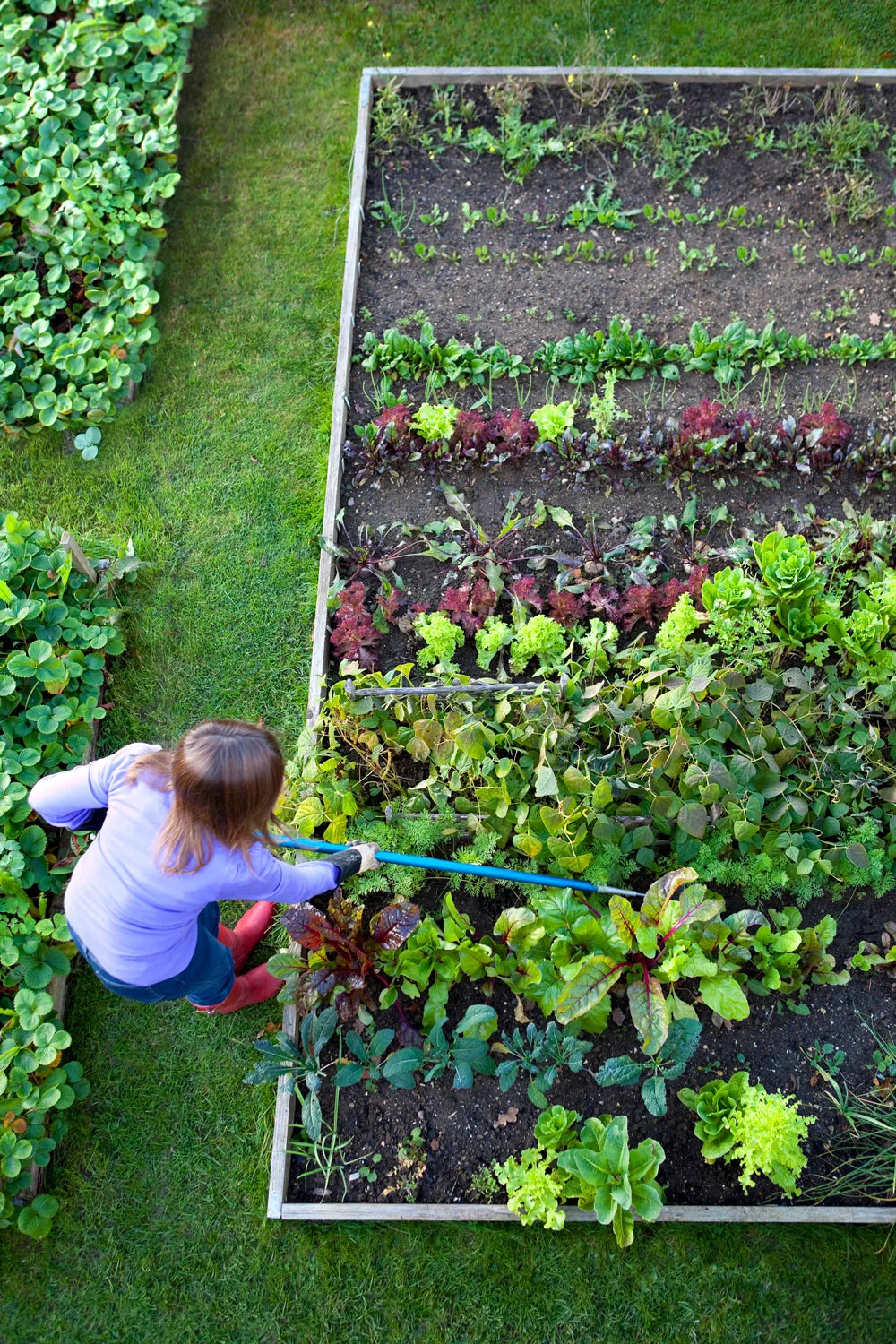
The basics of square foot gardening involve breaking down your garden bed into square feet, which is 30 x 30cm in the metric system we use in Australia. Then, you can map out how many plants or vegetables will fit into each area. This is usually done in a raised garden bed to maximise the use of the space.
How many plants fit into a square foot garden?
When working with a 30cm x 30cm square and deciding what to plant, you can use the following to fit either:
- 16 (4 x 4) extra small vegetables
- 9 (3 x 3) small vegetables
- 4 (2 x 2) medium vegetables
- 1 large vegetable per square foot.
Some plants may not fit in the layout as you will also need to consider things like sunlight (larger plants potentially overshadow and steal all the sunlight or water), and of course, some plants will take up more than a square.
Plants with vines, such as tomatoes, eggplant, melons, and pumpkins, will require 4 squares to themselves, while zucchini will require up to 9.
What are the benefits of a square foot garden?
The main benefit of square foot gardening is making the most of limited space. Square garden beds can come in different sizes depending on how much space you have and the size of your yard. It also provides a strict pattern to those who like routine and order.
What are the disadvantages of square foot gardens?
While square foot gardening has its merits, there are certain drawbacks. Some individuals may find it restrictive, as it prescribes a structured layout, which may not suit those who prefer a more fluid gardening approach. Additionally, nature doesn’t always conform to neat, square boundaries, which can pose challenges when plant roots and growth extend beyond their designated squares.
Another notable limitation is that if you later wish to cultivate larger plants or crops, you will need to pull up the entire grid and start again.
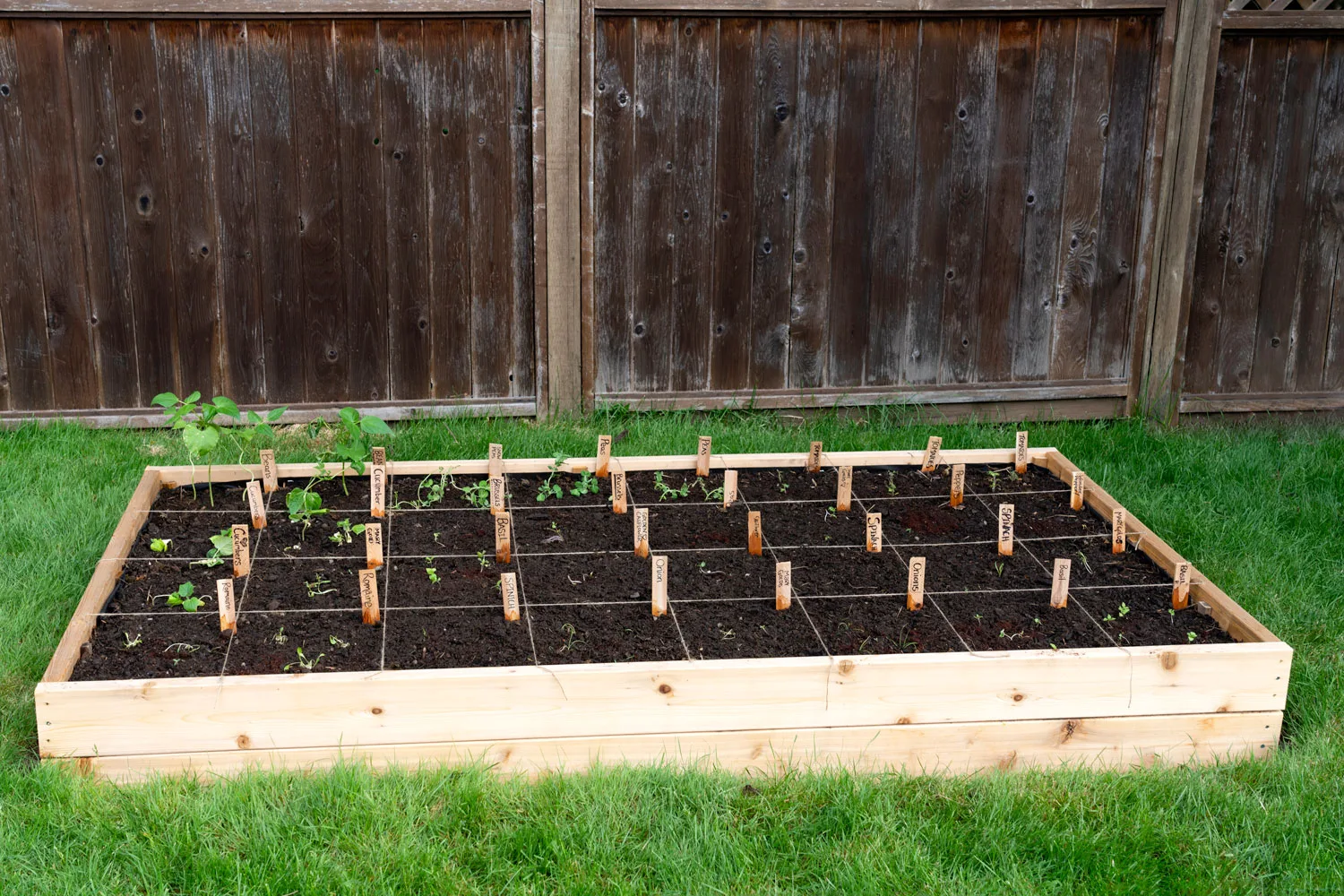
Which vegetables are good for square-foot gardening?
If you need a little guidance on what to plant, check out this handy guide:
Extra small vegetables that will fit 16 per square (4×4)
- Carrots
- Spring Onions
- Radish
Small vegetables that will fit 9 per square (3×3)
Medium vegetables that will fit 4 per square (2×2)
Large vegetables that will only fit 1 per square
- Cabbage
- Capsicum
- Rosemary
- Cauliflower
- Chilli
- Broccoli
- Brussel Sprout
- Tarragon
- Kale
- Oregano
- Rhubarb
Best garden tools
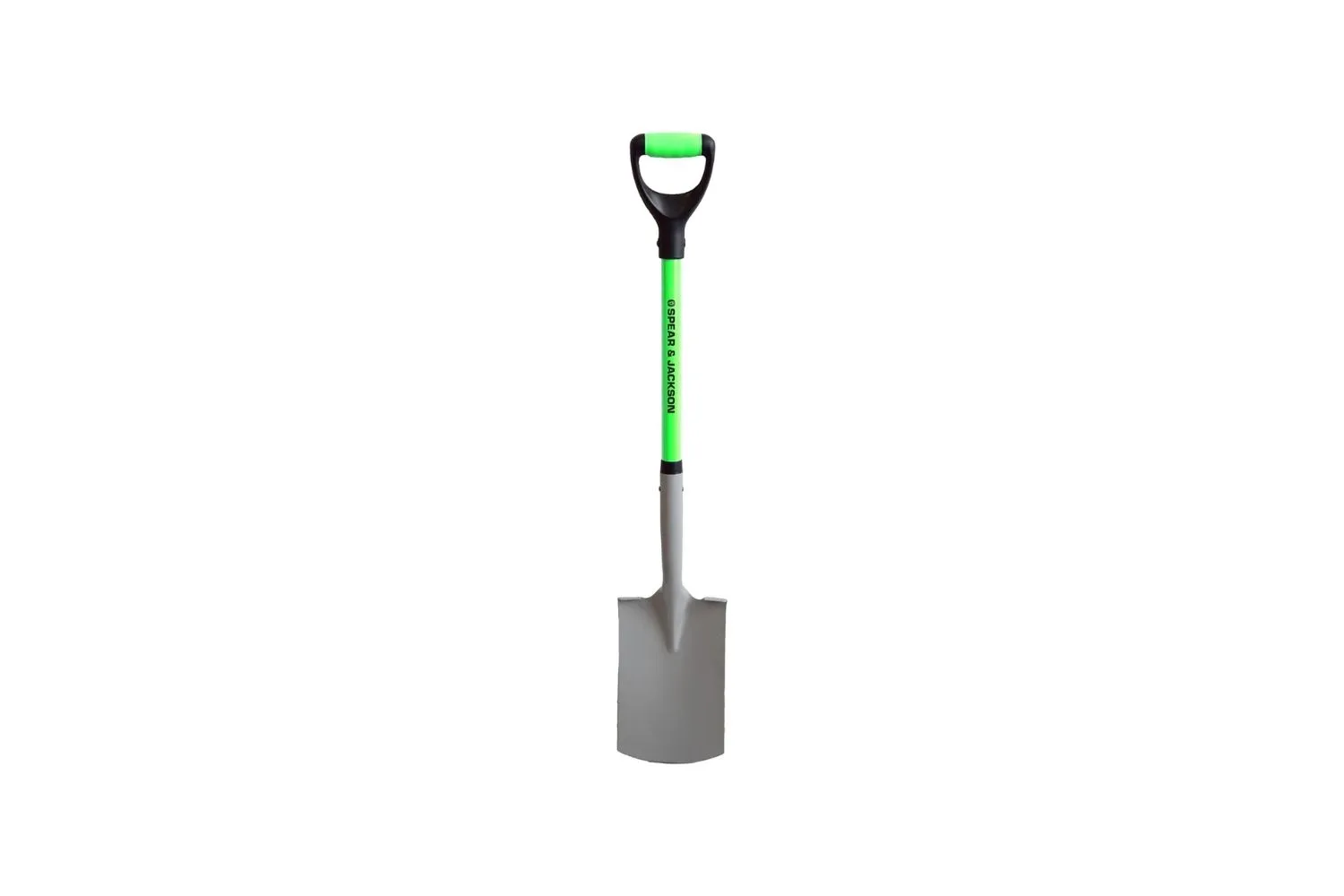
Spear & Jackson garden spade with green handle, $45.15, Amazon
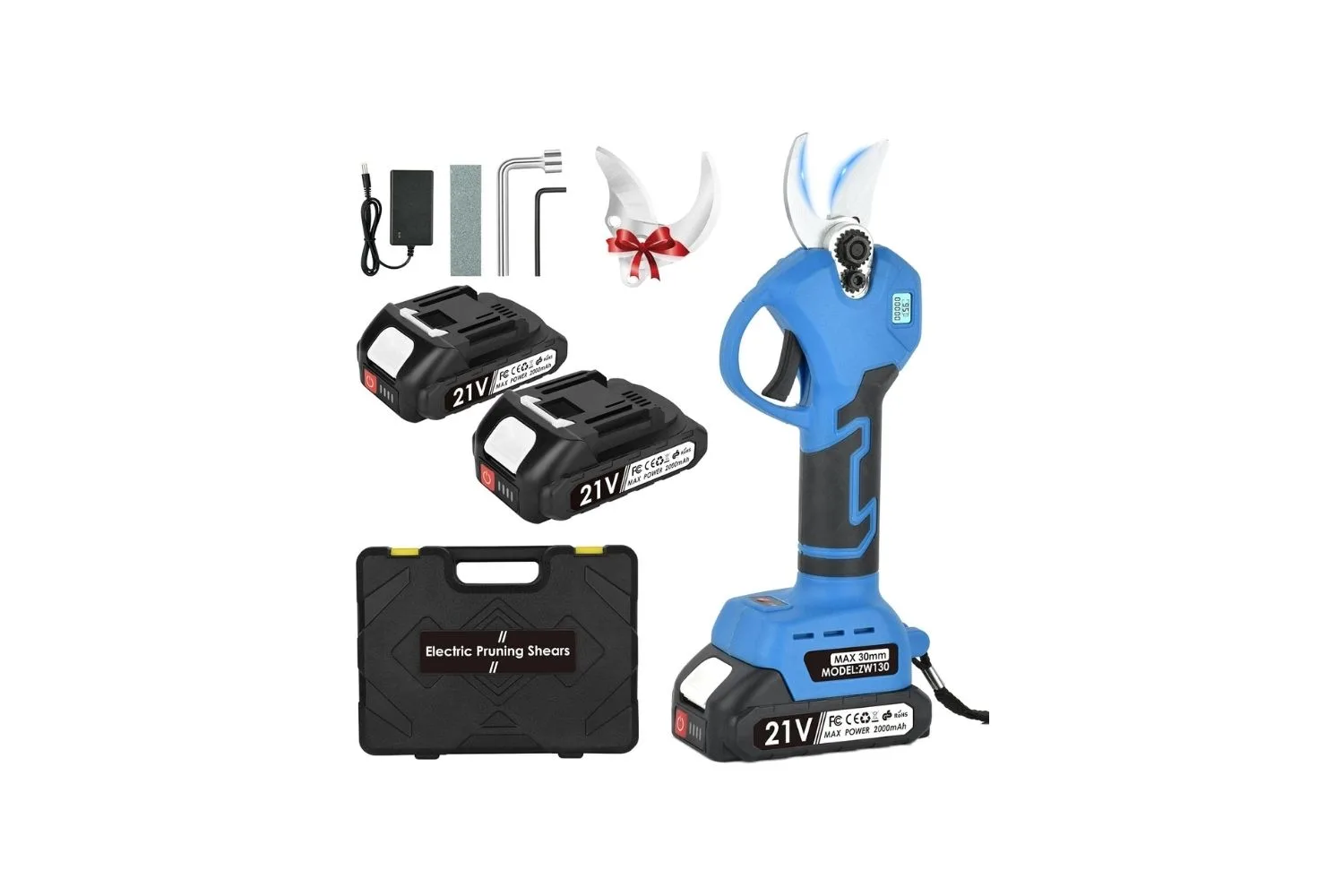
Electric pruning shears, $120.98, Amazon
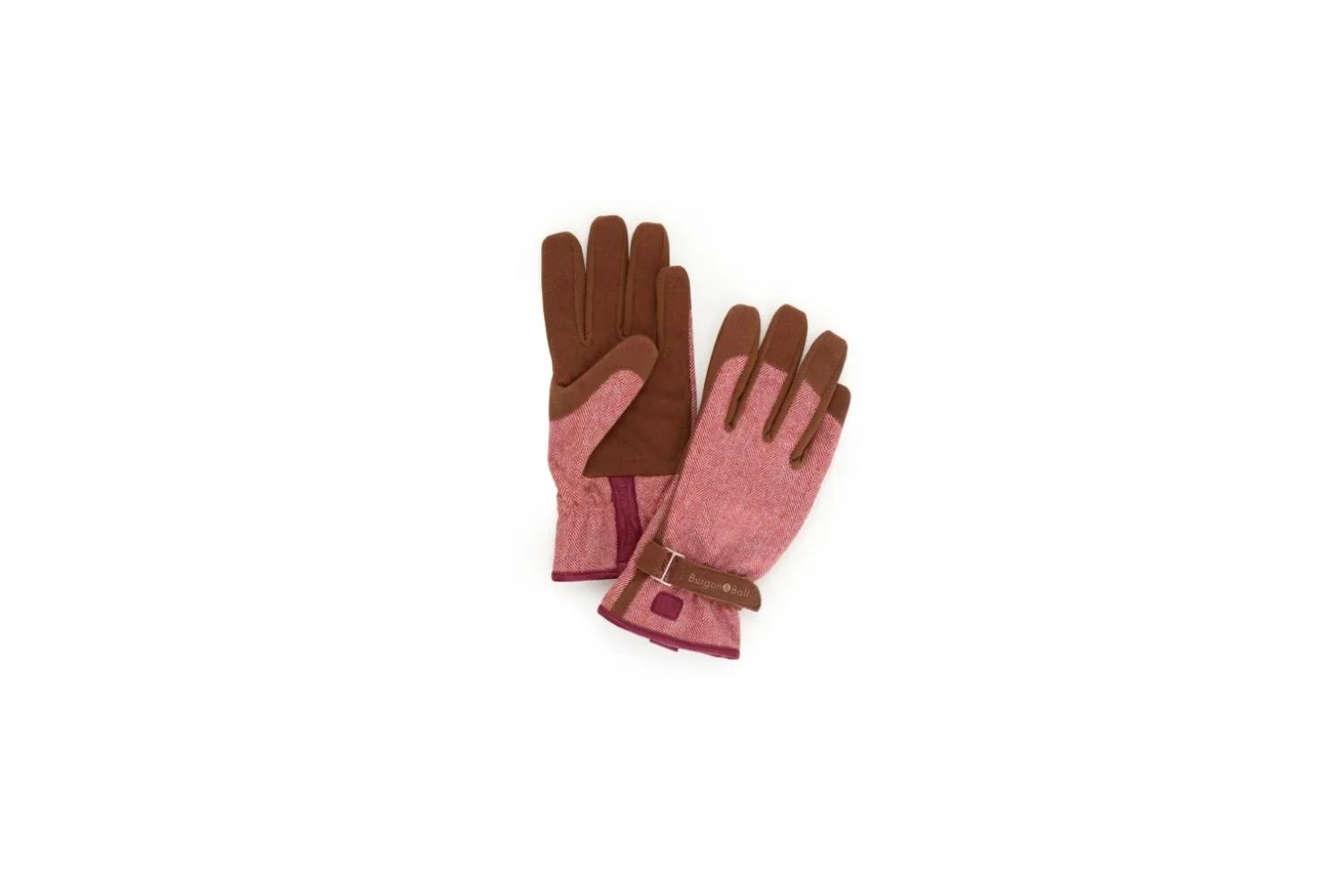
Ladies gardening glove by Burgon & Ball, $70, Hard to Find
You might also like:
- Charlie Albone’s guide to creating raised garden beds
- How to fill a raised garden bed, cheaply
- How to make wicking beds with old wine barrels


Related stories
Native ad body.
Native ad body.


Native ad body.
How to keep your summer lawn pristine