
If you’re thinking about adding new flowers to your garden, Australian natives are the way to go.
If you’re not sure what to plant, consider one Australian climbing vine that gardeners say deserves more love. The Pandorea jasminoides (bower vine) is hardy, can handle dry weather, and will give you lots of beautiful flowers.
KEY TAKEAWAYS
- Compact and manageable: Pandorea jasminoides grows to 3–5 metres, making it ideal for smaller gardens
- Low-maintenance once established: Tolerates dry spells and needs minimal fuss
- Long flowering season: Produces pink, white, or yellow blooms from spring through late autumn.
Even expert gardeners like Jon Lamb have recently started singing the praises of the Pandorea jasminoides plant.
“It’s taken time to happen, but the ornamental value of the Australian native pandorea is starting to be appreciated,” he wrote recently online.
“Because they are a native plant, most varieties have excellent tolerance to dry conditions and grow in most soil types that are well-drained.”
What is Pandorea jasminoides?
Pandorea jasminoides is an Australian native climber from the family Bignoniaceae, admired for its glossy evergreen foliage and showy flowers. Often called the bower vine or Bower of Beauty, it’s one of the most versatile vines you can add to your garden.
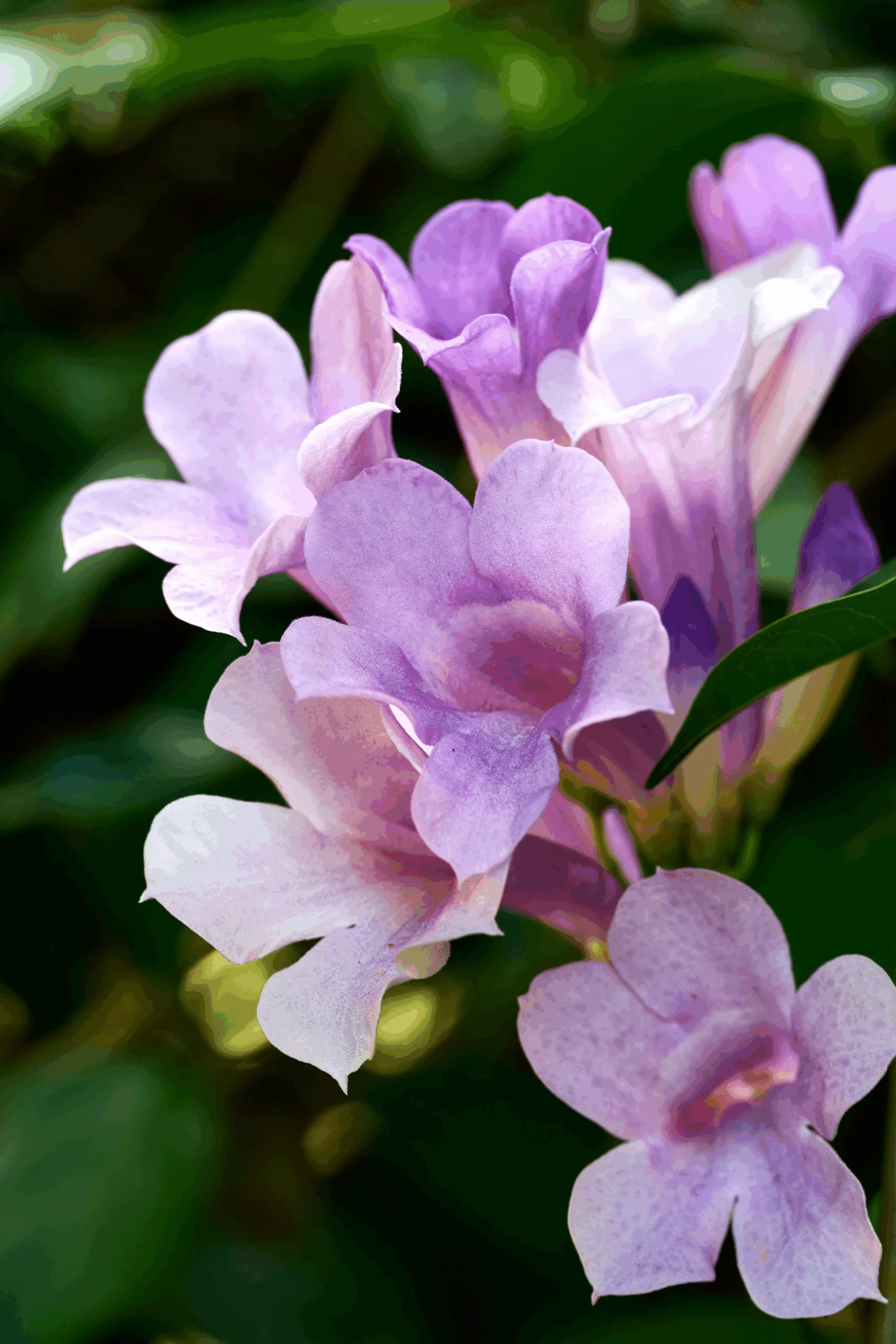
Pandorea jasminoides vs pandorea pandorana
Pandorea jasminoides
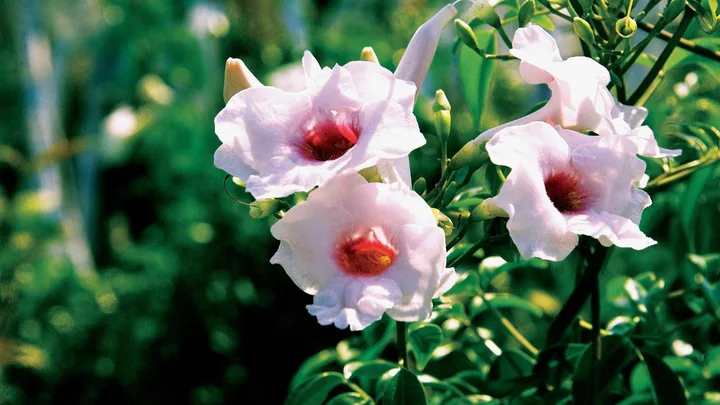
There are two main types of pandorea you’ll see in Aussie gardens. The first is the Pandorea jasminoides (the bower vine), which is perfect for smaller spaces. Once it gets going, it’ll cover about three to five metres with shiny, dark green leaves and big, tube-shaped flowers. The blooms come in pink, white, or yellow and look great from spring until late autumn.
The blooms come in pink, white, or yellow and look great from spring until late autumn. As a bonus, the bower vine’s flowers carry a light, sweet scent—a subtle perfume for your garden.
Pandorea pandorana
Pandorea pandorana (the wonga wonga vine) grows much faster and bigger, making it better suited for larger spaces. It can easily cover six metres or more, making it ideal for filling a big pergola, fence, or large trellis.
The flowers are a bit smaller (about three centimetres), but they grow in big bunches and look amazing in early spring.
Both are fantastic native climbers. But if you’re after something more manageable for a suburban garden or to train up a fence or pergola, jasminoides is the way to go.
How to grow and care for Pandorea jasminoides
- Position: Full sun to part shade — the more sun it gets, the more flowers you’ll see. In cooler or frost-prone areas, plant against a warm, sheltered wall.
- Soil: Any well-drained soil works; avoid spots that stay wet.
- Planting: Dig a hole twice as wide as the root ball, mix in compost, and water thoroughly. Add mulch around the base to retain moisture, but keep it clear of the stem to prevent rot.
- Support: Give it a trellis, fence, or pergola to climb. It naturally twines around structures and will cover its support once established.
- Watering: Water regularly while young. Once established, it tolerates dry spells but appreciates a deep soak during extended dry periods.
- Fertiliser: Feed in early spring with a native-plant fertiliser to support strong growth and flowering.
- Pruning: Trim lightly after flowering to control size and shape. It will reshoot readily, even after a hard cutback.
- Pests/disease: Generally low-maintenance; watch for aphids or scale on new growth.
- Cold tolerance: Handles light, occasional frost once established, but sustained frost can damage foliage or kill young plants.
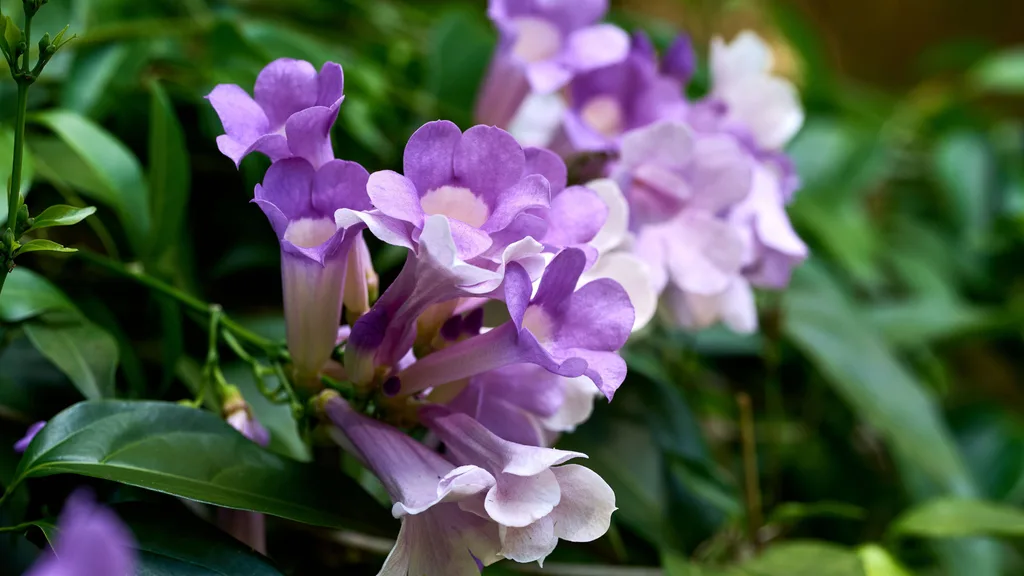
How to grow Pandorea in a pot
The Pandorea is a great option for patios, balconies, or rental gardens. Use a pot at least 40–50cm wide with good drainage, filled with a quality native potting mix. Position in full sun to part shade with a trellis or support for climbing.
Potted plants dry out faster than garden soil, so water more frequently in hot weather. Feed every six to eight weeks with a liquid fertiliser for flowering natives, and trim back messy growth after flowering.
How to propagate Pandorea jasminoides
Take semi-hardwood cuttings in late summer to early autumn. Cut a 10–15cm piece just below where a leaf grows, remove the lower leaves, and dip the cut end in rooting hormone. Plant in a well-draining propagation mix, keep it warm and evenly moist (not wet), and roots should form within 6–8 weeks. Move to a bigger pot once a strong root system has developed.
It’s a moderate grower, typically reaching its mature spread of 3–5 metres within a couple of growing seasons once established.
No — it’s evergreen in most Australian climates, though growth slows over the cooler months.
With good care, it’s a long-lived climber that can thrive for 15–20 years or more.

Related stories

Native ad body.
Native ad body.

Native ad body.
How to keep your summer lawn pristine