

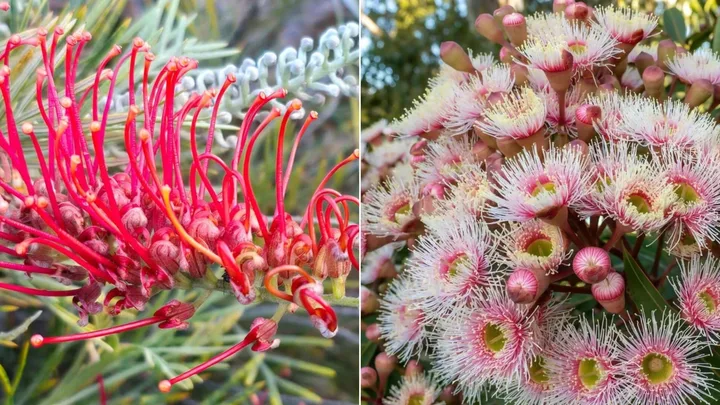
With increasing rainfall and hotter summers, Aussie gardeners are finding many traditional plants aren’t surivving in the garden.
But there’s good news. A new generation of native plants bred specifically to withstand extreme heat and drought is becoming readily available. Here’s a selection of the top new natives worth planting in your garden.
KEY TAKEAWAYS
- A new generation of native cultivars has been bred
- They’re tougher, more compact and lower-maintenance and built to survive scorching summers while still looking spectacular.
- Most attract birds and bees and need little water once established
How a new native plant is born
When you want plants to grow outside their climate comfort zone, breeders graft a shoot of the plant (called the scion) onto compatible root stock that copes with the new climate. This is how so many of the beautiful Western Australian plants now thrive on the humid east coast.
Creating new cultivars of plants with different colours, longer flowering times, greater disease resistance, drought tolerance and lower maintenance needs is a lot more complicated.
Much of this work is done at Kings Park in Perth by its senior plant breeder Digby Growns. It begins by choosing parent plants with the desired attributes, then cross-pollinating them.
“You need a steady hand and good eyesight,” Digby says. “Timing is also important. Hopefully you get fruit, then seeds you can harvest.”
It can take a while for the seed to germinate and may involve more than just water. Many natives need smoke or heat to germinate – an adaptation to bushfires.
And there’s no guarantee that you’ll get the cultivar you’re seeking. “We throw away about 90 per cent that don’t end up with the attributes we want,” says Digby.
It may be seven to 10 years before the plant is passed on to breeders who grow multiple copies of it, either through tissue culture or propagation. It can then take several years before plants are mature enough to be shipped to local nurseries.
New Australian native plants

Scaevola ‘Bondi Blue’
According to legend, the Roman soldier Gaius Mucius Scaevola plunged his right hand into a fire to prove his allegiance, so was forced to use his left hand afterwards. The one-sided fan of five petals is said to resemble his left hand. ‘Bondi Blue’ is a small, mounding plant 15-20cm high and 45-60cm wide – and the extended flowering season has it in bloom from spring through to autumn. Pop it into hanging baskets, or use as a ground cover when mass planted in full sun.

Kangaroo paw ‘Aussie Spirit’
This kangaroo paw’s vibrant green and gold flowers in spring and summer are captivating. It grows to 35cm high, 40cm wide in a sunny spot, protected from breezes. It grows best in tubs or pots in a quality potting mix, suitable for natives. Drought hardy, it only needs watering when the potting mix has dried out.

Geraldton waxflower ‘White Diamond’
A rounded shrub about 2m high and 1.5m wide, it produces masses of large buds in mid-autumn followed by an abundance of large, waxy, white flowers in late winter through to early spring, changing to pink as they age. Grow in free-draining soils, an open sunny or part shaded spot, and in a hot, dry climate.
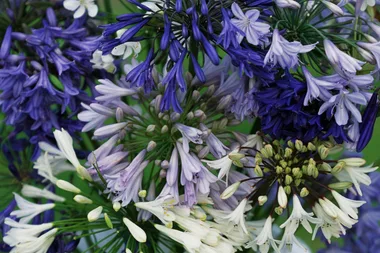
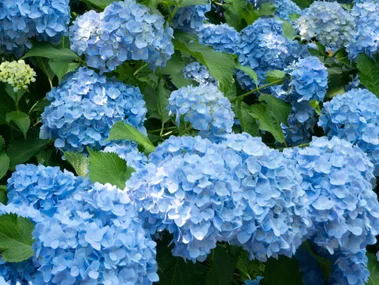
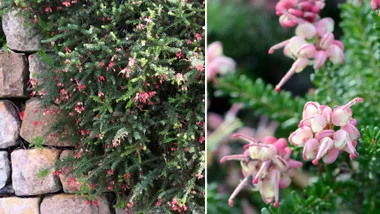

Boronia ‘Magenta Stars’
A cross between Boronia heterophylla ‘Moonglow’ and Boronia pulchella, this produces masses of vibrant, star-shaped flowers amid its fine, aromatic leaves from late winter to early spring. Growing about 1m tall and wide, it prefers shade or part shade and moist, free-draining soil. It needs extra water during extended hot, dry periods, but is tolerant of light frosts. Lightly prune after flowering.

Grevillea ‘Coral Fusion’
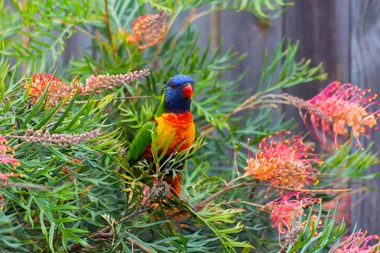
If you want to attract birds to your garden, ‘Coral Fusion’ will do it with its masses of cylindrical, coral pink flowers throughout the year. Naturally bushy and compact, it grows 1.5m tall and wide when put in a sunny spot with well-drained soil.

Flowering gum ‘Precious Pearl’
Voted 2026 Plant of the Year by the Nursery and Garden Industry Victoria, this was bred from the original red-flowering gum. Now its flowers are white and pink, and it grows to just 7m instead of 15m. Bird attracting and droughttolerant, it needs full sun in well-drained soil.

Chamelaucium ‘Rhiannon’
One of the most anticipated Australian native plant releases for 2026 is a new waxflower from Kings Park.
“It’s called Rhiannon. Big song, big flower,” says Digby. “That’ll be the biggest flower on a waxflower that we’ve produced, which is three centimetres in diameter.”
This hardy shrub produces striking white to pale pink blooms from late winter through to spring. Like most waxflowers, it is exceptionally drought-tolerant once established and will tolerate light frost.
Waxflowers thrive in full sun and require well-drained soil, with best flowering achieved in open, sunny positions. Growing to approximately 1.5 metres tall and wide, ‘Rhiannon’ makes an excellent feature plant in native gardens.
This will be a limited release, with around 1,000 plants available from August 2026 through Helix Australia stockists.
Kangaroo paws

Anigozanthos ‘Bush Merlot
Three new kangaroo paws arrive in 2026, with ‘Bush Merlot’ hitting stores in July.
Digby describes the flowers as “really rich, electric purple-magenta”, adding, “It’s a bit hard to describe until you see it.”
Kangaroo paws attract birds — particularly honeyeaters — making them an excellent choice for wildlife-friendly gardens.
They prefer sunny positions with excellent drainage and are relatively low-maintenance once established. Compact and fast-growing, ‘Bush Merlot’ reaches around 60–80cm and resists disease better than older varieties.

Anigozanthos ‘Bush Plum’
The next kangaroo paw release, due later in 2026, is ‘Bush Plum’.
“They’re all garden-tough, very hardy, resilient hybrids,” says Digby.
‘Bush Plum’ features deep burgundy tones that add rich colour to native gardens throughout spring and summer.”
Growing to a similar compact size as ‘Bush Merlot’, ‘Bush Plum’ suits smaller gardens.

Anigozanthos ‘Bush Flamingo’
The third kangaroo paw release, ‘Bush Flamingo’, will follow toward the end of 2026.
Speaking about ‘Bush Plum’, ‘Bush Merlot’ and ‘Bush Flamingo’, Digby says, “People can be confident they’ll stay alive in the garden.”
‘Bush Flamingo’ showcases vibrant coral-pink flowers with a long flowering season and provides an important food source for native birds.
Grevilleas

Grevillea ‘Rica’
A new grevillea named ‘Rica’ arrives around September or October 2026, and it’s one of the year’s most anticipated natives.
The plant honours Rica Erickson, the pioneering Western Australian botanist, author and artist who made significant contributions to the understanding and appreciation of Australian flora.
Grevillea ‘Rica’ features distinctive red and cream spider-style flowers that appear over an extended period.
Grevillea ‘Eleanor’ returns
Also returning in 2026 is Grevillea ‘Eleanor’, which sold out rapidly following its initial release.
“We’ve built the numbers up for that,” says Digby.
‘Eleanor’ features pink and cream flowers and blooms across much of the cooler months, from autumn into spring, highlighting the strong demand for well-bred native plants that combine ornamental appeal with reliability.
Grevillea landscape series
Kings Park is also developing a new Grevillea landscape series.
“We’re also looking to release our Grevillea landscape series for broader landscape applications rather than just home gardens,” says Digby.
Grevilleas are among Australia’s most valuable native plants, offering spectacular flowering displays while attracting birds, bees and other beneficial wildlife. They work beautifully as feature plants, in mixed native borders or as informal hedges, while some larger varieties can even be trained as small trees.
Many Australian natives that flourish in the wild struggle in home gardens, because cultivation changes the water, soil and pest conditions they evolved with. Breeders select new cultivars for adaptability, so they thrive in everyday gardens while keeping the colour, flowering and wildlife value of the originals.
It can take seven to 10 years to develop a new cultivar, then several more to propagate enough mature plants to reach nurseries. Around 90 per cent of crosses are discarded for not having the right attributes.
Autumn (March to May in southern Australia) gives roots time to establish before summer heat. In tropical and subtropical regions, winter is usually best.
Water regularly for the first 8–12 weeks while they establish, then gradually reduce. Once established, they need minimal extra water.
Excellent drainage is the single most important factor. If your soil is heavy clay, use raised beds.
Through specialist native nurseries and selected retailers. Rhiannon arrives in August via Helix Australia stockists, and Bush Merlot from July. Contact your local nursery to register interest or pre-order.



