

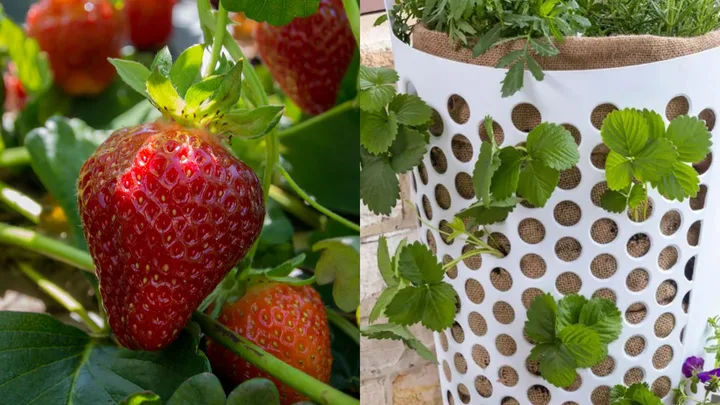
Strawberries are a delicious and rewarding crop for Aussie gardeners, but let’s be honest: they can be a nightmare to keep off the ground and away from pests. While most people stick to traditional garden beds, Better Homes and Gardens expert Melissa King has a much cleverer solution.
Using a $7 washing basket, Melissa has come up with an easy way to grow a strawberry tower in your backyard or balcony. Plus, we have everything you need to grow delicious strawberries this year.
Key takeaways
- The “Laundry Basket” Secret: Skip the expensive vertical kits; a $5 washing basket is the ultimate space-saving planter.
- The April Window: Plant now (late Autumn) to allow roots to establish before the Spring flush.
- The 3-Year Rule: Replace plants after Year 3 to avoid “fruit fatigue” and soil disease.
- Watering Hack: Always water the base, not the leaves, to prevent grey mould.
How to plant strawberries
Strawberries are versatile and can be grown in garden beds, raised beds, pots, hanging baskets, vertical gardens, or containers, making them one of the most adaptable fruit plants for Australian home gardeners.
How to grow strawberries from seed, runners or seedlings
There are three main ways to start growing strawberries, each with its own advantages:
From strawberry seeds
Growing from seed is the slowest method, but it gives you access to the widest range of varieties, including alpine strawberries and some speciality types not available as seedlings.
Sow strawberry seeds indoors 8–10 weeks before your last frost, pressing them gently onto the surface of moist seed-raising mix (they need light to germinate). Germination can take 2–6 weeks, and plants typically won’t fruit until their second year.
From runners
The most economical method. In year three of an established plant, strawberry runners can be pegged to the soil to develop roots, then cut free and transplanted. Runner-grown plants fruit faster than seed-grown ones and are genetically identical to the parent, so if you have a variety you love, this is the best way to multiply it.
From seedlings or bare-root runners
The easiest and most reliable option for beginners. Purchased from a nursery or garden centre, both seedlings and bare-root plants are virus-free, ready to plant, and will typically produce fruit in their first season. This is the method most Australian home gardeners start with.



Strawberry varieties
Not all strawberry plants are created equal. Australia has several excellent varieties suited to our climate, and choosing the right one for your garden, pot, or balcony will make a big difference to your harvest.
Millewa: A high-yielding variety with firm, glossy fruit. A high sugar content means this variety has a very sweet flavour. Millewa performs well in warm conditions and is a popular choice for home gardeners in Queensland and New South Wales.

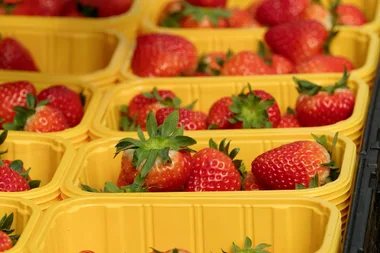
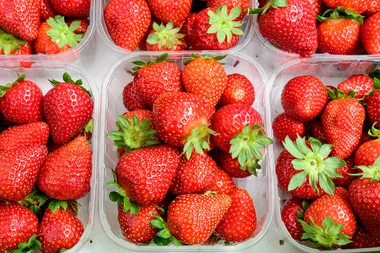
Lowanna: One of the most widely grown strawberry varieties in Australia. Lowanna produces large, flavoursome berries and is known for its reliable fruiting season in late spring and early summer. It’s also quite resistant to disease.
Kiewa: A mid-season variety with a good balance of sweetness and acidity. Kiewa strawberry plants are well-suited to cooler-growing regions such as Victoria and Tasmania.
Kalinda: An early-season variety that produces medium-sized fruit with a rich, sweet flavour. Great for gardeners who want to get a head start on the season.
Bunyarra: A disease-resistant variety producing firm, bright red berries. Bunyarra is a solid all-rounder for both garden beds and pots.
Adina, Tallara, Festival & Rubygem: These varieties are popular across different Australian states and are widely available at nurseries. Ask your local nursery which performs best in your region.
Everbearing, day-neutral and alpine strawberries
Beyond Australian commercial varieties, it’s worth knowing the three main strawberry types by fruiting habit:
Everbearing strawberries: these produce two main crops. One in spring and one in autumn, making them a great choice for home gardeners who want a longer harvest window rather than one big seasonal flush.
Day-neutral strawberries: These fruit continuously throughout the growing season regardless of day length, making them ideal for pots and balcony gardens where you want a steady supply of fresh berries over many months.
Alpine strawberries: These are a compact, low-maintenance variety that produces small but intensely flavoured fruit. They’re perfect for borders, pots, and shaded spots where larger varieties would struggle — and they rarely send out runners, so they’re easy to manage.
The trending varieties worth knowing
If you’ve seen white strawberries popping up on social media, you’re not imagining things. Pineberries (sometimes called pineapple strawberries) are white-fleshed strawberries with red seeds and a flavour that hints at pineapple.
They’re increasingly available at speciality nurseries and are a fun novelty for home gardeners.
Strasberries are another eye-catching option. They’re shaped more like a raspberry than a traditional strawberry, with a uniquely fragrant flavour.
How to care for strawberries
Climate
While strawberries can be grown everywhere in Australia, you’ll find most of the big strawberry farms where the air is cooler in Toolangi, Stanthorpe and Tasmania. The best time of year to plant strawberries is in Autumn and early Spring.
Aspect
To keep your strawberries happy, plant them in a sunny spot with moist, well-drained soil. Some experts recommend using straw bedding or manure to help keep the moisture in and the pests out!
Soil
Strawberries grow best in well-drained, slightly acidic soil with a pH of around 5.5–6.5. Soil that is too waterlogged will cause root rot and increase the risk of fungal disease, so good drainage is non-negotiable.
Before planting, work in plenty of compost or well-rotted organic matter to improve soil structure, boost nutrient availability, and help retain just the right amount of moisture. If your soil is heavy clay, consider building a raised bed or growing in pots with a quality potting mix instead.
Watering strawberry plants
trawberry plants generally need watering every 2–3 days in warm weather, and less frequently in cooler months. The goal is to keep the soil consistently moist but never waterlogged.
Always water at the base of the plant, directing the water to the soil rather than the leaves or fruit. Wet foliage and fruit create the perfect conditions for fungal diseases like grey mould (Botrytis), which is one of the most common problems home gardeners face with strawberries.
In pots and hanging baskets: Container-grown strawberries dry out much faster than those in the ground, especially in summer. Check them daily and water thoroughly until water drains freely from the bottom.
Fertiliser for strawberries
Strawberry plants are hungry feeders, and regular fertilising is one of the best ways to boost fruit size, flavour, and overall yield. When planting, work a slow-release fertiliser or compost into the soil to give young plants a strong start. During the growing season, feed your strawberry plants weekly with a liquid fertiliser. (Look for products labelled for fruiting plants or tomatoes.) In pots: Container-grown strawberries exhaust nutrients faster, so feeding every 7–10 days through spring and summer is especially important.
Mulch
Cover soil or growing medium with organic mulch such as sugarcane or lucerne.
Disease
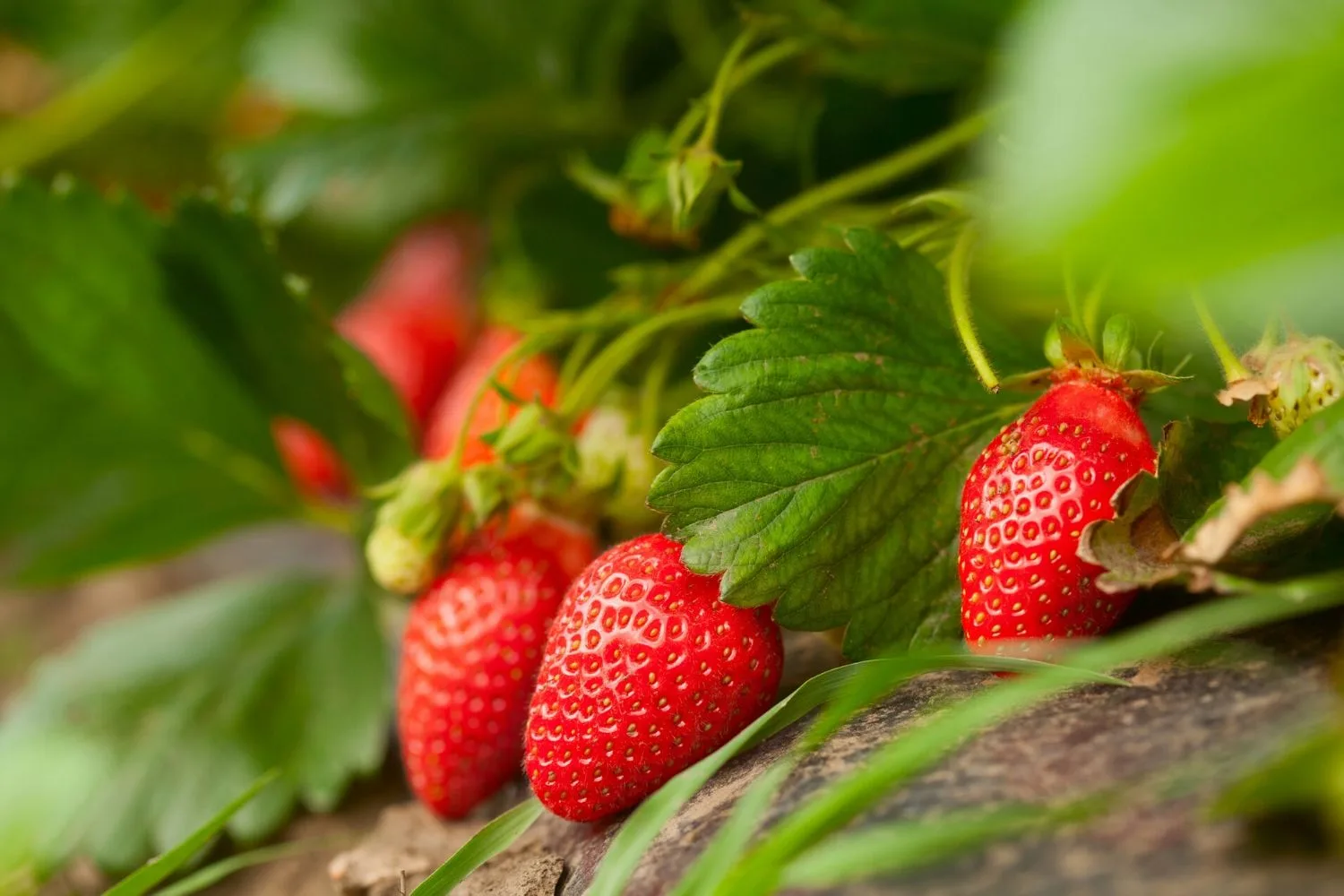
It’s important to keep the fruit off the ground because, if exposed to wet and moist soil for too long, it risks getting fungal diseases such as grey mould or fruit rot.
How to propagate strawberries
Yes, you can multiply your strawberry plants for free. Strawberry plants send out side shoots, or runners, that take root to form new plants. But the runners need a lot of energy, so they should be removed in the first two years of a plant’s life to direct the energy into fruit production.
In year three, the tiny roots on the runners can be used to make new plants. Secure the roots to the soil with a hairpin or wire. After about six weeks, cut it free from the parent plant, leave it where it is to grow, or replant it in a different spot or pot.
Pot vs. ground: which is best for growing strawberries?
If you have outdoor space, garden beds are the lower-maintenance choice. Plants in the ground have access to more nutrients, produce runners to expand your patch, and will crop well for 2–3 years with minimal fuss.
For balconies and smaller spaces, pots, hanging baskets, and vertical gardens all work beautifully; opt for a day-neutral or everbearing variety, as they fruit continuously rather than in a single seasonal burst. A north-facing spot, a 30–40cm pot, and regular feeding are all you need. Plus, hanging baskets have the added bonus of keeping fruit off the soil, which reduces disease risk.
The 3-year rule: when to replace your strawberry plants
| Year | What to expect | Pro tip |
| Year 1 | Plants establish and produce a moderate first crop. | Snip the flowers: Many experts suggest removing the first flush of flowers to build a massive root system for Year 2. |
| Year 2 | Peak production. This is your largest and sweetest harvest. | Feed weekly: Use a high-potassium liquid fertiliser now to maximize berry size. |
| Year 3 | Yield begins to decline. Fruit often becomes smaller and more tart. | Start Runners: Pin down healthy runners into small pots now to create your “New Generation” for free. |
| Year 4+ | Significantly reduced fruiting. Plants are prone to disease. | Rotate Beds: Don’t plant new strawberries in the exact same soil to avoid pathogen buildup. |
6 ways to plant strawberries
While you can purchase strawberry seeds, the easiest way to grow strawberries is to start with seedlings, which can be purchased from your local nursery.
Here are six ways to grow strawberries.
1. In the ground
Traditionally speaking, growing strawberries in the ground is the way to go. Simply purchase a small plant or two and plant 30cm apart in the ground.
2. Raised garden beds
The same tactic as above applies to raised garden beds.
3. Hanging pots
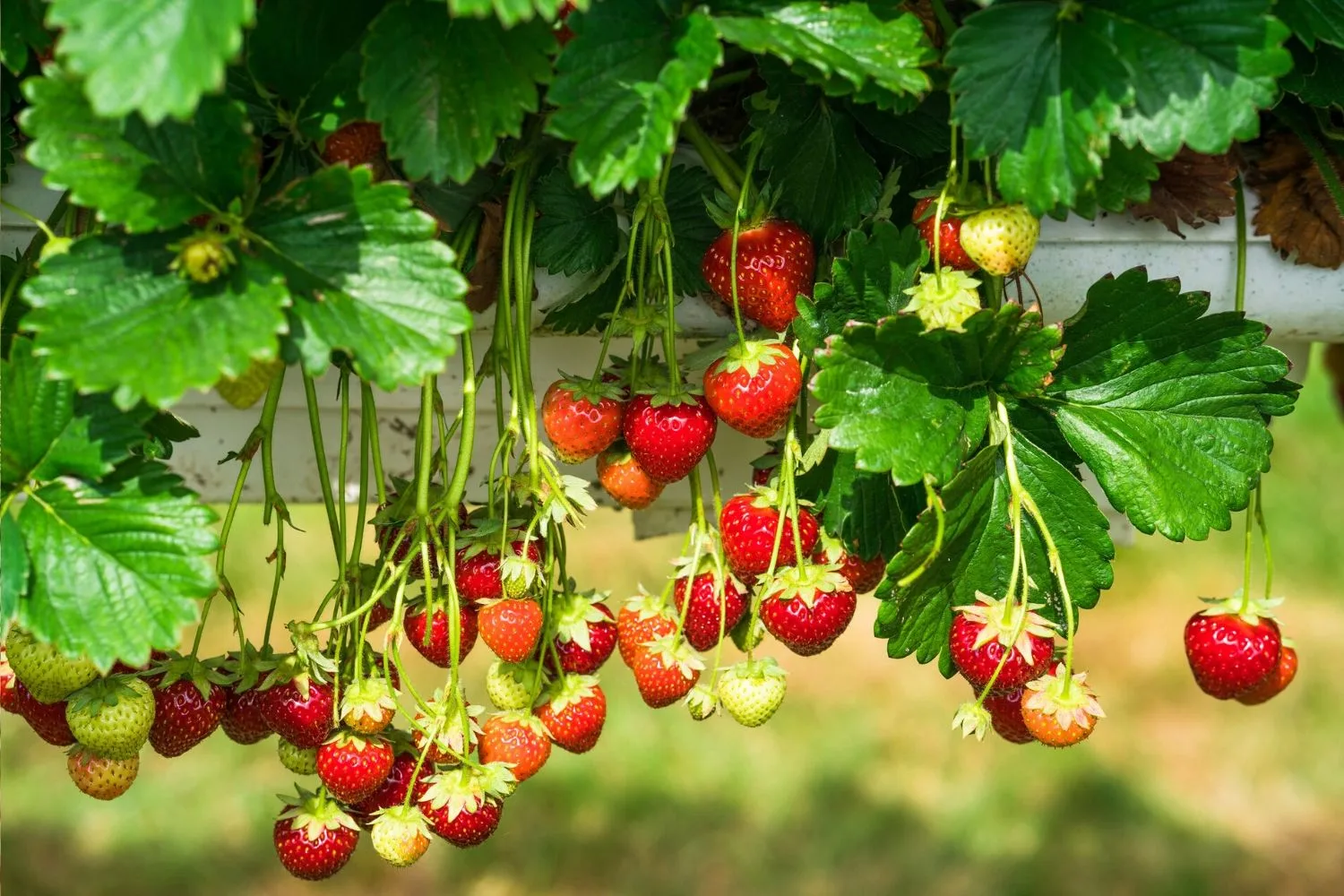
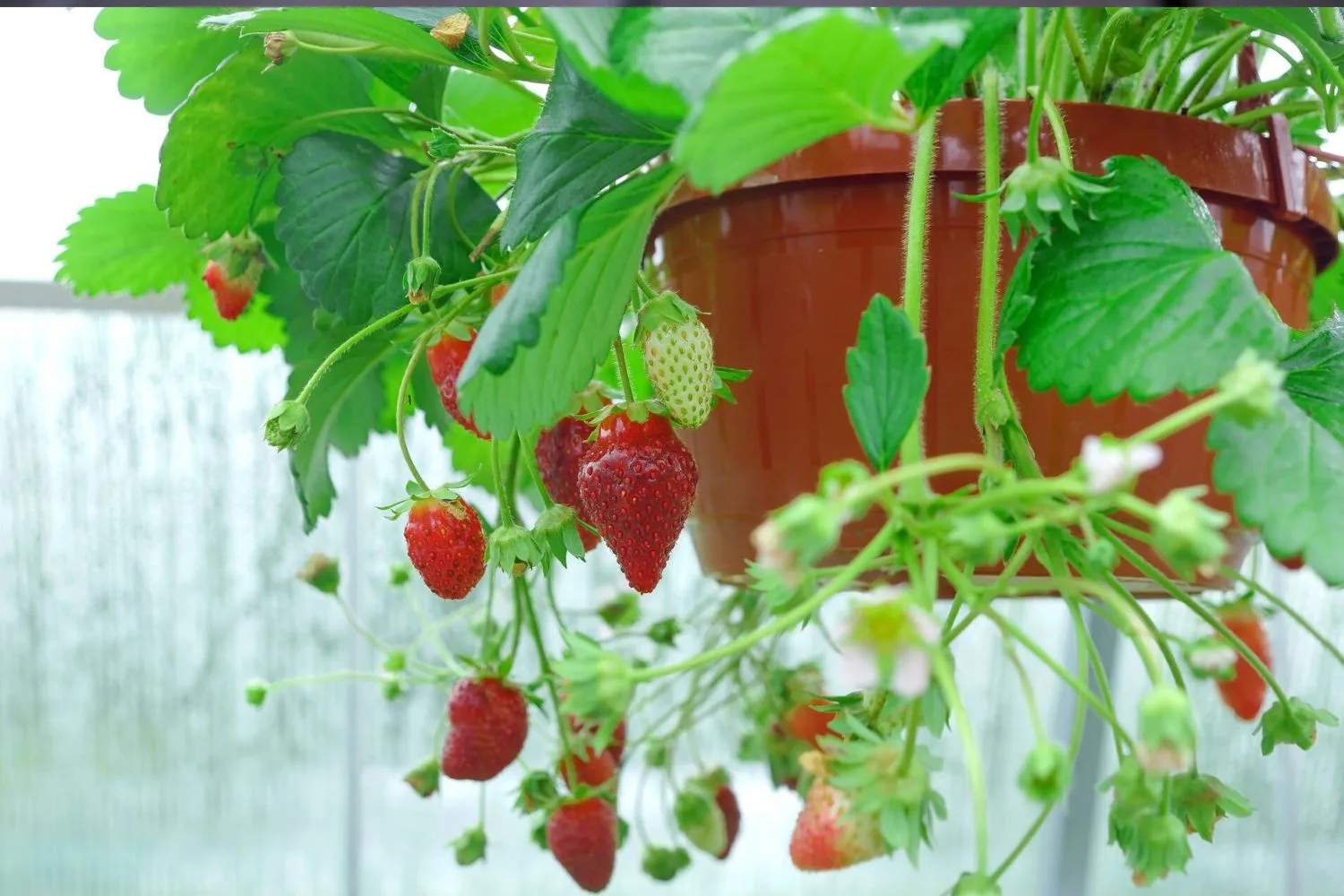
Hanging strawberry planters are a fun and innovative way for households with limited space to enjoy strawberry goodness. They also generally have great drainage, which your strawberries will enjoy.
4. Terracotta pots
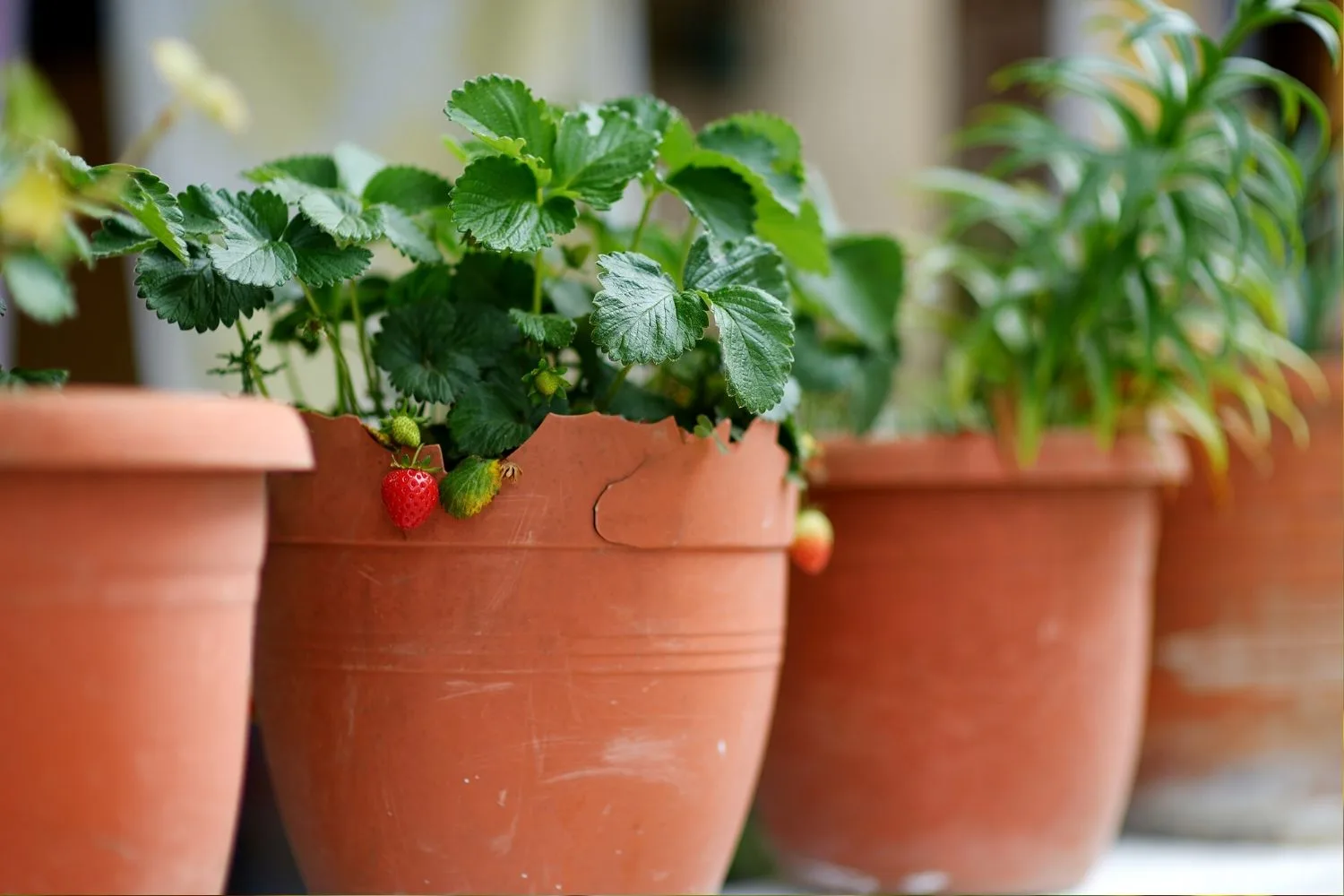
Yes, you can grow strawberries in pots. The contrast between healthy strawberry bushy green foliage and terracotta pots looks great. Just be wary of terracotta strawberry pots in the hot Australian climate. Terracotta can heat up and burn the fruit and leaves.
5. Vertical garden
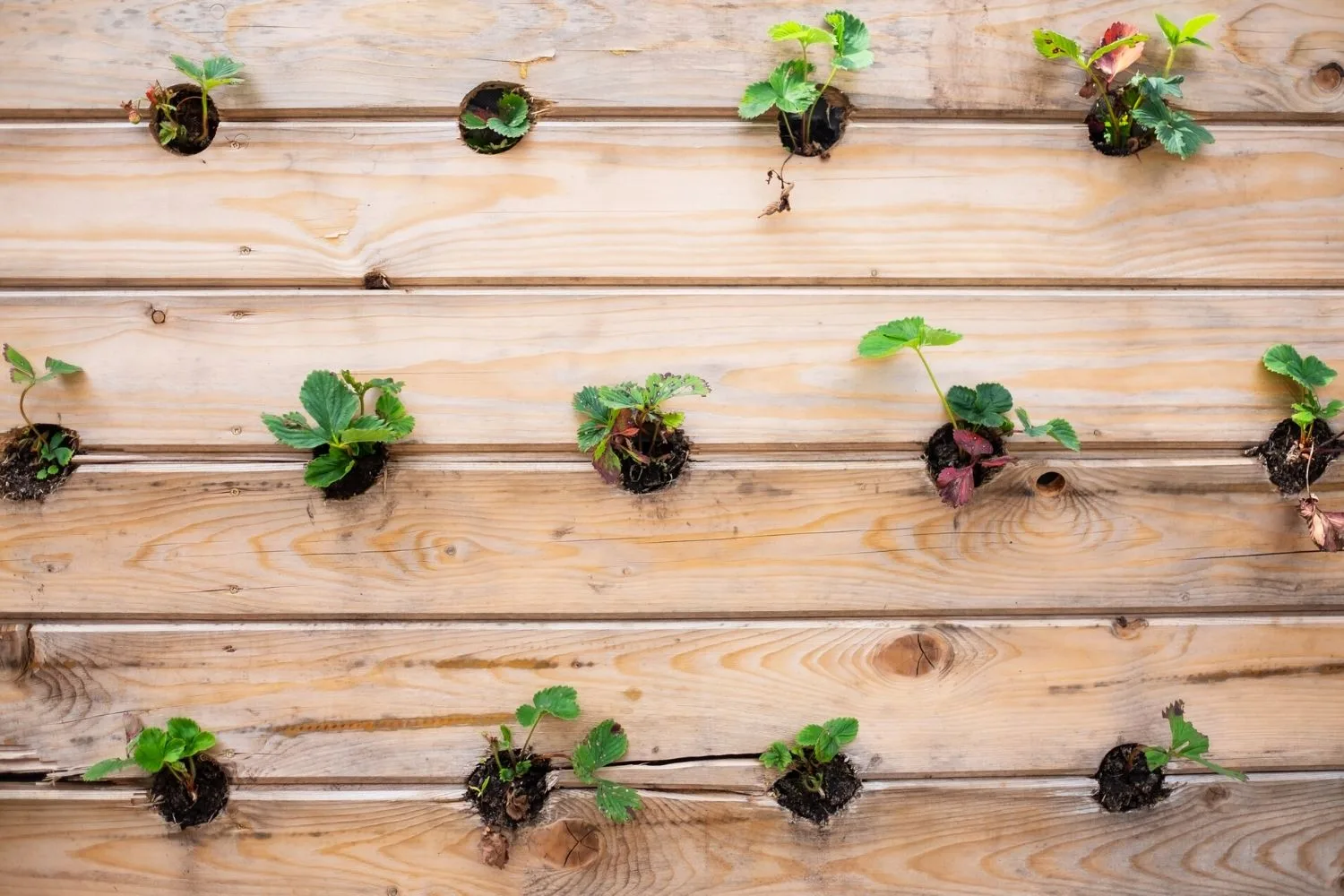
Another great option for inner-city living is a vertical garden. Like tomatoes, strawberries have strong stems, which makes them an ideal candidate for your vertical garden.
6. Pipe
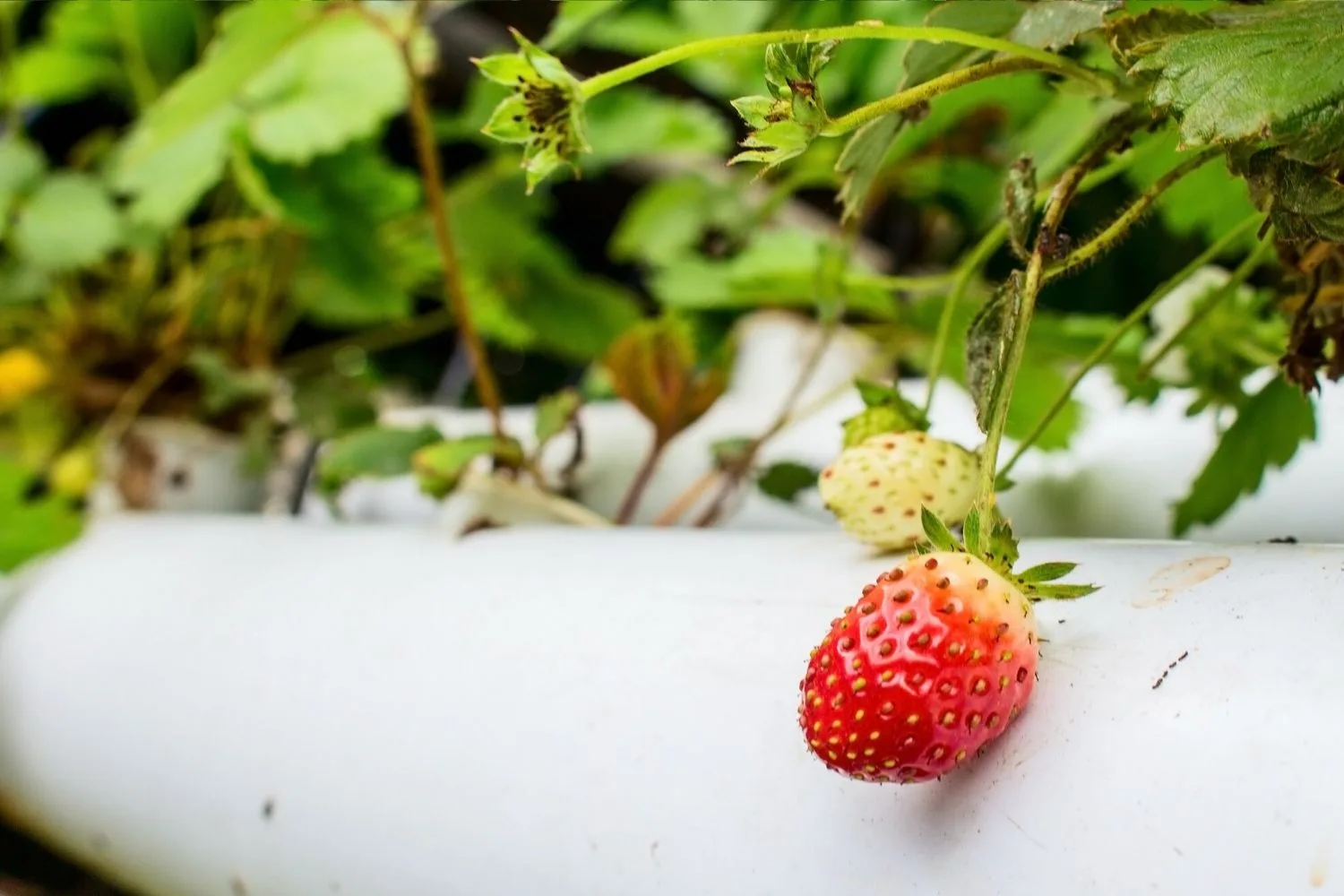
Growing strawberries in a PVC pipe is possible, and if done properly, looks great. There are two main ways to grow strawberries in pipes: either cut a couple of round holes in the pipe, or cut the pipe in half lengthwise and let them spread the whole way along.
7. Melissa King’s DIY strawberry tower
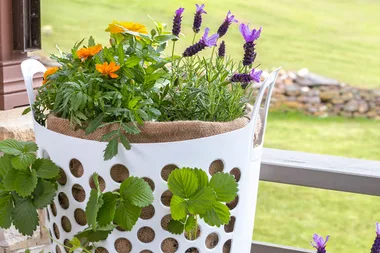
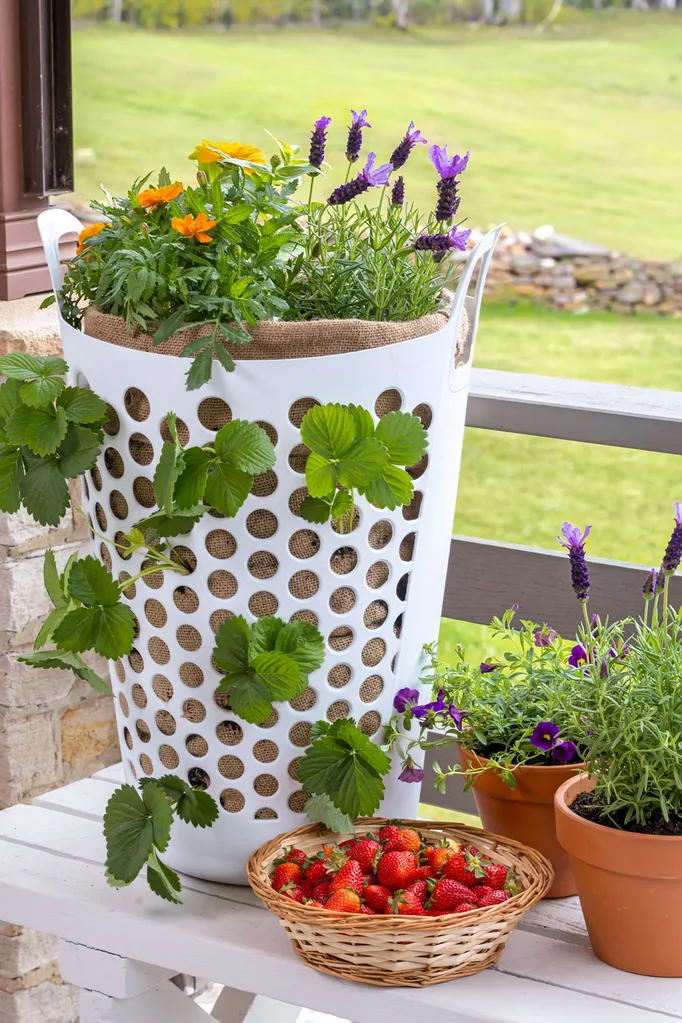
While many gardeners struggle with expensive vertical kits, Better Homes and Gardens’ Melissa King proved in 2024 that you only need a standard plastic washing basket. By lining the basket with a hessian sack and filling it with soil, Melissa planted 12 strawberry plants through the holes, creating 360 degrees of sun exposure. See Melissa’s full, step-by-step washing-basket strawberry tower.
How to harvest strawberries
So now you’ve done the hard work, you’re probably wondering how long strawberries take to grow. There are a couple of signs to look out for. Firstly, your strawberry plants will start flowering 8-16 weeks after planting, and you can expect fruit 4-6 weeks after spotting the first blossom. Unlike many other fruits, once picked, strawberries won’t further ripen, so make sure they’re nice and red and juicy.
Pests that love strawberries
Strawberries aren’t just one of our favourites, little critters love them too! Everything from two-spotted mites to worms, slugs and possums. Not only do these garden pests love strawberry fruit, but they also enjoy munching on their lush green leaves.
How to keep birds away from your strawberries
Chances are you won’t be the only one with eyes for delicious, juicy fruit. Lay some bird nets over your strawberries to keep the birds out and maximise your crop. Here’s another way to stop birds from eating your fruit without harming them.
Best companion plants for strawberries
Onion and garlic are great companion plants for strawberries as their strong scents keep pests away.
Thyme: makes a great border around strawberries as it deters worms.
Leafy greens: many experts believe that planting lettuce, spinach and strawberries together increases the productivity of all three!
Once you’ve grown your strawberries, the next step is to find a way to use them! Will you be eating them straight off the plant or putting them into delicious desserts? Check out 19 of our favourite strawberry recipes that are perfect for springtime weather.
Most Australian gardeners using seedlings or bare-root runners will see fruit within 12 to 20 weeks. Typically, flowering begins 8–16 weeks after planting, followed by a 4–6 week ripening period. If you are growing from seed, expect a longer wait, with the first significant harvest usually occurring in the second year.
While you can plant the seeds from a store-bought berry, it is not recommended. Most supermarket strawberries are F1 hybrids, meaning the “offspring” will likely produce small, flavourless fruit or none at all. For a reliable harvest, always use certified virus-free runners or seedlings from a reputable nursery.
To produce sweet, juicy fruit, strawberry plants require at least 6 to 8 hours of direct sunlight daily. In hotter climates like QLD or WA, providing some afternoon dappled shade can prevent the fruit from scalding, but full morning sun is essential for sugar development.


