
 Canva/Chris6
If you missed the March 2025 lunar eclipse, you’re in luck because another total lunar eclipse will be visible across Australia next week.
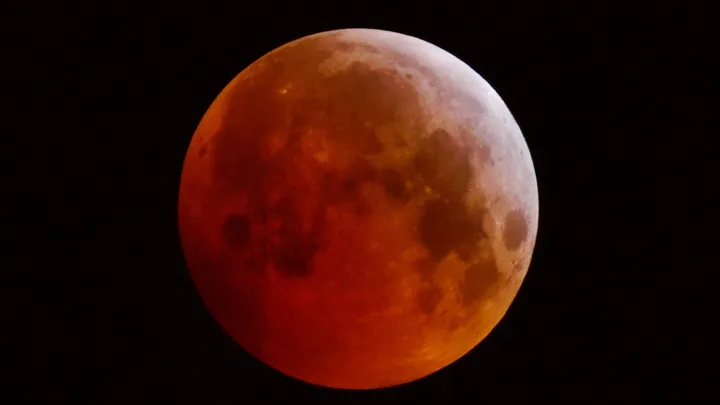
A second total lunar eclipse for the year, also called a ‘blood moon’, will be visible in the early hours of September 8, 2025. During this time, the Moon will turn a rusty red for 82 minutes, which is the longest lunar eclipse since 2022. And it won’t just be humans noticing.
In fact, next week’s 4 am eclipse may silence frogs, stir possums, and even wake the dog.
And thanks to our time zone, Aussies will see the celestial show first, making it feel like a front-row cosmic event just for us.
When is the next lunar eclipse?
In Sydney, Melbourne, Brisbane, Canberra, and Hobart, the peak of the eclipse will occur at 4:11 am AEST. Western Australia and South Australia will enjoy an even clearer view through much of the night.
The even better news? Clear skies are forecast across New South Wales. Posting in the Newcastle/Central Coast Storm Chasers Facebook group, Steven Forward reassured members:
“Get ready for this. It’ll be an early Monday morning, but with zero cloud cover, this is a 100% go for seeing. I’m working, so I’ll be able to see this easily.”
As one group member asked, “At the risk of being absolutely pilloried by the members of this group, which direction do we need to be looking in at that time in the morning?”
To which Steven replied, “Should be almost straight up and slightly west.”
Why animals may react to the eclipse
While most animal-eclipse studies have come from overseas, there’s good reason to think Australian wildlife could respond too.
Professor Euan Ritchie, a wildlife expert at Deakin University, told Australian Geographic that many animals use moonlight to help them find food, get around, and reproduce. This means a sudden darkening, like during an eclipse, could briefly confuse night animals such as possums, bats, frogs, and birds that wake up early.
What makes this eclipse special?
Not all eclipses are the same. Some are over in minutes, but this one will last more than an hour because the Moon passes through the very middle of Earth’s shadow, called the umbra. This path means you get more time to watch and a stronger red colour.
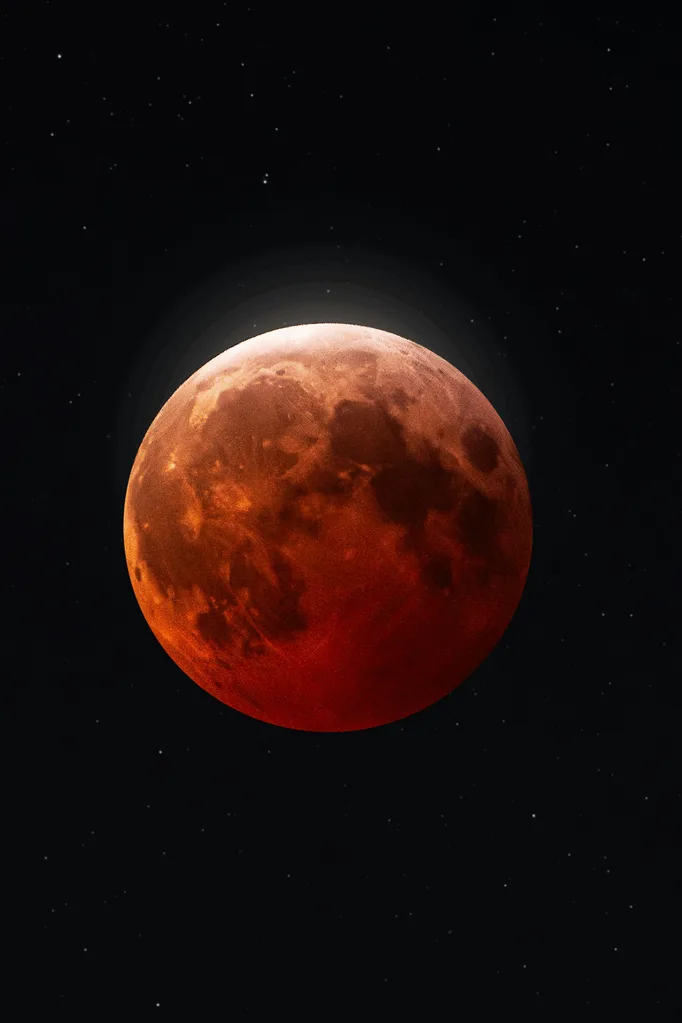
The exact colour depends on Earth’s air. Smoke, dust, or even volcanic ash can change how the light bends, making the Moon look anywhere from copper-orange to blood-red or even brownish.
The next opportunity for Australians to witness a total lunar eclipse (after the September 8 lunar eclipse) won’t come until March 2026.
Global visibility at a glance
Visible fully (start to finish) in:
- Asia, Australia (especially western parts), and Eastern Africa. These regions will enjoy the complete eclipse, including totality.
- Europe will see at least part of the eclipse, particularly where the Moon is rising around that time.
Also visible in:
- Oceania, including New Zealand and the western Pacific.
What is a total lunar eclipse?
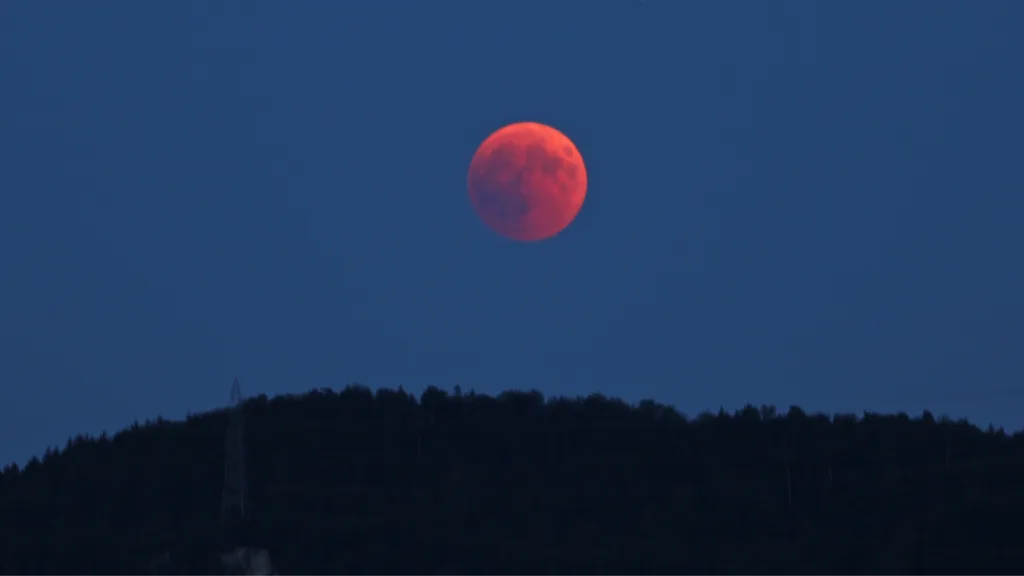
If you’re scratching your head and wondering what exactly a lunar eclipse is, you’re not alone. A lunar eclipse happens when the Sun, Earth, and Moon line up perfectly, and the Moon passes through Earth’s shadow.
During a total lunar eclipse, Earth blocks direct sunlight from hitting the Moon. But instead of going black, the Moon glows red because Earth’s atmosphere acts like a filter, scattering blue light and bending red light onto the lunar surface. From the Moon, it would look like every sunset and sunrise on Earth happening at once.
Daytime vs nighttime eclipses
Solar eclipse (daytime):
A solar eclipse occurs when the Moon passes between Earth and the Sun, temporarily blocking the Sun’s light for a few minutes, turning day into night. This is only visible during the day. Australia’s next big one: 22 July 2028, visible across Sydney and lasting over 5 minutes.
Lunar eclipse (nighttime):
A lunar eclipse happens when the Earth’s shadow falls on the Moon. This type of eclipse is only visible at night, and the moon appears to turn a shade of red. The next lunar eclipse is scheduled for 7–8 September 2025, visible across all of Australia.
Do lunar eclipses affect humans?
Despite centuries of myth and folklore, lunar eclipses don’t cause any physical effects on humans; there’s no research to suggest any gravitational pull, magnetic forces, or changes to our health.

Related stories

Native ad body.

Native ad body.




Native ad body.