
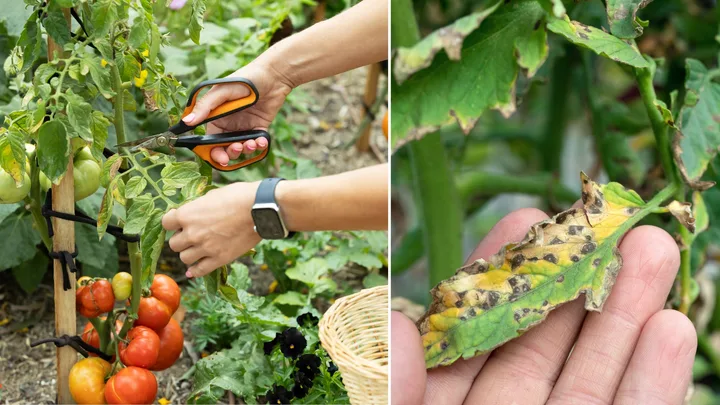
Are the leaves on your tomato plant turning yellow? Yellowing leaves on a tomato plant indicate the plant is stressed, or possibly diseased. And, there may be a couple of reasons why.
If your tomato plant is plagued by pests, receives too much (or too little) water, it’ll begin to show signs of stress, including stunted growth and those telltale yellow leaves.
Let’s find out the 5 reasons why your tomato leaves are turning yellow, and the best remedies for each problem:
KEY TAKEAWAYS
- Tomato plants have a delicate temperament and are prone to environmental stress and disease.
- Watering issues, nutrient deficiency, disease, pests or growth rate are the 5 problems that may cause yellowing leaves
- Make sure to keep a close eye on your tomato leaves, their location and their colouring for signs of stress or damage.
1. Watering issues
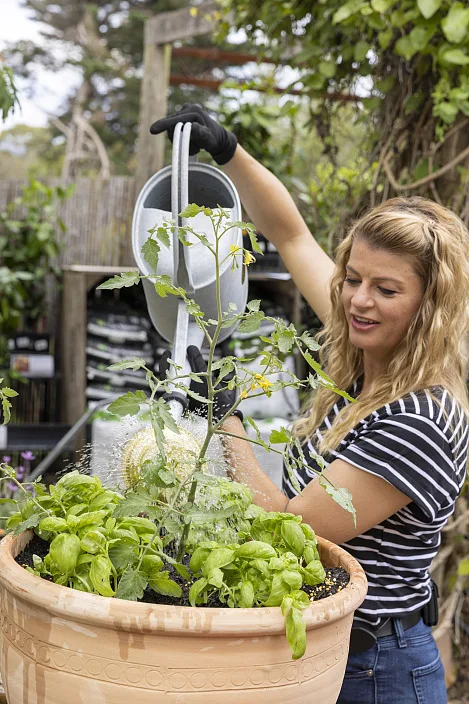
If you water your tomato plants by hand, it’s possible the leaves are turning yellow because of an inconsistent water intake. Too much, or too little water, is never a good thing.
The problem: Too much water
Too much watering can lead to root rot in your tomato plant, which can also result in yellow leaves towards the bottom of your plant. If the roots and bottom stem of your tomato plant feel a little mushy, and the surrounding leaves are yellow, cut back on your watering schedule.
The solution: Treat fungal bacteria
One way to treat fungal problems and bacteria growth caused by overwatering, is to add a small amount of hydrogen peroxide to your watering can. Mix 1 part hydrogen peroxide to 3 parts water for a powerhouse solution that’s effective against root-rot causing fungi. Follow safety instructions when using peroxide.
The problem: Too little water
Too little watering can also contribute to yellow leaves, with wilting and brown edges appearing beforehand.
The solution: Mulching and drip irrigation
Mulching around the base of the plant will help keep the soil moist and happy, as long as you stick to a consistent watering schedule. If you’re too busy to water at the right times, using a drip irrigation system is recommended – simply set and forget!
2. Nutrient deficiency
The most common reason for tomato leaf yellowing is a nutrient deficiency, which causes ‘environmental stress’ to the plant.
The problem: Plant is deficient in key nutrients
Nutrients, including nitrogen, potassium, phosphorus, sulphur or calcium, may be depleted in the soil you’ve grown your plant in.
The solution: Fertilise the soil
The easiest fix for this problem is to fertilise the soil with a tomato or vegetable-specific fertiliser. These will include all the nutrients needed to keep your tomatoes healthy and happy!
3. Tomato diseases
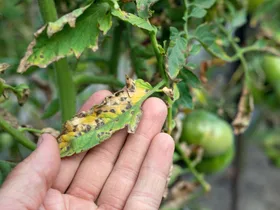
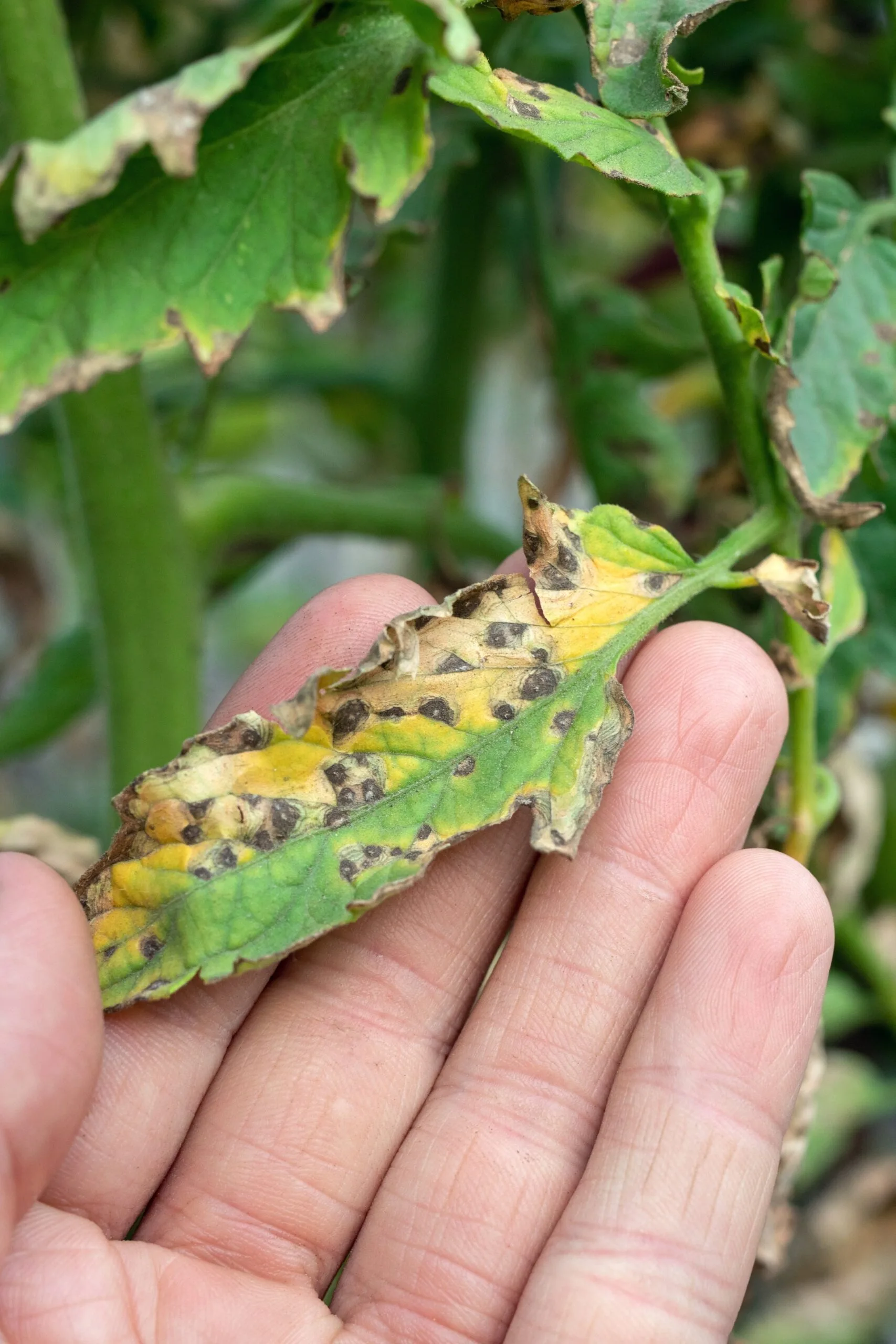
Tomatoes have a myriad of diseases that they can easily be affected by, including early blight, wilt, mosaic spot, Anthracnose and Septoria leaf spot. Unfortunately, many of these diseases can result in yellowing leaves or spots of yellow. Consult our tomato diseases guide to work out whether your plant has been affected by any of them.
Preventing tomato diseases
The best method for fixing a tomato plant disease is prevention. When planting tomatoes, ensure you consider the following:
- Space out your plants in their plot. This will ensure a good amount of circulation and air movement.
- Don’t water the plant, water the soil! This will reduce the risk of fungal disease.
- Trim lower branches so they don’t sit on the soil.
- Keep all gardening tools clean in between each use.
4. Pests
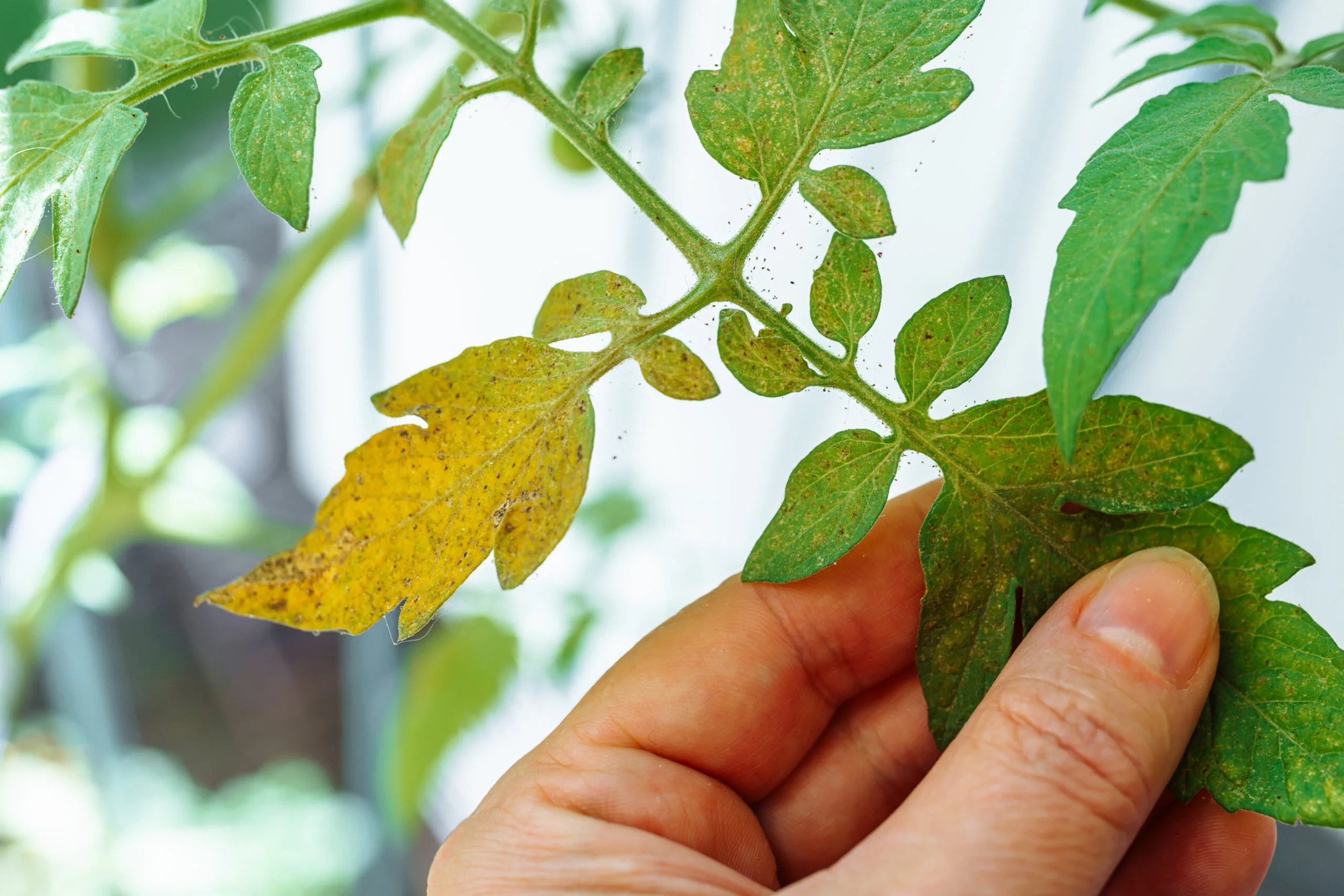
Pests such as spider mites and aphids are common predators of tomato plants.
The problem: Your plant is plagued by pests
If your tomatoes have been infested by a pest, the added stress to the plant may cause leaves to yellow. Keep your soil healthy and follow companion planting techniques to reduce the risk of a pest infestation.
The solution: Aphid spray
If you’ve got aphids in the garden, you can use a natural spray or neem oil to remove them.
5. Growth
Finally, yellow leaves may be caused by a problem that’s not really a problem at all – growth!
The problem: Your tomato plant is growing!
If your tomato plant is steadily growing big and tall, the very bottom leaves may begin to yellow. This is because these leaves were the first ones from the sapling stages, and have no further use.
The solution: prune
The best thing to do in this scenario is to carefully prune away the bottom leaves. Leaving space between the soil and the plant will reduce the risk of disease, and you’ll end up with a much happier plant.

Related stories
Native ad body.
Native ad body.

Native ad body.