
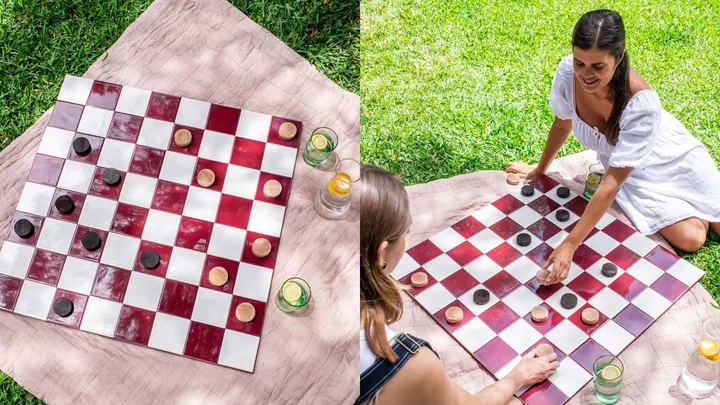
It’s perfect for sunny arvos, barbecues and a little friendly competition in the backyard. Created with 97mm square tiles and thick dowel, its pumped-up dimensions make it even more fun. If you’d like a smaller playing field, use 48mm mosaics for the board and 19mm round dowel for the checkers.

Watch Geneva make a giant garden checkerboard
How to make a giant checkerboard
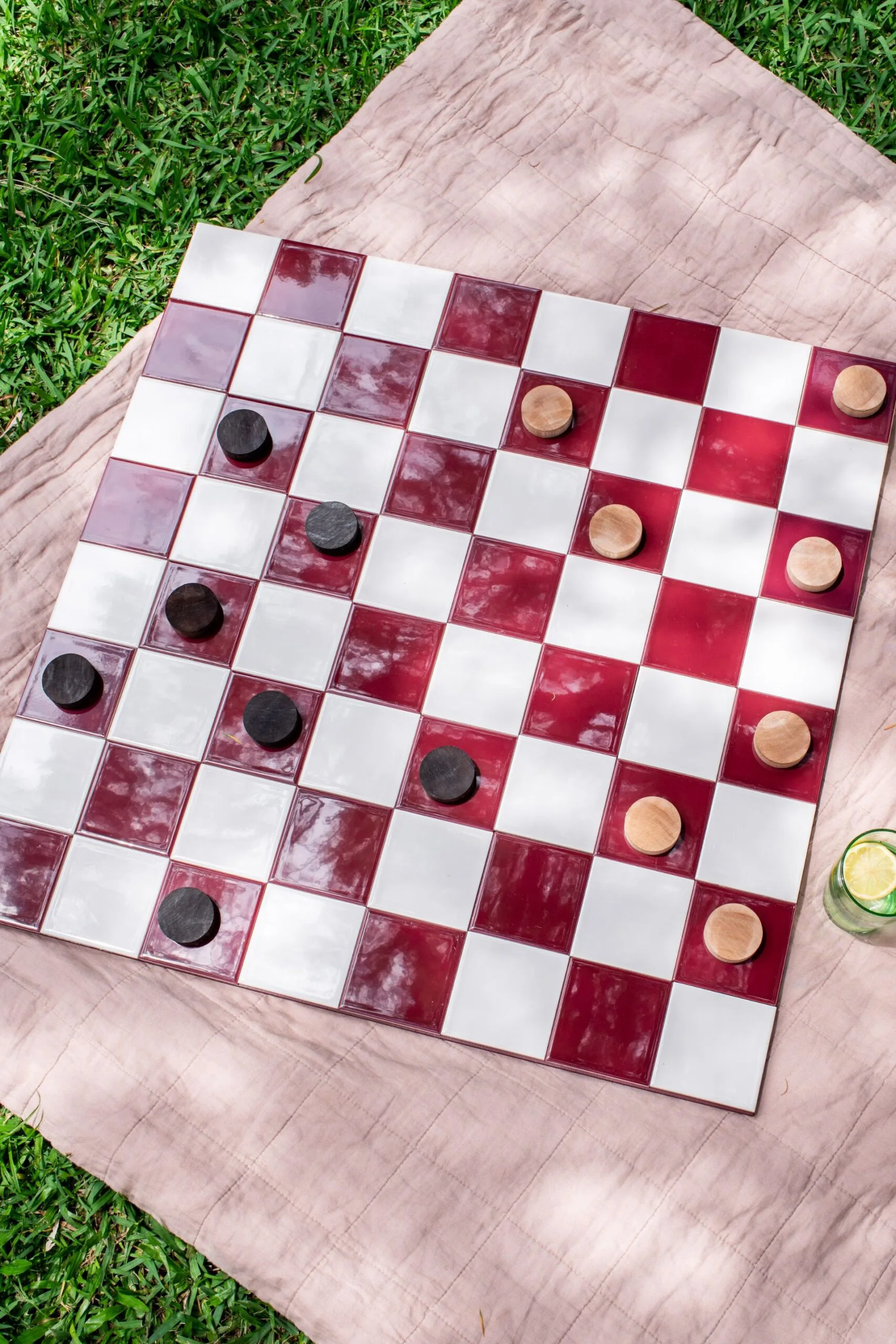
Gather your supplies
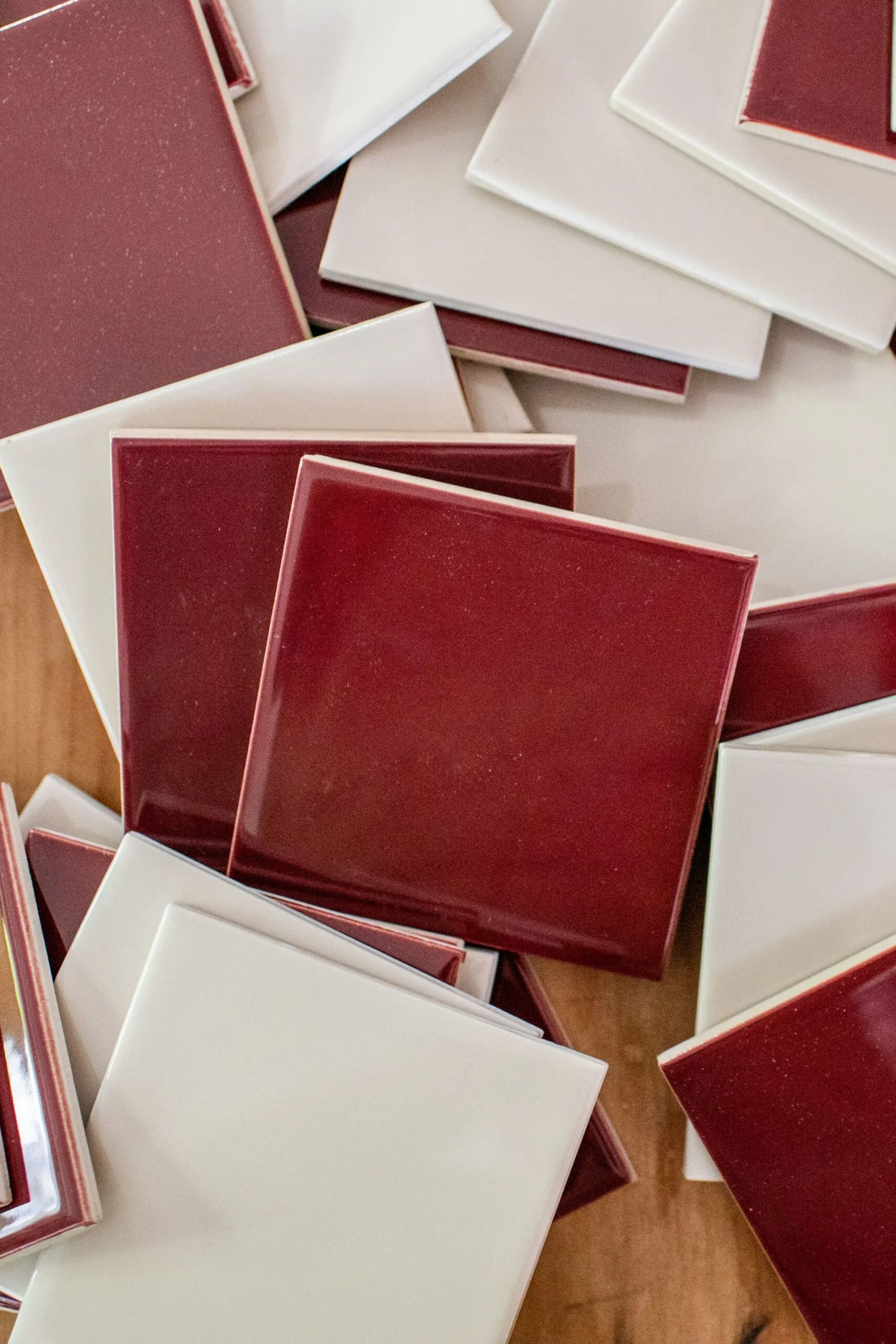
- 64 square tiles in two colours, 32 of each colour (we used Johnson Tiles 97mm tiles)
- Plywood square cut to fit (each edge must be about 8 x tile size)
- Outdoor paint in a colour matching one of the tiles
- Wood or tile glue
- 42.4mm round dowel (at least 48cm in length)
- Wood stain in two different shades
You’ll also need
- Saw
- 120-grit and 150-grit sandpaper
- microfibre cloth
- and a paintbrush
Safety notes
When operating power tools, wear safety glasses, a mask, earmuffs and tie your hair back. When appropriate, wear rubber gloves and protective clothing. Work in a well-ventilated area when sanding or painting.
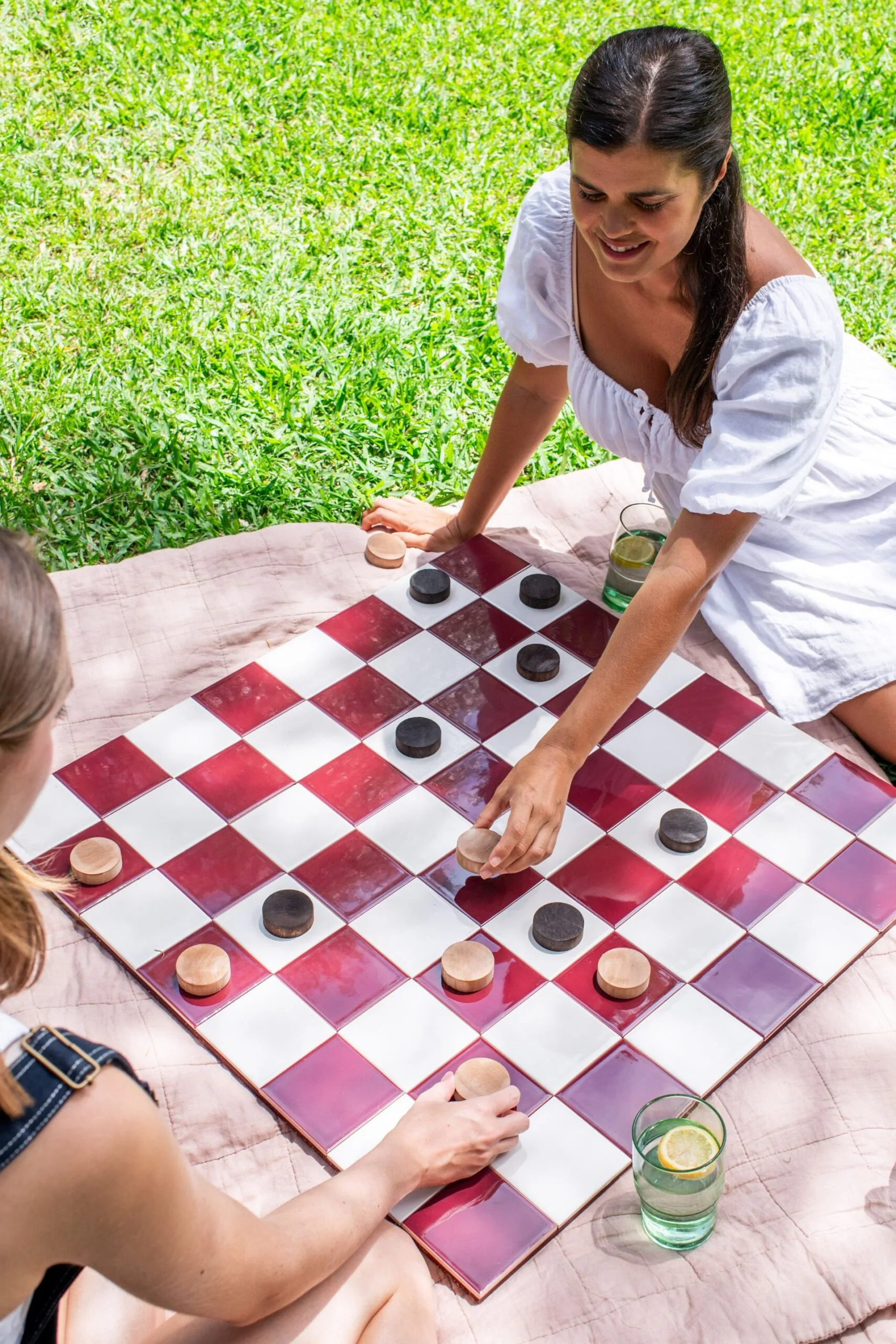
Step 1
To work out the right size for your plywood base, lay out the tiles tightly on the plywood in eight rows of eight. Mark where the tiles come to. Cut the plywood to a square this size.
Step 2
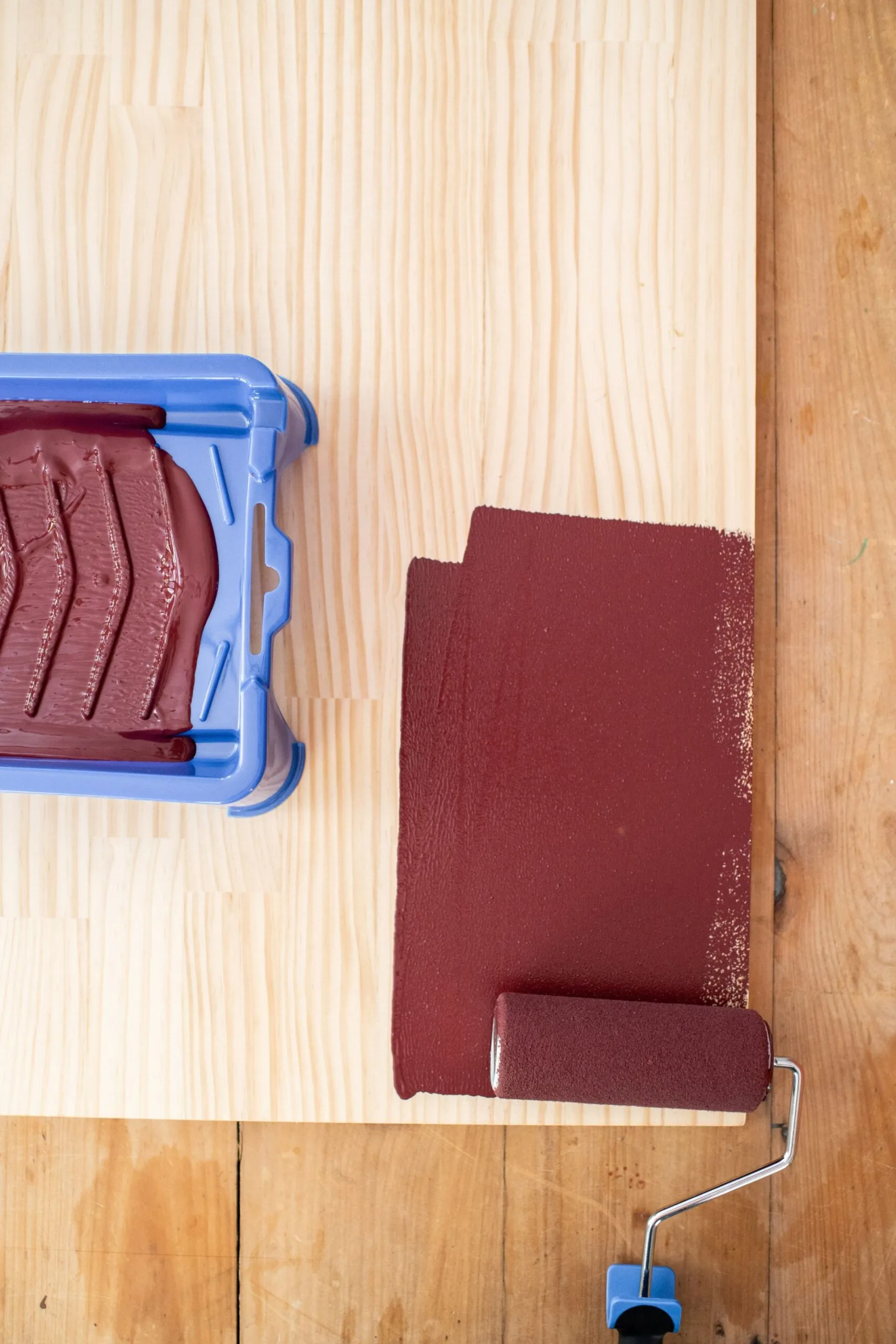
Sand the edges smooth, then clean off any dust with a microfibre cloth. Paint a coat of exterior paint onto the wood base to add colour and seal the wood. Allow to dry.
Step 3
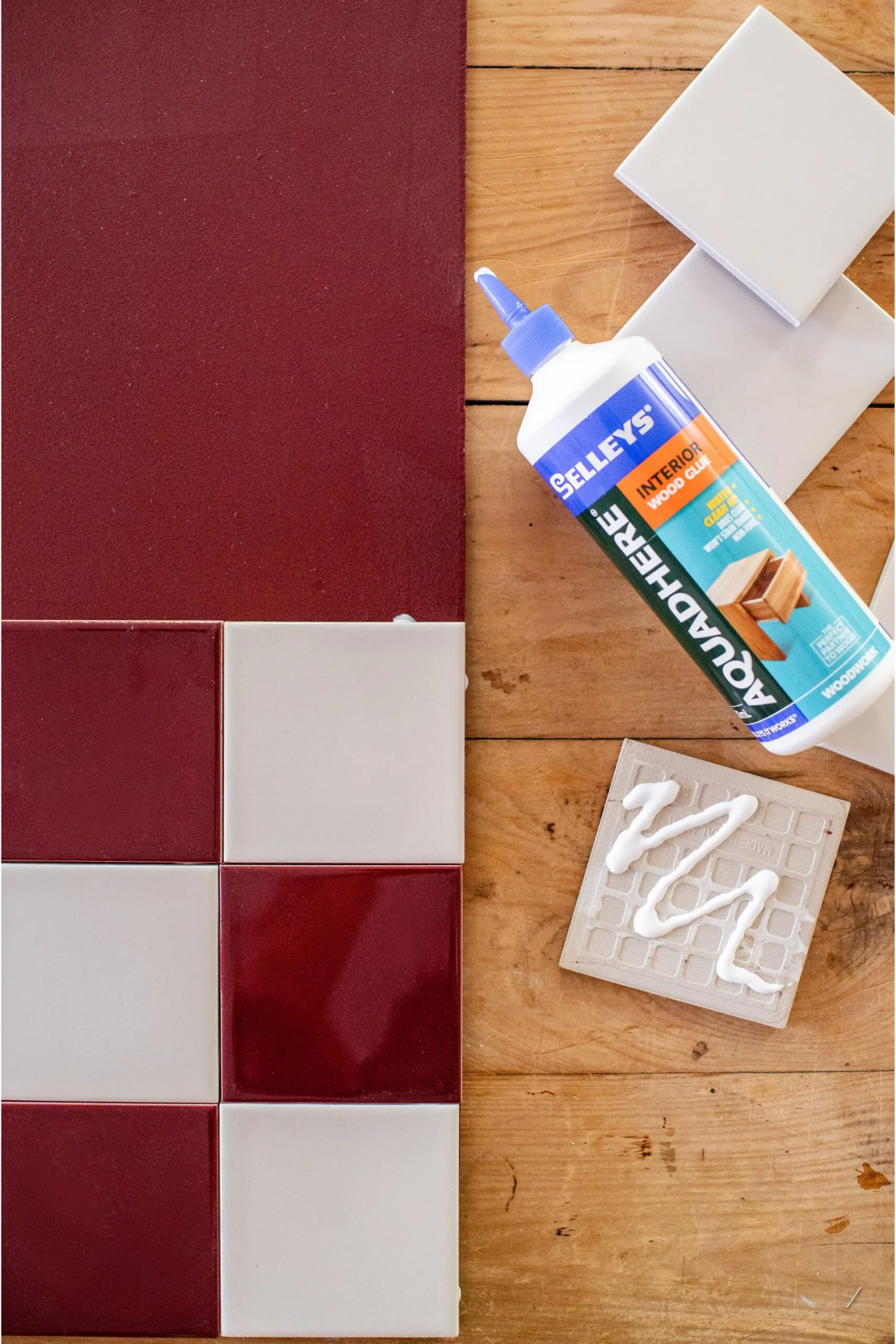
Once the paint is dry, lay out the tiles again in a checkerboard pattern on the plywood base. Glue each tile in place, pushing them together tightly. Leave the board for the glue to dry fully.
Step 4
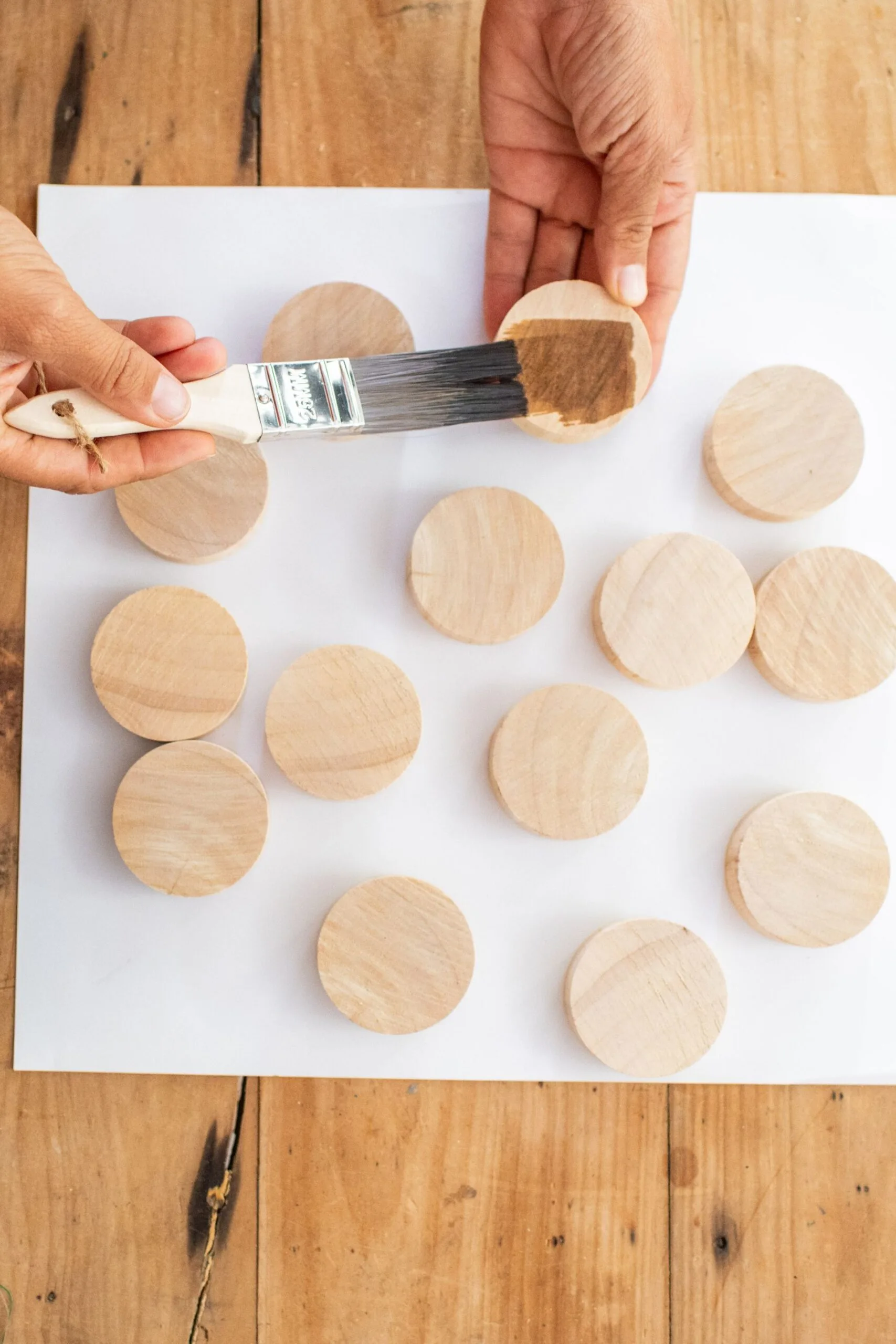
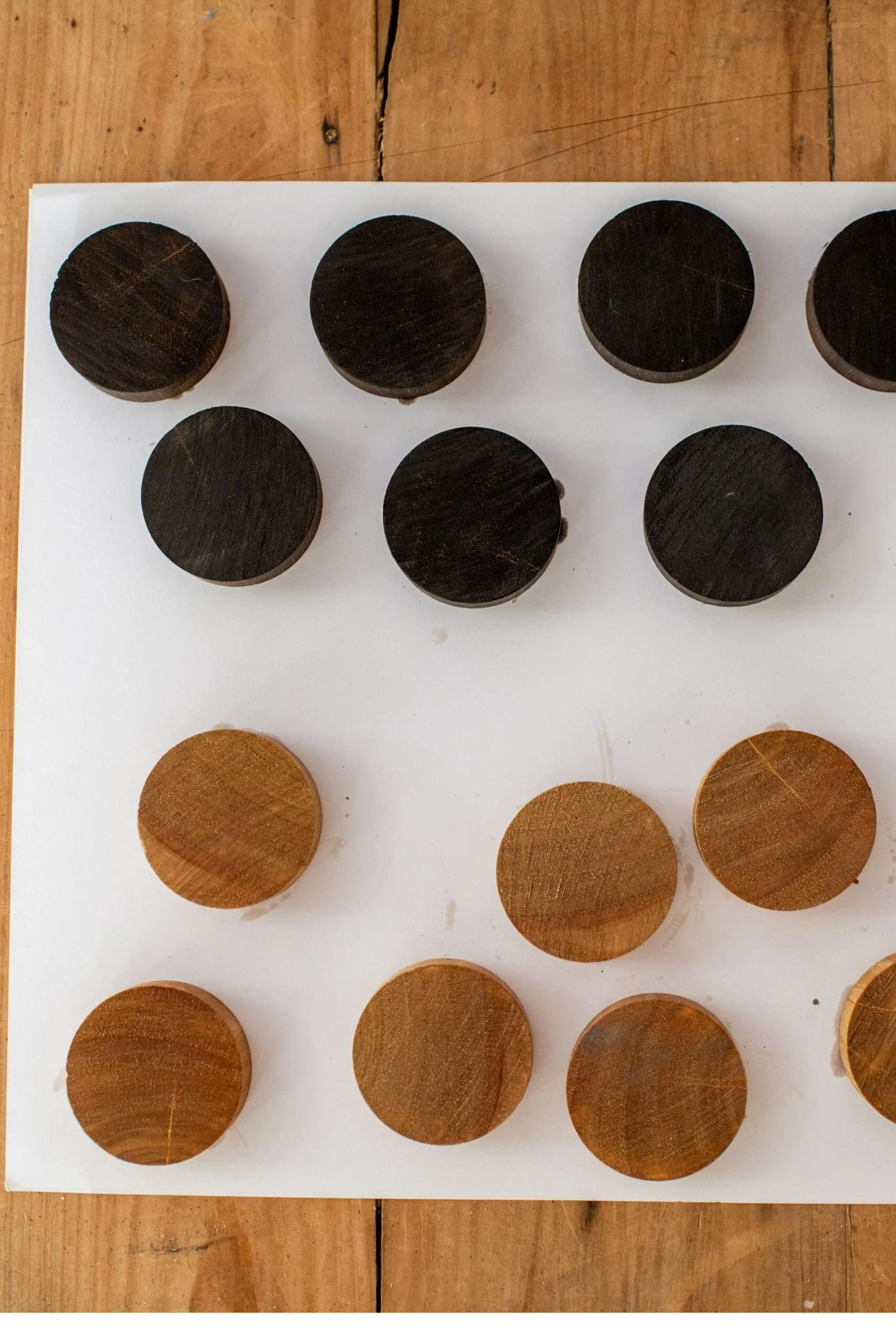
To make checkers, cut the dowel into 24 pieces, each 2cm high. Sand edges until smooth, then wipe off any dust. Stain 12 of them with a darker stain and the others with a lighter stain.
Step 5
Once the stain has dried completely, your game is ready to play!
Quick tips
- For a smaller board, follow the same steps but use 48mm square mosaic tiles for the board (you’ll need one sheet of each colour) and 19mm round dowel for the checkers, cut into 24 pieces, each 1cm high.
- Lay out your tiles dry first to check the spacing before glueing.
- Apply glue in small amounts (too much can squish up between the tiles).

Related stories

Native ad body.
Native ad body.

Native ad body.