
Question: I’m renovating my kitchen and want to avoid white. How do I choose a colour that won’t date?
If there’s one question I get asked a lot, it’s: “I love colour… but what if I regret it?” Usually followed by: “Maybe I should just do white?”
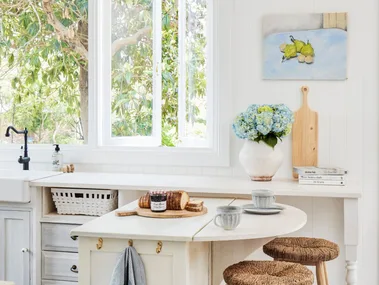
Somewhere along the way, white kitchens became synonymous with timeless design. They’re often seen as the safest choice, particularly for resale value. But here’s the thing. White isn’t automatically timeless; it’s simply one trend that’s had a very long run.
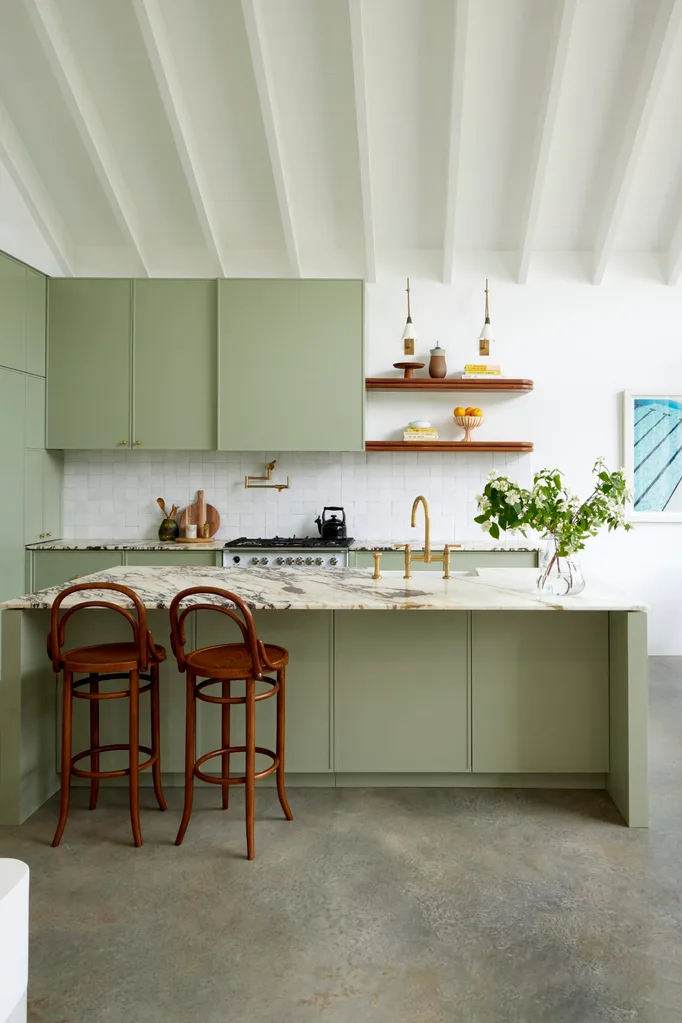
Not that long ago, playing it safe meant glossy white cabinets, a tinted glass splashback and chrome everything. At the time it felt modern and foolproof. Today, it instantly places that kitchen in the late 2000s.
Give it another 30 years, and it might come back around again. That’s how trends work, which is exactly why you shouldn’t design for them. Timeless kitchens aren’t defined by colour. They’re about balance, good materials and choosing something you’ll still love 10 years from now.
Who are you designing for?
Are you designing for yourself, or for the next owner? If you’re planning to sell in the next year or two, a broadly appealing palette might make sense. But if this is your forever home, or even somewhere you’ll be for the next decade, don’t let resale dictate every design decision. You’ll spend thousands of mornings in that kitchen before someone else ever sees it. Living in a space you love beats designing one that just feels “acceptable” to everyone else.
Colour as a concept
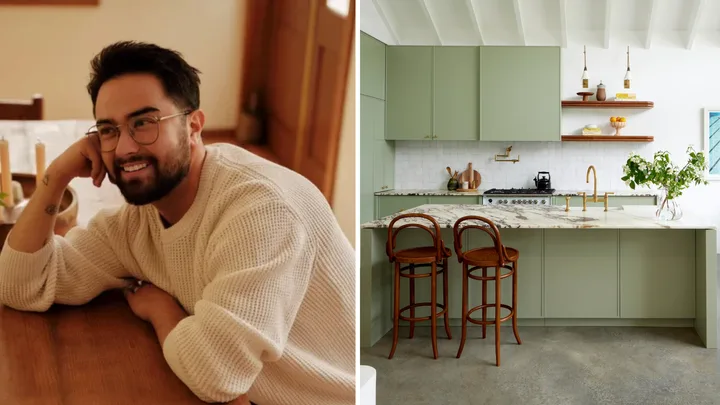
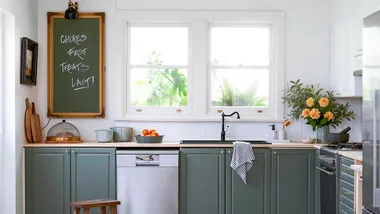
Don’t think in colours, think in moods. A kitchen doesn’t need to be loud to have personality. Some of my favourite kitchens aren’t bright orange or lime green. They’re soft mushroom, warm beige, olive, sage or dusty blue. Colours that still feel calm and neutral, but have far more depth than a crisp white.
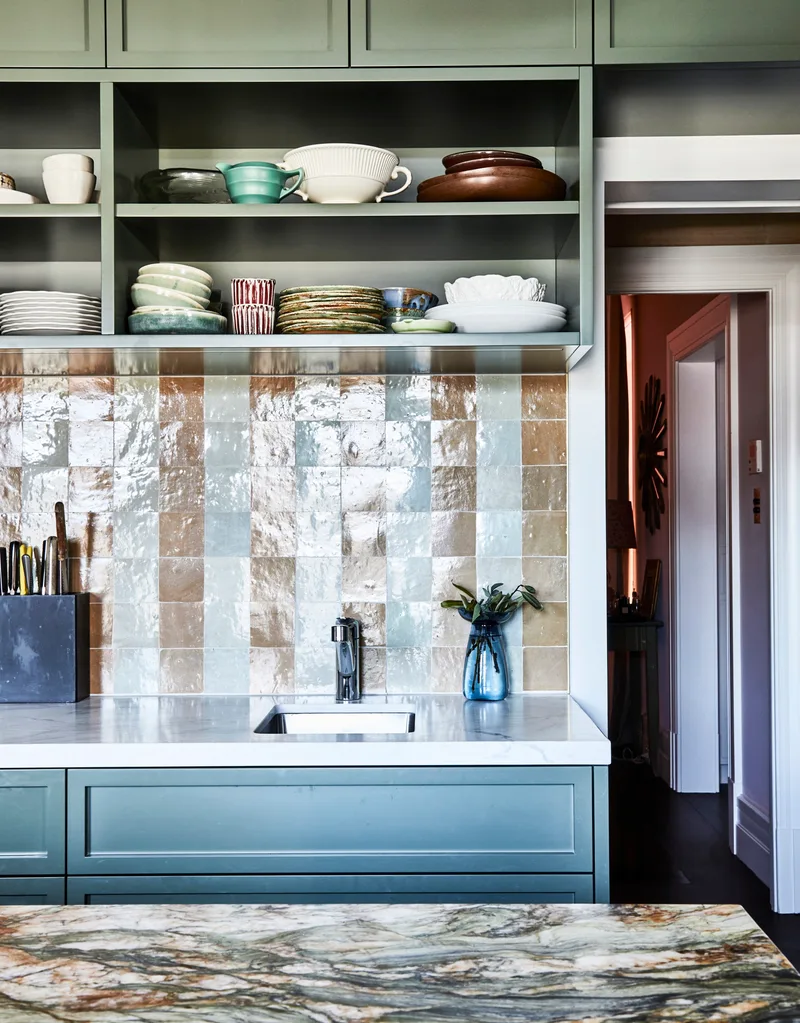
It’s amazing how much atmosphere colour can create. Want your kitchen to feel cosy? Think warm beige or mushroom. Want it to feel connected to the garden? Soft sage is hard to beat. Looking for something a little fresher? Dusty blue paired with natural stone or brushed nickel feels calm without stealing the show.
The colour isn’t the statement; the feeling is. And the best part? When you choose a mood you love, you’re far less likely to fall out of love with it.
Timber is great for softening
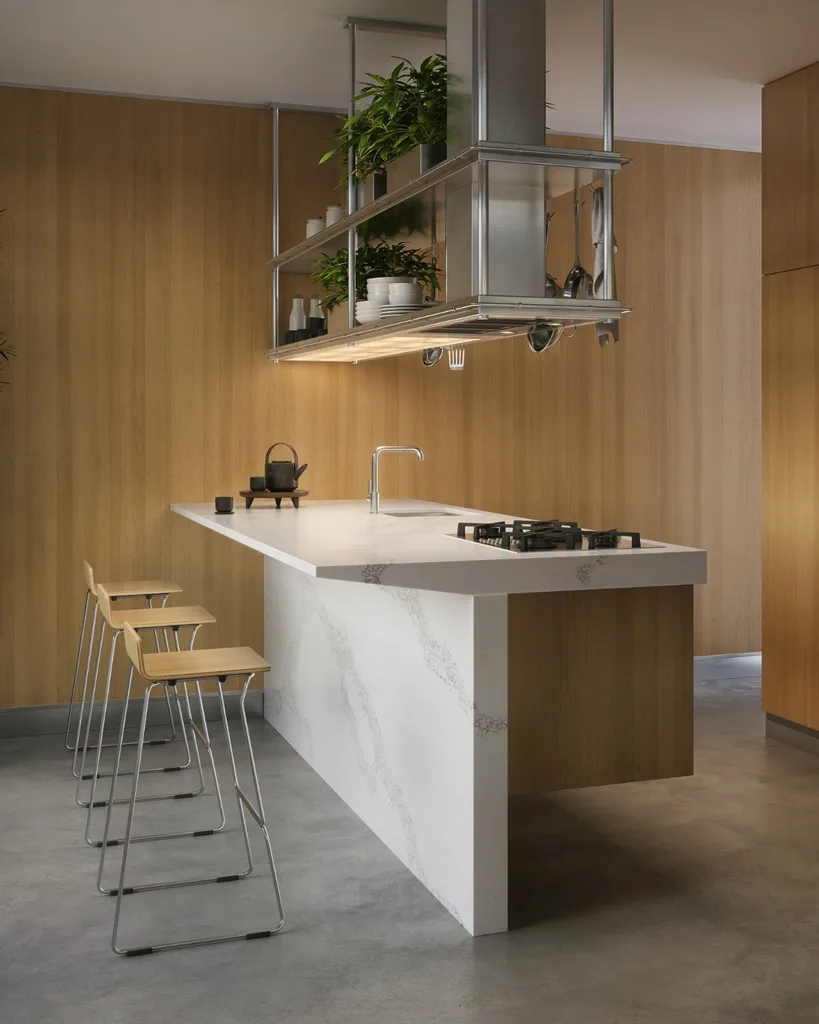
One material I think deserves a comeback is timber. And before you picture glossy honey oak from the late ’90s, hear me out. Today’s veneers have come a long way. Beautiful oaks, rich walnuts and smoked timbers bring warmth that painted cabinetry simply can’t. They feel classic, bring warmth into the room and still have far more personality than flat white.
Timber also has this wonderful way of softening a space. It stops everything from feeling too polished or clinical, which is often what people are trying to avoid when they move away from white in the first place.
The secret is contrast
One mistake I often see is kitchens where every finish sits in exactly the same tonal family: white cabinetry, white benchtops, white splashback, white walls. Even kitchens with bright colours can fall into the same trap if everything is one flat tone.
The kitchens that feel layered usually have a little more contrast. That might be a coloured island with a lighter benchtop, timber paired with painted joinery, or a beautiful piece of natural stone introducing movement and texture.
You don’t necessarily notice these details individually. You just notice that the room feels richer. And that’s usually the difference between a kitchen that feels “fine” and one that feels considered.
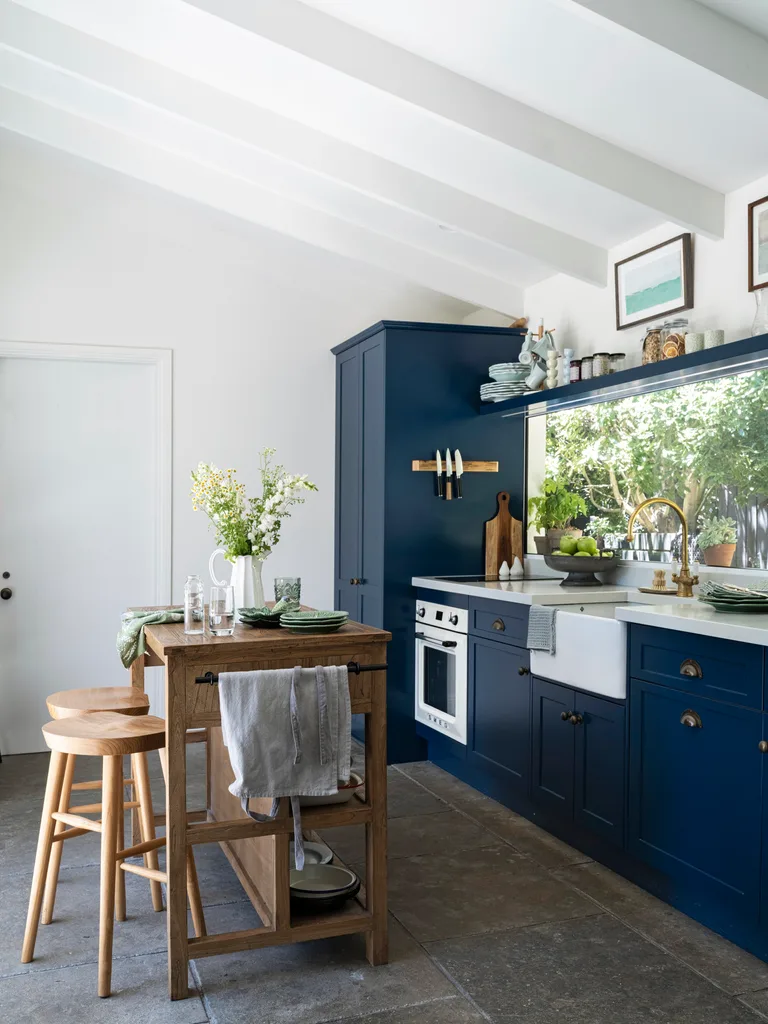
Timeless doesn’t mean colourless. The kitchens I find myself loving are rarely stark white. They’re layered. They’re warm. They have personality without trying too hard. Because, ultimately, the kitchens that stand the test of time aren’t the ones that follow every trend. They’re the ones you still love making your morning coffee in, year after year.
Timeless kitchen checklist
- Does this colour suit the style of my home?
- Will it work with natural light throughout the day?
- Does it have enough warmth to feel inviting?
- Am I choosing it because I genuinely love it, or because it feels “safe”?
- Will the materials around it age gracefully?

Related stories
Native ad body.
Native ad body.
Native ad body.