

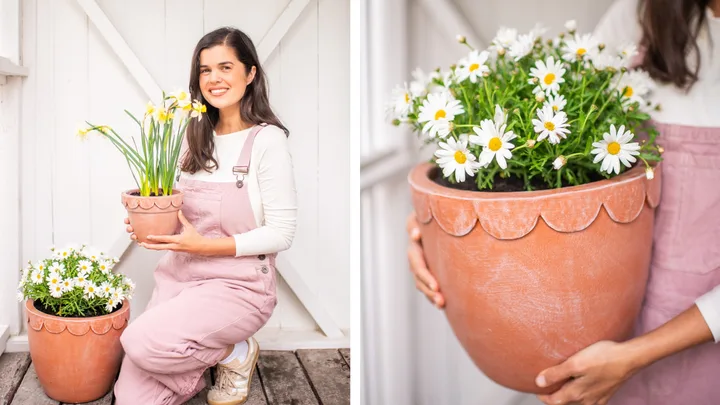
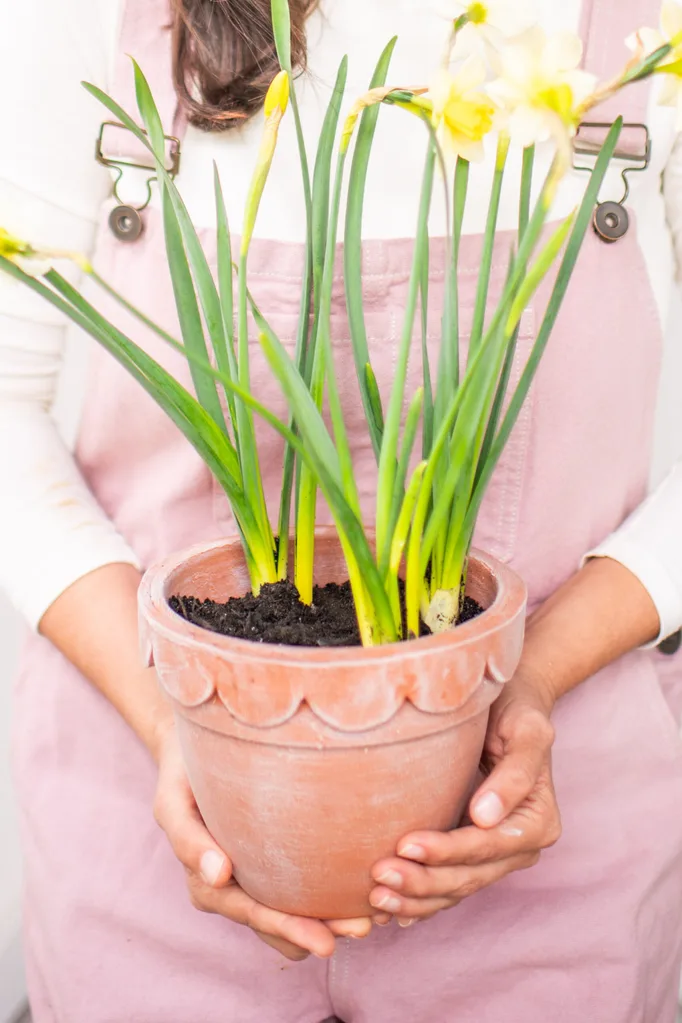
If you’re looking for an easy way to elevate your plant display, this scalloped clay detail ticks all the boxes.
With just a few simple steps, you can transform a basic plant pot. It’s an easy project that adds personality and character, all without fancy tools or a kiln.
Tips for making a scalloped-edge pot
- Choose the right clay: Use a high-quality air-dry clay that’s easy to shape. White or light grey is ideal for painting. If you notice cracks or texture, dip your finger in a little water and gently smooth the surface.
- Score and slip well: Be extra thorough when scoring the back of the scallops and applying slip to ensure they adhere firmly to the pot.
How to create a scalloped terracotta pot
Safety notes
Wear a dust mask while sanding as fine dust particles can irritate your lungs.
Gather your supplies
- Air-dry clay
- Slip (see Step 1)
- Card or thick paper
- Craft knife or clay cutter
- Scoring tool (fork or needle tool)
- Terracotta plant pot
You’ll also need
- Baking paper or non-stick mat
- Rolling pin
- Fine-grit sandpaper
- Acrylic paint
- Paintbrush
Step 1
To make the clay slip, add equal amounts (about 1–2 tablespoons) of air-dry clay, pinched into tiny pieces, and water to a screw-top jar. Give it a mix, then leave for one or two hours until it’s gluey. Stir until smooth. Add more water or clay if needed. Screw on the jar’s top so the slip doesn’t dry out.
Step 2
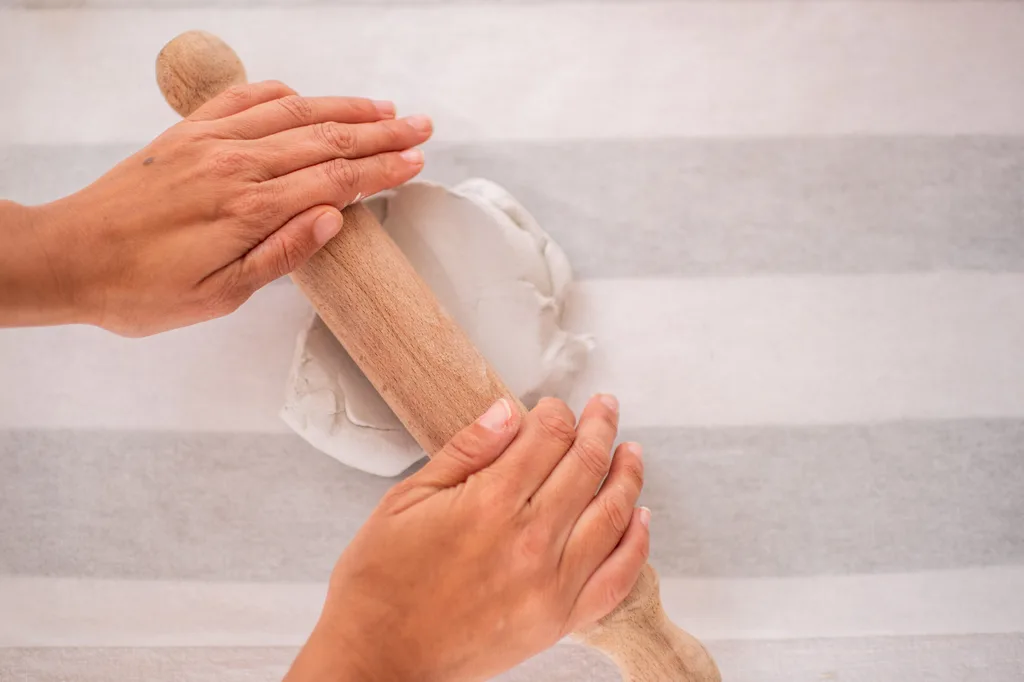
Make a scallop template from card or thick paper. Using a rolling pin, roll out a piece of clay on the paper or mat until about 5mm thick.
Step 3
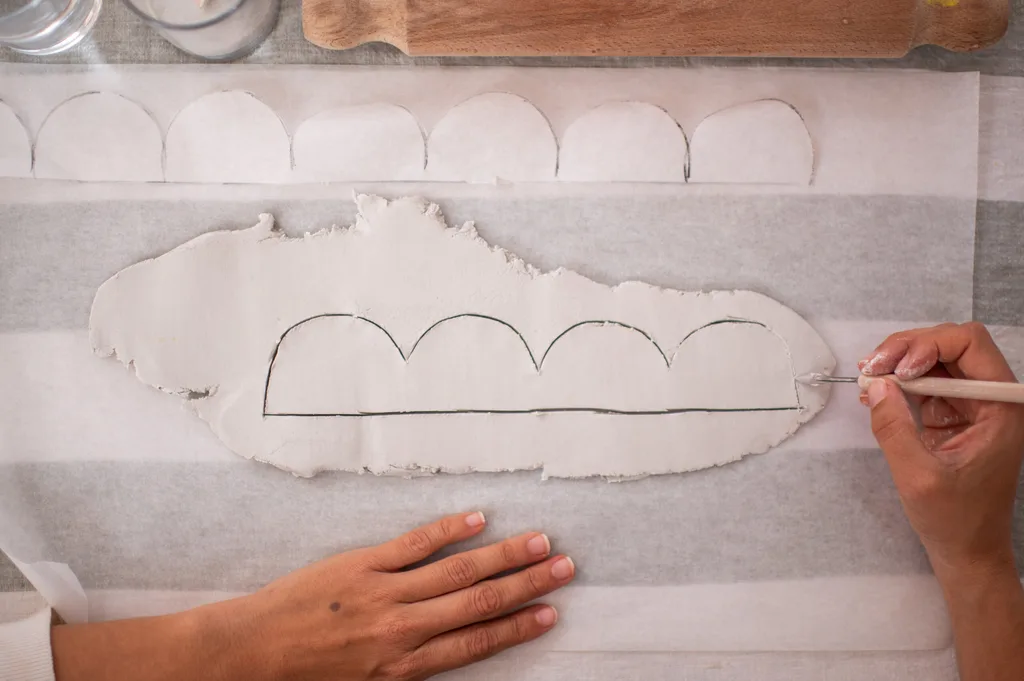
Place the template on the clay and carefully cut out scallop shapes with a craft knife or clay cutter.
Step 4
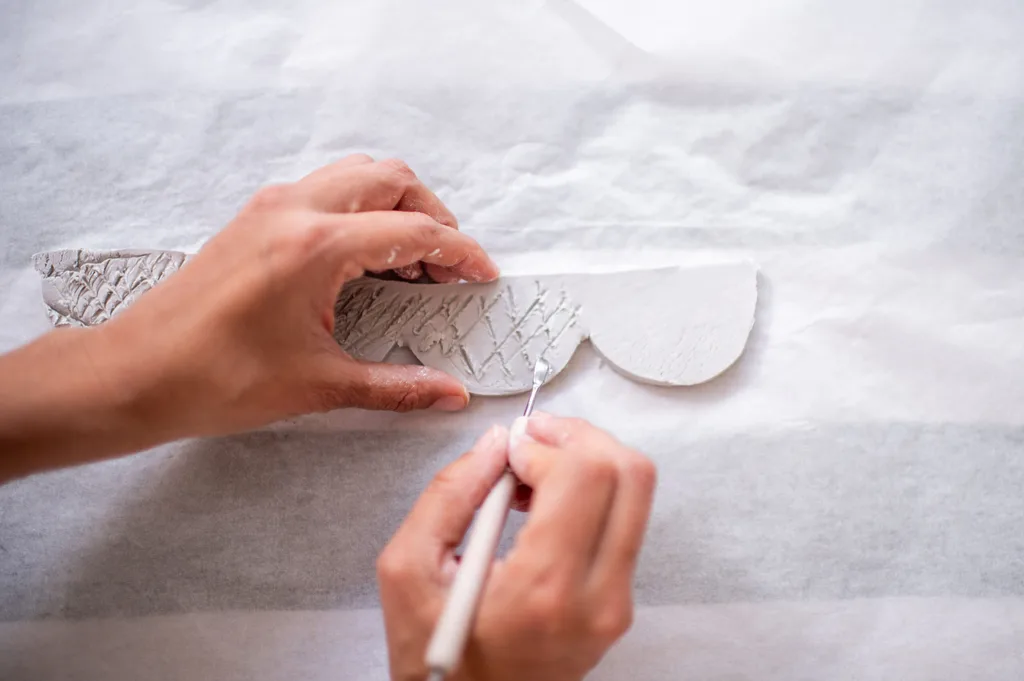
Flip the scallops over and lightly score the back surface in a crisscross pattern with a scoring tool.
Step 5
Apply slip over the scored back, covering the marked area. This will bond it securely to the pot.
Step 6
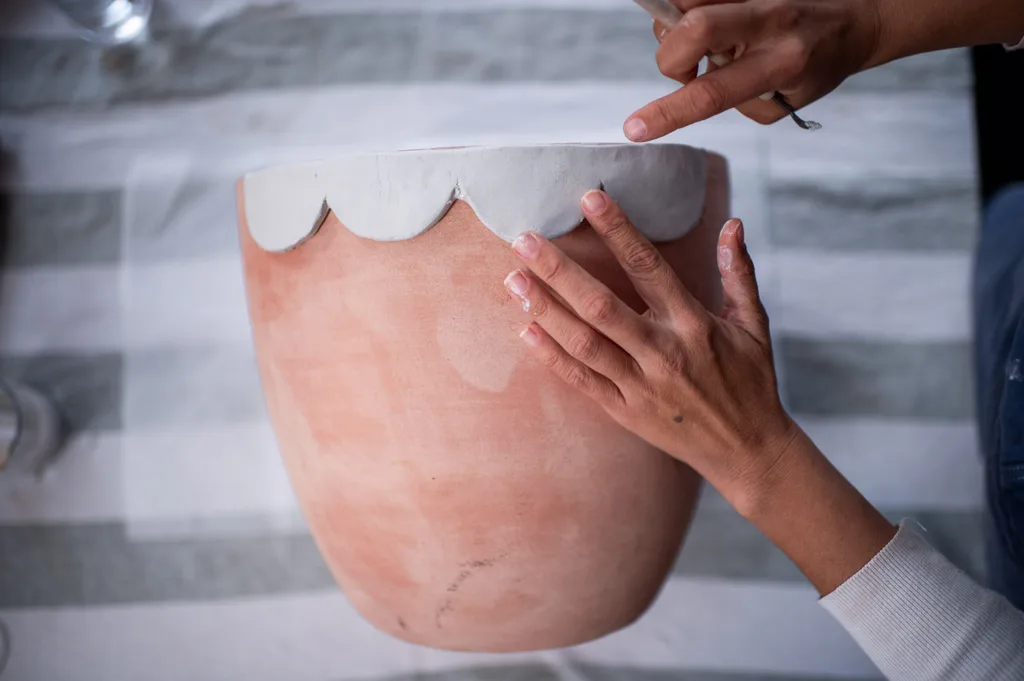
Gently press the scallops onto the top rim of the pot, making sure they sit evenly around the circumference.
Step 7
Smooth the top of the scallops onto the pot with your fingers. If the pot is larger, you may need to apply the scallops in sections and use slip to join.
Step 8
Set pot aside and allow the clay to dry completely in a cool, dry place. Avoid direct sun to prevent cracking.
Step 9
Once dry, use fine-grit sandpaper to smooth the edges and surface of the scallops, removing any rough spots. This ensures a clean finish.
Step 10
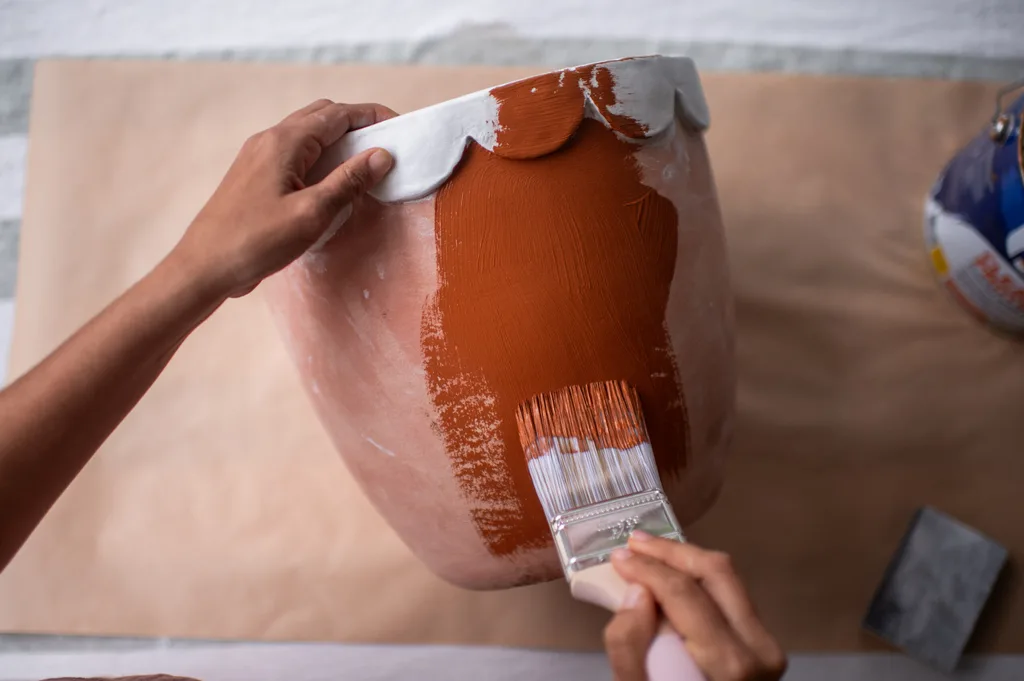
Paint the scallops and pot in acrylic paint in your preferred colour. To emphasise details, dry brush a lighter colour over the top.
Watch Geneva make a scalloped pot on Instagram

