
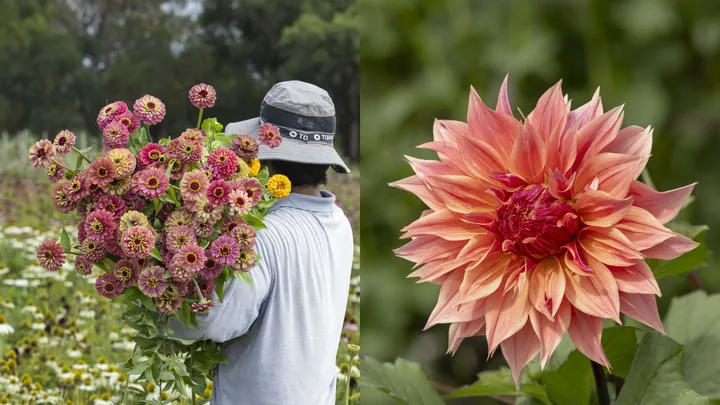
A traditional garden is about permanence – perennials, shrubs and hedges that create a beautiful picture through all seasons. If you pick a bunch of your big blooming hydrangeas, you alter the symmetry of your garden by creating an unwanted gap.
What is a cutting garden?
A cutting garden is the exact opposite. It’s a garden where flowers are grown specifically for harvesting. The trend for cutting gardens has grown with the popularity of wildflower – or chaos – gardening as more of us aim to enjoy fresh flowers indoors as well as out. And, in many cases, the more you cut, the more they bloom. But no cutting garden compares to that of Jonima Flower Farm, nestling on the edge of the Southern Highlands in NSW.
Inside Jonima Flower Farm: A cut flower paradise
A cutting garden that is a 10ha kaleidoscope of colour is any gardener’s dream, a floral and perfume overload. For John and Ingrid Padovano it’s a dream come true – they’ve been growing and harvesting their flower farm for 20 years.
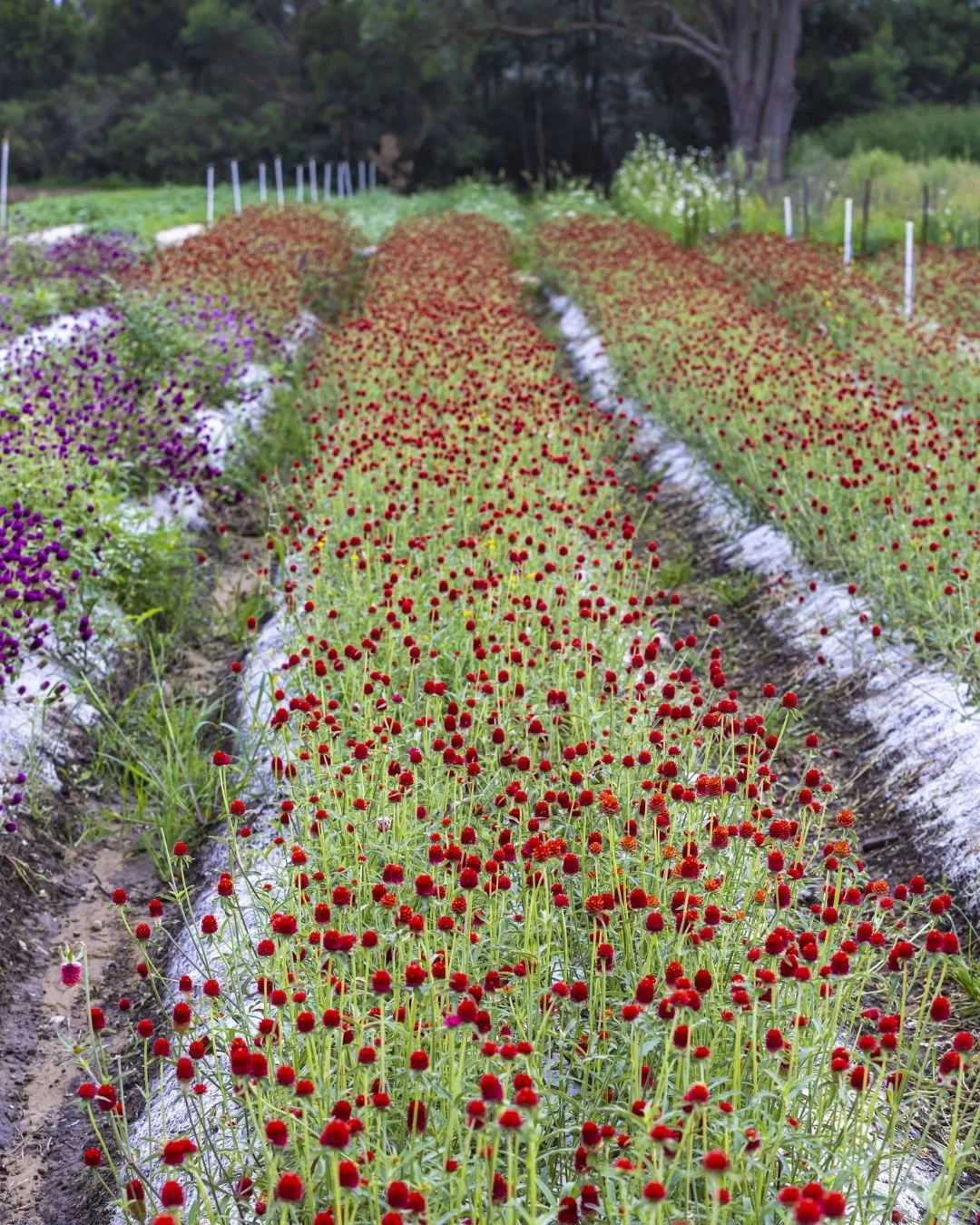
John is a third-generation flower grower, Ingrid a florist, and together – along with their four children – they sustainably produce more than 100 varieties of flowers and foliage that grow with the seasons and work with the land. There are rows of dahlias, banks of glorious, old-fashioned hydrangeas, avenues of flowering gums and wattle, gangs of gerberas, voluminous pillows of baby’s breath, fields of echinacea, crowds of cosmos – anything that can be cut one day, be in the markets the next and in your home that evening. It’s a glorious explosion of floral fireworks that Ingrid says brings joy to the family each and every day.
How Jonima Flower Farm grows flowers sustainably
This involves conserving water and avoiding harsh chemical fertilisers, herbicides, or pesticides to build rich, healthy soil.
Cutting flowers means discarding the leaves that sit in water after the stems are cut, so Jonima Flower Farm does a lot of composting. “All our green waste is composted,” Ingrid says. “What we take we also put back into the soil. We’ve got turkey farms around us so we get the manure, rest it, then, when we’re prepping the soil, we dig it in.”
The soil in the beds of flowers is covered with jute matting as part of the farm’s weed control. “We didn’t want to use the black plastic weed matting but instead something more sustainable. Jute is biodegradable and goes back into the soil.”
A timer operates the irrigation system so there’s no over- or under-watering, and often fertiliser is added to the water – again for quantity control.
Why locally grown cut flowers are becoming more popular
Over the past two decades, Ingrid has noticed a gradual change in preferences for cut flowers. Initially it was gerberas, roses and lilies. “But people are more open to exploring different things now,” she says. “The interest in native flowers has really grown. People are more educated, and now there are so many different options, such as the lovely flannel flowers.“
Australian native flowers are in demand
In the farm’s glasshouse, they’re growing kangaroo paws, so they flower for most of the year, and they’re experimenting with the exotic Siam tulips, not a bulb but a member of the ginger family. As cut flowers, they make a vibrant, long-lasting addition to tropical-themed arrangements.
The surge about 15 years ago of out-of-season flowers being flown in from overseas meant many flower growers went out of business, and it forced Ingrid and her family to become more competitive. “We push the concept that we’re local. Also, our flowers can be transported more easily.” Many overseas blooms have sacrificed perfume for longevity, but Jonima flowers retain their aroma.
The best flowers to grow in a cutting garden
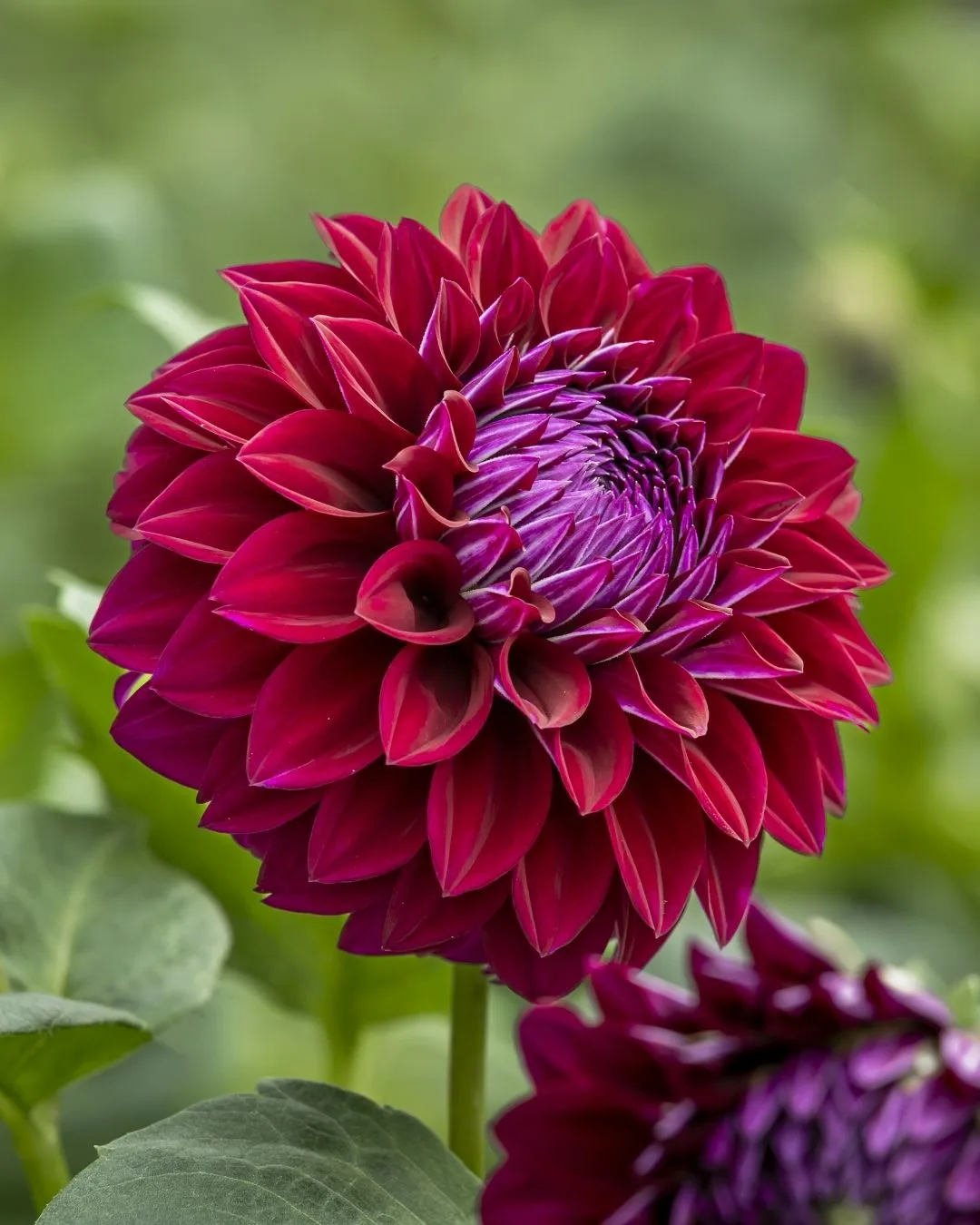
Being surrounded by so many flowers on a daily basis, she says it’s hard to pin down her favourites. “It changes by the season. In summer you can’t go past the flowering gums; they’re so beautiful, bright and lovely.” In autumn it’s the dahlias, in winter and spring it’s the ruffled, chalice-like flowers of poppies, and when spring comes into full force it’s the delicate, tightly packed flowers of ranunculus.
When is the best time to cut flowers?
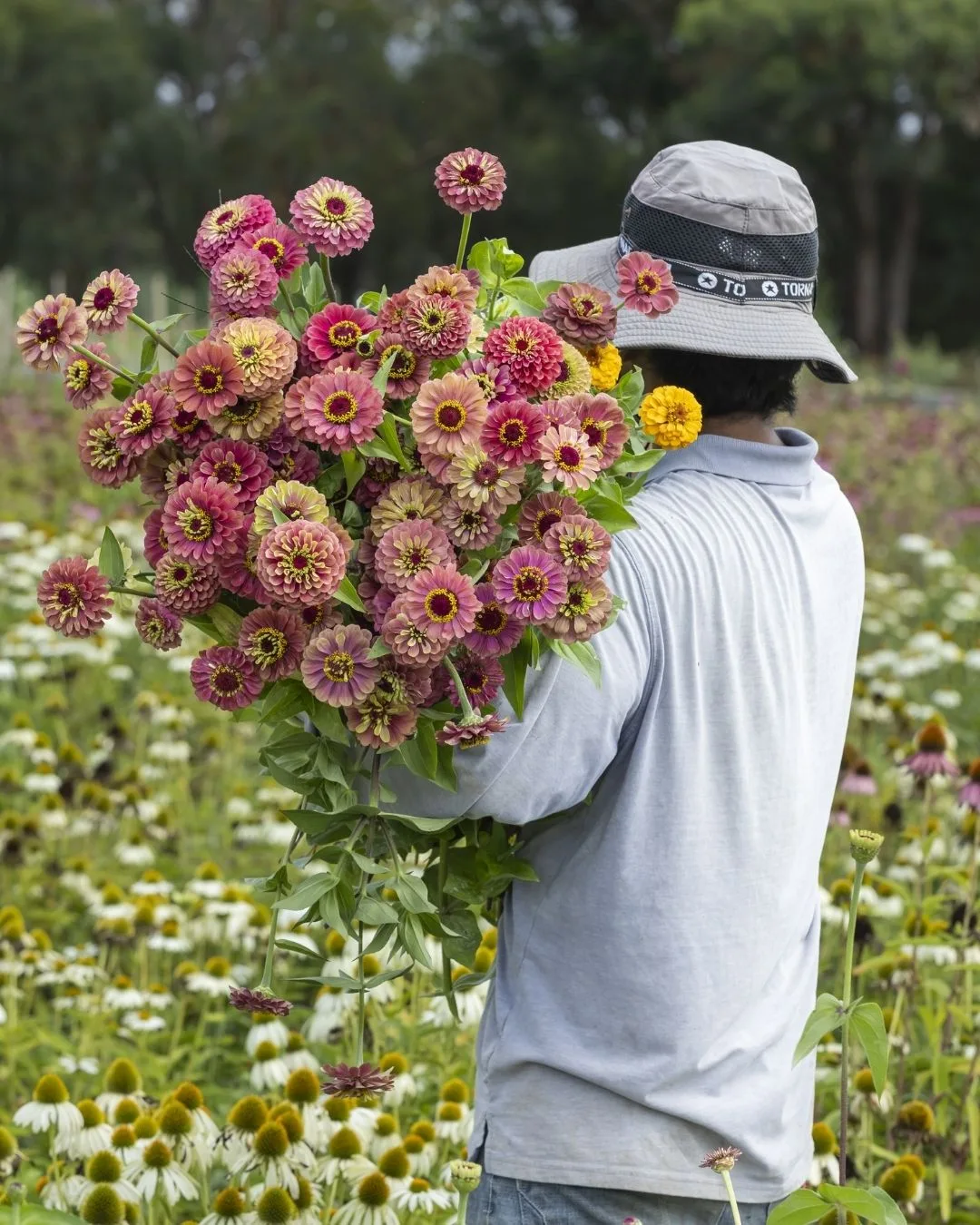
Some flowers you can cut when they are still in bud, others you need to wait until just before the flower opens, says Ingrid. “Every flower is different.” With flowering gums, “when the buds are closed, they won’t open when cut. You need to see those cracks in the bud for them to ripen in the vase for you”.
For healthy, long-stemmed plants such as echinacea, the family harvests in a way that encourages more flowers. “We pick them right down low, then they come back through again. Cut first in early summer, then we’ll get another flush coming through later.”

Related stories
Native ad body.
Native ad body.

Native ad body.