
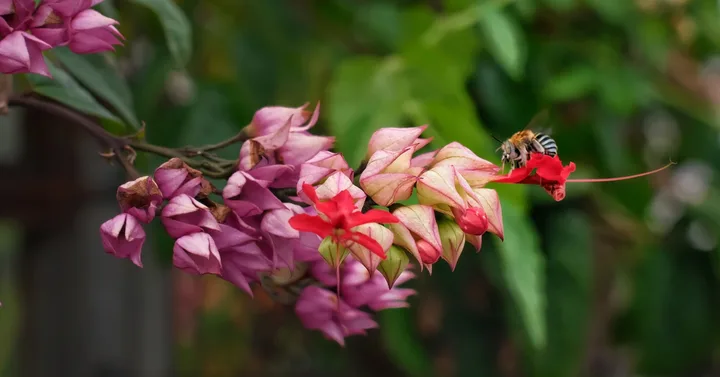
Bees, known more formally as Anthophila (anthos means “flower” and philos means “loving” in Greek), are flower lovers by name and by nature. But how much do you really know about them?
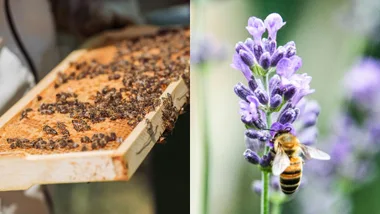
For instance, did you know that more than 62% of Aussie bees nest in the ground, not in hives? And that not all types of bees make honey? In fact, only 11 known Australian bee species produce honey and live in a hive with a queen.
Bees are hard workers and play an important role in the ecosystem, with nearly 90 per cent of flowering plant species benefiting from bees and other pollinators. Bees play an important role in agriculture, too. So, from the ranks of Australia’s native bees, here are some quirky characters you’ll love to meet.
The smallest bee in the world
Aussie bees come in a huge range of sizes, from big bombastic bees to teeny tiny fairy bees like the small but mighty Euryglossina (Quasihesma) clypearis – arguably the world’s smallest bee, with males measuring a mere 1.8mm long. Most Euryglossina are less than 10mm.
Then there are the heavyweight champions, like the peacock carpenter bee (Xylocopa bombylans) at 16mm and the great carpenter bee (Xylocopa aruana), which grows up to 25mm.
Head-banging banded bees
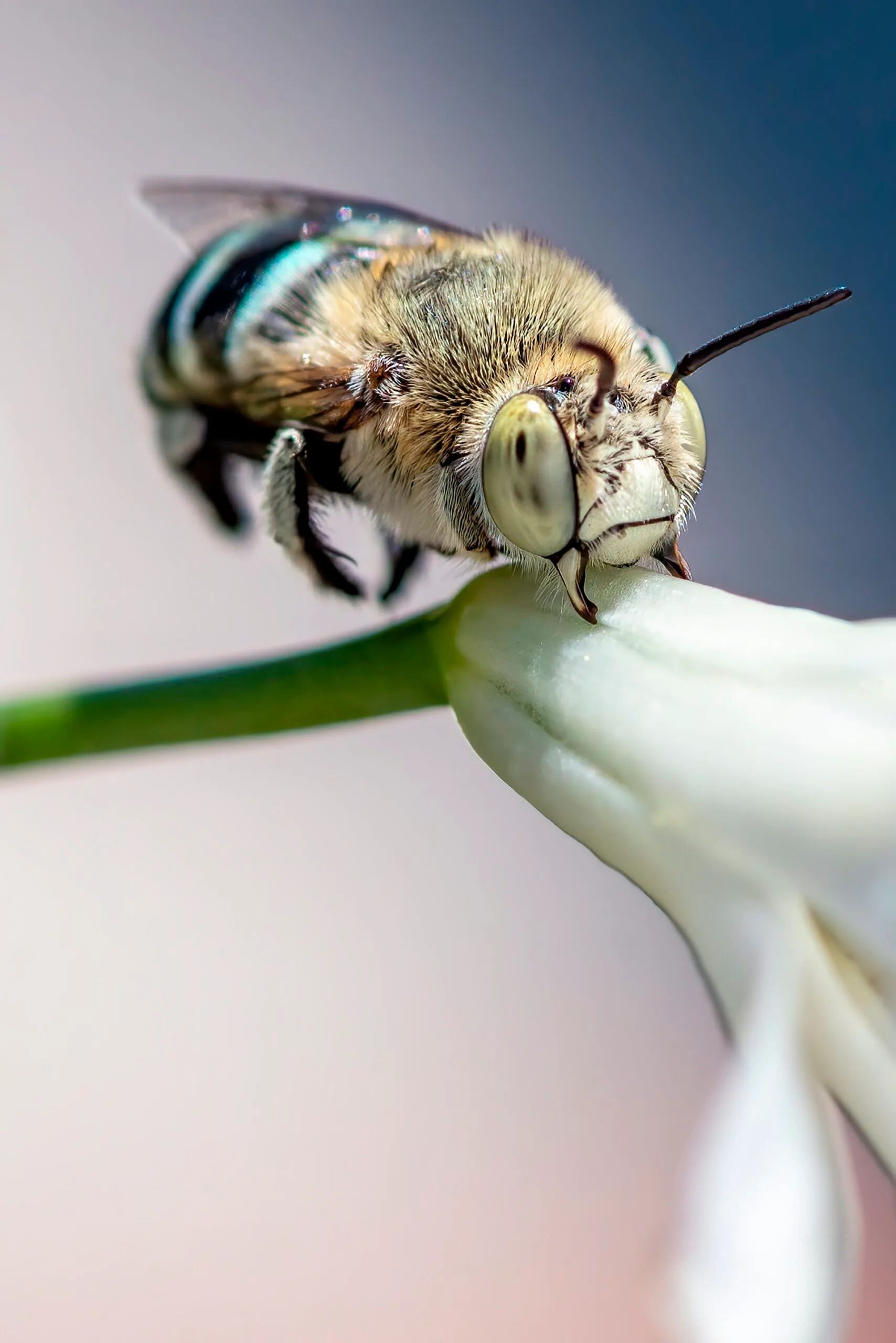
The crowd favourite, and the sweetheart of the Australian public – Amegilla cingulata. A type of blue-banded bee, it was voted Insect of the Year in 2024. Unsurprisingly, it has blue bands around its abdomen, and as a “buzz pollinator”, it vibrates and bangs its head against a flower’s anthers (part of the stamens) to extract pollen.
Bubble blowers
The tiny Euryglossina (Microdontura) mellea, with a body only 3mm long, blows bubbles with nectar to get it to just the right consistency. The bubbles allow excess moisture to evaporate, concentrating the food source.
Fussy eaters
Native bees can’t get enough of native flower pollen and nectar, and are often specialist pollinators, or what we like to call fussy eaters. Many will only collect pollen from one plant family, or even a genus such as Daviesia or Banksia. It’s only the more generalised species like the European honeybee that will visit exotics in your garden.
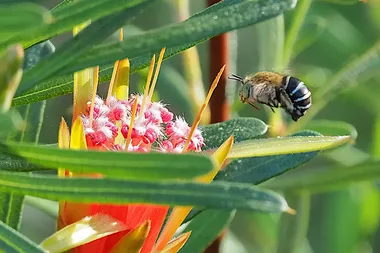
The award for the fussiest bee ever would have to go to Euhesma tubulifera, which only forages on one-sided bottlebrush (Calothamnus quadrifidus). This red-flowering plant with its long flowers is adapted for bird pollination, so the little bee (about 5mm long) has evolved mouthparts as long as its body to reach the nectar.
Ground dwellers
Bees show a huge variation in nesting behaviour and social lives. An estimated 62 per cent of Australian native bee species nest in the ground, like the furry teddy bear bee (Amegilla bombiformis) and the stingless Ctenocolletes smaragdinus. Some nest in sandy soils, others in clay. Nest depths vary a lot, with the record for the deepest going to Ctenocolletes albomarginatus, whose nest dives to more than 3 metres!
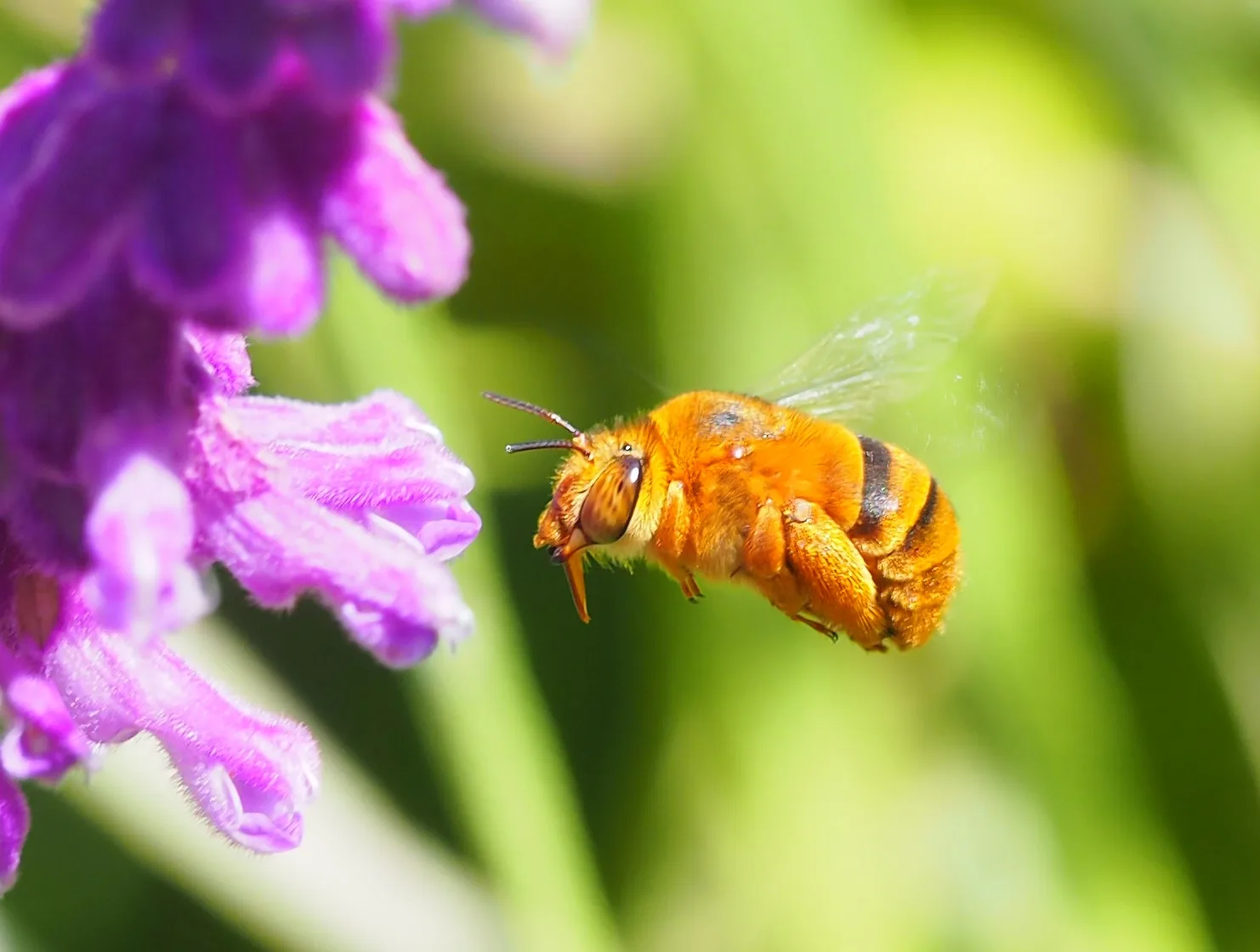
The above-ground nesters have a variety of nurseries. Xylocopa burrow in wood; Allodapini bees such as Exoneura (aka “reed bees”) nest in pithy stems. Some make little pots of resin and hang them on twigs; the majority, however, nest in pre-made holes created by wood-boring beetles. These are the bees that will deign to visit bee hotels.
Plasterer bees
Once native bees have stocked their nurseries with nectar and pollen, and laid their precious eggs, they need to seal off the entrance. This protects baby bees inside the nest from the elements, and also from predators (like ants) and parasitoids (wasps, flies and even other bees).
Colletidae (plasterer) bees, such as those in the genus Hylaeus, make a cellophane-like secretion to seal their nests.

Research on Hylaeus bees has found that this secretion has properties similar to plastic. Bees from the Megachile genus seal their nests with a range of materials they collect themselves – resin, mud, chewed-up leaves, leaf discs and petals – or a mix of these materials. Some bees will even seal up the nest with their little bee butt, like the reed bee (Exoneura species).
Cuckoo bees
Being a mumma bee is a hard life, and some bees, like cuckoo bees from the Thyreus genus, don’t bother collecting food for their offspring. Instead, they lay their eggs inside the nest of a host, making them kleptoparasites or a pollen stealer. When the larva hatches, it kills the host and eats its food!
Regardless of the type of native bee, they all need food and shelter – which we can provide in our gardens! Plant native plants, build bee hotels and document the native bees that you come across to help conservation efforts.
Native bees are key to a thriving wider ecosystem. On a smaller scale, having them in the garden means you’re encouraging biodiversity. Native bees can help pollinate native plants in the garden as well.
Native bee nests look different from species to species. 62% of Australian native bees have nests in the ground. Some burrow in wood, reeds or make resin nests and hang them from trees.
Most Australian native bees sting. However, many native bee species are solitary, non-aggressive and rarely interact with humans. Only around 11 species out of 2000 recorded Australian bee species do not have functional stingers.


Related stories
Native ad body.
Native ad body.

Native ad body.