
A shady spot can be a bonus in summer, but when so many of our vibrant summer-flowering plants need six hours of sun a day, you may think that shade-loving ferns are all you can grow. Not at all!
There’s a wondrous array of colourful shade-tolerant plants that don’t like sunbathing and literally glow in the dark. They’re perfect for your garden hideaway, secret nook or along a side path in summer and autumn.

Heuchera or coral bells
Heuchera sp.
The tiny, pink, bell-shaped flowers on top of tall, skinny stems are your spring surprise, but the enduring quality of heucheras is their colourfully patterned, scalloped leaves. Often two-toned, the colours range from silver to vivid light green, gold, red, orange, dark purple and burgundy, changing through the seasons.
They’re bright and vibrant in spring, mellower in summer, revive their intensity in autumn and soften again in winter. They give your shady garden a coat of many colours!
Care requirements: Full sun to full shade. Regular watering to keep the soil moist. Best suited to temperate – cool climates.

False goat’s beard
Astible sp.
These striking, spire-like stems with soft, feathery plumes of tiny flowers originally grew in East Asian forests, meaning shade and moisture are their natural habitat. The flowers emerge in summer and come in colours ranging from white to multiple shades of pink, red and purple. This creates a shimmering haze replicating the effects of heat outside your shady corner.
Growing from fleshy rhizomes (underground stems), these shade-tolerant plants can withstand being waterlogged, so sit comfortably next to water.
Care requirements: Part shade to full sun, with regular watering. Suits cool, temperate, arid and semi-arid climates.

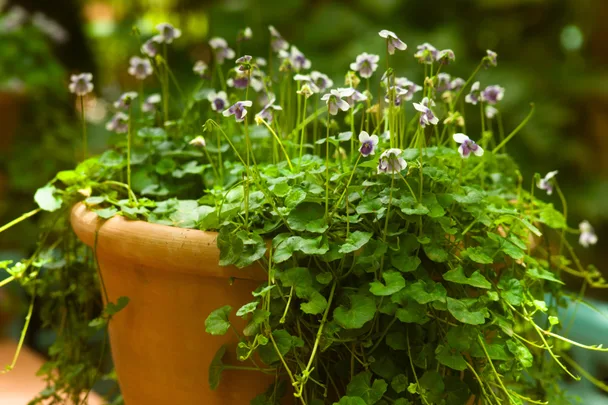
Native violet
Viola hederacea
Lawns don’t grow in the shade, but this pretty native ground cover will. Little purple and white flowers above kidney-shaped leaves will bloom most of the year. Spread by underground runners, it looks lovely within pavers or under trees. It does best in rich, moist soil, so it is a great option for boggy soil or a damp, dark corner.
Care requirements: Low-growing, thrives in part to full shade. Prefers moist but well-drained soil. Is suited to all climates, but can die back in times of drought.

Beehive ginger
Zingiber spectabile
This bizarre-looking tropical shade-loving plant is a beacon that initially shines yellow, then turns red. The beehive-shaped flares that rise through a fountain of lance-like foliage are bracts, from which emerge tiny, yellowish flowers, often with purple freckles.
The stems can grow up to 2m, and the bracts last long after the flowers have gone and look amazing in cut-flower arrangements.
Care requirements: Part to full shade positioning, with moist soil. Best suited to cool to warm temperate climates.

Walking iris
Neomarica caerulea
This shade-loving plant can slowly sneak up on you – not that you’ll mind, because it means seeing more of these beautifully patterned blue and white flowers that last only a day.
In late spring and summer, the tall stems that bear them bend over with the weight, dropping the flowers to the ground. If it lands on soil, the tip takes root, and a new plant emerges, often a metre away from its mother. Fast-growing, all it needs is consistent moisture and well-drained soil.
Care requirements: Partial shade with indirect light and well-draining soil. Best suited to warm, sub-tropical and tropical climates.

Foamflower
Tiarella
Make your shady spot dazzle like hundreds of white and pink sparklers being lit at once. Then, as the small flowering spires mature, they evolve into a foamy frenzy, hence the common name. Native to North American woodlands, the low-growing clumps of this shade-loving shrub make a pretty ground cover when mass planted under a tree or lining a shaded border garden.
Care requirements: Partial to full shade. Prefers moist, well-draining soil and is best suited to temperate climates.

Cineraria
Pericallis x hybrida
The shadows grow longer in winter, a challenge for many plants – except for cineraria. Its flowers start to emerge in winter with pops of white, pink, blue, purple, magenta and other shades.
Growing as a mounded bush up to 80cm tall, it will give you a longer flowering season if you regularly deadhead spent blooms. Keep soil damp but avoid overwatering. You’ll have a jaunty little corner or row when all else is still slumbering.
Care requirements: Needs consistently moist, well-draining soil. Suited to cool temperate climates.

Foxglove
Digitalis sp.
The 1.5m tall tower of flowers emerges in late spring and summer from a low rosette of large leaves, often up to 60cm wide, so just one plant takes up a bit of room. But the large surface area is all the better for showing off that impressive spire.
Originally a woodland plant from Europe, most are biennial, meaning they only flower in their second year, drop their seeds, and then die. But now you can get perennial foxgloves that flower every year. Traditionally, the clusters of flowers were bright pink, but they now come in white, lavender, yellow, red and purple, usually with a speckled throat.
Care requirements: Partial shade with rich, moist, free-draining soil. Best suited to cool to temperate climates

Bleeding heart
Lamprocapnos spectabilis
Surround yourself with lots of love with rows and rows of pink, red, sometimes white, puffy, heart-shaped flowers with a small teardrop at their bases. These quirky little flowers hang from elegant, arching stems in late spring to summer to brighten up the shade.
Delicate-looking but very hardy, they grow up to 1.2m tall, with the stems emerging from feathery, bluish-green foliage.
Care requirements: Grows best in rich, well-drained soil. Best suited to temperate climates.

Lungwort
Pulmonaria
Lungwort gets its name because long ago, people believed it looked like a lung and actually tried to treat lung diseases with it. This perennial plant is best grown in full to partial shade. Keep in mind that most trees have not leafed out when they bloom in early spring, and the weather is still cool and damp.
Care requirements: Needs well-drained, nutrient-rich soil with regular watering. Thrives in temperate climates.

Forest bell bush
Mackaya bella
This South African shrub has glossy green leaves and grows to about 2.5m, making it ideal as a screen or fence cover. In late spring and early summer, it produces masses of white trumpet flowers with violet veins, giving the impression of soft mauve from a distance.
This shady plant will tolerate higher light levels than most of the others here, but doesn’t do well in hot sun. It can be a little frost tender, but always bounces back.
Care requirements: Partial shade with regular watering, well-draining soil and compost. Best suited to subtropical, tropical and warm temperate climates.

Gladwin iris
Iris foetidissima
This strappy-leafed plant grows in clumps and has rich, evergreen leaves that are beautiful in their own right. The flowers are, for an iris, small and dull in colour, usually cream with brown veins, or dusty mauve with darker veins.
But this plant is grown for the huge, green seed pods. As they mature, they split open, exposing orange seeds that are wonderful for over-arranging in the house.
Care requirements: Full sun to deep shade. Prefers moist, humus-rich soil. Works best in temperate climates.

Silverleaf or spurflower
Plectranthus argentatus
This is a frost-tender plant, but one that may be a bit of a thug in warmer climes. It trails along the ground and can cover quite some space in a fairly short time. The tops of the rounded leaves are deep green with silvery veins, and the underside is a rich purple.
Come winter, it produces tiny, white flowers that certainly light up the shade, as do most others of this worthy and attractive genus, so go Plectranthus nuts!
Care requirements: Moderate watering once established. Thrives in subtropical, warm temperate and Mediterranean climates.

Cast iron plant
Aspidistra elatior
The humble Aspidistra was long used as an indoor plant, but when released into the garden, this leafy green will make a handsome foliage plant to 60cm or so. It only needs a little bit of attention to stop its foliage from being ruined by marauding snails.
Care requirements: Well-draining soil, minimal watering. Best suited to tropical, subtropical, and warm temperate climates.

Rozannie
Aucuba japonica
A Japanese shrub, with the common name of Japanese laurel, that’s usually seen in variegated forms. This has glossy, straight green leaves that are quite beautiful in the shade. As a bonus, this hermaphrodite form will produce large crops of long-lasting red berries on a bushy, metre-tall shrub.
Care requirements: Partial to full shade with moderate watering. Works well in most climates.
Shade-tolerant plants Charlie Albone loves
Landscape designer Charlie Albone loves finding new plants and creative ways to fill out shady spots in the garden. Watch as he works on this very dark courtyard, and turns it into a leafy paradise.
The two plants he added to this shade-filled garden were:
- Coin Spotted Tree Fern (Cyathea cooperi)
- Goldfussia (Strobilanthes anisophyllus)
The fern gives the right side of the garden a good height to balance out the camellias and viburnum growing tall opposite. And, the dark purply leaves of the ‘Goldfussia’ are the perfect contrast to the bright greens from the ferns.

Related stories
Native ad body.
Native ad body.


How to keep your summer lawn pristine
Native ad body.