
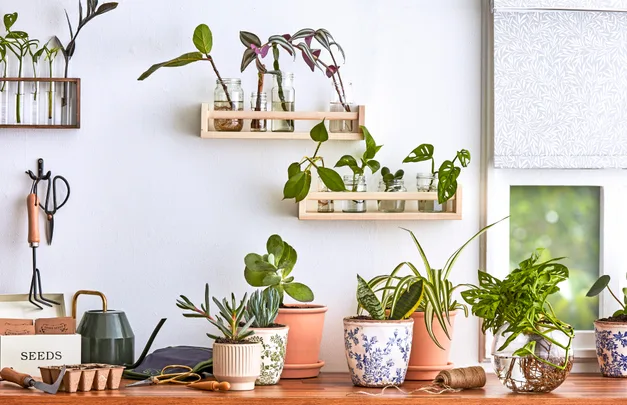
Growing your plants from seeds means you’re often in for a surprise in terms of the eventual colour, shape and size of the plants. With propagation, you know exactly what you’re getting
– a clone of your parent plant.
To do it, there are three processes that are ridiculously easy: soft-tissue cuttings (leaf and stem), hard-tissue cuttings (stems), and division.
1. How to propagate leaf cuttings and stems
Leaf cuttings can be propagated quickly and easily, and using leaves is one of the best ways to ensure identical new plants. It’s as easy as snipping off a stem with a few leaves (just below a node – ensure it has at least three internodes of growth) and rooting it.
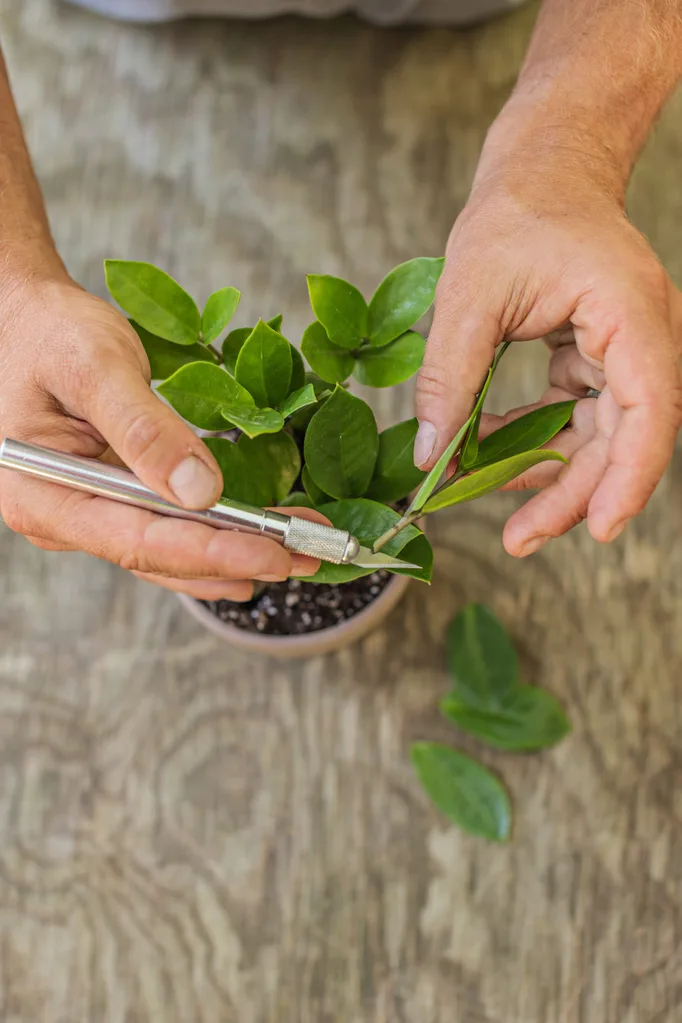
Lay it on, or insert into fresh, moist propagation mix – 50/50 potting mix and perlite or washed coarse river sand. Place in a container with a drainage hole.
Plants that grow well from leaf cuttings include:
- Begonias
- Sansevierias (snake plant)
- Crassula
- Pothos
- Umbrella plant
- Rosemary
- Philodendron
- Prayer plant
- Monstera
- Rhipsalis
- Chalk sticks
- Monstera
- Silver Inch plant
- Echeyeria
- Pilea
- Peperomia
- African violet
- ZZ plant
- Spider plant
Hardwood cuttings
Hardwood cuttings from roses, hydrangeas or camellias are best done when flowers are finished. Here are the three hardwood plants that can easily be propagated:
- Roses
- Hydrangeas
- Camellias
Propagating cuttings in water
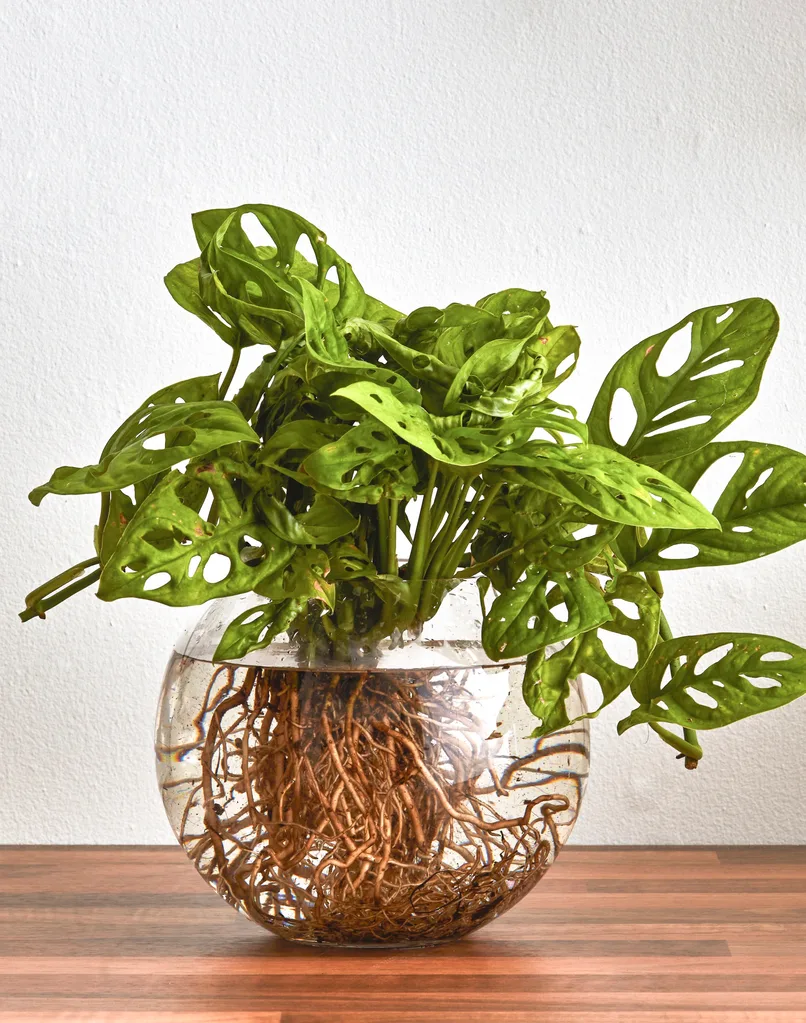
Some common houseplants – especially vining types such as pothos, philodendron, and monstera – are easy to propagate by putting stem cuttings in water. After about 5cm of roots form, carefully plant the cutting in a fresh, moist mix, taking care not to damage the fine roots.
Keep it clean
Be sure your cutting tools are sharp and clean before each cut to prevent the spread of diseases.
2. Propagate plants by dividing the roots
Multi-stemmed plants (like monstera) can be divided into multiple plants. It involves taking the plant from the pot and gently tugging one stem to separate the roots; if this doesn’t work, you can cut the roots with a knife.
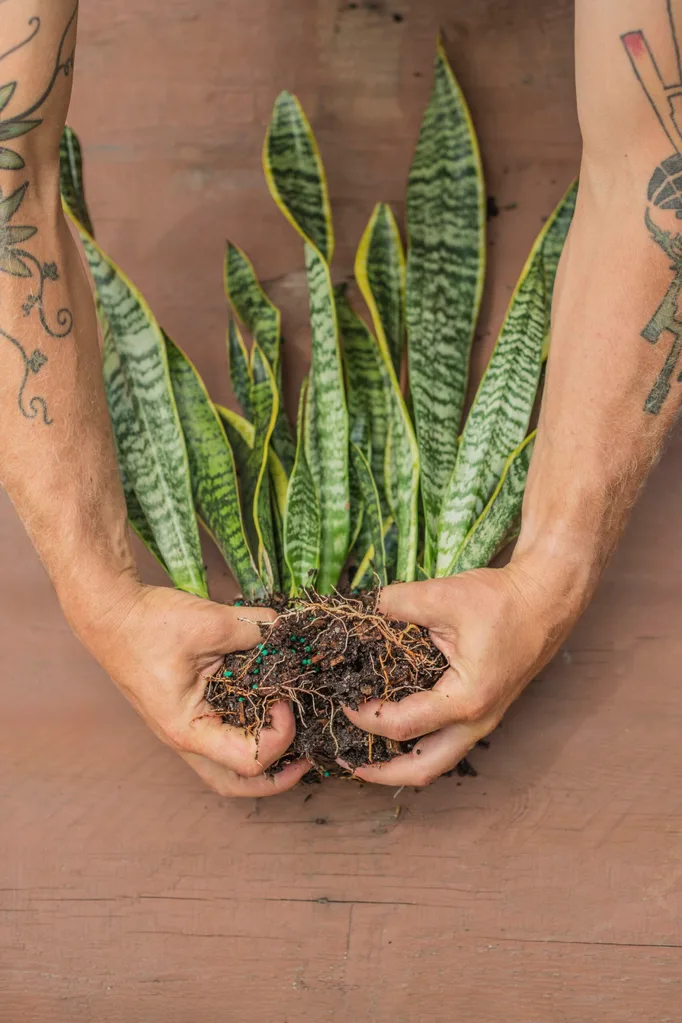
Plants that grow well from root division include:
- ZZ plant
- Peace lily
- Snake plant
- Monstera
- Pilea
3. How to propagate from pups
Some plants will literally multiply all by themselves, producing baby plants (aka “pups”). Let these plants grow to about 3 inches before you cut them and plant them in their own pots. Plants that you can propagate from pups include:
- Spider plant
- Aloe vera plant
- Bromeliad
- Ponytail plant
Cuttings may take between six days and six months to grow until they’re ready for planting out. Remember to be patient as some garden plants will take a while to grow – but it will certainly be worth the wait! Others may shoot up and surprise you. You can opt for a rooting hormone powder or gel when you plant them to ensure you’re speeding up the process.
4. How to propagate clumping plants
Clumping plants tend to be fairly easy to propagate, and include salvias, echinaceas, kangaroo paws and ornamental grasses. At a minimum, you’ll get one extra plant, but if you’re lucky, you can get up to five.
- Propagate in autumn, when the plant is becoming more energised.
- Water the plant deeply the day before you dig it up or remove it from its pot.
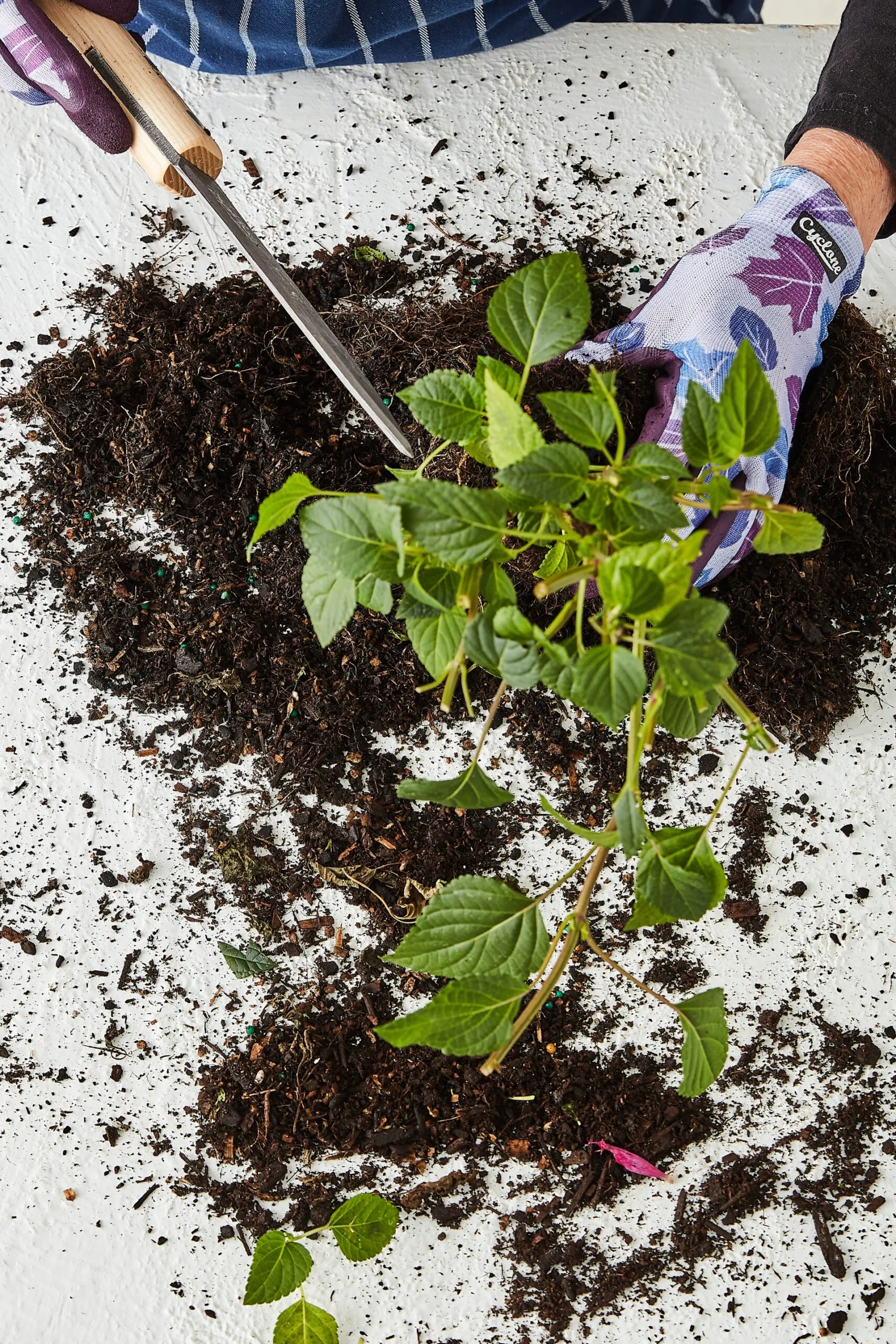
- Cut back old stems or leaves, leaving some shoots. This reduces transplant shock. Extract the plant from the pot or carefully dig around the entire clump in the garden with a spade. Lift with a garden fork, keeping the roots intact.
- Gently wash off soil to see root structure better. With clean, sharp secateurs, a spade or knife, cut the clump into smaller sections, ensuring each section has plenty of roots and 3–5 shoots.
- Plant immediately in prepared soil or potting mix. Water thoroughly. Keep it moist, not soggy, as the plants establish. If you can’t replant immediately, put in a shady spot for a couple of days and cover roots with a damp cloth.
17 popular plants you can propagate easily

Snake plant
(Sansevieria)
From a cutting:
Step 1: Cut a leaf from the host plant and cut it into 7–10cm segments.
Step 2: Maintain the leaf orientation by marking each segment with an arrow pointing to its lower edge.
Step 3: Insert the lower edge of each segment (arrow pointing down) about 2.5cm into the mix.
Place in bright, indirect light and wait until the mix is nearly dry before watering again thoroughly. You’ll see a new pup emerge from the cuttings in one to three months.
Dividing at the roots:
Step 1: Remove the plant from the pot. Hold the plant at the base of the leaves and gently break into clumps.
Step 2: Try to keep roots attached to each leaf clump.
Step 3: Plant clumps in new pots with fresh mix. Water thoroughly. Tall snake plants may need to be staked for a few months until supportive roots develop.

African violet
(Saintpaulia)
Step 1: Cut a healthy, mature leaf from a host plant.
Step 2: Dip the stem in rooting hormone to speed up root development.
Step 3: Plant the stem about 2.5cm deep. Cover pot with a plastic bag and secure with a rubber band. Place pot where it gets six hours of bright, indirect light daily. Water every 3–4 days. Remove bag for a few hours when moisture builds up. When shoots appear at the base of the leaf, remove the bag. Care for the new plant as you do the host plant.

ZZ plant or Zanzibar Gem
(Zamioculcas)
Step 1: Cut a mature leaf or a young stem with two or three leaves.
Step 2: Insert into a pot of propagating mix. Place in a warm spot with bright light. Keep mix moist.
Step 3: The leaf or stem cutting will produce a baby ZZ plant with roots, rhizome, stem and leaves that can be repotted.

Spider plant
(Chlorophytum comosum)
Step 1: Select a well-developed offshoot, or spiderette, with small starter roots at its base. Cut from the mother plant.
Step 2: Plant the base of the spiderette in a pot of fresh, moist mix. Keep the mix moist, but not wet, until the plant is established. Spiderettes can be put in water to develop longer roots before potting.

Pothos
(Epipremnum aureum)
Pothos cuttings can be placed in a jar of water with a special open-grid lid that holds them in place but lets you easily pull them out once they’ve formed roots to plant out. Change the water in the jar at least once a week.

Monstera
(Monstera deliciosa)
Step 1: Cut a section of stem with 3–4 leaves, just below a node. Remove lowest leaf and place stem in a container of water, submerging the bottom half of the stem. Replace water every week.
Step 2: Remove from water after 2.5cm roots emerge.
Step 3: Plant in fresh, moist propagating mix.

Pilea
(Pilea peperomioides)
Step 1: Remove the plant from the pot and gently pull plantlets apart from the mother plant. Try to keep the pups’ roots intact with the leaves.
Step 2: Plant the pups in pots of fresh potting soil and replant the mother plant. Water thoroughly. Keep the soil evenly moist, but not overwatered, until plants are established.

Lavender
(Lavandula)
Step 1: Gently pull a 10cm shoot to side and strip away from main plant, ensuring it has a heel (a strip of bark) attached. Trim with secateurs.
Step 2: Remove leaves at base of cutting.
Step 3: Fill pot with seed raising mix. Using pencil, poke a shallow hole in top of mix and insert cutting.

Rosemary
(Salvia rosmarinus)
Step 1: Snip 15cm cuttings from top of plant and strip leaves from bottom.
Step 2: Dip cuttings into the rooting hormone then place dipped end into seed-raising mix. Press each cutting firmly into mix with your fingers.

Step 1: Carefully snap off a leaf from where it’s attached to the main stem.
Step 2: Leave the cut or leaf in a well-lit spot for 2-3 days until a callus forms over the end.
Step 3: Once formed, you can place straight into soil (callus first) or lie flat on soil and watch it grow.

Step 1: Take a shoot tip cutting, about 8 -12cm long. Avoid taking cuttings from plants that are budding or flowering. Remove the bottom 50 to 75% foliage from the cutting.
Step 2: Cut the base below the node at an angle to prevent rot.
Step 3: Apply your rooting hormone, covering approx 1 cm of the stem.
Step 4: Insert the cuttings into the soil. Leave 2-3 cm between cuttings.

Rose
(Rosa)
Step 1: Cut stems beneath where the flowers were and cut a 10–20cm ‘stick’ that has 3–5 growth nodes. The cut at the base should be just below a node.
Step 2: Mark base with a down arrow and put this end directly into soil.

Hydrangea
(Hydrangea)
Step 1: Choose healthy, non-flowering shoots 10–15cm long, with two sets of leaves below the top set of leaves.
Step 2: Cut just below the node.
Step 3: Remove lower leaves and put the ‘stick’ in propagating mix.

Camellia
(Camellia)
Step 1: Make a 10cm cutting in summer, making sure the bottom cut is just below the node.
Step 2: Remove all but two leaves, and place half of the stick into propagating mix.

Dahlias
(Dahlia pinnata)
Dahlias are among the most delightful blooms in late summer and early autumn gardens. If you’d love more of them, now’s the perfect time to dig them up.
Step 1: Once flowers have faded, cut back foliage to about 5cm from the crown.
Step 2: Dig up your dahlia with a garden fork. Beneath the stems and above the roots, you’ll find potato-like growths called tubers.
Step 3: Separate the tubers from the stem with clean, sharp secateurs, a knife or spade. Keep the crown intact.
Step 4: Cut the tubers with a knife so each piece gets a healthy bit of the crown and at least one eye.
Step 5: If you’re digging up tubers in autumn and you get winter frosts, store them in a cool, dry, dark place, protected from rodents, and plant in spring, eyes facing up. If your climate is warm, let the cut surface dry and callous for a few days in a dry, airy spot before planting, eyes up.

Gladiolus
(Gladiolus)
Channel your inner Dame Edna with ever-generous gladioli – the most flamboyant of towering plants. They grow from corms which, similar to bulbs, store energy. Extracting the corms in autumn and replanting them means more gladioli next summer, at no extra cost.
Step 1: Wait until the foliage has yellowed so you know the corm has collected all the energy from the leaves and it can perform next year.
Step 2: Gently dig around and under the plant with a garden fork, lifting the clump without damaging the corms.
Step 3: Extract the corms and lay in a warm, dry, airy and shaded spot for 2–3 weeks to dry out.
Step 4: Once dry, remove the old, shrivelled parent corm from the bottom, and separate any small, baby corms (cormels) from the main, firm new corm.
Step 5: If you live in an area that gets regular winter frosts, store corms in a mesh or paper bag somewhere cool, dry, dark and frost-free. Then plant in spring, pointy end up. If you live in a warm climate, plant immediately, pointy end up.

Hippeastrums
(Hippeastrums)
Hippeastrums bring a real wow factor to your summer garden. They’re extroverts with huge, trumpet-like flowers. They’re also generous and, when you treat them right, they’ll produce offsets from their bulbs, meaning more hippies in your garden.
Step 1: Wait for late autumn or early winter, when the plant is slowing down or already dormant.
Step 2: Lift the whole bulb from the potting mix. Brush away mix to see the base clearly.
Step 3: Look for small bulbs attached to the side. Check they have a basal plate – the hard, flat base from which roots emerge. Gently separate these offsets from the main bulb with your fingers or use a clean knife.
Step 4: Replant offsets in a free-draining mix with the neck above the soil line. Replant the parent bulbs – they can keep producing glorious flowers and offsets for decades!


Related stories
Native ad body.
Native ad body.

Native ad body.