
 Bambu Lab via Amazon
From design models and artwork to decor, toys and unique jewellery, 3D printers can make just about anything you want. In fact, there’s a whole section on Etsy dedicated to 3D printing plans.
I was also surprised to find that buying a 3D printer doesn’t necessarily mean spending a small fortune. Yes, there are models that cost thousands, but also some that are cheaper than, say, a robot vacuum.
So I’ve rounded up some of the best 3D printers on the market based on features including design, ease-of-use, customer support and warranties. Plus reviews, where relevant and possible, to give you a better sense of what the printers are like to use.
2025’s top 3D printers
- Best all-round 3D printer: Bambu Lab A1 3D Printer Combo, $1548.45 at Amazon
- Best 3D printer for beginners: Flashforge AD5M Pro 3D Printer, $799 at Amazon
- Best for detailed 3D printing: Original Prusa MK4S 3D Printer, $1999 at Amazon
- Best 3D printer under $500: Creality Ender 3 V3 SE 3D Printer, $299 at Amazon
- Best 3D printer for crafting: Elegoo Saturn 4 Ultra 3D printer, $1057.65 at Amazon
The best 3D printers in Australia
01
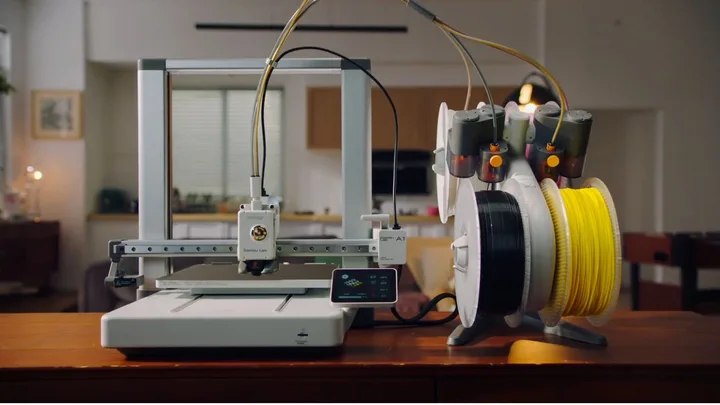
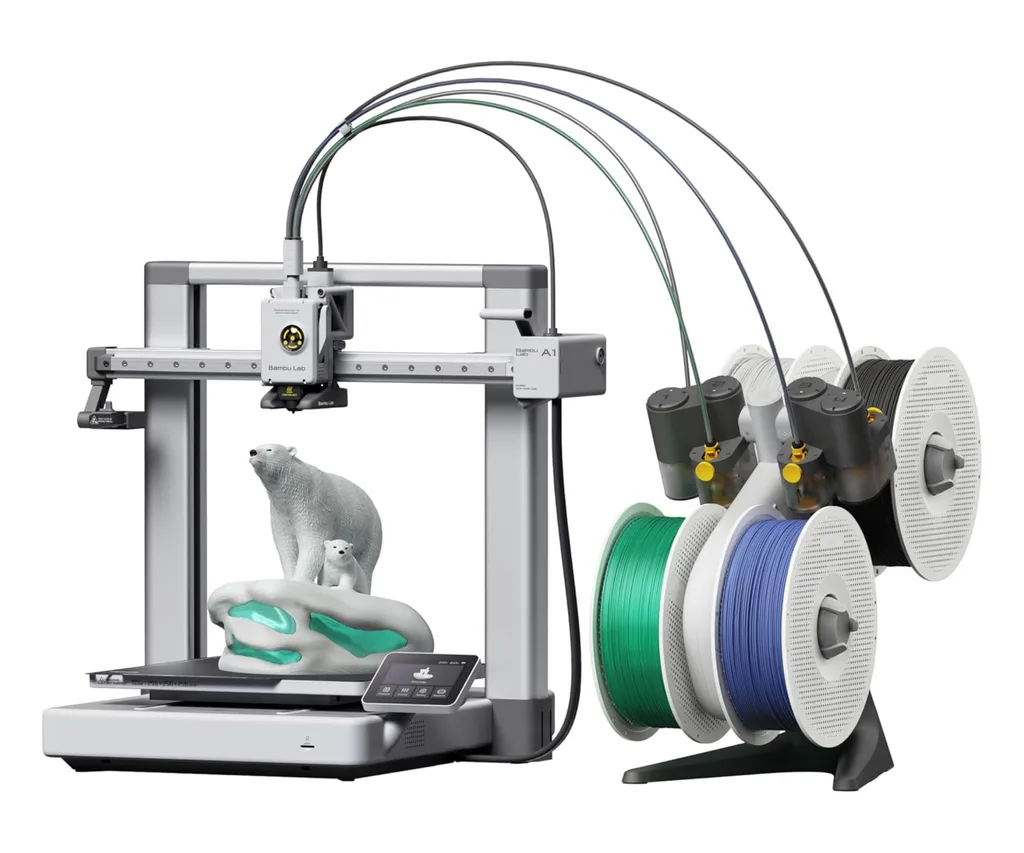
Bambu Lab A1 3D Printer Combo
$1548.45 at Amazon
Best all-round 3D printer
Bambu Lab has built a reputation as one of the leading 3D printer brands and the A1 model is a popular choice for both hobbyists and professionals. Its auto-calibration features make it easy to get the optimal 3D printing quality for your designs, and the AMS lite means you can print with multiple colours.
“This is an excellent 3D Printer. Cannot speak highly enough about the ease of use and the print quality, straight out of the box,” one Australian customer shared in a 5-star review on Amazon, where it has a 4.5-star average from over 289 global customer ratings.
Another customer who shared a very detailed 5-star review summed up with: “if my experience is anything to go by, the Bambu printer is an excellent unit to get started with and offers so much more. The results so far have been amazing. I’m very happy with my purchase.”
Printer dimensions: 59D x 42W x 53H cm
Maximum print volume: 256 x 256 x 256 mm
Compatible print materials: ABS (Acrylonitrile Butadiene Styrene), PETG (Polyethylene Terephthalate Glycol), PLA (Polylactic Acid)
Key features:
- Multi-colour printing with AMS lite included
- Auto-calibration for precise Z-offset, bed-levelling and more
- User-friendly interface and simplified touchscreen
- Acceleration of 10,000mm/s² for fast printing
- Compatible with smartphone and computer
02
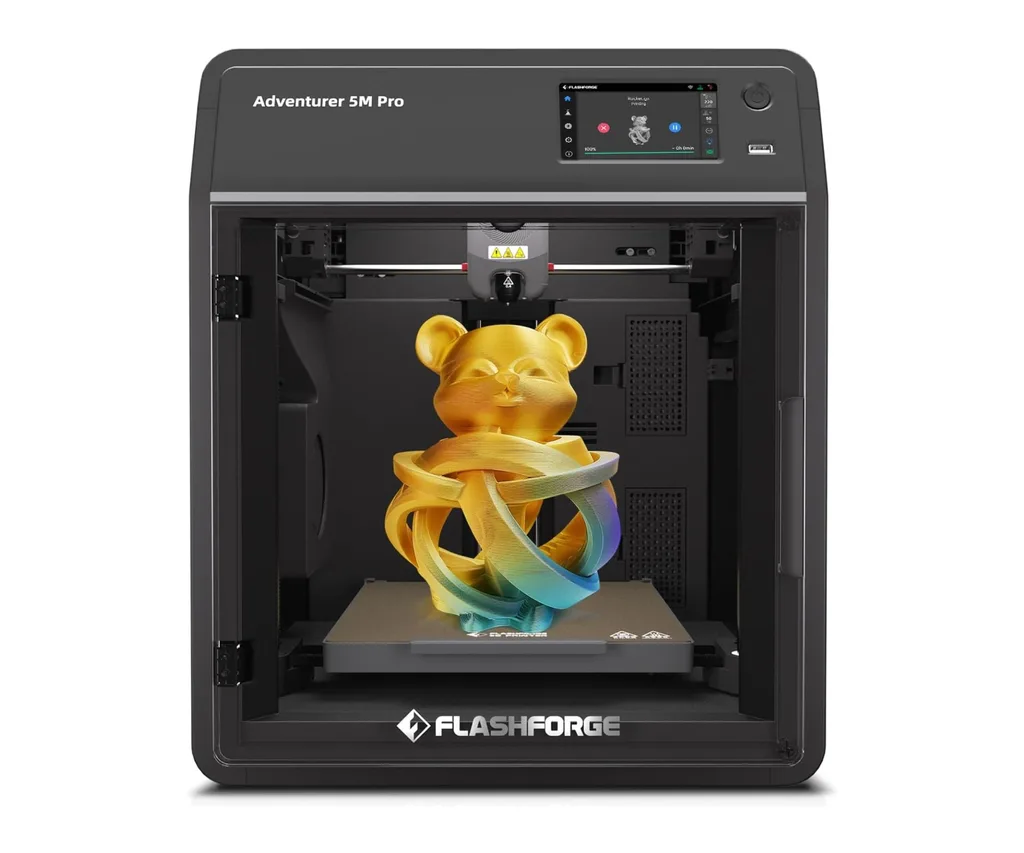
Flashforge AD5M Pro 3D Printer
$799 at Amazon
Best for beginners
This 3D printer can be used for family crafting, creative teaching and even household repairs (yes, you can use a 3D printer to make nuts and bolts, washers, bits of pipe, garden stakes and more). Auto-calibration, video monitoring and easy-maintenance nozzles also help beginners get started and save time switching between print modes and tasks.
It’s also designed with home-safety features in mind, including an enclosed structure, dual filtration system and HEPA13 and activated carbon filter.
“This is a great 3d printer…. hasn’t missed a beat and still going strong. Easy to learn and worked straight out of the box,” one Australian customer said in a 5-star review on Amazon from August 2025, where it has a 4.3-star average from over 155 global reviews. Another verified Australian customer wrote a very detailed review and said it was “so good that 3 days later I bought a 2nd one.“
Printer dimensions: 38 x 40 x 45.3 cm
Maximum print volume: 220 x 220 x 220 mm
Compatible print materials: PLA, PETG, TPU, ABS, ASA, PLA-CF, PETG-CF
Key features:
- One-click, automatic levelling system
- Dual filtration system
- Multi-diameter quick detachable nozzles
- OOne-click group file sending and multi-printer network print monitoring
- Flash Maker APP to manage devices and monitor printing in real time
03
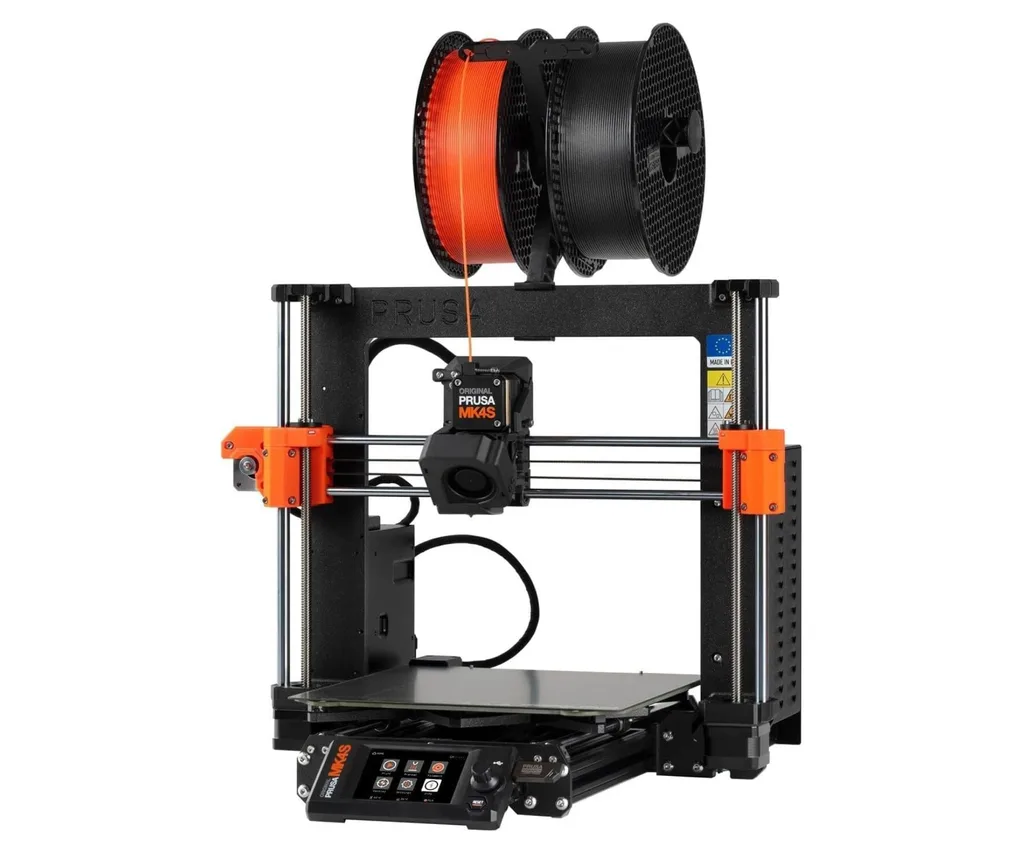
Original Prusa MK4S 3D Printer
$1999 at Amazon
Best for detailed 3D printing
Prusa has a reputation for making high-quality 3D printers, and the MK4S is the brand’s most recent version. Beginner-friendly features include automatic calibration and one-click printing, as well as coming already assembled. So you can just take it out of the box, plug it in and start printing after it’s automatically calibrated.
“So sturdy, so easy to set up, and SO much better in print quality,” one seasoned 3D-printing customer in the US said in a very detailed 5-star review on Amazon.
“It is an expensive printer but the quality shows!”
Printer dimensions: 49.78 x 39.88 x 54.86 cm
Maximum print volume: 250 x 210 x 220 mm
Compatible print materials: PLA, PETG, Flex, PVA, PC, PP, CPE, PVB and ABS, ASA, HIPS, PA when using the Original Prusa Enclosure with filtration add-on
Key features:
- Designed and made in Europe
- Automatic calibration
- One-click printing
- Comes assembled
- Lifetime technical assistance
Also available at:
04
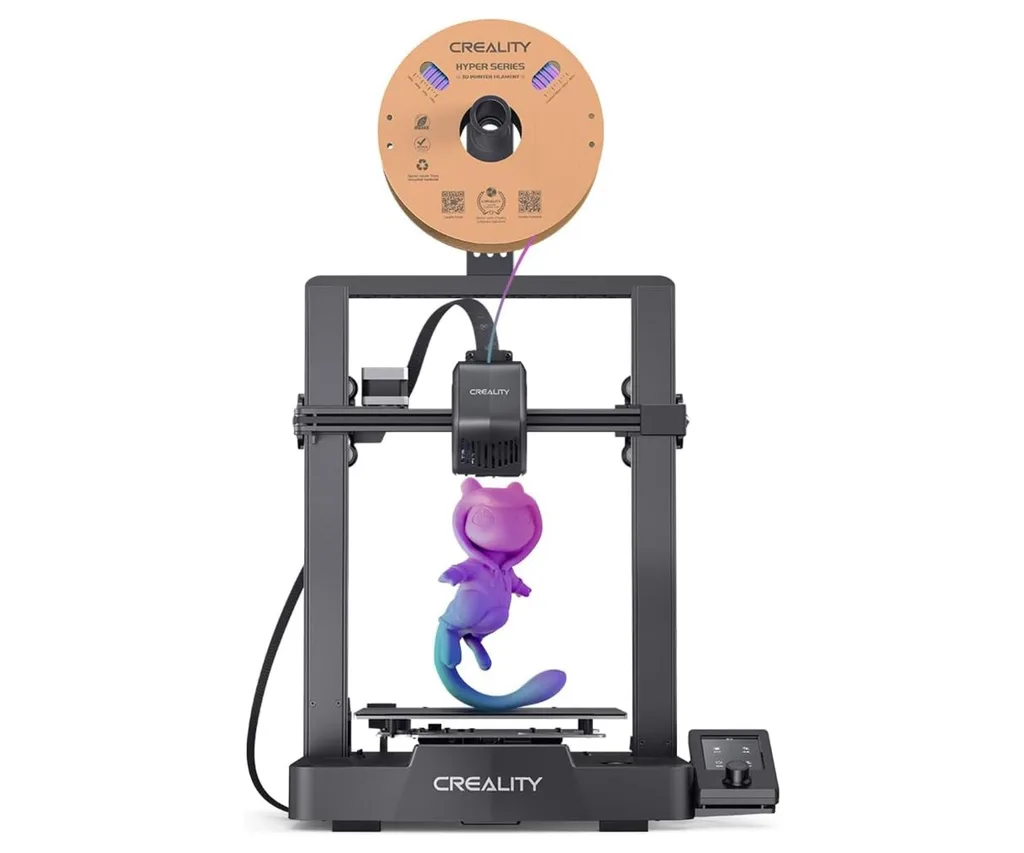
Creality Ender 3 V3 SE 3D Printer
$299 at Amazon
Best 3D printer under $500
This low-cost 3D printer is a best-seller on Amazon, with more than 1590 5-star reviews from verified customers. It’s designed to be simple to use, with auto-levelling and filament loading features.
“So easy to setup and get going. Roughly 45-min setup time. Not perfect though. Bed springs are very soft so be prepared to level everytime you want to print. Other than that great price and really good quality prints,” one Australian customer shared in a 5-star review on Amazon, where it has a 4.3-star average from over 11,880 global ratings.
But some customers did find troubleshooting took quite a lot of time, so while the price is low it may be more suited to people who are happy to spend time learning as they go.
Printer dimensions: 40D x 40W x 40H cm
Maximum print volume: 220 x 220 x 250 mm
Compatible print materials: PLA, PETG and TPU
Key features:
- Monochrome and colour printing with inkjet technology
- 250mm/s printing speed
- CR touch auto levelling
- Auto filament loading in one touch
05
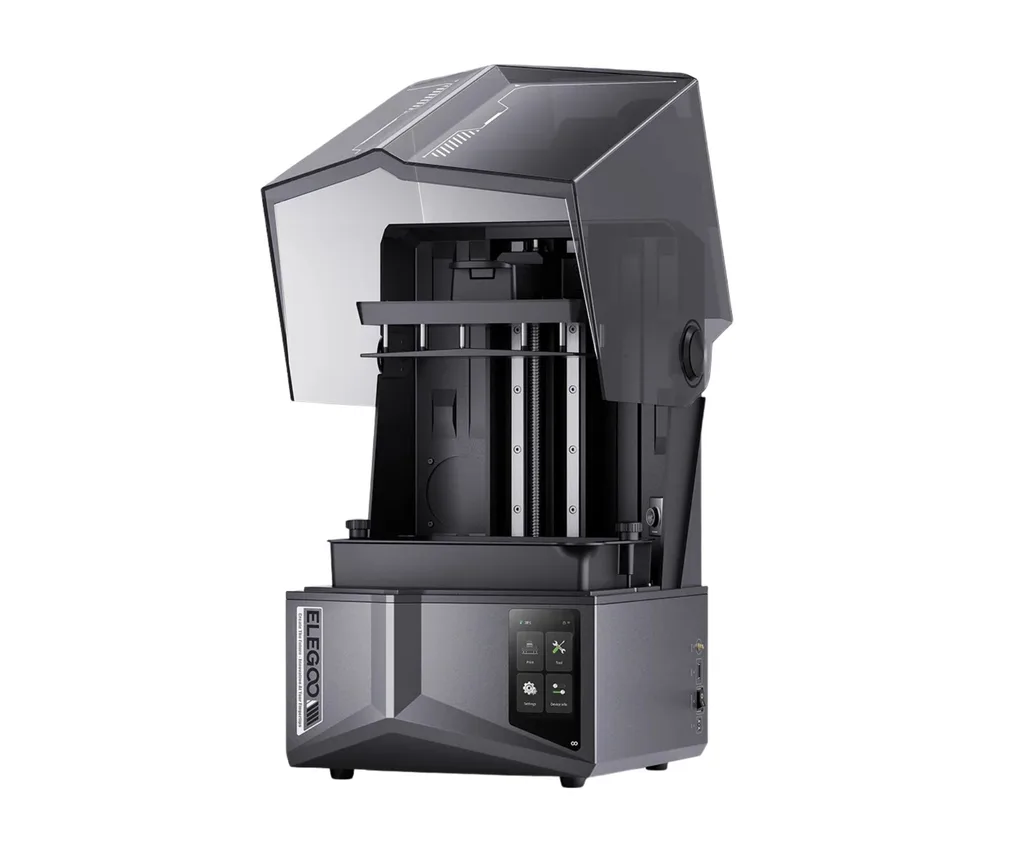
Elegoo Saturn 4 Ultra 3D printer
$1057.65 at Amazon
Best 3D printer for crafting
If you’re keen to create 3D prints you can paint and decorate yourself, this resin 3D printer is designed to make it easy to create detailed figurines, prototypes and home gadgets or tools. Its innovative tilt release technology makes printing faster by allowing the models to be peeled off the release film faster, and the AI camera means you can monitor prints or even capture time-lapse videos of your creations as they’re formed.
“Great 3D printer and results for the price,” one Australian customer shared in a detailed 5-star review on Amazon, with plenty of great pictures of their designs.
“This is my second printer, but a big upgrade coming from a 5″ 2K machine, quadruple the build plate area, twice as fast layer times, just about half the XY pixel size and cheaper than my old machine,” another Australian customer wrote in a 5-star review on Amazon, where it has an average of 4.3-stars from over 310 global ratings.
Printer dimensions: 42.3D x 65.3W x 43.6H cm
Maximum print volume: 218.88 x 122.88 x 220 mm
Compatible print materials: Resin
Key features:
- Innovative tilt release technology
- 10-inch 12K Mono LCD
- COB + fresnel collimating lens
- Auto levelling and intelligent mechanical sensor
- AI camera, intelligent monitoring and power-loss resume printing
06
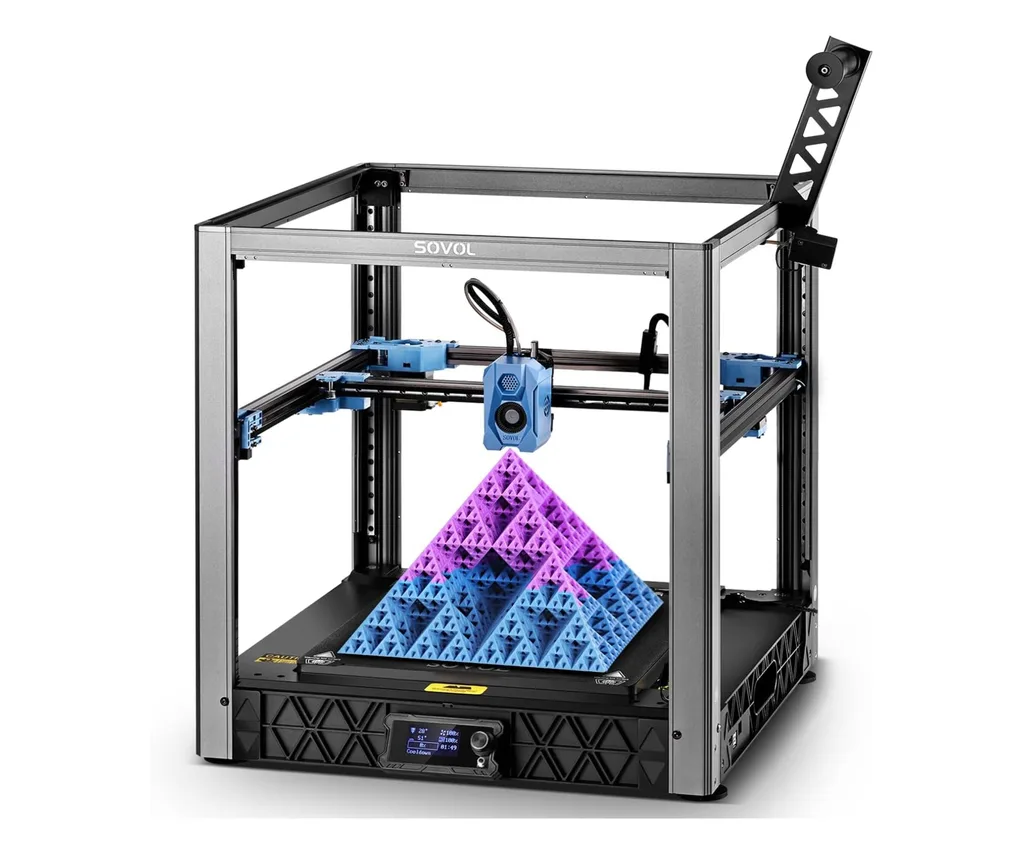
Sovol SV08 3D Printer
$779.99 at Amazon
Best for big 3D prints
This 3D printer from Sovol has one of the largest maximum print sizes on the market in Australia, giving you scope to create prints of up to 35 x 35 x 34.5cm. It’s also compatible with most 3D print materials and has a built-in camera so you can keep an eye on the print progress (3D printing takes a while).
“Great value for money printer that prints fast and is fairly easy to use. Ideal for the hobbyist who wants a good solid printer than can be updated with open source firmware and hardware,” one Australian customer shared in a 5-star review on Amazon.
“For what it offers, the SV07 is a really good option for 3d printing; it’s a moderate price for decent quality prints and I’m pretty happy I got the printer,” another Australian customer shared, also noting “the Sovol community seems pretty excited to help which is lovely.”
Printer dimensions: 53.34 x 55.12 x 57.4 cm
Maximum print volume: 350 x 350 x 345mm
Compatible print materials: PLA, PETG, TPU, ABS, PLA-CF, PETG-CF, PC, ASA
Key features:
- Monochrome and colour printing
- Maximum printing speed of 700mm/s
- Three working modes: USB Printing, WIFI (2.4G) and Network Port
What you’ll need to get started with a 3D printer
The technology for 3D printing has developed to a point where it’s now possible to have your own machine at home. But there are a few key things you’ll need to know and get to really make the most of these machines. As a fellow novice, here are some of the most valuable factors I’ve found that are worth keeping in mind:
1. Dedicated workspace
While 3D printers can be quite compact, they’re heavy – most models here weigh around 7kg to more than 18kg! So this is not a machine you’re likely to want to move once it’s set up. If you have a workshop, garage or craft space, consider setting it up there. Oh, and make sure it’s on a very sturdy table or other surface.
2. Safety gear
Some 3D printers come with enclosures, and a few brands sell these as add-ons. For resin 3D printers, it’s especially important to wear a mask or have the printer in an enclosure – I like to think of it as similar to the way you’d wear a mask and eye-gear for home improvements with power tools.
3. Print materials
Filament spools and resin are the two main types of materials used for 3D printing. Most of the models here use filament as it’s typically easier to start with and more readily available. Resin is typically more suited to highly detailed designs. But you can choose whichever you prefer, and often you’ll be able to switch between materials sold by the same brand as your 3D printer and third-party brands.
4. Support services and 3D printing communities
If you’re new to 3D printing, it’s a great idea to check out the support offered by different 3D printer brands. There are also plenty of videos, online forums and communities where you can ask for help, get design ideas and more. Beyond that, you might also be able to find some resources in your local area. One community business near me actually has a 3D printer – so that’s where I’d go first for some hands-on insights.
In Australia, 3D printer prices range from around $300 to $2000 or more. The print materials (such as filament and resin) will add to these costs as you use it, so keep that in mind. When you’re choosing a printer, also consider the features, technical support and other factors important to you so that you can choose one that offers value beyond the price tag.
You might also like:
- Check out this living, growing, 3D printed tiny house
- 20 present ideas for crafters we guarantee they’ll love
- James discovers 3D printing

Related stories

Native ad body.
Native ad body.
Native ad body.