
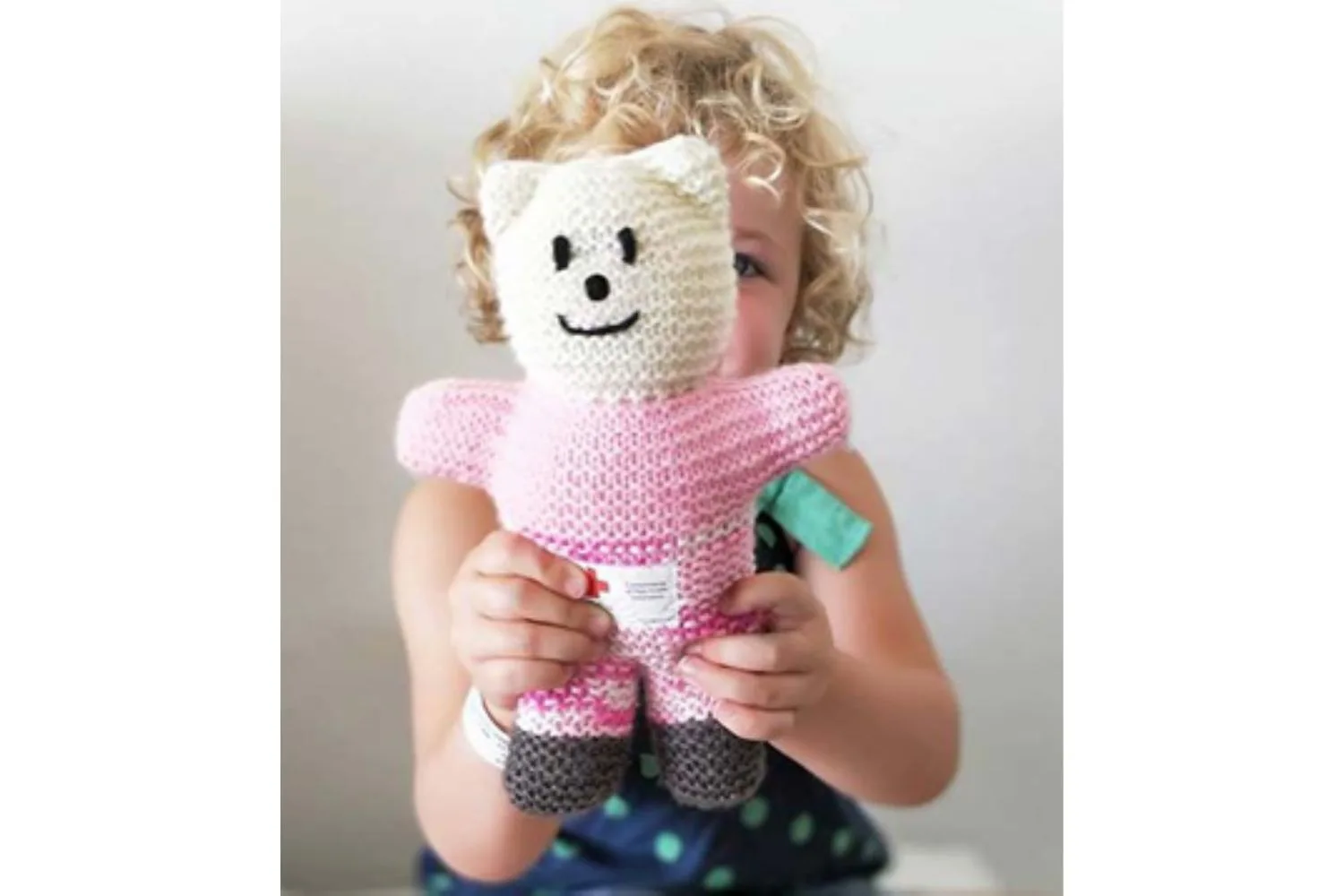
If you’re looking for a project to channel some pent-up creativity, The Australian Red Cross Trauma Teddies is the perfect place to start.
The Australian Red Cross Trauma Teddies program involves volunteers crafting and donating hand-knitted or crocheted teddy bears to comfort children experiencing trauma or crises.
KEY TAKEAWAYS
- The Australian Red Cross Trauma Teddies program has been running since 1990, distributing around 50,000 bears to children in crisis each year.
- Download the free official knitting pattern directly from the Red Cross website.
- Only 8-ply acrylic yarn is permitted — no mohair, angora, or cotton.
- No buttons, loose pieces, or plastic eyes allowed — all features must be knitted or sewn directly into the bear.
- Drop finished teddies at your nearest Red Cross office for inspection and labelling before they can be given to a child.
What are Red Cross Trauma Teddies?
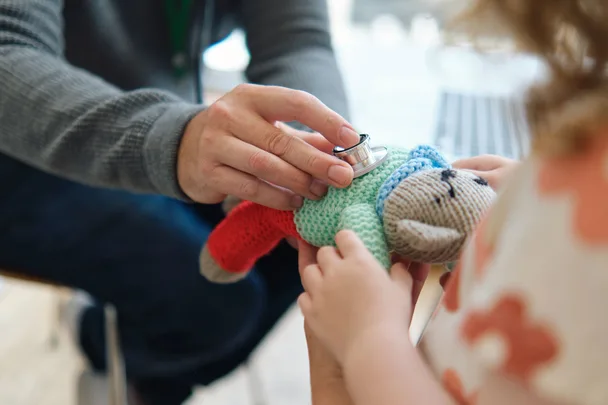
The Red Cross Trauma Teddies program connects volunteer knitters with children who need comfort. When a child is caught up in an emergency or traumatic event, an Australian Red Cross worker or paramedic may give them a Trauma Teddy to hold.
The program has been running since 1990, making it one of Australia’s longest-running charity knitting initiatives. Every teddy must pass a strict quality and safety inspection before it can be given to a child, so following the official guidelines carefully is important.
The free Trauma Teddies knitting pattern
The Australian Red Cross provides a free official knitting pattern you can download directly from their website. There is a standard-size pattern, a larger-size pattern, and a crochet pattern for those who prefer to crochet.
- Standard Trauma Teddy knitting pattern (PDF)
- Large Trauma Teddy knitting pattern (PDF)
- Crochet Trauma Teddy pattern (PDF)
Each teddy takes around 5 hours to complete, making it a great weekend project.
Knitting tutorial: what the pattern involves
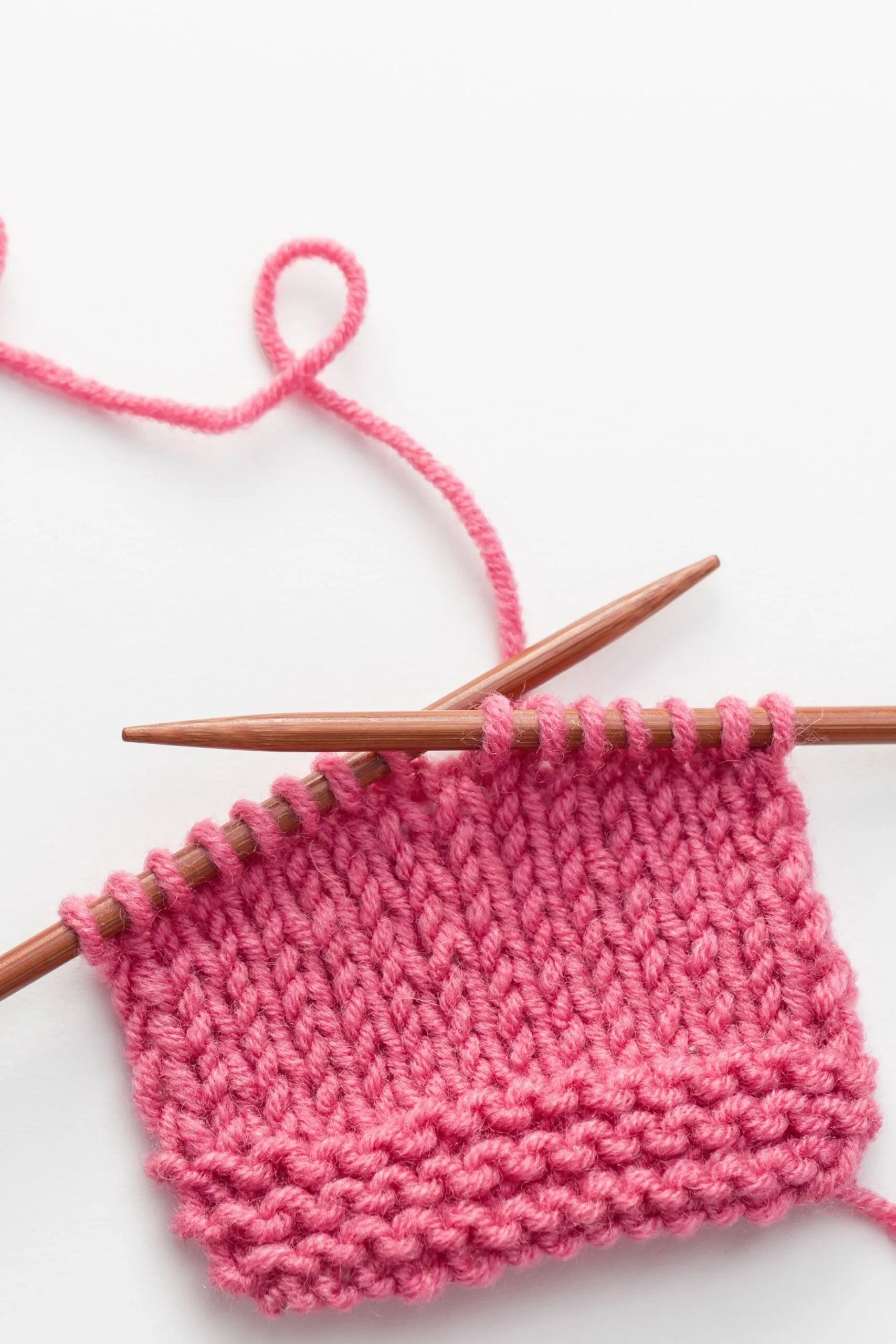
This is a beginner-to-intermediate knitting project. The entire teddy is knitted in garter stitch (plain knitting, every row), which makes it very accessible even if you’re fairly new to knitting.
To complete a Trauma Teddy, you will need to know how to:
- Cast on and cast off
- Knit in rows using garter stitch
- Change colours (for the legs, shorts, shirt, and head)
- Increase and decrease stitches
- Sew seams neatly to assemble the pieces
The pattern works on each side of the body flat, then the two sides are sewn together and stuffed. The teddy is knitted from the feet upward, legs first, then the body, sleeves, and finally the head. Ears and the face are added once the toy is assembled and filled.
If you need a refresher on any of these techniques, our guides on how to cast on, knitting in rows, and how to cast off are a good place to start.
What yarn and needles do you need?
Yarn: Use only 8-ply acrylic yarn (also known as DK weight yarn). Do not use mohair, angora, Feathersoft, Lurex, or cotton yarn anywhere on the teddy. These can cause allergic reactions in children.
Needle size: 3 mm needles for loose knitters, or 3.25 mm for tighter knitters. Adjust accordingly if your finished teddy comes out too long or too short.
Colours: You’ll want at least two or three colours. One for the legs and shoes, one for the shorts and shirt, and a skin-tone colour for the head and hands. The Red Cross encourages knitters to make teddies with a variety of facial tones so every child who receives one can see themselves in it.
You can find suitable 8-ply yarn at craft stores like Spotlight, which often runs sales on yarn packs.
How big is a trauma teddy?
Trauma teddies come in various sizes, but they are typically small enough for a child to hold. They are usually around 20 cm (8 inches) tall before filling or 23cm (9 inches) tall after filling. The pattern states, “Trauma Teddies should be stuffed with a polyester monofilament (Dacron) fibre approved by the Red Cross.”
Do you have to follow the trauma teddy pattern?
Ensure you carefully read the Trauma Teddy knitting pattern for instructions and safety information. For example, no loose pieces, such as scarves or buttons, can be added.
Safety rules to follow
Every Trauma Teddy must pass inspection by a Red Cross coordinator before it can be given to a kid. Here are the key rules:
- Garter stitch only — no other stitch patterns
- No loose pieces — no scarves, buttons, bows, or add-ons of any kind. If you want your teddy to have shoes or hands, change the yarn colour within the knitting itself
- No knots in the middle of a row — join yarn only at the end of a row, and darn the tail securely into the seam
- No pins or sewing needles left inside the finished toy
- No plastic or button eyes or noses — all facial features must be sewn using black yarn, with stitches no longer than two rows to prevent little fingers getting caught
- Approved stuffing only — use polyester monofilament (Dacron) fibre. Never use bean bag filling, foam rubber, corn, stockings, or rags
A Red Cross volunteer will sew the official Red Cross label onto each approved teddy at a finishing school.
Where to send your Trauma Teddies
Once your teddy has been completed, drop it off at your local Australian Red Cross office or contact the Red Cross through redcross.org.au/traumateddy to find your nearest Trauma Teddy coordinator.
When you drop off your teddies:
- Don’t attach a card or label, as these become loose pieces
- Make sure they are clean and free of loose threads or long yarn ends inside
- Do not package or wrap them — the coordinator needs to inspect each one


Related stories

Native ad body.

Native ad body.


Native ad body.