Trying to rid your plants of annoying garden pests is one of gardening’s most frustrating cycles, and the spray bottle is often to blame. Most pesticides don’t just kill garden pests; they also wipe out the beneficial insects that were quietly eating them. Plus, pests like aphids breed fast and bounce back in days.
The fix? Let the good garden bugs do the work. Meet nine good garden bugs for your veggie patch, and tips on how to get them to move in with you.
9 good garden bugs to welcome into your garden
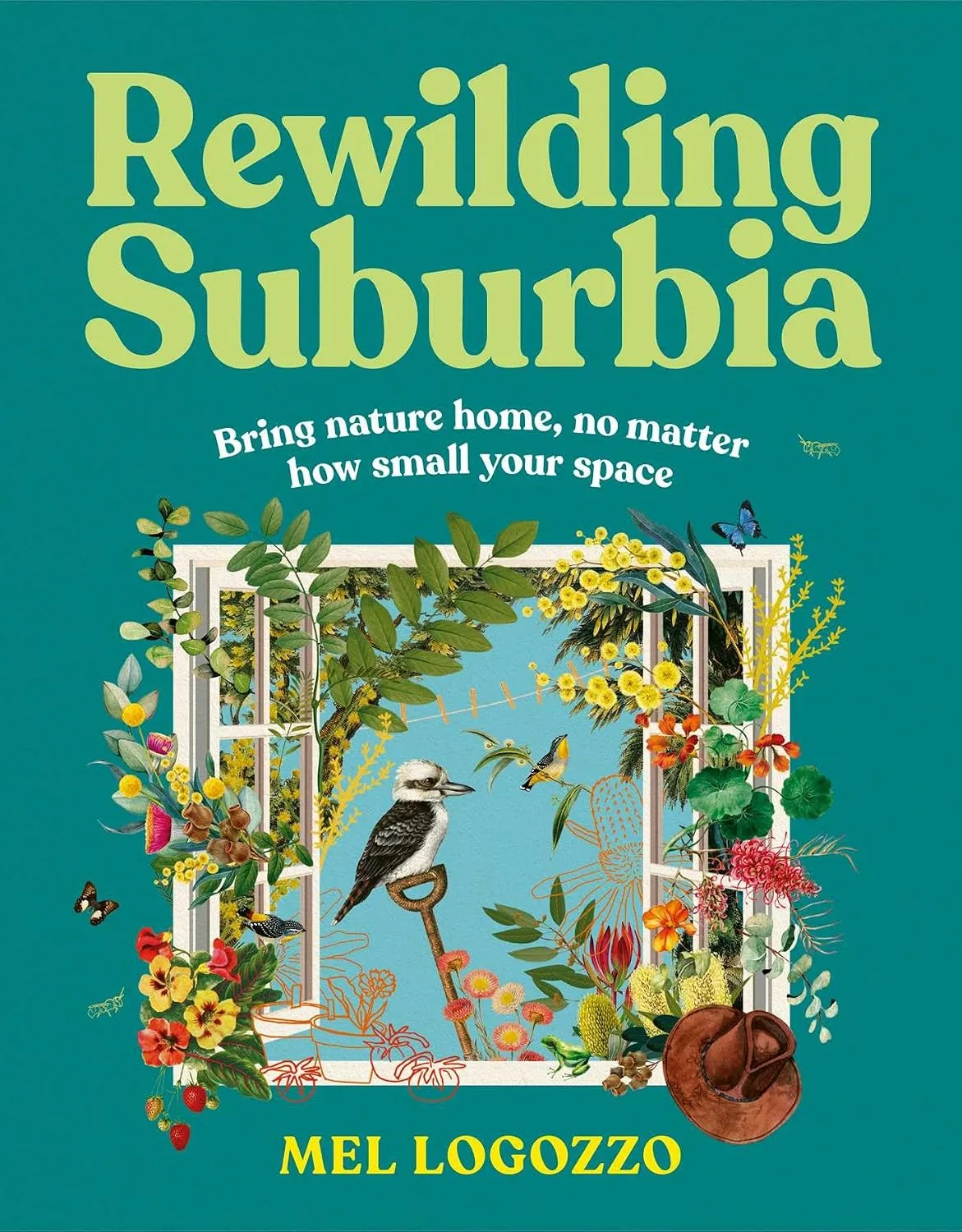
Over the past eight years, Mel Logozzo has transformed her paved backyard into a vibrant garden, full of food and native flowers. Along the way, she’s discovered another universe: the birds, bugs, and lizards that are key to any gardener’s success. Now a self-confessed nature nerd, she’s not just growing things in her garden; she’s exploring the vital role this other universe plays in rewilding our backyards and putting food on the table.
“Every pest has a predator. Every garden villain has a natural enemy just waiting to swoop in and ruin their day,” says Mel. “It’s not exactly a romcom, but it comes with drama, tension and the occasional happy ending – usually for the plants.”
Here’s an extract from her book, Rewilding Suburbia, where we meet the garden saviours that keep pests in check.

Meet the beneficial garden bugs, Tinder style

Ladybird
Ladybird
I know I don’t look like my profile picture right now. I’m going through a bit of a larval phase.
- Transverse ladybird (Coccinella transversalis)
- Common spotted ladybird (Harmonia conformis)
- Australian ladybird (Rhyzobius ventralis)
- Mealybug destroyer (Cryptolaemus montrouzieri)
- Strawberry ladybird (Micraspis frenata)
- Variegated ladybird (Hippodamia variegata)
What I bring to the table
I’m not just here for the aesthetics; I chew through pests like a boss, and my larvae are even hungrier than I am. While you’re busy admiring my polka dots, my alligator-shaped babies are clearing out colonies one bite at a time.
I lay eggs right where the food is. No packed lunches needed. As soon as my larvae hatch, they tuck into the nearest aphid, scale or mealybug like it’s a buffet. I keep the cycle going strong while your garden stays in balance.
It’s a match!
Swipe right if you’re dealing with: aphids, mealybugs, whitefly, scale, psyllid or spider mites.

Lacewing
I might look delicate, but my kids are absolute savages.
- Green lacewing (Mallada sp.)
- Green lacewing (Plesiochrysa ramburi)
- Brown lacewing (Micromus tasmaniae)
- Native lacewing (Drepanacra binocula)
What I bring to the table
I’m here to clear the scene, quietly and brutally. My lacey wings might say ‘fairy princess’, but my babies are full-blown apex predators, with sickle jaws and zero mercy. Lacewing larvae don’t nibble politely; they stab, slurp and leave nothing behind.
I lay my eggs on tiny stalks so my kids don’t immediately eat each other. Once hatched, they hit the ground crawling, tearing through soft-bodied pests like it’s a buffet. If there’s a sticky situation in your patch, I’ll send in the heavy hitters. And yes, I clean up after myself.
It’s a match!
Swipe right if you’re dealing with aphids, mealybugs, whitefly, thrips, spider mites or caterpillar eggs.

Tachinid fly
I’m not here to pollinate. I’m here to body-snatch your pests and let my babies finish the job.
- Australian leafroller tachinid (Trigonospila brevifacies)
- Primarily uses scarab beetle larvae as hosts (Rutilia spp.)
- Primarily uses caterpillars, sawfly larvae and grasshoppers as hosts (Exorista spp).
- Primarily uses caterpillars and armyworms as hosts (Winthemia spp)
- Uses shield bugs as a host (Trichopoda pictipennis)
What I bring to the table
I don’t play games. I find a host, lay my eggs on or inside it and walk away. My larvae do the rest. They burrow in, feed from the inside out, and emerge when the job’s done. It’s savage, but it works. And I’ve got a long list of garden pests on my radar.
You’ll usually see me cruising around flowers, stocking up on nectar between missions. I love a patch with plenty of open blooms and places to land. The more nectar you provide, the more energy I’ve got to patrol.
It’s a match!
Swipe right if you’re dealing with caterpillars, cutworms, cabbage whites, armyworms, sawfly larvae, beetle grubs or stink bugs.

Parasitic wasps
I don’t sting people; I sting pests. Usually in the soft bits. Then I let my kids finish the job.
- Brassica aphid assassin (Diaeretiella rapae)
- White butterfly parasite (Cotesia glomerata)
- General aphid parasite (Aphidius colemani)
- Potato and green peach aphids specialist (Aphidius ervi)
- Greenhouse whitefly parasitoid wasp (Encarsia formosa)
- Moth egg parasitoid (Trichogramma spp)
- Caterpillar parasitoid (Copidosoma spp)
- Psyllid parasitoid (Psyllaephagus spp)
- Scale parasitoid (Anicetus ssp)
What I bring to the table
I’m the reason your pests don’t sleep well. Some of us go for the eggs. Others lay straight into the larvae or pupae. We don’t just kill pests; we use them. My babies hatch inside and eat their way out like it’s a horror movie with a happy ending.
There are thousands of us, each with a different target. Most of us are tiny, quiet and working behind the scenes while you’re checking for chewed leaves. If you’ve got flowers, healthy diversity and no harsh sprays, we’ll stick around and do the dirty work.
It’s a match!
Swipe right if you’re dealing with caterpillars, aphids, whitefly, scale, leaf miners, psyllids, moth eggs or beetle grubs.

Assassin bugs
I don’t care who you are. If you’re soft-bodied and moving, you’re lunch.
- Common Australian assassin bug (Pristhesancus plagipennis)
- Spider assassin bugs (Stenolemus sp.)
What I bring to the table
I’m not subtle and I’m not nice. I stalk, ambush and stab. I’ve got a needle-like beak that pierces pests, injects digestive enzymes and sucks out the insides. It’s efficient and a little brutal. I’m a top-shelf predator that does the dirty work so you don’t have to.
Some of my relatives are flashy, with wild colours and spiky legs, but we’re all built for one thing: the hunt. I’m especially helpful in gardens with loads of mulch, perennial cover and a steady supply of prey. Just don’t pick me up; I’m not into cuddles.
It’s a match!
Swipe right if you’re dealing with caterpillars, aphids, leafhoppers, mealybugs, beetle larvae, bugs or flies.

Mantids
If you’re into intense eye contact, slow moves and a partner who takes their time before striking, I’m your dream … or your nightmare.
- Garden mantid (Orthodera ministralis)
- Large brown mantid (Archimantis latistyla)
- Burying mantid (Sphodropoda tristis)
What I bring to the table
I’m a patient predator. I perch perfectly still, blending into your basil or hiding in your rosemary, then strike fast when something tasty walks by. I’m silent, sneaky and deadly, with forelegs built like weapons and reflexes to match.
You’ve probably called me a praying mantis. That’s the nickname people use, but in your garden, I go by my proper names. I show up where the planting is thick, the flowers are tall and the mulch is deep. I’m not fussy about what I eat, which makes me powerful but unpredictable.
It’s a match!
Swipe right if you’re dealing with caterpillars, grasshoppers, crickets, moths, beetles, flies, butterflies and the occasional overconfident pollinator.

Solitary hunting wasps
I don’t do group chats. I work alone, raise my own kids and drag paralysed prey twice my size like it’s nothing. I am strong, silent and, if you’re a spider or caterpillar, terrifying.
- Giant spider wasp (Cryptocheilus bicolor)
- Smaller spider wasps (Pompilus spp.)
- Tyde’s sand wasp (Podalonia tydei)
- Thread-waisted wasps (Sphex spp.)
- Sand wasps (Ammophila spp.)
What I bring to the table
I’m the original solo parent. I find a target, sting it just enough to paralyse, then haul it back to a nest chamber underground or tucked into a crevice. I lay one egg on the still-living body and seal it in. My baby hatches and eats fresh without the prey ever fighting back.
I’m fast, graceful and not here to mess with people. You’ll see me hovering low to the ground or dragging limp spiders across the path. Some of us go for hairy wolf spiders, while others target armyworms or beetle grubs.
If your garden has soft soil, ground cover and plenty of prey, we’ll turn up. We don’t sting humans unless cornered; our eyes are on bigger, juicier things.
It’s a match!
Swipe right if you’re dealing with spiders, armyworms, caterpillars, beetle larvae and web-builders who’ve overstayed their welcome.

Spiders
I’m not everyone’s type, but I’ve got good instincts, quick reflexes and I never ask for anything. I work the night shift, keep to myself and quietly reduce your pest population.
- Orb-weaver spiders (Eriophora transmarina)
- Jumping spiders (Salticidae spp.)
- Wolf spiders (Lycosidae)
- Huntsman spiders (Sparassidae)
- Leaf-curling spiders (Clubiona)
- Ant-eating spiders (Zodariidae)
- Flower spiders (Thomisidae)
What I bring to the table
I’m the unsung hero of your backyard. I don’t need praise, pay or a fancy nesting box, just a bit of cover and some decent prey. Some of us build webs, some of us stalk on foot and some of us pounce like tiny fuzzy assassins.
We’re not out to get you. Most of us aren’t dangerous and we’d rather run than bite. What we are is incredibly helpful. We bring natural balance to your patch by keeping pest numbers in check, including the ones you didn’t even notice yet.
Give us some mulch, flowering groundcovers and shady spots to lurk, and we’ll quietly sort out your insect drama behind the scenes. You don’t need to love us, but a little respect goes a long way.
It’s a match!
Swipe right if you’re dealing with caterpillars, beetle larvae, moths, grasshoppers, flies, whitefly, leafhoppers, mozzies and even other spiders.

Hoverfly
I’m not a wasp; I’m just drawn that way.
- Common hoverfly (Melangyna viridiceps)
- Yellow-shouldered stout hoverfly (Simosyrphus grandicornis)
- Spot eyed hoverfly (Eristalinus punctulatus)
What I bring to the table
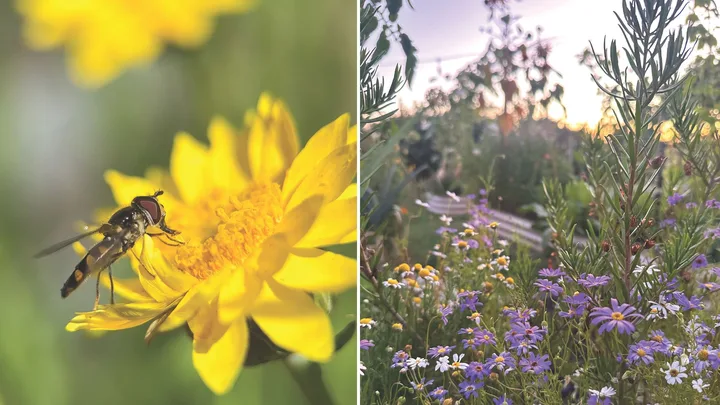
I’m the garden’s undercover operator. I look like I’d sting you, but I won’t. That whole wasp look is just a vibe. I’m actually a fly. A very helpful, hardworking fly. My larvae are tiny, legless hunters that get straight to work, tunnelling through aphid colonies like they’ve got something to prove.
While my kids handle pest control, I handle pollination. You’ll catch me hovering like a tiny drone, sipping nectar from flowers and making sure your plants get lucky. I multitask like a legend and never ask for anything more than a few blooms and a bit of soft ground to raise my weird little worm babies.
It’s a match!
Swipe right if you’re dealing with aphids, mealybugs, scale, thrips or caterpillar eggs.
Happily ever after
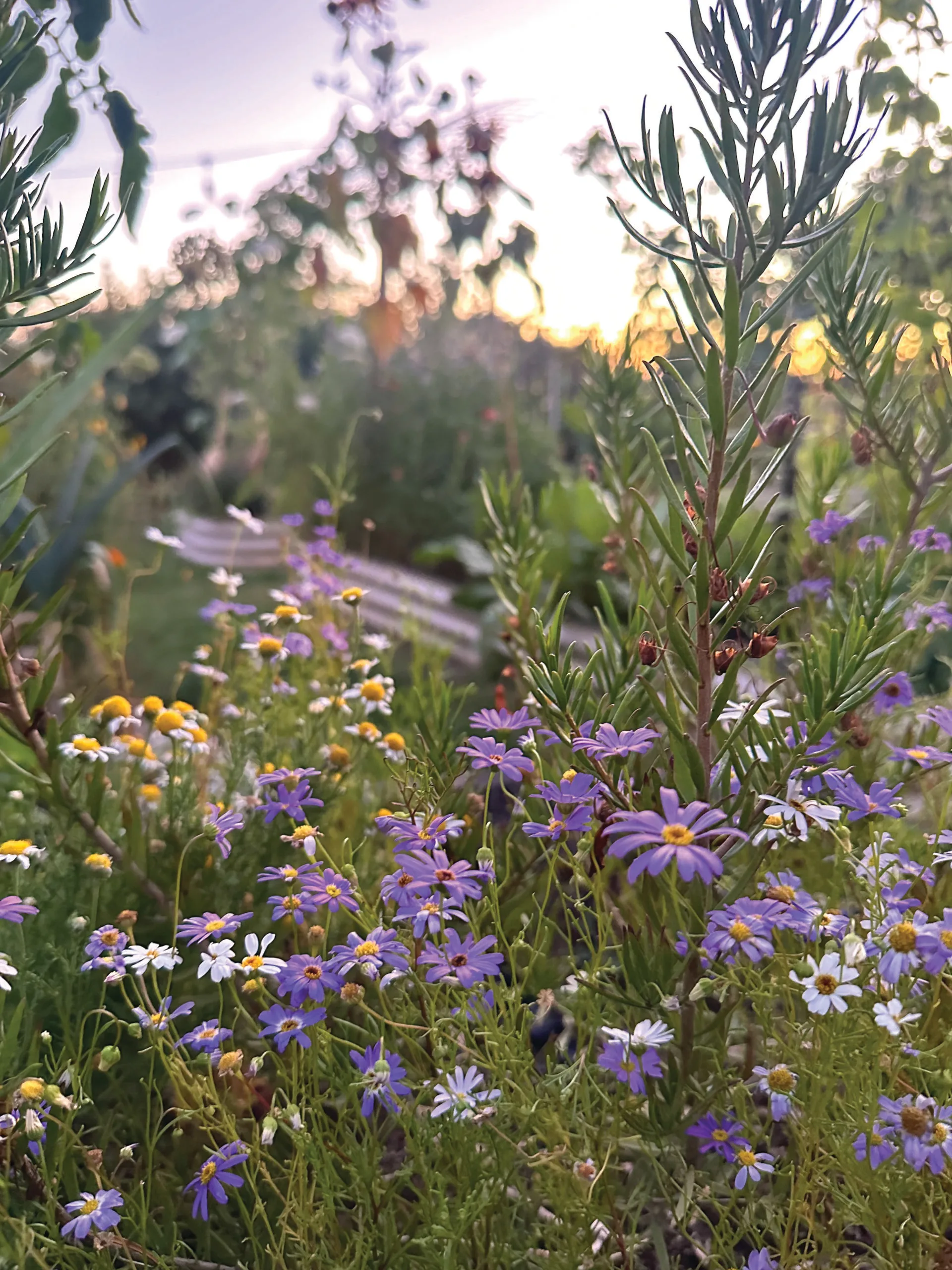
In the end, every thriving garden is basically a love story. There’s drama, chemistry, the odd toxic ex and a whole lot of sneaky hookups happening under the leaves. Some matches are fleeting, some stick around for the long haul and some ghost you after one aphid buffet.
When you stop trying to control every little thing and let nature do what she does best, you start to see it. The magic! The messy, beautiful, bug-filled magic. Those ecological interactions happening right in your yard. Ladybirds turning up just when the aphids do, wasps quietly running their own undercover operations, frogs on night patrol, bobtails sunbaking until it’s time for a snack and spiders stringing up love letters across your veggie patch.
Every little interaction has a ripple effect, every relationship, even the weird ones, play a part. Plant for the pollinators, mulch for the microbes, leave the leaf litter, skip the sprays and trust that nature’s got a better matchmaking algorithm than we ever will.
Love bites … and in the garden, that’s exactly how it’s meant to be.
Why beneficial insects matter (and why to skip the sprays)
A healthy garden isn’t pest-free. It’s balanced. A few aphids on your roses provide food that attracts ladybirds, lacewings and hoverflies, which then lay eggs where their young can feed. If you spray those aphids, you remove the predators, leaving your garden unprotected when the next pest attack comes. Even natural sprays can hurt helpful bugs, so the less you spray, the better your natural pest control works.
Good bugs vs bad bugs: how to tell the difference
Not every bug on a damaged plant is the cause. Before you squash one, look closely. Pests usually gather in groups and feed on leaves, stems, or sap, like aphids, whiteflies, scale, and caterpillars. Helpful bugs usually move around hunting or are found near pest groups. Ladybird and lacewing larvae especially look very different from the adults and are often confused with pests, so learn to identify them.


Related stories
Native ad body.

Native ad body.

Native ad body.