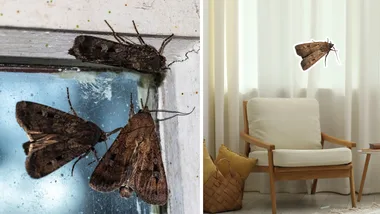

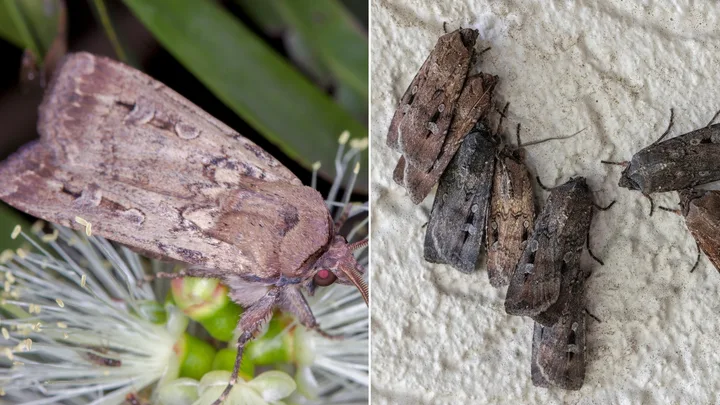
If you’ve been in Sydney in the last few weeks, you’ve likely seen a Bogong moth (Agrotis infusa) – or heard about them. Swarms of moths have been seen in the thousands around the Sydney region, after strong winds blew them off course during their migration to the Snowy Mountains. We asked insect experts and scientists, who have assured us that these moths are harmless and just a little lost.
As the Bogong moths begin to correct their course back to the Snowy Mountains, experts have a few things to say. Clancy Lester, self-appointed ‘Bee Man’, along with ecologist and Yorta Yorta–Barapa Barapa man Kai Lane, and PhD researcher Sebastian Judkins, have answered our questions about this endangered species and what, if anything, we can do to help.
KEY TAKEAWAYS
- Bogong moths (Agrotis infusa) are an endangered moth species that have taken over Sydney and surrounding regions as they migrate to the Australian Alps.
- This long-distance migration is not an infestation or plague, but a positive sign for a species in severe population decline.
- Bogong moths are harmless to humans and pets, and do not eat fabrics.
- If you find a Bogong moth inside your home, experts recommend you use the ‘Aussie spider technique’ – a container and piece of paper – to gently take it outside.
- Moths are underrepresented in research. As a citizen scientist, observing and documenting Bogong moths (and other moth species) helps collect data.
The current Bogong moth boom is not a plague
Bogong moths have been in the spotlight for several weeks now – they’ve excited and scared Aussies so much that media coverage has reached a global level. But, in reality, they are an endangered species. From 2017-2019, their population declined by as much as 99.5%. You may have seen an extreme amount of them recently, but experts assure us that this boom is not an overpopulation problem.
Clancy says, “This is not a plague, nor an infestation; this is the return of an Aussie icon, and should be celebrated!”
How did Bogong moths end up in Sydney?
Bogong moths travel using the stars every year, migrating from the warm inland plains of western NSW, QLD and north Victoria. Each year, they fly thousands of kilometres to their ‘summer home’ in the Snowy Mountains region of NSW and Victoria. In 2026, strong westerly winds pushed them off course, into Sydney instead.
What to do if you find Bogong moths
Finding a Bogong moth is quite easy in Sydney at the moment. Thousands have been found in unusual places throughout the city, especially in people’s homes. If you’ve got a big group of moths hanging around your laundry, the best thing to do is keep your windows and doors open, so they can leave safely.
If you find a single moth in your home, Clancy recommends using the ‘classic Aussie spider technique’: use a container and a piece of paper to gently remove them.
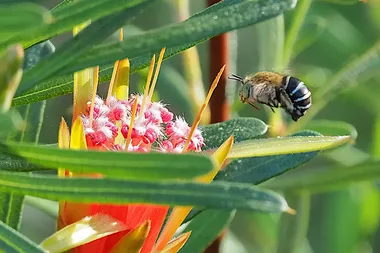
It’s important to know that Bogong moths are harmless to humans and pets, and they do not eat fabric or clothes. In fact, Sebastian explains that research suggests that these moths play a big role in pollination. While there haven’t been any formal studies into moth pollination, researchers call them ‘flower visitors’. In any case, they don’t want anything in your wardrobe (though they may be drawn to your floral patterned clothes).
Moths are an underrepresented species in science
Because of their nocturnal nature and the difficulty of understanding populations at scale, most Australian native moths are quite underrepresented in scientific research. We actually don’t know too much about the Bogong moth, or native moths in general. According to Sebastian, “Australia is home to at least 10,500 described moth species and there’s probably many thousands more – many of these are likely endangered, but we don’t have enough data to know it.”
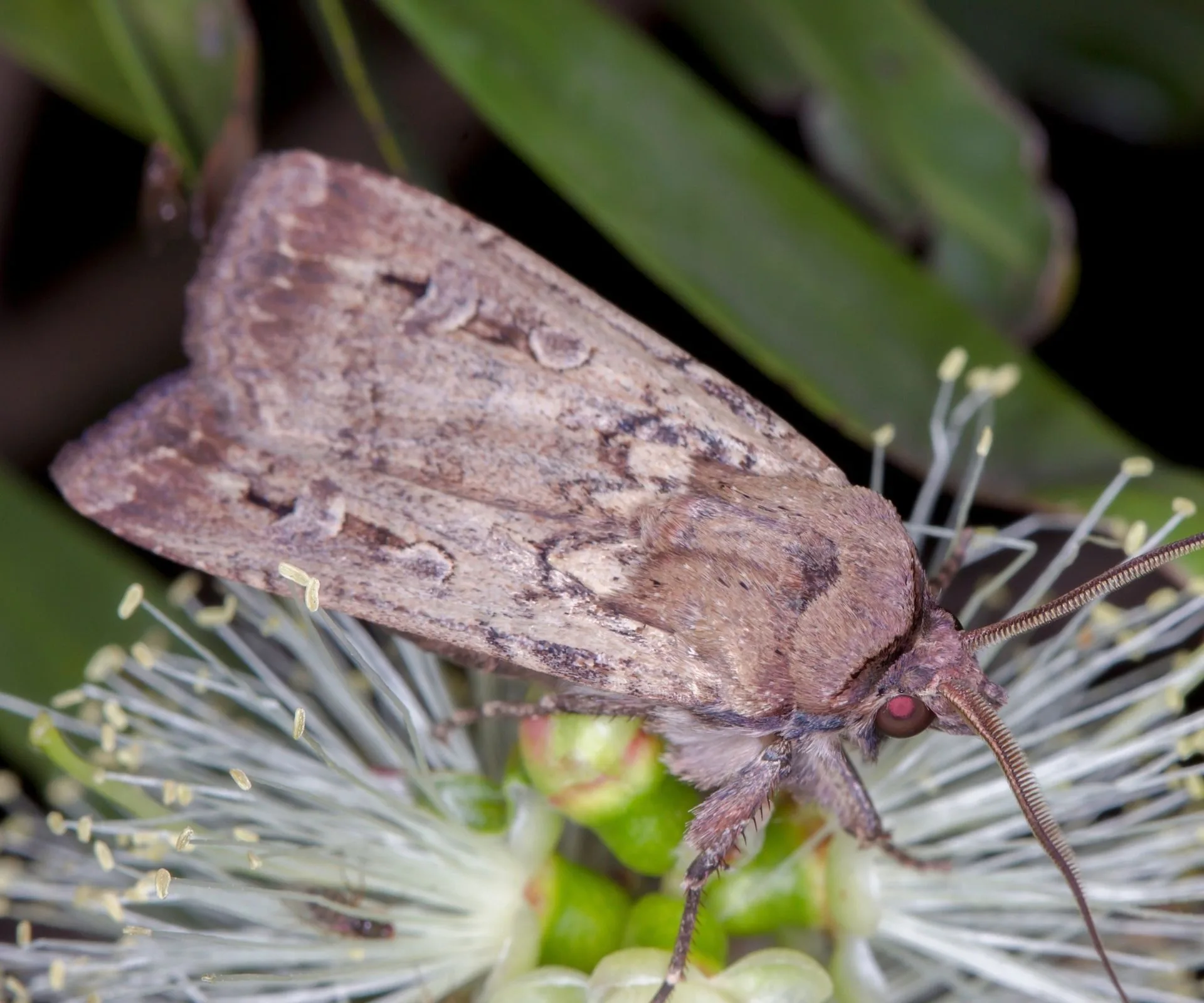
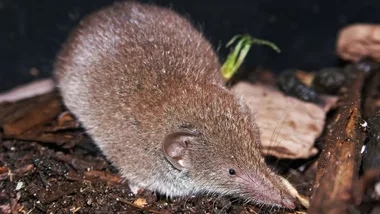
We do know that Bogong moths are an essential part of the Australian alpine ecosystem. They are a vital food source for the Mountain pygmy possum (Burramys parvus). Kai Lane explains that First Nations peoples have generations of knowledge about the importance of Bogong moths. They understood that these moths were a key food source for the Mountain pygmy possum, and the reverse food chain: “If you want a healthy forest, you must lure the moths to the top of the mountains in the alpine to start that food chain,” he explained.
How you can help endangered insect species
Currently, scientists are attempting to tag and track Bogong moths as they migrate. It’s a difficult process, but there are a few ways that you, as a citizen scientist, can help out. Clancy recommends taking photos of any moths you spot and uploading them to Moth Tracker, an online tracker developed to collect data on Bogong moths.
Sebastian also suggests looking at iNaturalist, an organisation that helps identify plants and animals around Australia. All observations from the iNaturalist community become data for scientists and conservationists.
You’ll also notice different regions trying to track Bogong migration with methods like tiny blue splotches of paint (see above). Many researchers also use Bogong Watch for tagging and observation. Overall, the sentiment is: if you see one, take a pic and upload it to a tracking site!
Bogong moths are on the Australian endangered species list due to a massive population decline in recent years. While there are approximately 2.2 billion Bogong moths, they are still recovering from a 99.5% decline that occurred in 2017-2019.
Bogong moth populations are declining due to increased use of agricultural pesticides, effects of climate change and general habitat loss. In 2017-2019, a huge population decline was mainly due to drought.
Bogong moths travel using the stars every year, migrating from the warm inland plains of western NSW, QLD and north Victoria. Each year, they fly thousands of kilometres to their ‘summer home’ in the snowy mountains region of NSW and Victoria. In 2026, strong westerly winds pushed them off course, into Sydney instead.

Related stories
Native ad body.
Native ad body.

Native ad body.