
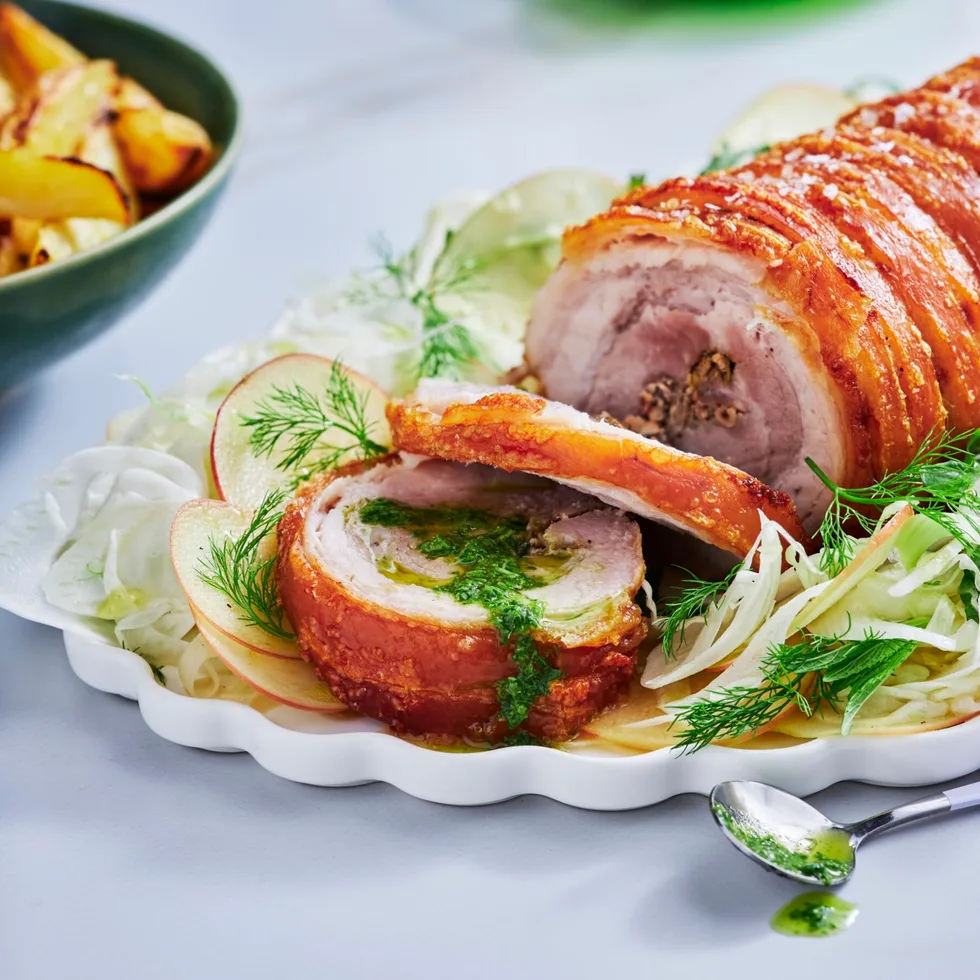
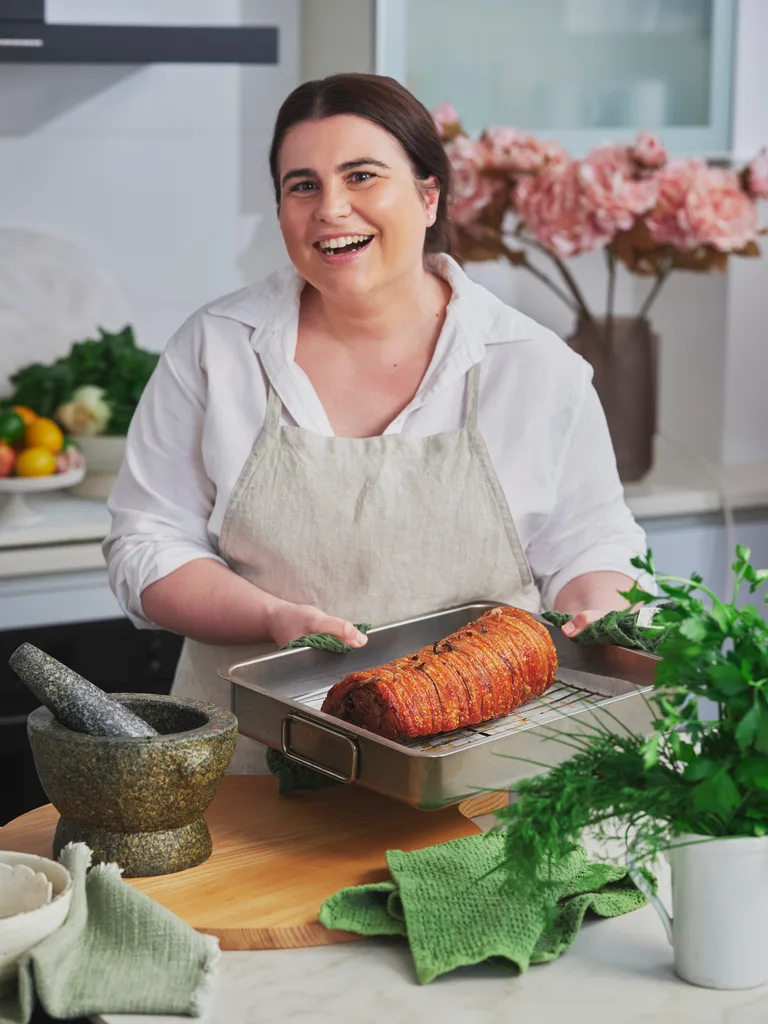
If you’re after a show-stopper roast to feed a crowd, you can’t go past a porchetta. The pork belly stays beautifully moist while it cooks, and the fragrant swirl of fennel seed and garlic through the centre adds heaps of flavour for very little fuss. And then there’s the crackling!
How to get crispy crackling
The secret to ultimate crackling is getting ahead, which works in your favour as it means you can prep the day before. Sitting your pork in the fridge overnight, uncovered, lets the skin dry right out. The drier the skin, the crunchier your crackling will be.
What to eat with porchetta
To balance the richness of the pork belly, I’ve added little pops of zing throughout the rest of the dish. No roast is complete without potatoes, so these golden wedges are tossed through a lemony dressing before roasting. For crunch and freshness, I’ve included a fresh slaw with fennel, apple and cabbage. If you aren’t a fan of fresh fennel, you can just swap in extra salad leaves.
And, of course, you can’t forget the vibrant salsa verde. This fresh, herby sauce is the perfect drizzle for the rich pork. You can make the salsa verde up to three days ahead and keep it covered in the fridge (pop some plastic wrap on the surface to avoid the herbs going brown).
If you’re lucky enough to have leftovers, thinly sliced porchetta piled with salad on a fresh bread roll is one of the most delicious lunches you can have!
Ingredients
Method
Put pork belly, skin-side up, on a large cutting board. Score rind at 1cm intervals. Flip and place skin-side down and lightly score flesh at 1cm intervals.
In a mortar and pestle, combine whole peppercorns and fennel seeds. Roughly crush. Add garlic, thyme, lemon zest, chilli and 1 tablespoon table salt. Stir in the pine nuts. Rub mixture into scored pork flesh (not the rind).
Roll pork belly into a tight log, then place seam-side down on the cutting board. Working from both ends towards the centre, tie pork with kitchen string at 2cm intervals (tie it firmly but not too tight). Place on a rack in a roasting tray and refrigerate overnight, uncovered, so the skin dries out (this ensures crispy crackling).
Remove pork from fridge 30 minutes before cooking. Preheat oven to 250°C/230°C fan-forced. Rub olive oil then 1 tablespoon salt over the skin of the rolled pork.
Roast for 30 minutes, until the skin is golden and crackled. Reduce heat to 150°C/130°C fan-forced. Roast for a further 2 hours. Rest pork, loosely covered with foil, for 30 minutes. Increase oven temperature to 240°C/220°C fan-forced.
For the potatoes, cut each into six thick wedges. Put into a saucepan. Cover with cold salted water. Cover pan with a lid and bring to the boil over high heat. Boil, partially covered, for 6–8 minutes or until potatoes are just tender. Drain well. Put in a single layer in a large non-stick roasting pan. Combine lemon juice and oil. Spoon over potatoes. Season. Turn to coat. While the pork is resting, roast the potatoes for 30 minutes, turning after 15 minutes, until golden and tender. Combine lemon zest and thyme. Sprinkle over the roasted potatoes.
Meanwhile, for the salsa verde, put basil, mint, parsley, capers, gherkins, mustard, vinegar and oil in a food processor. Pulse until a thick sauce forms. Season with salt and pepper, then transfer to a serving bowl. Cover the surface with plastic wrap.
For the slaw, put olive oil, lemon juice, maple syrup and mustard in a large bowl. Season with salt and pepper. Whisk to combine. Using a mandoline, thinly slice the fennel and apples. Add to the dressing. Stir to coat. Just before serving, add cabbage and mint. Stir to combine.
Slice porchetta with a serrated knife. Serve with potatoes, salsa verde and slaw.
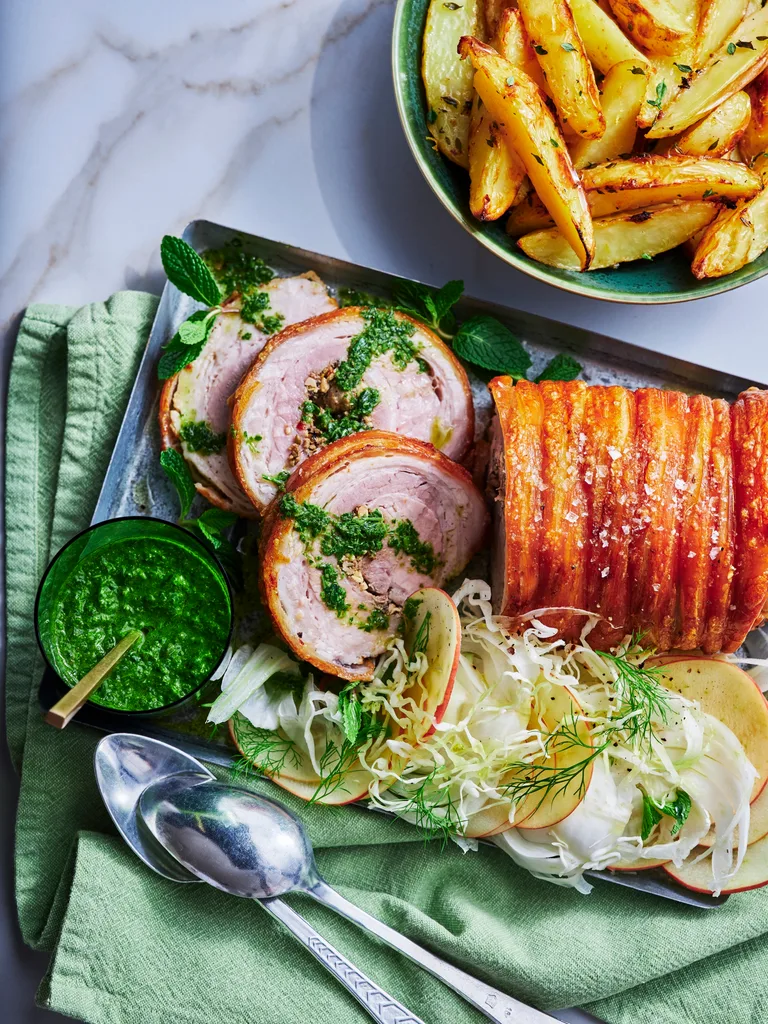
Use whole boneless pork belly, with the skin on, to make your porchetta. This will make it easy to roll, and the skin will become crispy, crunchy crackling.
The traditional filling for porchetta is usually a herb-based paste, made using a mortar and pestle. Fennel, garlic, rosemary and sage are most commonly used. In this recipe, we use garlic, thyme, lemon zest, chilli and pine nuts.

Related stories
Native ad body.
Native ad body.
Native ad body.