
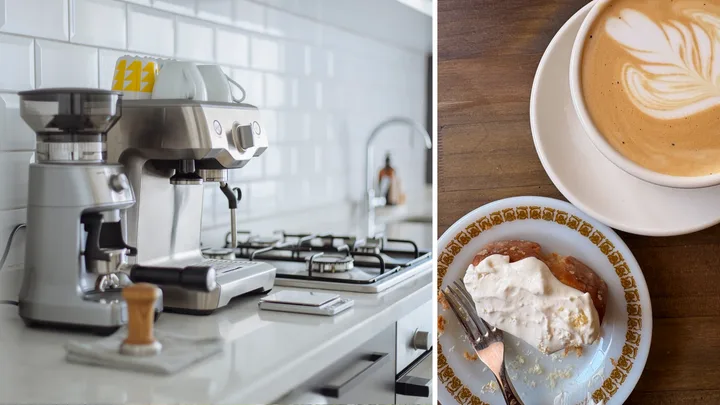
Ever since my year-long stint in Melbourne, where I developed a pricey obsession with Mont Blanc lattes, my morning coffee ritual has become increasingly high maintenance. For me, instant coffee simply doesn’t cut it, but with the average takeaway coffee in Australia creeping past the $5.50 mark (and my personal daily iced latte habit hovering closer to $7.50), that daily cafe run is becoming less and less justifiable. There is, however, a simple solution: switching to an at-home coffee machine.
Meet the reviewer
Paris Blanchfield is Better Homes and Gardens’ shopping editor. When she’s not writing about appliances, you’ll likely find her posted up at a new cafe in search for Sydney’s best iced latte.
When we consider the potential for long-term savings (and 24/7 access to great coffee), making the switch from takeaway cups to home brews is easy to justify. However, finding a coffee machine that delivers barista-quality coffee without requiring barista training to operate, or that doesn’t visually clash with your carefully curated kitchen benchtop, is another story entirely.
As someone who’s always tried to balance design and utility, I’ve put an array of espresso machines, automatic bean-to-cup units, and sleek pod systems through their paces in my own Sydney kitchen. Below are the three tried & tested coffee machines I still recommend to all my friends.
01
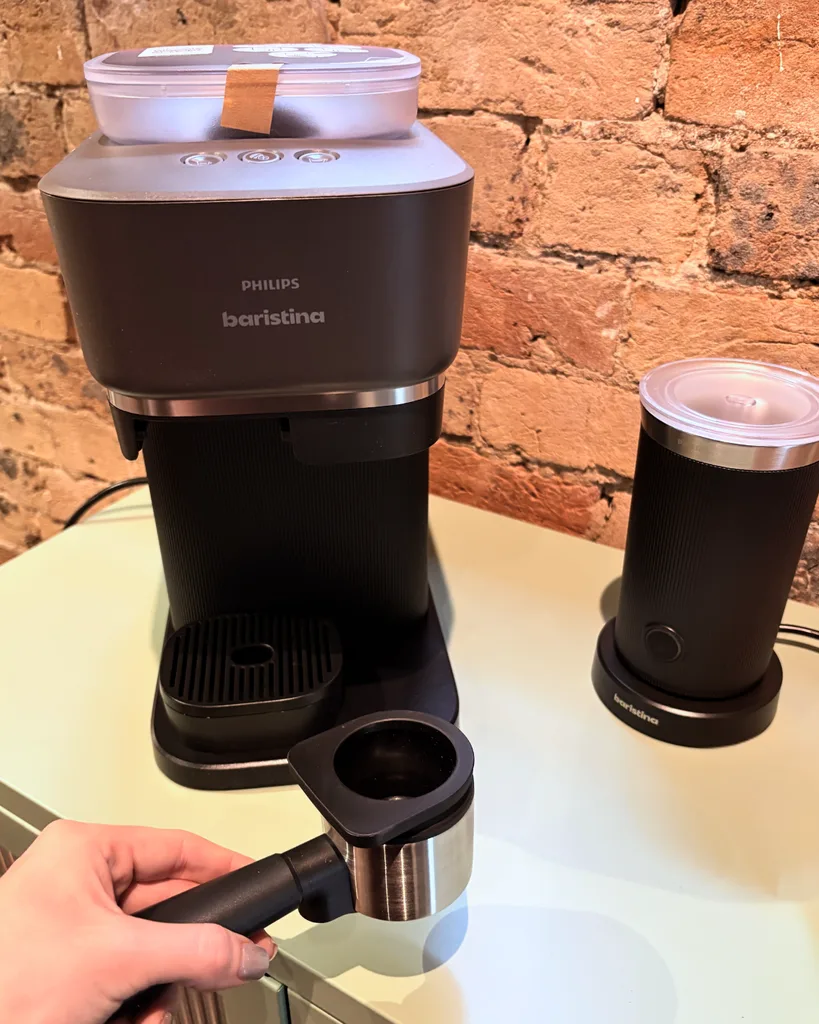
Philips Baristina Coffee Machine
$599 at Myer
Best for: first-time coffee machine buyers
On the other end of the difficulty spectrum, the Philips Baristina coffee machine is a great beginner-friendly option for anyone who isn’t quite as confident in their brewing abilities. Unlike the La Specialista, grind settings, tamping, and temperature settings are all automatically adjusted; all you have to do is press a button.
This model is great for small kitchens with limited bench space, too. With a tiny footprint, it takes up about half the space of traditional machines. The trade-off, however, is that with fewer settings comes less range – a perk for newbies, but something that experienced coffee-makers may find a tad limiting. If you take milk in your coffee, you’ll also need to invest in the Philips milk frother, which is sold separately for $149.
The verdict: I give this machine a 7.5/10; despite its simple controls, this machine makes a great coffee – and yes, you can still create a top-tier iced drink with the Baristina. The only catch is the lack of control over settings, which might make the process of brewing a little less fun for hardcore coffee enthusiasts, and the lack of an in-built frother.
Also available at:
02
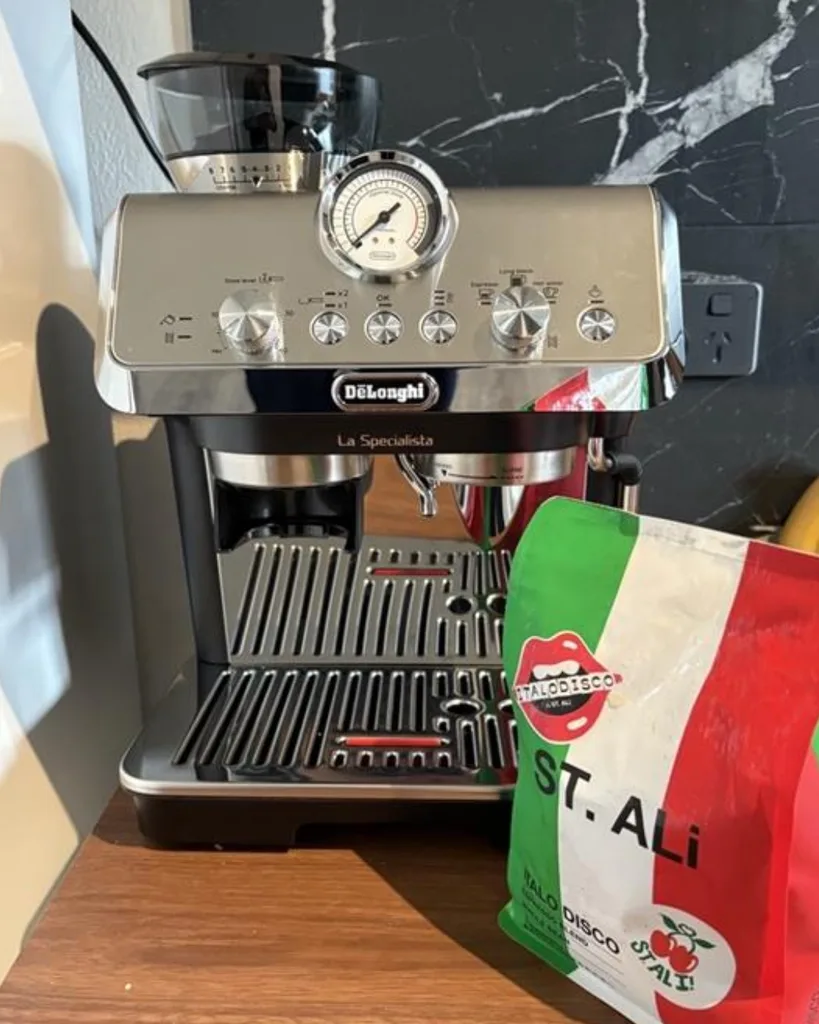
De’Longhi La Specialista Coffee Machine
$649 at Amazon
Best for: experienced coffee makers
The De’Longhi La Specialista coffee machine will always have a special place in my heart; it was the first machine I made a proper latte with. However, the controls can be a little finicky. I was lucky enough to have an ex-barista friend help me navigate grind settings, heat levels, and proper tamping techniques, but brewing a perfect latte on this machine may be a little challenging for beginners.
For those who like experimenting with different coffee recipes, or who want full control over settings, it’s a fantastic machine. My only advice is to expect a trial-and-error phase; finding the perfect combination of settings takes time!
The verdict: I give this machine a solid 7/10; with its built-in coffee bean compartment, grinder, and milk frother, it removes the need for pricey add-ons, and the settings allow for complete control over how your coffee comes out. The 3-point deduction is only due to the fact that it isn’t the most beginner-friendly machine.
Also available at:
03
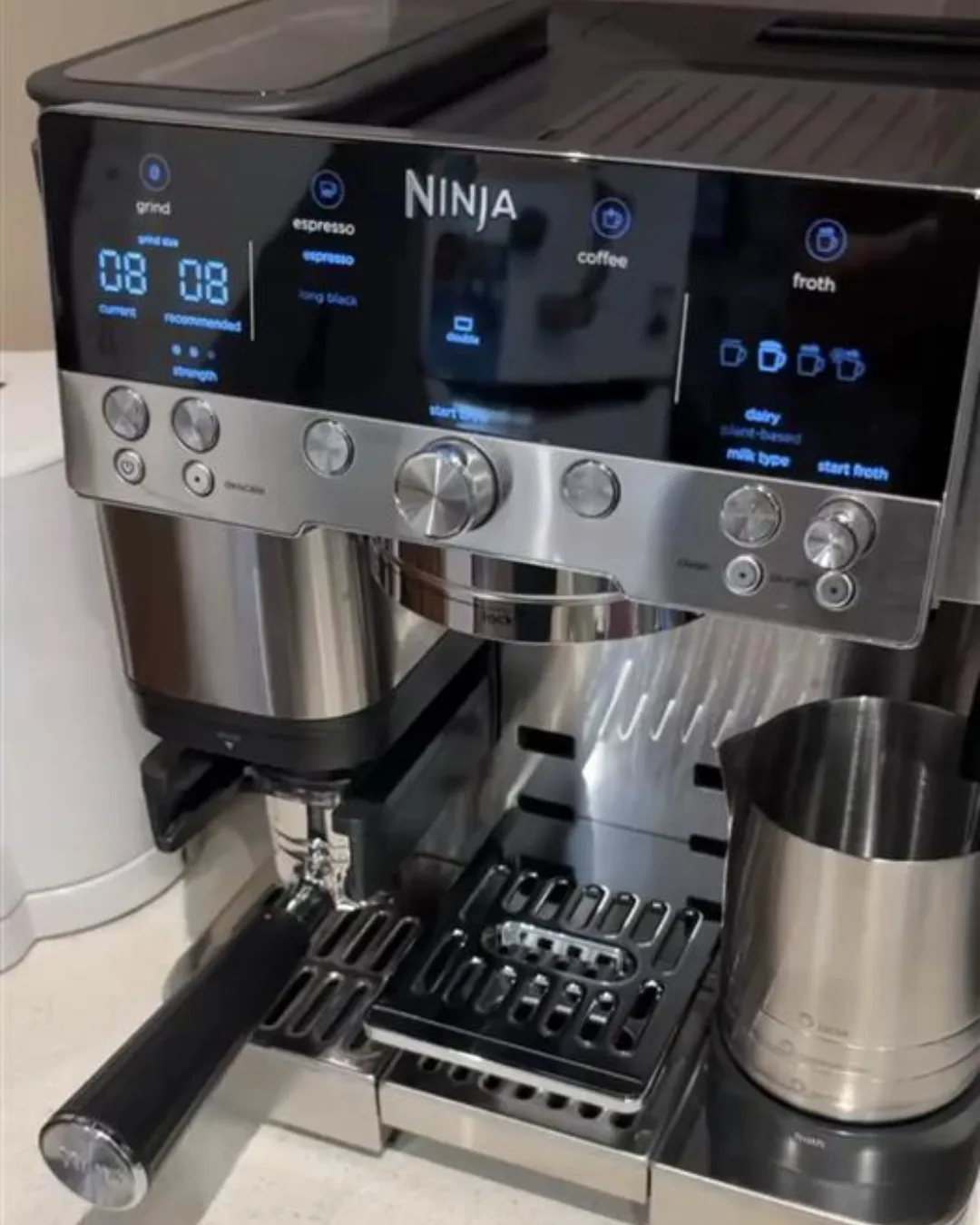
Ninja Luxe Café Premier Espresso Machine
$799.99 at Amazon
Best overall
If you combined all the best bits about the De’Longhi La Specialista and the Philips Baristina, you get the Ninja Luxe Café Premier Espresso Machine. Yes, it has the built-in bean compartment, grinder, and milk frother, but it also has pre-set functions for all your favourite kinds of drinks (and it nails it every time). However, what I love most about this model is the versatility: if I want to get fancy with my settings, I can, but if I’m short on time, it can also create a no-fuss one-button drink.
My only warning relates to the grind level recommendations. The machine weighs the beans and automatically calculates how fine the grind should be (very cool), but the recommendations are often a little off (not cool). The good news is that this can be fixed with a little trial and error; just aim for a consistency similar to that of sand, and you’re good to go.
The verdict: I give this machine an enthusiastic 8.5/10; stylish, sleek, and functional, this machine has been a permanent fixture in my kitchen since its release in 2025; a high compliment from someone who tests a lot of coffee machines. It’s versatile and solves the dilemma of choosing between a basic model and a complicated one – and I love the array of iced drink settings. The -1.5 points come down to grind accuracy alone.
Also available at:
How I select our top coffee machine models
I don’t rely on press releases or spec sheets. Every machine included in this guide undergoes rigorous home testing, evaluating six specific metrics:
- Extraction & Taste: Evaluating crema quality, body depth, and temperature consistency across standard espresso, iced lattes, and milk-based drinks.
- Workflow & Speed: Measuring heat-up time, workflow friction on busy mornings, and total preparation time from start to drink.
- Milk Texturing: Testing steam wand pressure, microfoam quality, and ease of creating latte art (or automatic frothing consistency).
- Countertop Footprint & Design: Evaluating build materials, aesthetic cohesion, cord management, and bench space required.
- Ease of Cleaning & Maintenance: Assessing daily puck disposal, descaling routines, and drip tray capacity.
- Cost-Per-Cup Economics: Calculating total return on investment against daily cafe spend.
Make the perfect coffee at home
While I do consider myself somewhat of a coffee expert, I decided to bring in an official expert for a few extra insider insights. Colin Jones, a coffee machine pro from the team at Appliances Online, claims that “The best place to start is to understand your household’s needs.” As such, the natural place to start is with the different types of machines – and how to figure out which one is best for you.
| Beginner Friendly | Versatility | Price | Best suited for | |
| Capsule Coffee Machines | ✅ | 4/10 | 💲 | Occasional coffee drinkers, rushed mornings |
| Automatic Coffee Machines | ✅ | 7/10 | 💲💲 | Regular coffee drinkers |
| Manual Coffee Machines | ❌ | 10/10 | 💲💲💲 | Coffee snobs |
Colin’s advice:
If you’re opting for a capsule coffee machine: “Make sure to check what type of capsules your machine takes, as it may be a specific one, and consider buying enough to last you a couple of months.”
If you’re choosing an automatic coffee machine: “Buying good quality coffee beans will make all the difference in your brew. Make sure to always store your coffee beans in an airtight container away from any heat, light and moisture,”
If you’re shopping for a manual coffee machine: “With a manual coffee machine, you are able to be more hands-on and it is perfect for those who like their coffee done a certain way, flavour and texture-wise.”
Manual coffee machines
“After you grind your coffee beans, you need to place them into the porta filter; this part is referred to as dosing. You will need to know what kind of taste and strength you prefer for your coffee, as this will determine how much coffee you put in,” Colin says. Adding that when steaming milk, “Make sure not to overheat your milk as this can change the texture of the milk and will not provide a good taste.”

Related stories

Native ad body.

Native ad body.

Native ad body.