

 (Photography: Canva)
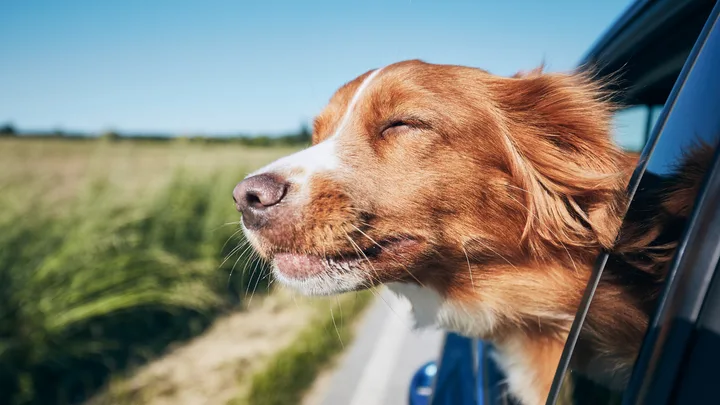
Few things beat a road trip with your dog – new places to explore, new smells to investigate, pure adventure. But while some pooches are born co-pilots, others find the experience completely overwhelming.
“Many dogs feel unsettled in cars because it’s an unfamiliar environment where they have very little control,” says vet Dr Will Maginness (@drwillmaginness). “The movement, noises, vibrations and changing scenery can overwhelm their senses, especially if they haven’t been gradually introduced to travel when they’re young.”
For some pets, the car simply means ‘we’re going to the vet’. Signs of anxiety might show up as panting, drooling, whining or pacing. Some dogs tremble, others withdraw. You might see vomiting, excessive yawning or lip licking.
“It’s important for pet owners to tune in early and not dismiss these behaviours as ‘just excitement’,” says Dr Will.

How to train your dog to be calm in the car
One of the most important training steps is gradual, positive exposure.
“Begin with short, low-pressure trips and slowly build duration so your dog learns the car isn’t something to fear,” Dr Will says.
A walk or gentle play session beforehand helps burn off the jitters. And don’t underestimate the comfort of a favourite blanket or well-loved toy; familiar smells work wonders.
Inside the car, a calm environment makes a big difference. “Ensure good airflow and temperature control, minimise sudden loud noises and position your dog where motion feels more stable,” suggests Dr Will. “Some dogs benefit from soft music, while others prefer quiet.”
Avoid feeding a large meal right before driving, as this can worsen nausea and discomfort.
On longer journeys, regular breaks are essential for water, toilet stops and, most importantly, quality sniffing time.
“Safety is non-negotiable,” adds Dr Will. “Dogs should be properly restrained using a crash-tested harness, secured crate or vehicle barrier. Allowing dogs to roam freely or sit on laps is dangerous.”


For the long haul
If your dog shows persistent vomiting or escalating anxiety, or just refuses to get in the car, get a vet’s advice.
“Chronic car anxiety is not something owners should simply ‘push through’ as it can affect long-term emotional wellbeing. You want your dog to feel genuinely safe and regulated, not sedated or suppressed,” says Dr Will.
Your vet may suggest pheromone sprays, calming wraps, behaviour modification programs or short-term medication as part of a broader plan.
With preparation, patience and the right support, most dogs can learn to see road trips for what they’re meant to be – a joyful shared adventure.
10 tips for a successful doggie road trip
- Watch for anxiety before getting in the car
- Gradually introduce them to travel, as young as possible
- Start with short, low-pressure trips
- Try a walk or play session before getting in the car
- Make sure they have a favourite blanket or toy
- Ensure good airflow and temperature control
- Minimise sudden loud noises and keep any music low
- Position your dog where motion feels more stable
- Avoid feeding a large meal right before driving
- Take regular breaks for water and toilet stops


