
 Getty
Getty
Did you know that 80% of dogs aged three or older have some form of dental disease? PetStock reports that preventable dental conditions often go unchecked for long periods of time because many dogs continue to eat normally even if they are experiencing tooth or gum pain. Luckily, Sydney-based dental veterinarian Christine Hawke says checking your dog’s dental health can be done at home in two seconds.
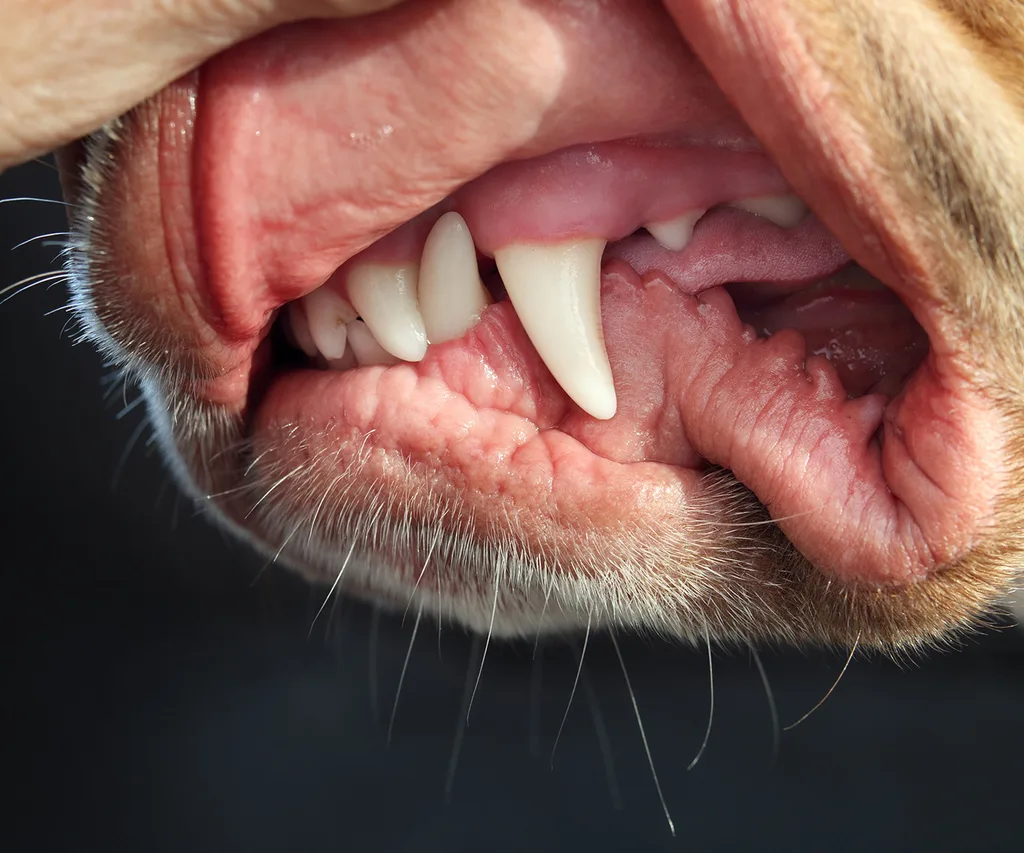
“Press your finger gently on your pooch’s gum: if the pink colour returns within one to two seconds after you release, that’s a good sign of normal blood flow and hydration.” A dog’s healthy gums should be a soft pink colour – smooth, moist and even in tone.
KEY TAKEAWAYS
- Studies show 80% of dogs aged three years or older have some form of dental disease.
- Getting a quick idea of your dog’s dental health can be done at home with a simple 2-second check.
- Healthy dog gums should be a uniform, soft pink colour.
Dog gum colour warning signs
Keep an eye out for these shades, which may require a vet visit:
- Pale or white: If gums look pale or white, it may indicate blood loss, anaemia, pain, shock or poor circulation.
- Red: Red, inflamed or bleeding gums often point to gingivitis or more advanced gum disease from plaque and tartar build-up.
- Red line: A distinct red line along the gumline can signal inflammation from dental disease.
- Blue or purple: Bluish or purple gums suggest a lack of oxygen in the blood and need urgent veterinary attention!
Signs your dog’s teeth need extra care
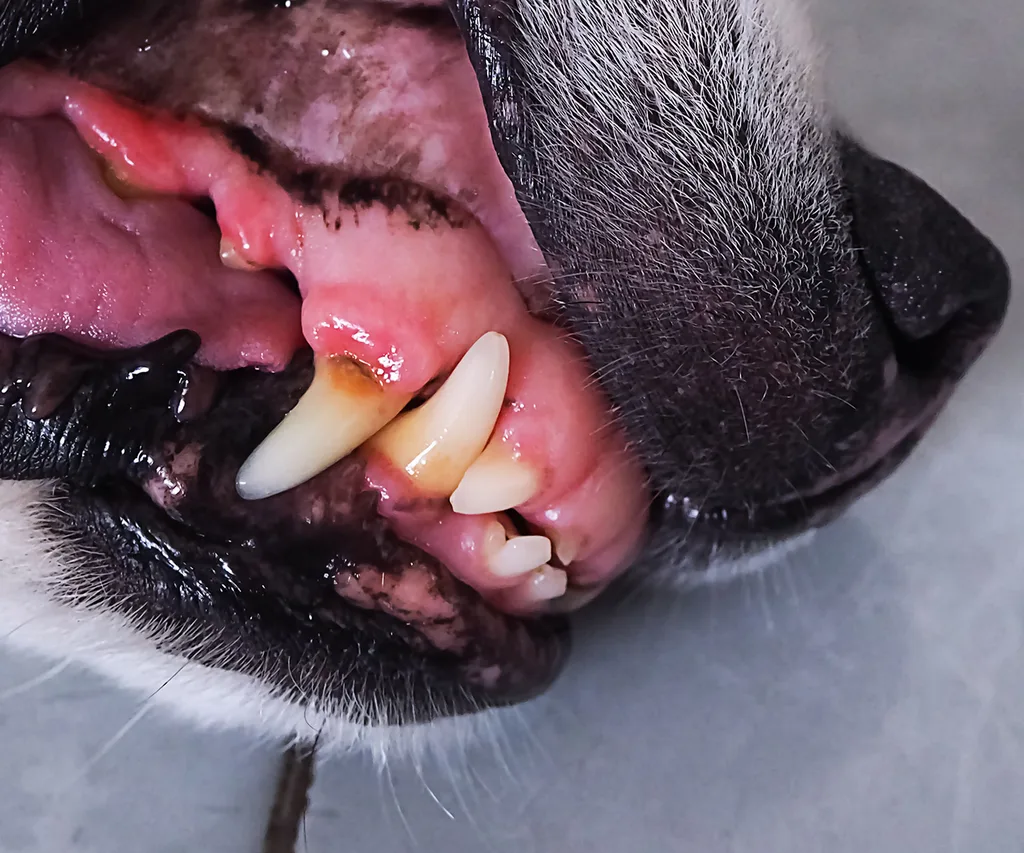
“When it comes to teeth, yellow or brown discolouration usually means tartar build-up. Left untreated, this can lead to gum disease and tooth loss,” Christine explains. “Pink, grey or black teeth are usually dead and may have a painful tooth root infection or abscess underneath.”
She suggests taking a moment to peek at your dog’s gums every week. That way, you can spot any redness, swelling or odour early. Also have annual dental checks with your vet.
3 ways to keep your dog’s teeth healthy
The best way to prevent painful dental disease is through regular brushing and chewing to remove plaque, says Christine.
1. Daily brushing
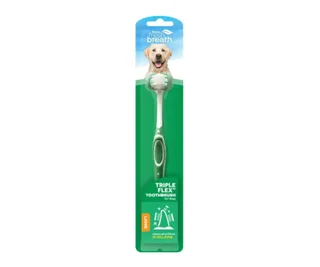
Daily brushing with a pet-safe toothpaste is the gold standard for oral health. A soft baby’s toothbrush or one designed for sensitive teeth is perfect.
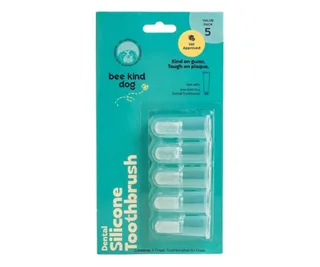
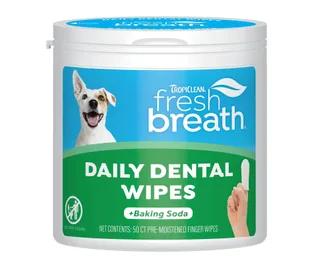
“If brushing’s a battle, anything that is gently abrasive on your finger can be used, such as a silicon finger brush or dental wipes. Ask your vet for ones that are effective and safe.”
2. Dental chews
Dental chews and dental-focused dry kibble diets also help keep teeth clean.
“But be cautious with bones and hard chews,” Christine says. “Anything as hard as a tooth can break a tooth!”
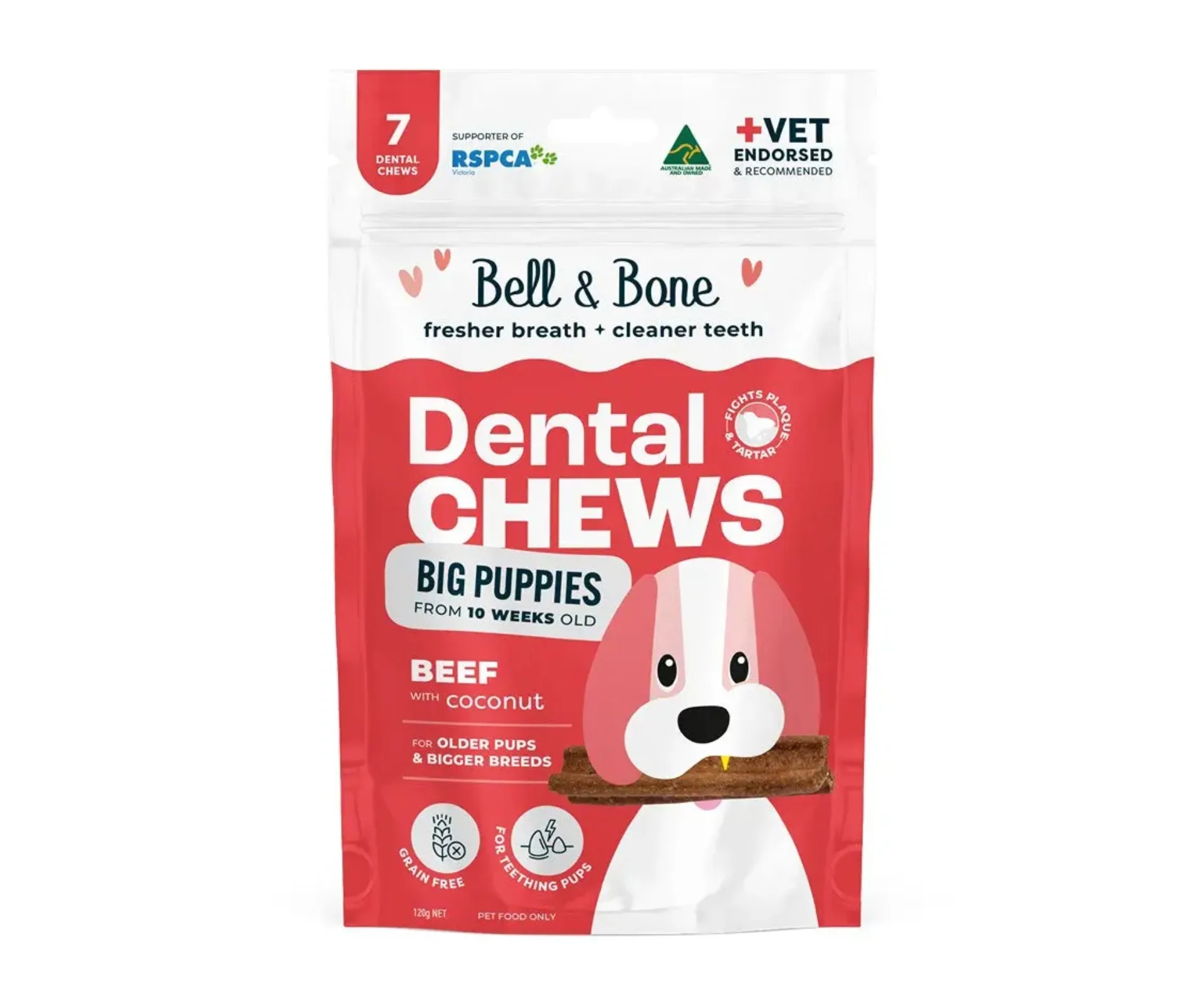
Bell & Bone Big Puppy Beef Dental Chews 7pk, from $14.38
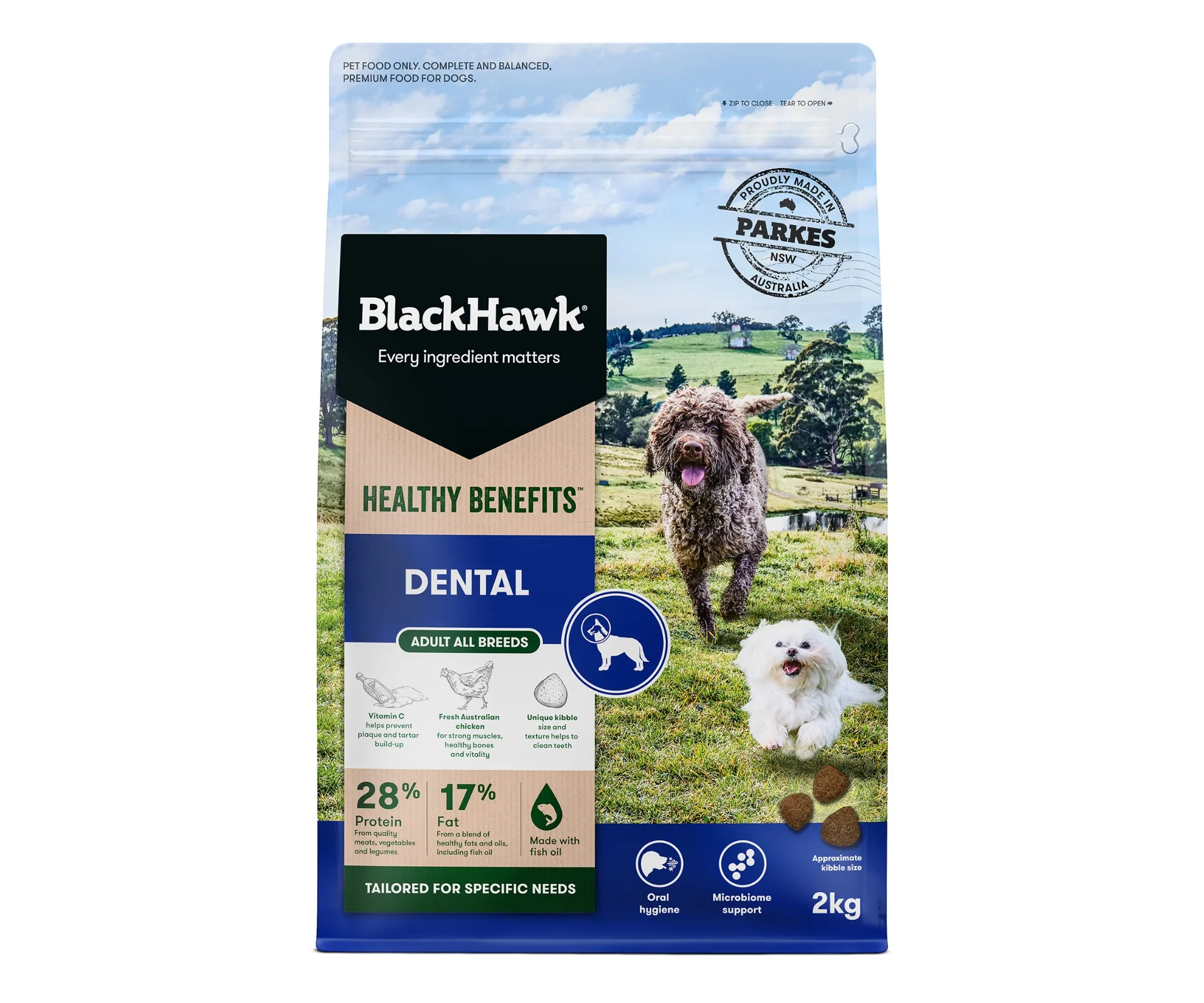
Black Hawk Healthy Benefits Dental dry dog food, from $37.50
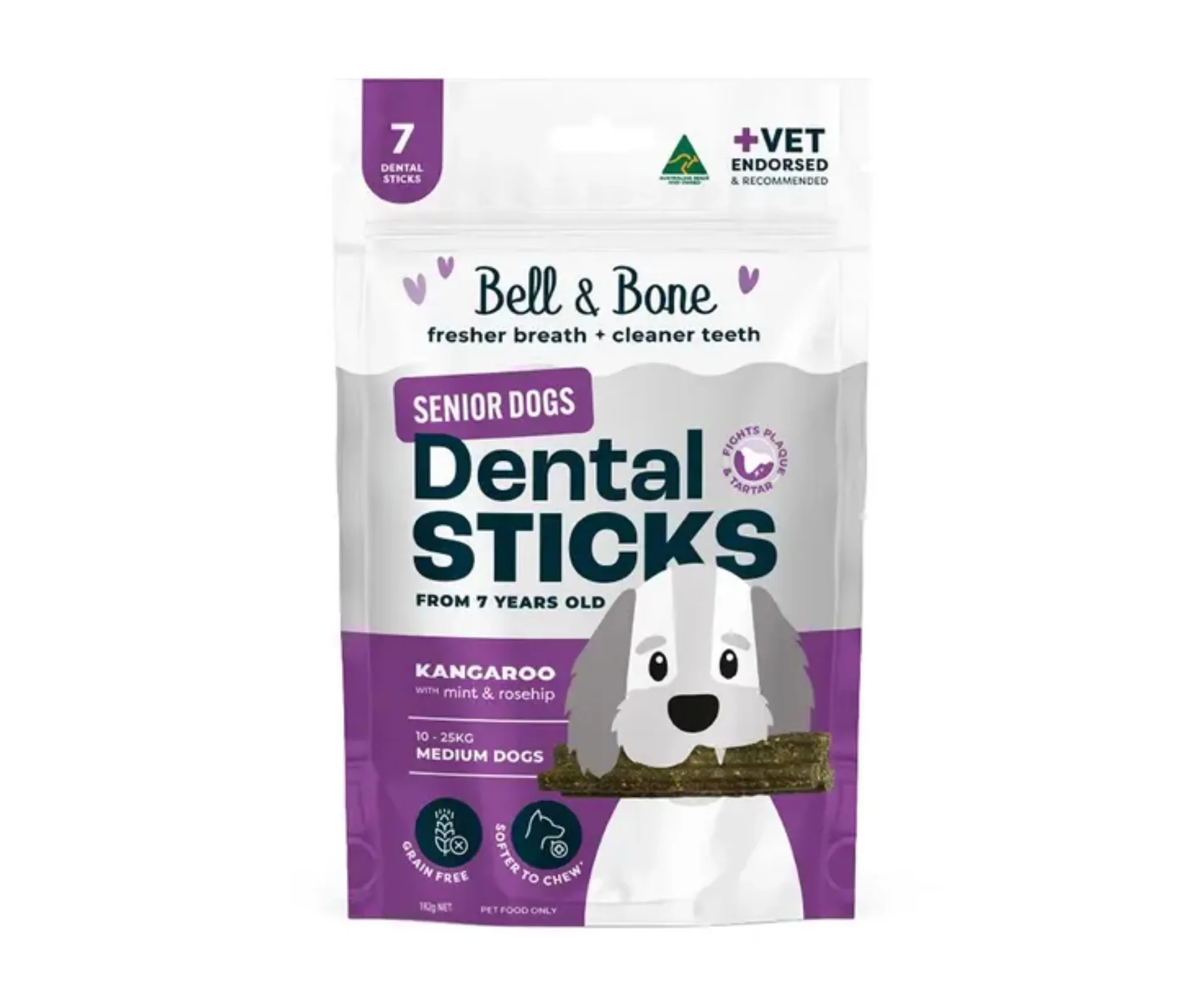
Bell & Bone Kangaroo Senior dental sticks, from $15.18
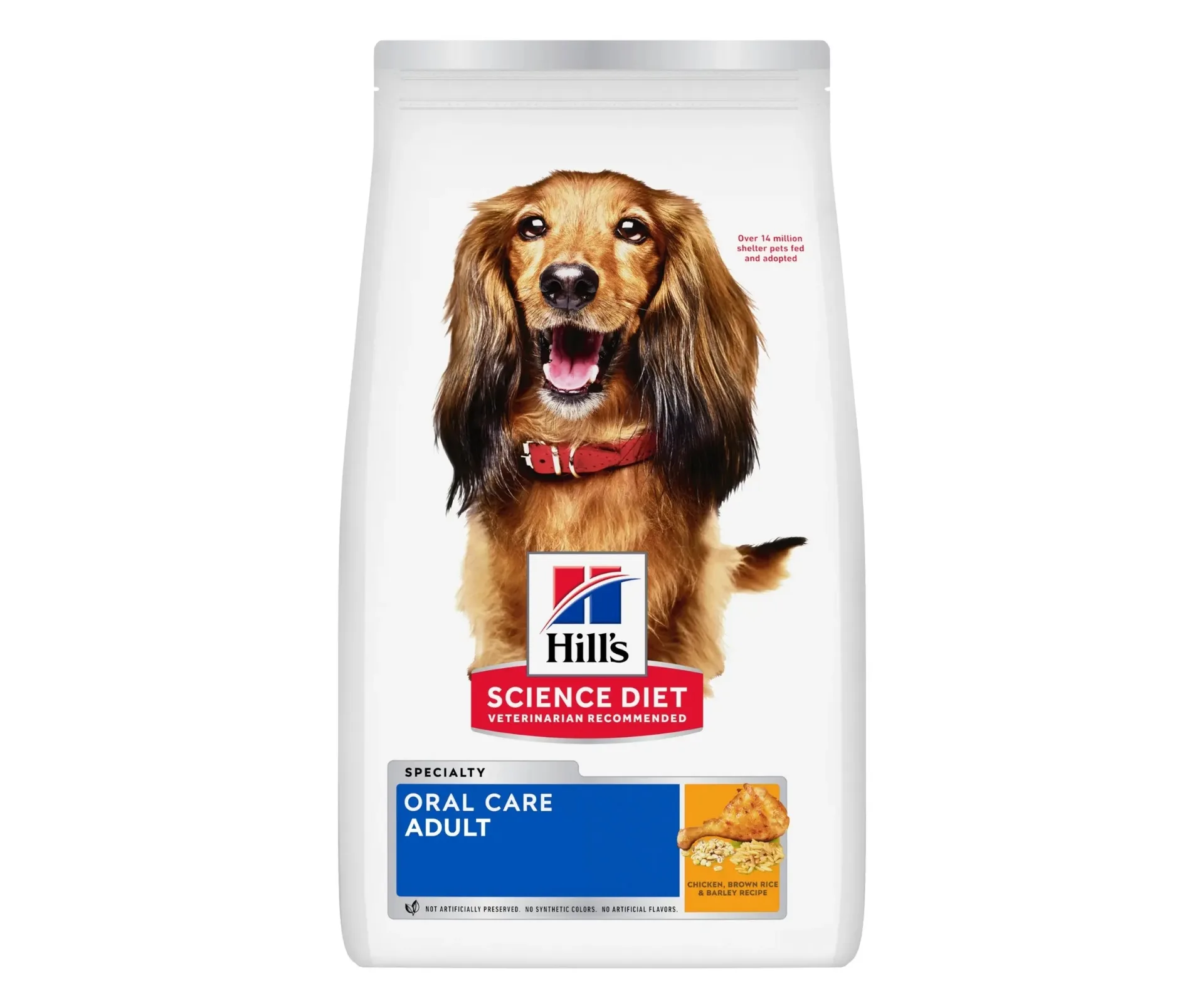
Hill’s Science Diet Oral Care Adult chicken dry dog food, from $45.99
3. Chew treats and toys
When choosing chew treats or toys, “You should be able to flex it with your hands, dent it with your fingernail or it should crumble as your pet chews on it,” she says.

Related stories

Native ad body.

Native ad body.




Native ad body.