

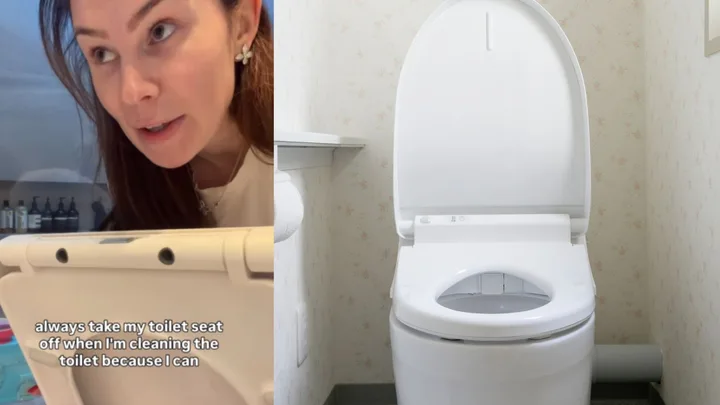
There’s nothing worse than going to the trouble of cleaning your toilet only to find it still smells. No, your toilet isn’t broken. It turns out you might be missing one hidden spot, and it involves removing the seat.
KEY TAKEAWAYS
- Removing your toilet seat allows you to clean grime, bacteria and buildup in areas that are impossible to reach with the seat attached
- Many modern toilet seats have a quick-release button near the hinges — press it and the whole seat lifts off in seconds
- Avoid using bleach on your toilet seat, as it can degrade the plastic over time and cause yellowing
- If your toilet still smells after cleaning, trapped buildup under the hinges is likely the culprit
Victoria Devine shared the handy piece of advice on Instagram, saying: “I’m just cleaning my toilet, and I thought maybe you’d want to know this.
“But I always take my toilet seat off when I’m cleaning the toilet, ’cause I can put the whole thing in the shower, put bleach over it, and wash it off there. And I feel like everything just gets really, really clean.”
Why should you remove your toilet seat if you can
Grime, urine splatter, and bacteria build up in the gap between the hinge and the porcelain. A spot that is nearly impossible to reach and clean with the seat attached. Over time, this can get genuinely gross and smelly.
So if you’ve cleaned your toilet but it still smells, this might be why.
How to take your toilet seat off
“There’s actually a button on the back of the toilet. You press the button, and the whole thing comes off, and then when you’re done, you just pop it back on,” says Victoria.
What people are saying
Most people had absolutely no idea this was possible.
“I was today years old when I learnt this,” wrote one person. Another said: “Am I the only one getting out of bed at 9.30 pm on a Sunday night to test this?”
For many, the revelation came with a side of betrayal. Parents copped the blame for keeping this life skill hidden.
One person admitted their father had shown them recently and that they’d “yelled at him for not telling me sooner.”
Not everyone was celebrating, though. A sizeable chunk of commenters were quick to rain on the parade, pointing out that quick-release buttons are a modern luxury. “I feel like this isn’t on most toilets”, a commenter pointed out.
The comments also served up some genuinely useful advice.
A professional cleaner warned that bleach “is very degrading and ruins toilets and toilet seats. It starts breaking down the plastic surface and causes yellowing.”
What to do if your toilet seat doesn’t come off
Not everyone has a modern quick-release seat, but that doesn’t mean you’re stuck with grimy hinges.
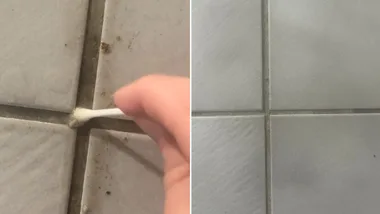
A thin microfibre cloth or an old toothbrush are your best friends here. Work the cloth into the gap between the hinge and the bowl, using a back-and-forth motion to dislodge buildup. An old toothbrush dipped in disinfectant can scrub into the crevices around the bolts and hinge plates where grime tends to accumulate most.
For the dark staining that can appear around the bolt covers, try popping the small plastic caps off with a flat tool and cleaning underneath them.
Cleaning the toilet FAQs
Yes, and you should. Most modern toilet seats come off for cleaning. Newer seats feature a quick-release button near the hinges that pops the seat off in seconds, while older models use plastic screws or bolts you can unscrew by hand or with a tool.
Look for plastic caps or covers near the back of the toilet where the seat meets the bowl. Use a small flat tool to pop these off and reveal the bolts underneath. Some newer seats have a push-button release on either side of the hinge instead.
As part of a deep clean, removing your toilet seat once a month is a good habit. However, if you have young children, share a bathroom with multiple people, or notice any discolouration or smell around the hinges, you may want to do it more frequently.
A disinfectant spray or antibacterial cleaner is the best option. Avoid bleach, as professional cleaners warn it can degrade the plastic surface over time, causing yellowing and damage to the finish.
If your toilet still smells after a thorough clean, buildup trapped under the hinges or between the seat and the bowl is almost certainly the problem, and you can’t reach these spots without removing the seat entirely. Take the seat off, clean underneath it, and that should solve it. Taking the seat off and cleaning underneath it usually solves the problem.
Not all toilet seats have quick-release buttons, but you can still remove most of them. Older or budget toilet seats use screws or bolts rather than a push-button mechanism, which takes a little more effort but is still very doable.

