


Whether they’re behind a stovetop or sink, kitchen splashbacks protect your walls from splatters and spills; that’s their day job. But splashbacks are also an opportunity to set the tone for your entire kitchen. From kit kat tiles to stainless steel to peel n’ stick vinyl, there are many creative ways to update your splashback.
WATCH: Pete Colquhoun shows you how to design a kitchen
If you’re planning a new kitchen or renovating an existing one, choosing your kitchen splashback material will be one of the dozens of decisions you’ll need to make. It’ll depend on your budget, aesthetic taste and appetite for maintenance.
Do you want to use the same material on your splashback as your kitchen benchtop for a seamless look? Are you willing to clean tile grout, reseal natural stone or put up with smudgy fingerprints? (If not, we may have found the perfect kitchen splashback material for you… more on that later.)
To help make your decision a little easier, we’ve compiled a list of gorgeous kitchen splashback ideas and their pros and cons.
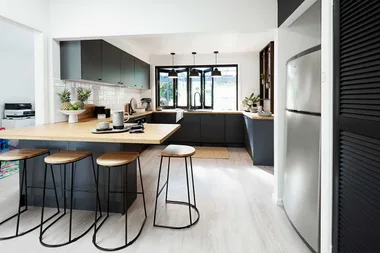



The pros and cons of any kitchen splashback
First ask yourself, do you even need a kitchen splashback? It’s not compulsory, but a kitchen splashback does have some convenient benefits, such as protecting your walls, obviously.
Splashbacks also allow you to introduce colour, texture, pattern or unique materials to complement your kitchen design, create a focal point or add visual interest to the space. Certain splashback materials, such as glass or mirrored surfaces, can also reflect light and help brighten the kitchen.
As for cons, you will need to add the cost of materials and installation to your kitchen reno budget. According to home improvement platform hipages, the all-in cost for installing a kitchen splashback can be anywhere from $450 to $900 and up, for high-end projects.
The cheapest type of kitchen splashback
Trying to save money? Tiles are very affordable: a tiled kitchen splashback will set you back $45 to $250 per square metre.
Choose from various design options, from colourful and patterned ceramic tiles to clean and classic subway tiles. You can create mosaic patterns and herringbone designs or mix and match different tile shapes and colours to create a unique look. Not only do they look good, but tiled splashbacks also relatively easy to clean.
While they’re not as durable, vinyl or PVC stick-on tiles are even cheaper. This economical DIY option, popular among Kmart shoppers, is a nifty way to update your splashback regularly. Just be sure to install peel n’ stick tiles at least 2 millimetres away from open-flame gas stovetops.

The easiest kitchen splashback to install
Acrylic or perspex splashbacks are lightweight, cost-effective and easy to install. An acrylic splashback can weigh half that of glass, while being 25 times stronger than glass.
As well as being very low-maintenance, an acrylic or perspex kitchen splashback can create a vibrant and colourful look in the kitchen. It can, however, be scratched easily and is not as tolerant of heat as glass.

Glass splashbacks are the easiest to clean
All hail the glass splashback! This sleek and contemporary material is super easy to clean, hygienic, non-porous and usually scratch-resistant, as well as heat-resistant.
Glass kitchen splashbacks create more space and light in this heavy-traffic zone, and can double as a window. There’s no need to worry about dirt and mould accumulating in tile grout or join lines, either.
Of course, a glass splashback will cost you a bit more upfront, as the glass needs to be toughened to survive the slings and arrows of kitchen activity, and be professionally installed.
The pros and cons of a natural stone splashback
Natural stone, such as marble or granite, adds a touch of elegance and luxury to a kitchen. And when using stone, no two pieces are the same, so you’ll create a custom, unique look without even trying.
On the other hand, natural stone requires regular maintenance and sealing to protect it from stains and etching. As an alternative to natural stone or engineered stone, which is now banned, consider porcelain. A porcelain splashback is virtually non-porous, stain-resistant, heat-tolerant and easy to wipe clean.
Ready to be inspired? Take a look at these 10 stunning kitchen splashbacks.
1. Marble splashback

Marble lends a luxe touch as splashback option, complementing both modern and classic design. It can also elevate the design of a Hamptons-style kitchen.
2. Kit kat tile splashback

Kit kat, or ‘finger’, tiles originated in Japan as a stylish alternative to subway tiles. They infuse kitchens with more texture and colour, since they come in a range of hues.
3. Rustic brick splashback

A brick splashback offers a rustic textural element to your kitchen and works particularly well with both industrial and country-style kitchens. It’s important to properly seal it, or fit a glass panel over it, to protect your brick splashback from water and food stains.
4. Honeycomb hexagon tile backsplash

Geometric honeycomb-hexagon tiles are a popular option for kitchen splashbacks, offering an eye-catching and creative alternative to traditional tiles. Ditto for penny-round tiles, which, as the name suggests, comprise a circular pattern like a wall of coins.
5. Window backsplash

Instead of adding materials to your kitchen splashback, why not take some away? Using a glass window can help your kitchen appear more spacious, while streaming natural light into the room and giving you a view of the garden.
6. Subway tiles backsplash

When it comes to a classic backsplash, nothing beats traditional subway tiles, which were spawned from the New York City subway system and characterised by white tiles stacked in an offset pattern. Use hand-pressed tiles for a softer and more organic look, and consider coloured versions.
7. Stainless-steel splashback

Stainless steel is a very popular material for a kitchen splashback, due to its durability and heat resistance. Think of commercial kitchens! Stainless-steel kitchen splashbacks are easy to clean, resistant to stains and can complement various kitchen styles, including industrial, minimalist and Hamptons-style designs.
8. Mosaic tile splashback

Mosaic tiles are a classic choice for adding texture and visual interest to your kitchen. Whether you prefer intricate patterns or a mosaic mural, these small, versatile tiles allow you to create a personalised splashback that reflects your unique style.
9. Mirror splashback

A mirror splashback works across all decorating styles, and helps to reflect light as well as create the illusion of a larger space. Consider using a mirror splashback in small kitchen designs.
10. Patterned tile splashback

Introduce personality and character to your kitchen by incorporating patterned tiles into your splashback. From verdant botanical designs to intricate geometric patterns, these tiles can become a focal point and inject a vibrant energy into your space.
You might also like:
How to create a DIY tiled splashback
Mum’s $7.67 Bunnings kitchen cupboards makeover is pure genius
How to turn an IKEA Kallax into a kitchen island


