

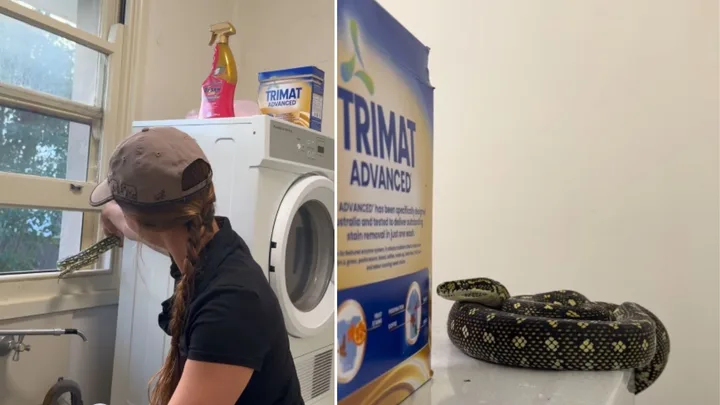
While snakes do brumate during winter, it doesn’t mean they disappear altogether.
In fact, a nice sunny day in winter means you could still see certain snake species appear in your backyard, especially if you have an outdoor laundry.
KEY TAKEAWAYS
- Snakes do not fully disappear in winter; they brumate, meaning a warm sunny day can bring them out at any time
- Diamond Pythons are cold-weather snakes, and males are actively moving in winter to find mates
- Snakes seek out warmth in your home
- If you find a snake, do not try to move it yourself. Give it space and call a professional
- Killing snakes is unnecessary and illegal in NSW. Relocation is always the safer and legal option
Bronte Hillen is a snake catcher who runs a snake and reptile relocation service in Newcastle, Lake Macquarie, and the Hunter region. After relocating a diamond python from a home’s laundry in Newcastle, she says in a social media post, “Snakes are looking for anything warm to snuggle up into.”
“So check your car engines before you drive, if the laundry is outside, keep an eye out.
“Or if you know there is a hole in the roof, get it patched! And if you have a snake that needs to be relocated, you know you can call me anytime.”
Diamond Pythons are actually built for the cold
Most people assume snakes vanish the moment temperatures drop. But if you live in the Newcastle, Lake Macquarie, or Hunter region, that assumption could catch you off guard.
Diamond Pythons are not your typical warm-weather snake. Unlike most reptiles, they are cold-weather pythons, with dark colouring specifically designed to absorb heat from the sun. That means mild winter days do not slow them down the way you might expect.
In fact, during winter, male Diamond Pythons are actively on the move, searching for females to mate with. So while other species might be deep in brumation, Diamonds could be crossing your backyard right now.
Why do we still see snakes in winter?
Snakes don’t hibernate in the same way bears and other mammals do. Instead, they enter a state called brumation, a period of semi-dormancy during which they slow right down. They remain alert and can become active again on warmer days.
A mild sunny afternoon in June or July is enough to bring a snake out of hiding to bask in the sun. But once the sun disappears, it is looking for two things: warmth and shelter.
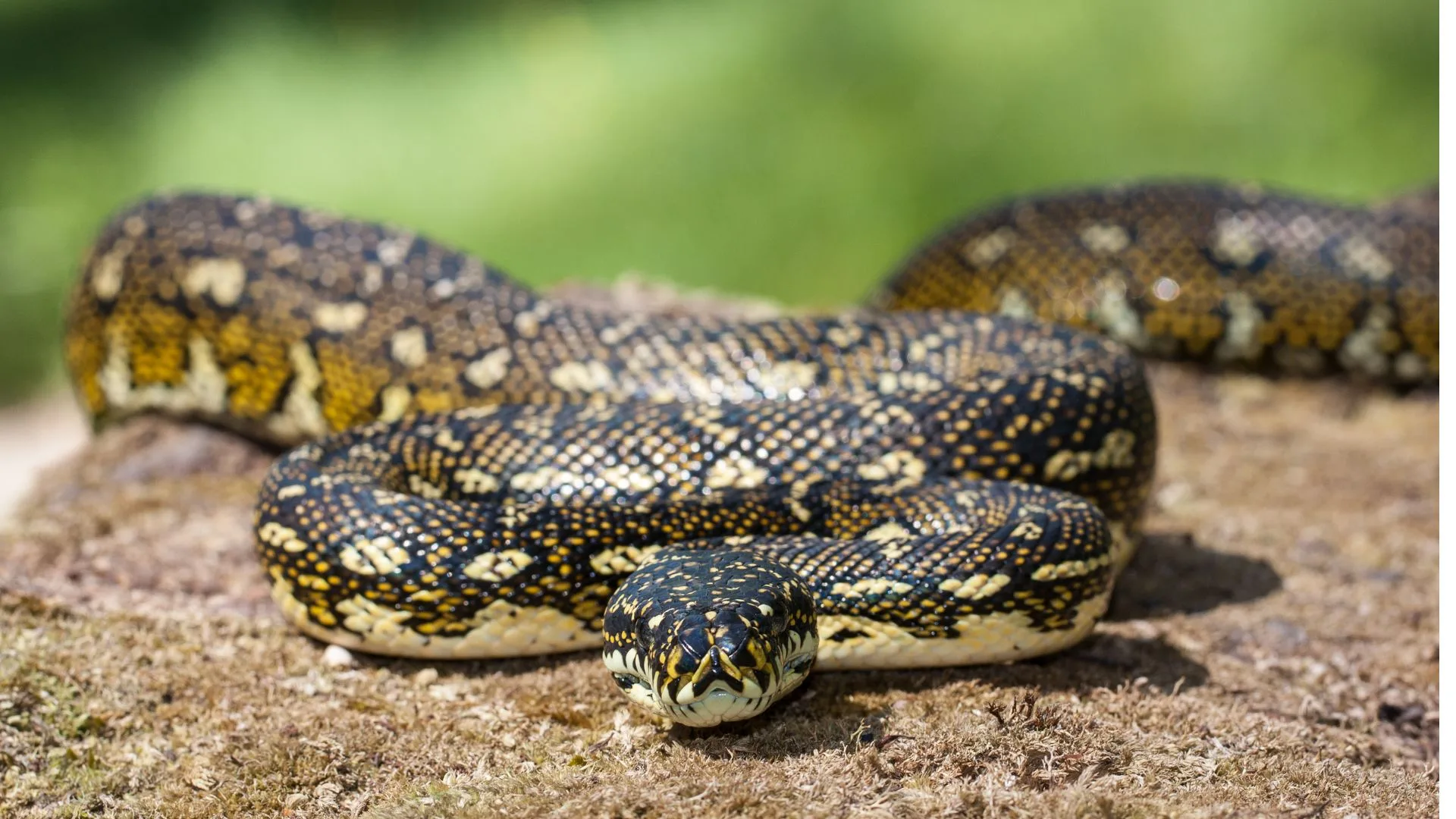
The warm spots snakes are looking for in your home
Snakes are not trying to scare you. They are just following the heat. And your home has plenty of it. The spots they are most commonly found include:
- Laundries, especially outdoor ones with a running dryer
- Car engines, which hold warmth long after you park
- Roof cavities, particularly if there are gaps or holes
- Garden sheds and garages with stored equipment or clutter
- Compost heaps and wood piles close to the house
The simple fix? Keep laundry doors closed, check under your bonnet before long drives in cooler weather, and patch any known gaps in your roof or walls.
How to handle a snake sighting without panicking
Finding a snake in your home or garden is alarming. But how you respond in those first few seconds matters.
Do not try to move it yourself. Even non-venomous species can bite when stressed, and misidentifying a snake can be dangerous.
Do not corner it. A snake that feels trapped is far more likely to become defensive. Give it space and keep people and pets away from the area.
Keep an eye on it if you can. Knowing where the snake is makes the job of a professional relocator much easier. If it moves into another room or outside, note where it went.
Call a professional. Snake catchers like Bronte are available around the clock. One call, and Bronte can help you determine whether you actually need a snake catcher and develop a relocation plan.
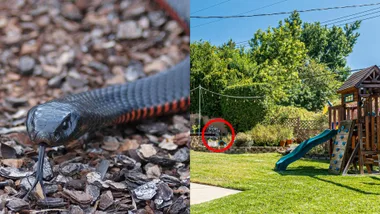
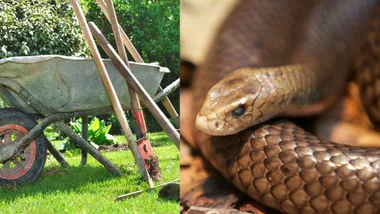
Why relocation is better than removal
There is a common misconception that a snake on your property needs to be killed or permanently removed. It does not.
Snakes play a vital role in the local ecosystem, keeping rodent populations in check and maintaining balance in the food chain.
Relocation means the snake is safely captured and released into a nearby habitat where it can continue doing what it does naturally, away from your laundry.

