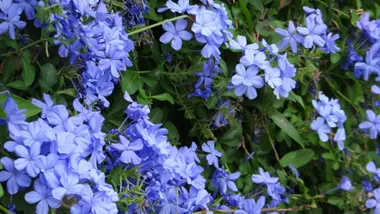

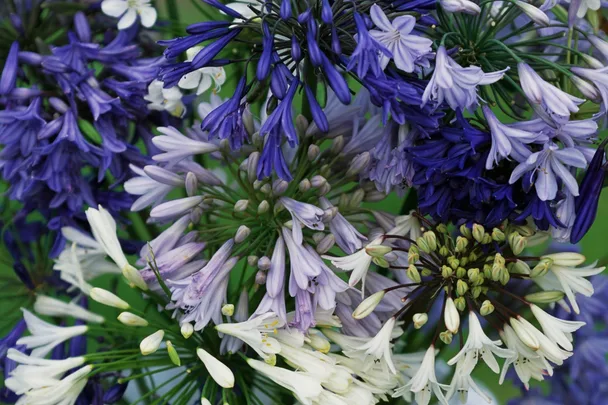
The bright purple, blue and white flowers of agapanthus can be seen far and wide across Australia. While it’s definitely a favourite among Aussies, some varieties of agapanthus can spread a bit too easily. But there are plants similar to agapanthus in both appearance and hardiness – and choosing native varieties can also be beneficial for your local environment.
So, let’s go through some key details about agapanthus, as well as some beautiful native plants you could consider instead.
KEY TAKEAWAYS
- Agapanthus are listed as invasive by all states in Australia due to their self-seeding nature.
- Old agapanthus varieties are invasive; however, newer varieties have been ‘sterilised’ and will not self-seed, making them safer for Aussie backyards.
- Replacing agapanthus with native alternatives, such as the six listed below, promotes biodiversity and encourages native bees and wildlife in the garden.
- The spread of existing agapanthus can be reduced by deadheading, disposing of seed heads or completely removing them from the garden.
- Agapanthus are fire-resistant; however, they also take over native plant systems, which can contribute to bushfire conditions.
Are agapanthus plants invasive?
Agapanthus are technically classified as a weed in Australia, according to the Centre for Invasive Species Solutions Weeds Australia website. Also known as African Lily or Lily of the Nile, agapanthus is originally from South Africa but is commonly used in Australian gardens for its colourful blooms and low effort maintenance. It’s a perennial plant with fleshy roots, dark-green foliage and tall spikes of flowers.
The problem with agapanthus lies in its spreading ability. The older agapanthus is a clumping plant that self-seeds, meaning that its fleshy root system spreads quickly and takes over large spaces with ease. While that may be beneficial if you need to fill a large area, this plant can take over space that other plants inhabit, including native plants. This means that agapanthus can be considered an invasive plant.
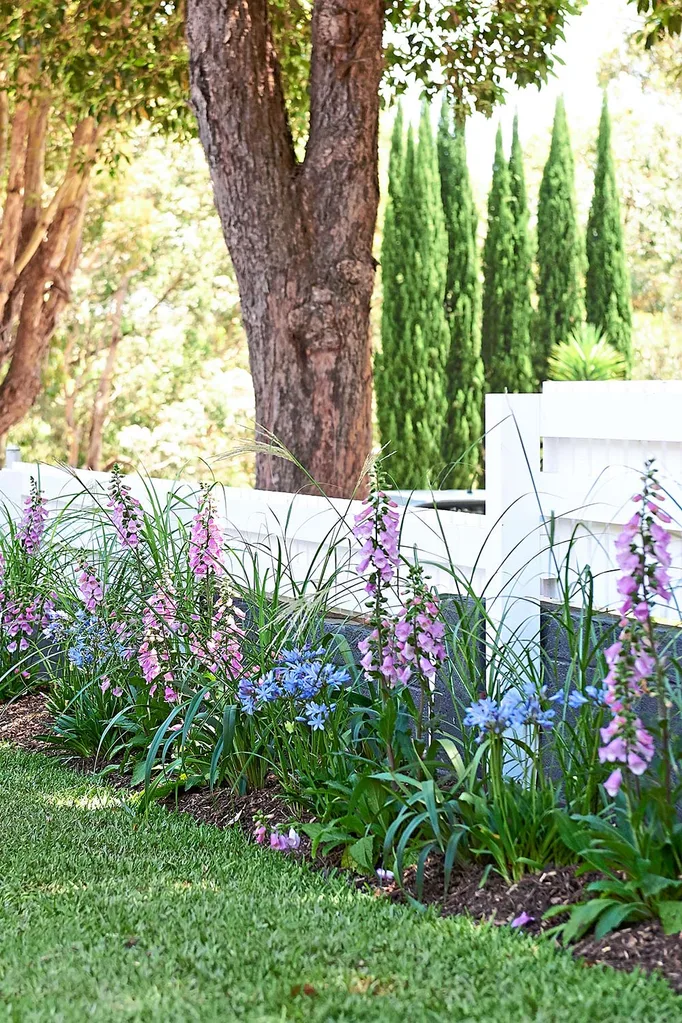
However, as our garden editor Jenny Dillon explains, new agapanthus plants that you find in nurseries and plant centres have been ‘sterilised’, meaning that they do not spread easily. Great examples include agapanthus ‘Baby Periwinkle’, ‘Purple Cloud’ and ‘Peter Pan’. If you do wish to plant a new sterilised agapanthus variety, ensure you speak to your local nursery or garden centre about the best plant to pick.
For native plant landscapers like Zach Barnett from Boronia Landscapes, removing old agapanthus plants can be a tricky conversation with his clients. They are beautiful and very easy to care for, but taking over the native environment is something that should definitely be avoided, even in urban spaces like backyards.
Instead, we’ve got four native alternatives for you to consider that will help bring biodiversity back to suburban and city areas, while still providing a beautiful outlook.
Meet the experts
- Rachel Iorfino, Senior Content Producer, is a journalist who loves learning about native plants and promoting biodiversity in the garden. With more than 5 years experience in content-writing, her aim is to find new ways for readers to enjoy Australian native and endemic species.
- Jenny Dillon, Garden Editor, is a horticulturalist and writer with over 30 years experience. She loves answering the tricky questions about plants that no one else knows the answer to!
- Zach Barnett (Boronia Landscapes), native plant landscape designer, has been in the landscaping industry for 5 years, and loves designing gardens that are native-first. He specialises in endemic and extremely localised plant choice.
6 native plants that are great alternatives to agapanthus

Blue flax lily
(Dianella caerulea)
Blue flax lily is already quite common in urban areas, including parks and council spaces. This is because it is quick to grow and easy to maintain.
The purple hues of the flowers and berries that this dianella variety has is very similar to agapanthus flowers. The only difference is, you’ve got brilliant yellow added in there as well!
This native plant alternative is also a clumping perennial, which means it grows in a similar way to agapanthus (but is a native). Blue flax lily enjoys a sunny or partly shady aspect and grows happily in most conditions, but especially well in coastal areas.
Boronia Landscapes loves this option as a native alternative to agapanthus, as it is similar in growing style, plant shape and flowering colour.

Nodding blue lily
(Stypandra glauca)
These cute starry blue flowers are a great swap for agapanthus. Not only are they similar in colour, but they are also a clumping plant, meaning they grow in a dense clump-like fashion, as agapanthus does.
Its distribution spreads from south-east Queensland all the way to Western Australia, and can reach heights of up to 1.5m if fully erect from the ground. This plant can look a little straggly by itself, so make sure to pair it with a few other native plants to fill out your garden bed.

Swamp lily
(Crinum pedunculatum)
Another perennial, this large lily species is native to coastal Queensland and northern NSW. It has a long spike of flowers similar to that of agapanthus, which bloom from November to March.
While this plant is a beautiful native, it may not work in every garden, as it can grow quite tall and wide (up to 2-3m in every direction!). They are hardy and versatile, and work well as a lone feature plant, rather than in a group.
Swamp lily is also quite happy living in a pot, or on a nature strip, in a street planting scenario.

Bulbine lily
(Bulbine bulbosa)
This clumping perennial is a great substitute for many plants, and is often used in place of daffodils. Although Bulbine lily’s flower is yellow, it looks great in large clumps, just as agapanthus does.
This lily loves moist soil, and works best in rockeries, flower gardens and even container planting. The best part is that this flower is loved by the native blue banded bee, which will add that pop of blue you may be yearning for!

Austral indigo
(Indigofera australis)
Austral indigo has a happy pink flower that will brighten up any garden. Although it is not similar in leaf shape or growing style to agapanthus, native indigo is definitely worth mentioning for its luminous colours.
A great plant to draw in wildlife, including pretty butterflies, Austral Indigo is another perennial to add to your garden.
This plant flowers in spring, and will delight you with spires of pink, purple and lovely green foliage in contrast. And the best part is, you can use the leaves and stems as a natural blue/purple dye!
Zach Barnett explains that Australian indigo can be more difficult to find in plant centres, so it is always best to visit your local nursery or a nursery that specialises in native plants to source them.

Lord Howe Island wedding lily
(Dietes robinsoniana)
This Australian native plant heralds from Lord Howe Island off the coast of NSW, and the white flowers on it are spectacular.
Only lasting a day at a time, the flowers from the wedding lily bloom from spring to summer.
This plant is another hardy species; however, it does not fare well in cold temperatures, so southern states should steer clear of this one!
Tips for reducing the spread of agapanthus
If you’ve got an older variety of agapanthus in your garden, then an invasive spread may be a possibility. There are several ways to reduce their advancement, including:
- Deadheading: Deadheading is a term that means to cut off the flower heads of plants. With agapanthus, it’s pretty simple; all you have to do is remove the large flower heads once the purple blooms have finished. Remember not to jostle or shake the heads, so no seeds fall out and disperse in your garden.
- Disposal of seed heads: It’s important to remember that agapanthus seeds are self-seeding, which means that they can fall onto the ground and grow without any help needed. This means that proper disposal of your ‘dead-heads’ is essential! Placing them in the green waste bin or taking them to your local tip, are the best ways to ensure they do not spread. Agapanthus seeds cannot go in the compost.
- Completely remove: overall, if you want to be rid of the agapanthus spread entirely, it may be best to completely remove them. All root material needs to be pulled out of the ground, and disposal of the plant, including any soil removal, should be done with caution (so it doesn’t keep spreading elsewhere).
Are agapanthus fire-resistant?
Agapanthus plants are fire-resistant because they have fleshy, high-moisture stems and leaves. They are commonly planted on farms and in rural areas that are prone to bushfire, as a way to protect household structures.
Even though they can act as a barrier to protect from bushfires, they are also a risk to native plant systems. Because older varieties spread easily and take over from smaller native shrubs, plants and groundcovers, they disallow native plants to grow, which can contribute to bushfire conditions. The best agapanthus varieties for fire resistance are ones that have low seed yield, such as Queen Mum. Or, opt for natives that are also protective from bushfire, such as Lomandra longifolia, Kangaroo Paw (Anigozanthos) and Swamp Sheoak (Casuarina glauca).

Related stories

Native ad body.
Native ad body.
Native ad body.