

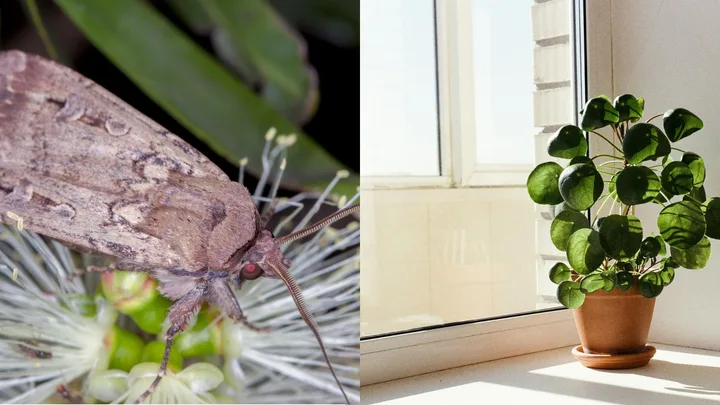
If it feels like bogong moths are coming inside your home faster than you can remove them, you’re not alone. BHG readers across NSW have told us they’re finding dozens indoors each day, even after checking windows, sealing doors, and doing everything they can to keep the insects out.
After sifting through hundreds of comments on a BHG Facebook post, a pattern quickly emerged. The same overlooked spots kept popping up, along with several moth-friendly ways to keep them out. Here’s how they’re likely getting inside.
KEY TAKEAWAYS
- Bogong moths enter homes through tiny gaps around doors, windows, and roofs.
- The moth influx is temporary, and numbers are expected to decline in the coming weeks.
- Bogong moths are harmless to people, pets and homes.
- If you find one indoors, gently move it outside rather than killing it.
- Scientists are asking Australians to report sightings to help track the endangered species.
How do Bogon Moths actually get in?
Bogongs are experts at slipping through small openings, especially at night when lights attract them to houses.
That said, many people have been left scratching their heads, wondering how the moths got inside. “I just want to know how they are getting in between the fly screen and the glass on my windows,” one person wrote. Another said of a family member’s home: “It’s like a plague in his house, and no idea how they’re getting in. Everything is closed up to shut them out.”
Others say they’ve figured it out and are successfully keeping the moths out.
Remember: Bogongs are protected and endangered species, so spraying them isn’t an option, leaving many people stuck in a frustrating catch-and-release cycle.
1. The drain holes in your sliding door and window tracks
This was the most common theory showing up in the comments. Several said bogongs appear to be entering through the small drainage openings, often called weep holes, in sliding door and window tracks.
“I think they are coming in through the drain hole in the window/door runner track,” one reader wrote. “I packed a tissue into this space, and it has helped reduce the influx into my house.”
These openings are made to let rainwater flow out, but they can also let insects get in easily.
2. Skylights
For some households, the entry point was easier to identify.
“I had over a thousand in my home in the Blue Mountains,” one reader said. “They came in through the skylight, and after a week of helping them outside I am down to 13.”
3. Freshly dried washing
They might be hitching a ride on your washing.
“They’re hiding in washing coming off the line,” one reader warned, suggesting some bogongs are accidentally being carried indoors on your freshly dried clothes and bedding.
4. Getting a lift with you
Again, a few readers suspected they were unknowingly bringing moths inside on their clothes.
“I suspect they fly onto us and we bring them in,” said another.
The best way to get the moths out of your house
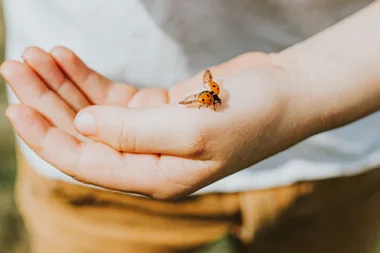
The best way to get a bogong moth out is the same trick most Aussies use on spiders. Clancy Lester, self-appointed ‘Bee Man’, along with ecologist and Yorta Yorta–Barapa Barapa man Kai Lane, and PhD researcher Sebastian Judkins previously told BHG the best way to remove the moths from your home is to gently place a container or glass over the moth, slide a piece of paper or thin card underneath, and carry it outside to release it.
Also worth knowing
Bogongs may be affecting some gas hot water systems.
Several readers told us their gas hot water pilot light has repeatedly gone out during the migration period, and they suspect bogong moths are the cause.
“They are drawn to the pilot light on gas hot water systems and shut them down,” one reader claimed. Another said she was “rather tired of getting down on my knees to keep relighting the pilot light on my water heater.”
“They keep interfering with our gas water heater. They’re attracted to the pilot light, and they fan their wings, blowing it out,” another shared. “Such a nuisance, as we have to get the plumber out to turn on the pilot light, as it’s so, so difficult to do.”
If your pilot light goes out, only relight it according to the manufacturer’s instructions. If the issue persists, contact a licensed gas fitter.


Experts say the moths are already beginning their return journey to the Snowy Mountains, meaning numbers should gradually decline in the next few weeks.
If you spot a bogong moth, consider uploading a photo to Moth Tracker or iNaturalist. Every sighting helps scientists monitor this endangered species.

