
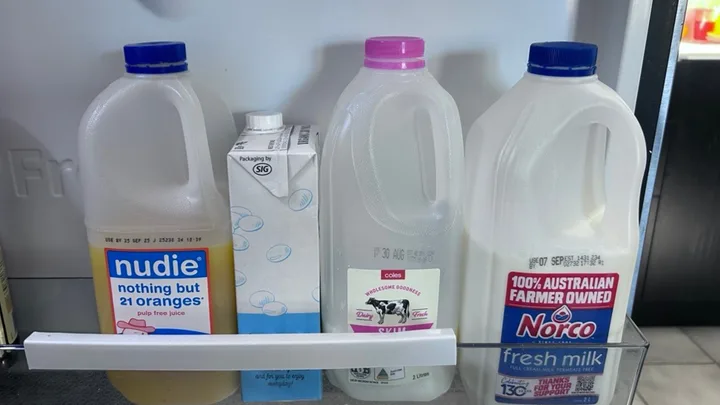
Of all the things in my kitchen, it’s the tiny milk bottle lids that leave me scratching my head at the recycling bin. Every time I go to put one in, I stop and second-guess myself. Do I leave it on? Do I take it off? Can it even be recycled at all?
I always thought I was doing the right thing. I use a keep cup, avoid single-use plastic where possible, and rinse out containers before placing them in the yellow bin.
But recently, while scrolling Instagram, I stumbled across a video from Banish, a recycling education program, and realised I’ve been putting one thing in the wrong bin all along: the humble bottle top.
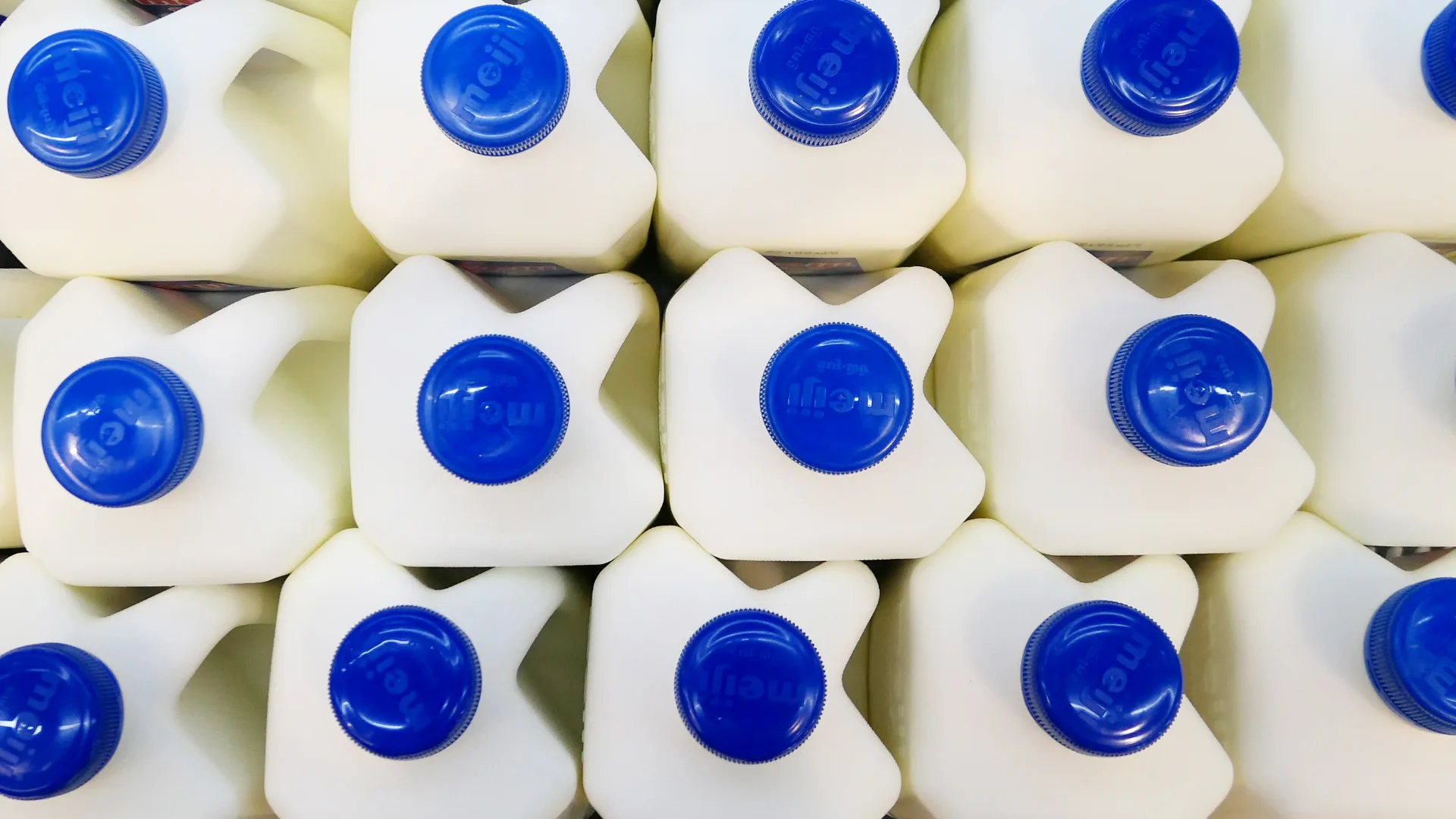
Why does such a small item cause a big issue
In the video, Banish’s Lottie and Hannah race through a supermarket, pointing out lids that generally can’t be recycled in your kerbside bin—blue No. 4 on thickened cream, yellow HDPE on a soft drink bottle, green No. 4 on a juice bottle, and white PP No. 5 on a stock carton.
The catch? All of these lids are too small for kerbside recycling machinery. If you toss them loose in the yellow bin, they fall through the cracks and contaminate the stream.
Unfortunately, leaving them screwed onto bottles doesn’t fix the problem either.
Of course, it depends on your local council. But a quick Google search revealed mine asks residents to remove the lids of their milk bottles. I am ashamed to say, I had no idea.
The truth about milk bottle lids
Milk bottle lids are most often made from Polypropylene (PP #5) or High-Density Polyethene (HDPE #2). Both plastics are technically recyclable, but their small size means that most councils ask you to remove the lid, recycle the bottle, and dispose of the lid separately.
As Lottie from Banish explains in her post: “All of these plastic lids can’t go in your kerbside recycling bin because they’re too small. But that doesn’t mean they’re destined for landfill.
“Our Banish Recycling and Diversion (BRAD) program recycles all kinds of tricky items on-shore in Australia, so that ‘waste’ can get turned into something new instead, from cool homewares to building materials.
“We recycle your bottle top lids ourselves at our Sustainability Hub at Sydney’s Central Station, and #2, #4 and #5 type plastics like these are our favourites.”
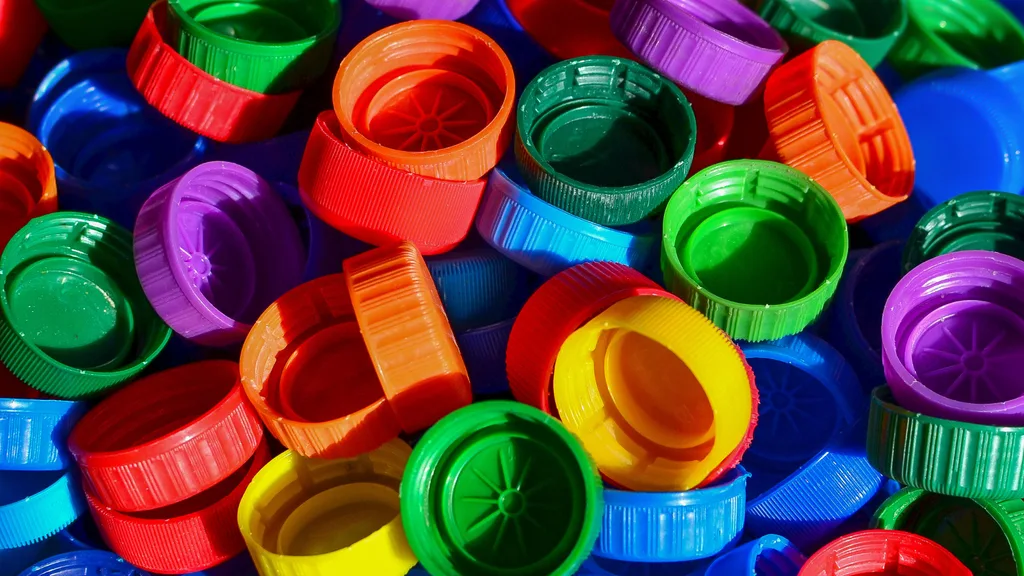
Which plastics can be recycled?
In Australia, plastics are labelled 1–7. But only some are widely accepted in kerbside bins:
- #1 PET (water and soft drink bottles)
- #2 HDPE (milk and shampoo bottles)
- #5 PP (yoghurt tubs, takeaway containers)
However, for these plastics to be recycled, they need to be larger than a credit card.
Other plastics, such as #3 PVC, #4 LDPE (soft plastics), #6 polystyrene, and #7 mixed plastics, typically require specialised recycling schemes.
What you can do with little lids at home
If you’re frustrated about bottle tops ending up in the bin, you do have options. You can collect lids in bulk in a jar or container before sending them off to programs like Banish’s BRAD.
Look for local collection points at schools, community groups, or sustainability hubs.
Alternatively, reduce lid use by choosing refill stations, cartons, or glass bottles with metal lids, which are often easier to recycle.

Related stories

Native ad body.
Native ad body.
Native ad body.