
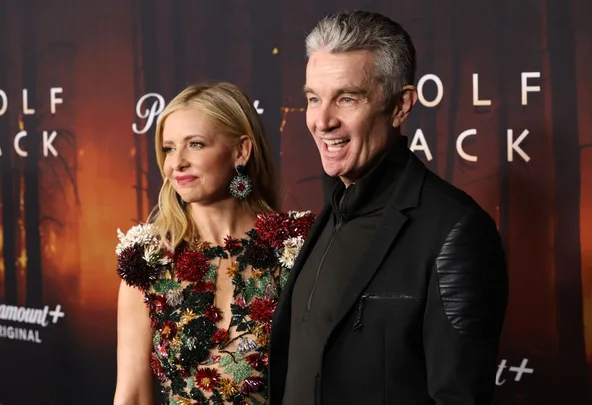
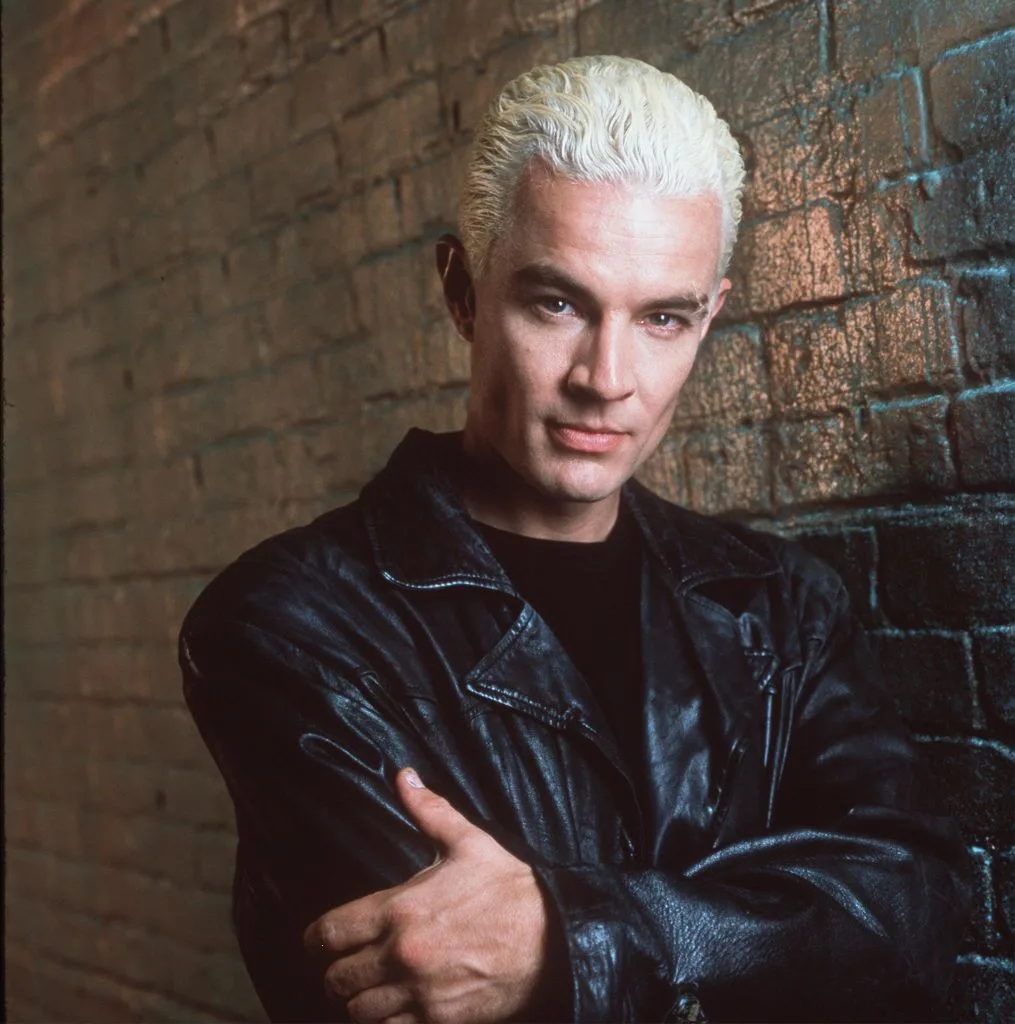
Best known to millions as Spike, the leather-jacketed vampire antihero of Buffy the Vampire Slayer, James Marsters is heading to Australia for Supanova Comic Con for his fourth trip to Australia, at least.
Somewhere between talking about cauliflower soup and the philosophy of clowns, it became clear that James in reality is a far-cry from his vampiric counterpart – except for the charm, he still has that in abundance.
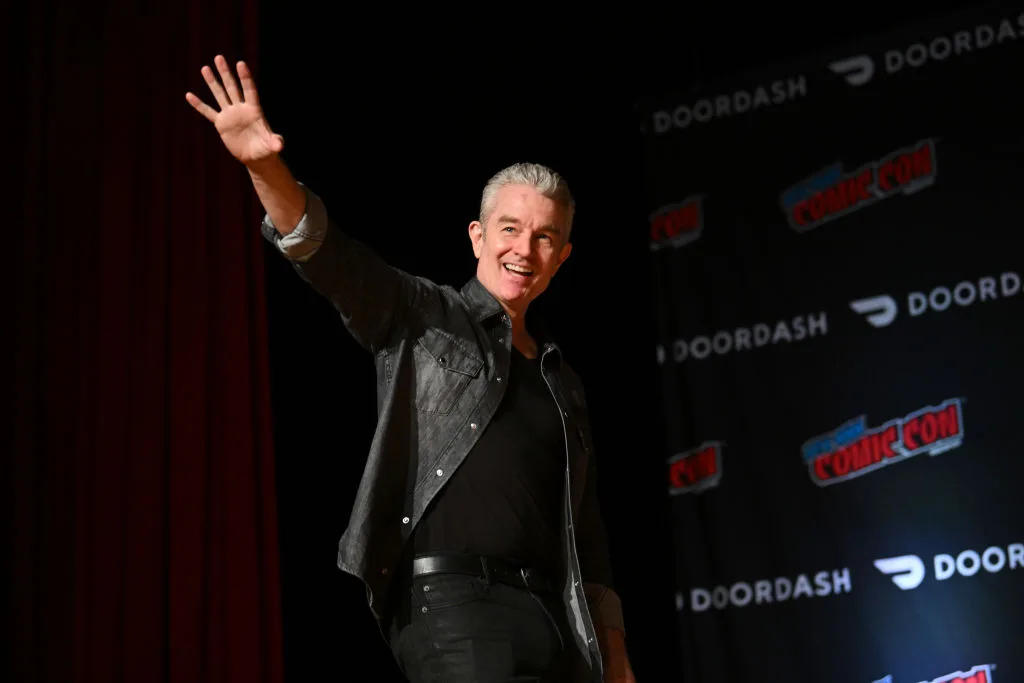
Conventions and community
For James, Supanova and other comic conventions are a fantastic experience in human connection. “There’s almost nowhere left in the world where tens of thousands of people come together in the same room to talk to each other,” he says. “You’ll notice that almost no one’s on their phone. They’re talking to someone else.” In an era when so much of life has migrated to a screen, he finds something quietly radical about that. The more digitised his own world becomes, he admits, the more he craves it: “The more and more digitalised I get, the less and less people I actually meet in real life. The more I look forward to coming to a con so I can hang out with human beings in three dimensions.” He says with a chuckle.
It’s a sentiment that will resonate with anyone who has ever sat in a room full of strangers united by a shared passion and felt, unexpectedly, completely at home. James touches on it again later in our conversation: that real happiness isn’t something you can buy. It has to be shared, in person, with other people.
Roots and wandering
James has been coming to Australia long enough to have opinions about each city. Melbourne impressed him with its music scene, clubs and guitar stores. Sydney overwhelmed him with its beauty. But it was a waterfall on the coast, somewhere he can’t quite place now, that stayed with him most.
“I remember, someone took us out and there’s this beautiful waterfall. I’ll never forget it. It was just, it was, it was heaven. On the coast somewhere. I’m sure you have many waterfalls. I tend to remember [nature] more than anything else.”
Nature, he admits, is where he genuinely relaxes, even if the city life of Los Angeles is where he now lives. “I was born in a town of 200 people up on the mountains and there’s part of me that really relaxes if I’m around more trees than people… It’s a happy place for me. But I’m a city kid now.” Los Angeles does offer hiking, he concedes, if you’re willing to seek it out.
In the kitchen
James admits he really likes to cook. “My go-to recipe is cauliflower soup with nutmeg. It starts with leeks, onions, garlic, celery, and however much you have of that, you have four times as much cauliflower. So, if you have four cups of this, you would need 16 cups of cauliflower. And then you put that in a big pot and cover the pot and cook it at a low temperature and stir it until it’s very, very soft. And then throw it in a blender and blend it. Blend the crap out of it. Then cut it with chicken stock or vegetable stock. You find yourself with a soup that you would swear has cream in it.”
He tells the story of working as a waiter and customers who refused to believe the soup was dairy-free. “I used to get in arguments with my tables that would tell me, ‘This has cream in it. You’re lying, you know, you’re fooling us.’ Like, no, no, it’s just vegetables.”





The garden
Behind him on the video call, a few plants are visible. Are they real? He pauses. “Some are real. I spend a lot of time on the road, and so I find that the real plants tend to die because sometimes I’m gone, like I’ll be gone for two and a half weeks when I come visit you in Australia. So, it gets hot, and the plants just don’t make it.”
He is charmingly unapologetic about the solution. He admits gardeners come to help with his home garden. And he fondly shares stories of his 84-year old friend, still getting his hands dirty, who arrived one day to help cut the ivy and was characteristically blunt about the state of things. “He’s like, ‘Your garden looks like shit.'” James recounts, laughing. They worked together for a while before James tapped out. “He was up there for another two hours. At 84 years old. Incredible.”
His favourite plant, for the record? Ivy. “It’s beautiful and hardy and you can’t kill it.”
Method to the madness
James has thought a lot about happiness. What it is, what it isn’t, and how long it took him to tell the difference. The character that made him famous was, he says, built partly from the parts of himself he works hardest to keep contained. “I like to say Spike is all of the parts of myself that I try not to inflict on people, but there is a Spike in there. The problem is he’s not charming and he is not funny, and he is not anyone you want to hang out with.”
“If you combine all of that in me with the scripts of Buffy, with all those wonderful jokes and all the humour and intelligence that those scripts have, that intersection is the character of Spike.”
“If I showed you the Spike in me, you’d be like, ‘oh my god, interview’s over, eugh!” and he promises to keep that side of him locked away while we talk.
We talk about the years during Buffy being quite isolating – a self-infliction to become the character. “Those years were specifically me trying to live the life of a vampire, trying to use the method, so that I didn’t have to act like I was a vampire,” he says, admitting; “I sound psychotic when I talk this way… And what I found with Spike was it kind of started to eat me alive because I was doing that for, like, seven years. And that can get dark, yeah.”
Passion projects
James is also a musician, and has been since his father taught him guitar. He was playing bars at age 14, and later went on to form the band Ghost of the Robot. They’re still together and now working on their seventh album.
When I ask him whether success is due to talent, passion, or hard work, he doesn’t hesitate. “Hard work. Discipline and hard work is 70% of success.” He says, with the remaining 30% falling to talent. “But I think that if you’re passionate, it helps you work hard.”
“Talent is great, but I’ve known a lot of talented people who didn’t do a whole lot with it. because you have to develop your talent.” He speaks about the key to this being preparation. “Whether it’s live eyeballs or a camera, they’re going to tell if you got it or not. So, it’s all about rehearsal and preparation.”
But he’s also honest about where the best ideas come from. “I feel like my best stuff has come fully formed into my mind.”
The trick, he’s learned (partly from his son, who is also a musician and songwriter), is to do the work anyway. Sit down. Put pen to paper. Give it an hour. He also mentions that often bands create their best work when they’re touring, because they’re in the creative workflow. “Just start doing it. Get your brain into that mind state, so that it can start to improvise and give you stuff.”
Because perhaps, the landing-in-your-lap moments only come when you’ve already been working at it. “Whether that’s writing a short story, a poem, a novel, a script. Or any creative endeavour. You probably want to get into the pool so that you can start swimming. You know what I mean?”
Friendships, community and saving the world
There’s a moment in the conversation where things get unexpectedly still. Asked what he would have done if he’d never pursued acting or music, James doesn’t reach for a polished answer.
“I would be in jail,” he says. And then, quietly: “I, like many people, had a pretty horrific childhood.”
He doesn’t linger on it, and he doesn’t want you to feel sorry for him. But he does say that when he’s seen horror films depict a monster’s difficult backstory, he has often thought, “I remember that. I remember that day.”
What changed everything was finding a theatre when he was 10 years old. “It saved me,” he says simply. “And I was always doing a play.” Sometimes even two. He pursued it full-time through college, producing and directing as well as performing. “It’s a big reason. That, and good therapy, is why I’m a happy man today. Can’t imagine that I would have come to much good if I hadn’t been saved by theatre. “
He enjoys company these days, perhaps in rebellion to the isolation and mental state he created through the role on Buffy. He now surrounds himself with friends.
“I used to think of happiness, I now call it self-satisfaction, pleasure, comfort, safety. And that’s not happiness. I can buy those things, but the feeling is fleeting.”
He gives examples. A new car thrills him for maybe six weeks. A new house, six months. But neither of those things is what he’s after. “If I am connecting with other human beings on a healthy level, then that’s where I get this different feeling. And it’s an abiding, peaceful, good feeling that I’ve come to call happiness.”
“I think that I am older, and I’ve found that to find happiness, I have to give. I don’t really find happiness when I’m taking, either from a relationship or a situation. If I’m giving something, I get my reward right away because it feels good.”
He’s aware of the slight irony in the logic. ” So yeah, I guess I’m doing it selfishly, I just want to be happy. I think it’s a weird thing, to be happy, I’ve gotta think about other people more than I think about myself.”
That philosophy now shows up practically, in the way he maintains his friendships, always checking in, always ready to pick up the phone. “Someone’s always in the barrel, man, in a big way. I didn’t realise how many people really, really have it hard in the world.”
The theory of clowning
Everyone has challenges, even the character he’s famously known for. We talk about the character of Spike being charming and likeable, even when he was doing annoying, irresponsible or harmful things. “Everyone makes mistakes; we all mess up. And we hope that there are people in our lives who will not kick us out of the house for making mistakes sometimes. Because I think that we all make mistakes and I think that we’re all redeemable.”
“I thought of Spike as a clown, especially later on,” says James. “Why do clowns scare little kids but not adults? I argue that it’s because clowns have a pale face. They look like a cadaver and, and on an instinctual level, children don’t want to be around a cadaver.”
“They paint themselves like a cadaver to make the point that death turns us all into clowns. Why are we rushing around so much? Why are we feeling so self-important? Why are we not slowing down? Enjoying each other and investing in each other? We’re always like, oh, nope, I gotta go. I’m very important. I gotta go. You know? And, and when we do that, we become clownish when we’re too self-important.”
He believes that the humour in clowns is due to a subconscious recognition of them pantomiming the daily tasks and behaviours that are so relatable. “We’re laughing because we’re recognising, Hey man, I do that too. Oh my God. I rushed around just like that guy… I’ve thought that I was Mr Important and slipped on that banana peel, even if it’s just metaphorically.”
“So, I thought that, you know, Spike wasn’t a clown in the beginning, in season two or season three or anything, but [later] that’s how I thought about it. So that the audience would identify with Spike, even though he was causing so many headaches for the people around him.”
Buffy reboot cancelled by Hulu
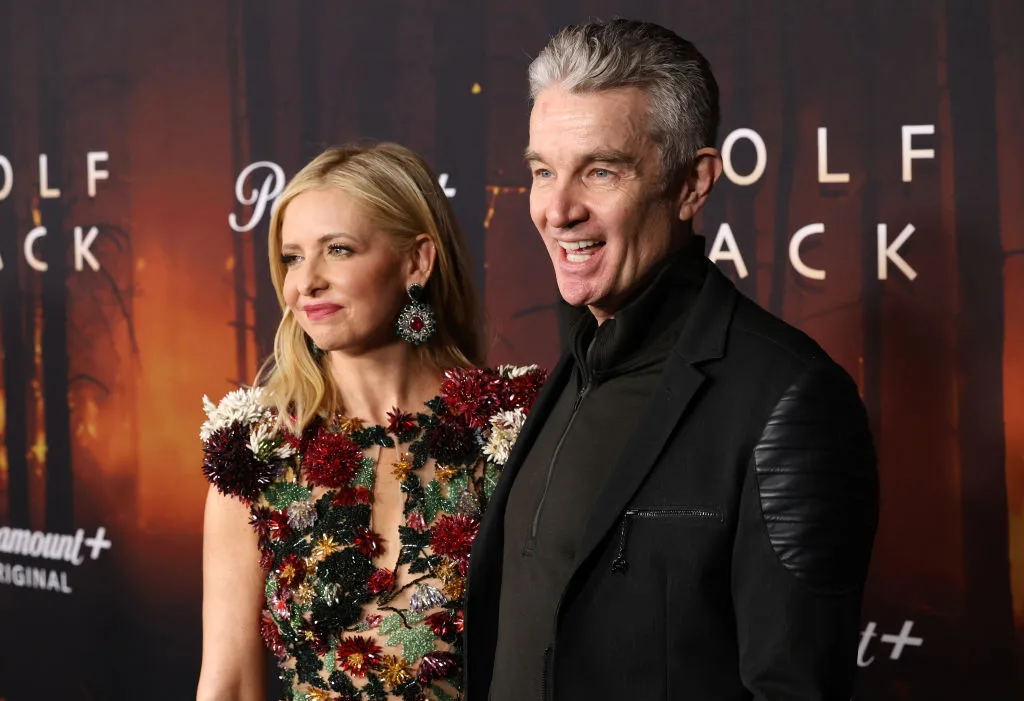
For fans of the TV show, the recent Buffy reboot that original actor Sarah Michelle Gellar was backing alongside Chloe Zhao, has been all the talk. Even more so when its recent pilot failed to get greenlit by Hulu, creating a storm of fans to lambast the streaming platform.
But I sat down with James before this news was announced. At the time of the interview, James was excited and enthusiastic about a potential later appearance on the show, once the new main characters had been developed. “If they call me, I’ll come and if I come, I’ll be ready, for sure.”
I reconnected with James shortly after the news that the series would not be proceeding. His thoughts? “I wasn’t really on the inside of the making of the pilot. I was told that I would be coming in later, maybe in season two. And so, I’m looking at all of this from the outside.”
“I can just say that; I was really looking forward to Buffy Summers coming back and helping out this befuddled world. I think we need her more than ever.”
“I also was looking forward to the world having a new slayer for a new generation. I thought that that was a promise we made every episode, and I was looking forward to making good on it. And I can only hope that there will be another iteration that is explored, and that we can continue, in this universe.”
As a longtime Buffy fan, I agree and if the outpouring of love on social media is anything to go by, so do many, many others. As Sarah Michelle Gellar herself once said in Season One of Buffy, and again in her recent statement following the pilot’s cancellation; “If the apocalypse comes, beep me”.
*Beep*
See more
James Marsters is appearing at Supanova Comic Con on the Gold Coast on April 11th, and in Melbourne on April 18th. Buy tickets via Ticketbooth.com.au.
James’ band Ghost of the Robot are currently working on their seventh album.

Related stories
Native ad body.

Native ad body.


Native ad body.