
It’s one of the most common things I hear during home consults: “We spent all this money on our outdoor area, but we barely use it.”
It often has to do with what you’ve put out there. Most outdoor spaces aren’t unsuccessful because they’re too small or because they need a bigger barbecue. They’re unsuccessful because they’ve never been designed around the way you actually live.
What do you actually want to do out there?
It sounds obvious, but it’s amazing how many outdoor spaces are designed without answering that first.
If your outdoor area flows straight off the living room, do you really need another outdoor lounge? Or would you get far more use from a dining setting where friends gather over lunch? And if you already eat at the dining table every night, maybe what you’re missing is somewhere to sit with a coffee on a Sunday morning. There isn’t a right or wrong answer. The trick is making sure the space has a purpose.
Don’t just copy your floor plan
One mistake I see all the time is people recreating the exact same room they already have inside: a lounge room inside, a lounge room outside. A dining room inside, a dining room outside. Sometimes it works, but often it doesn’t.
Think about how you naturally move through your home. The outdoor area should complement what’s happening inside, not simply repeat it.
Greenery is what makes a space feel alive
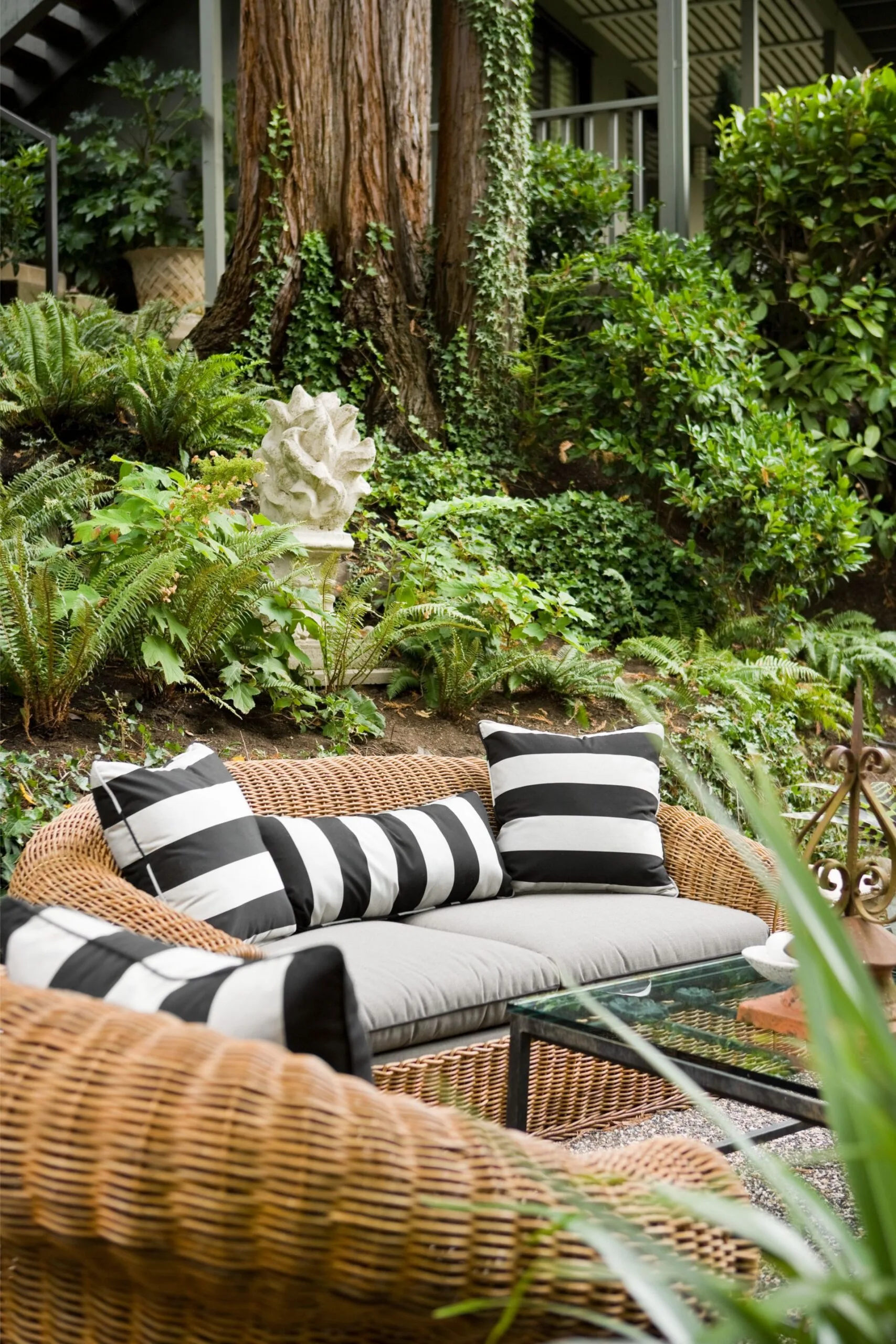
Whether you’re a keen gardener or someone who struggles to keep a succulent alive, every outdoor space benefits from greenery.
If you love gardening, embrace layered planting and create that lush feeling. If you’re not a green thumb, don’t overcomplicate it. One beautiful feature tree or a couple of oversized pots often have far more impact than 20 little plants that need constant attention. The goal isn’t to create a botanical garden, it’s simply to soften the space and make it feel welcoming.
Don’t be afraid of colour
I know the Australian sun is harsh. Fabrics fade, cushions weather and nobody wants to replace outdoor furniture every few years. But that doesn’t mean everything has to be white, beige or charcoal.
Outdoor fabrics have come a long way, and many brands now produce beautiful performance textiles that are specifically designed to handle our climate.
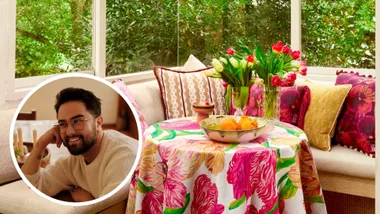
Even a little colour can completely change how inviting an outdoor space feels. Think a striped cushion, olive green upholstery, rust-coloured dining chairs.
Blur the line between inside and out
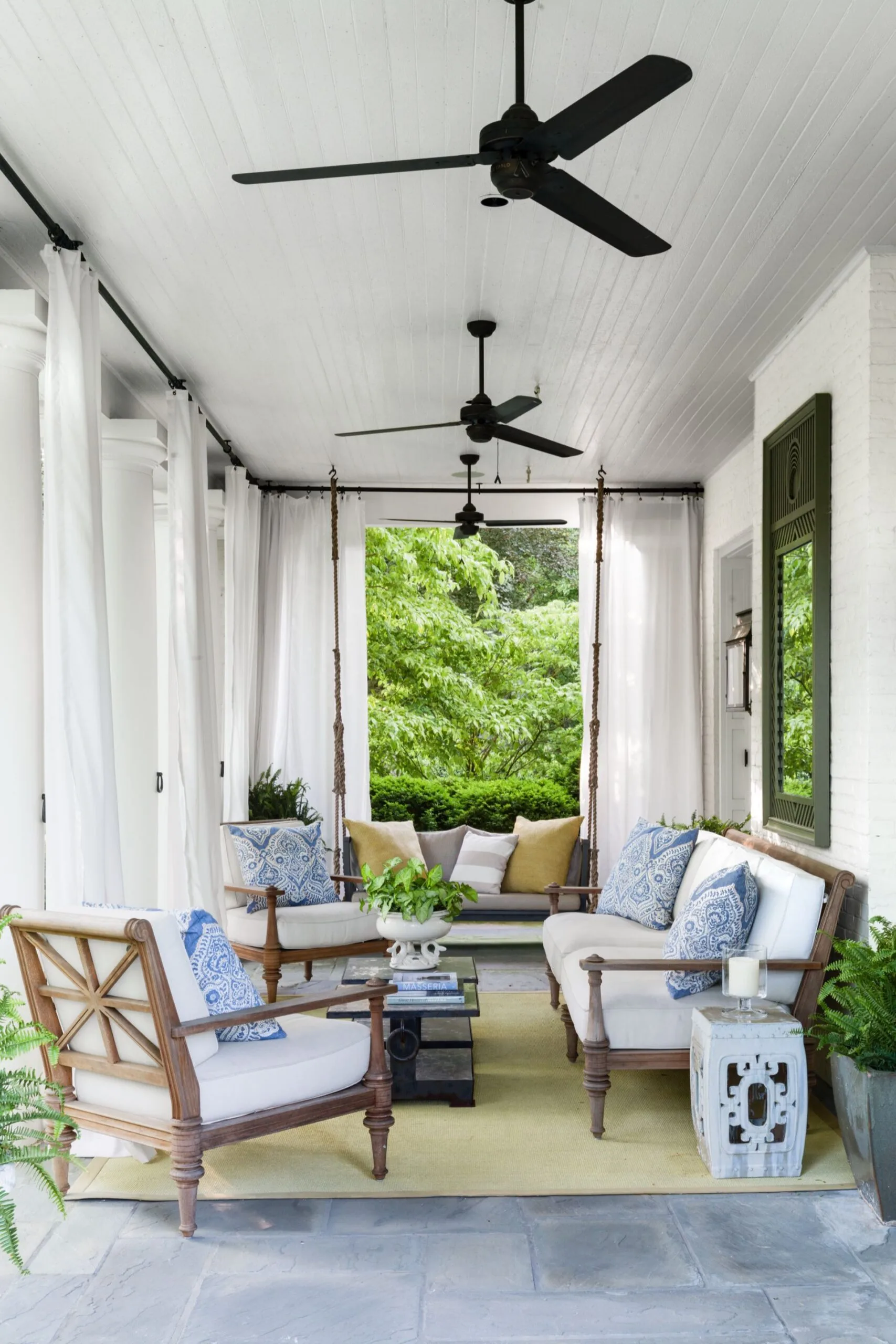
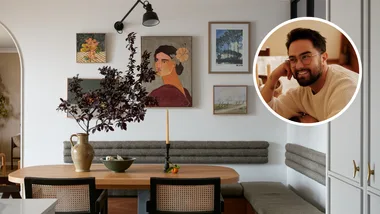
The outdoor spaces I love most don’t feel like a completely different house, they feel like a continuation of the interiors. If your home is warm, layered and natural inside, carry those materials and colours outdoors. If your interiors are contemporary and minimal, let that continue outside too. The more connected the two spaces feel, the more naturally you’ll move between them.
My rule for outdoor living
The best outdoor areas aren’t the ones with the biggest entertaining spaces or the most expensive furniture, they’re the ones that make you want to open the back door. Because when a space feels welcoming, comfortable and designed around the way you actually live, you don’t have to remind yourself to use it; you’ll simply find yourself out there more often.
Before you buy anything ask yourself:
- What will we actually do in this space?
- Does the furniture support that?
- Is there enough greenery?
- Does it feel connected to the rest of the house?
- Would I choose to sit here instead of inside?
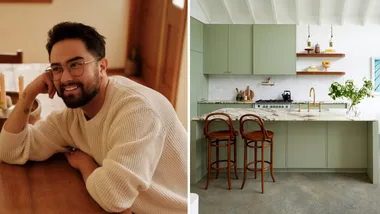
Ask Jono your home design questions! Jono Fleming is a Sydney-based interior designer, stylist and presenter with a passion for making great design accessible and personal. To ask him for advice on home design, scan the code above or visit bhg.com.au/askjono