

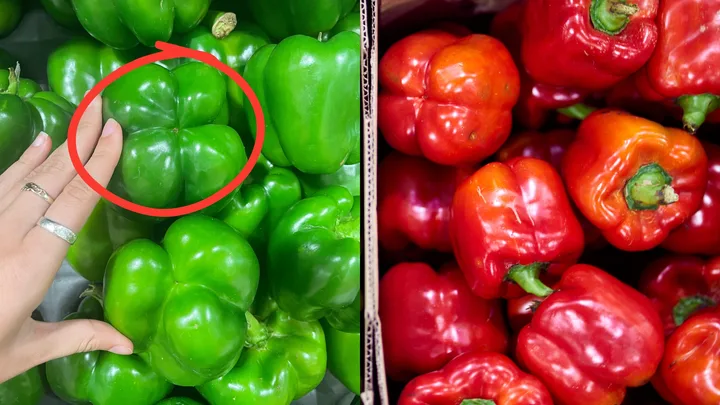
Going shopping with my mum always meant being very selective about the fruit and vegies – no hard avocados, no dry-looking herbs and certainly no capsicums that had 3 bumps underneath. According to her, and to many Aussies, the underside of a capsicum tells you how sweet it will be.
The story goes like this: 3 bumps under a capsicum is a male, and 4 bumps is a female, and a female capsicum is always sweeter. When I go to the grocery store before fajita night, I always pick and choose my capsicums very carefully, checking the underside for the right amount of bumps.


While this method seems foolproof, it’s actually a complete myth. But here’s the good news: there IS a way to pick the sweetest capsicum every time. I spoke to our resident horticulturist and garden editor, Jenny Dillon, about this unusual belief, and she revealed what actually determines sweetness.
Meet the experts
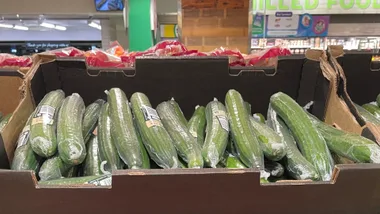
Rachel Iorfino, Senior Content Producer, is a journalist who loves asking the unusual questions about groceries, like why continental cucumbers are wrapped in plastic. She spends her time taste-testing and reviewing supermarket food products and uncovering the best grocery hacks.
Jenny Dillon, Garden Editor, is a horticulturalist and journalist who spends her time writing up seasonal gardening advice and beautiful plant profiles for Better Homes and Gardens – and answering unusual questions from her colleagues!
Are there male and female capsicums?
The simple answer is no, there are not male and female capsicums. The capsicum 3 or 4 bumps rule is completely untrue!

The more scientific answer about the sexes of capsicum is that all capsicum fruits ‘have both!’ as Jenny explains to me, “A capsicum fruit comes from a capsicum flower, which has both male and female parts to it.”
So, technically, all capsicums contain female and male sex organs. After a capsicum is grown, the seeds inside can then form new plants to grow more capsicums!

So, why do capsicums have a different number of bumps underneath? The underside of a capsicum can have as many as 5 bumps, and as few as just 1. These ‘bumps’ are usually formed based on the variety of pepper and the growing conditions of the fruit.
Jenny says that the shape of a capsicum, including the bumps underneath, is due to how much sun and shade the plant gets.
How to find the sweetest capsicum at the supermarket
The sweetness of a capsicum is usually down to the ripeness of the fruit, which can be spotted based on colour, not bumps. A red capsicum is the ripest, while a green capsicum is the least ripe. A yellow or orange capsicum is somewhere in the middle.
That’s why a red capsicum is so much better, more delicious and all around tastier than any other capsicum. Who else is here for green capsicum hate?
What’s the difference between yellow, red and green capsicums?
The difference in the colour of capsicums is actually ripeness. Red, green, yellow and orange capsicums are all the same plant (Capsicum annuum), just at different stages of ripeness.
- Green: the least ripe (and most disgusting, in my opinion!)
- Yellow and orange: at the middle stage of ripening
- Red: the most ripe (and most delicious)
At the grocery store, you may also find capsicums that have a swirl or mix of different colours. These capsicums are in the middle stage of ripening, and can have a green and yellow or yellow and red or even a green and red colouring. Some yellow capsicums are a slightly different variety, and are not as common in Australia (and therefore usually more expensive).
I will admit, I still do check the underside of a capsicum for bumps. And, although I do dislike the flavour of a green capsicum, I will often buy them for making stir fry, to use as pizza toppings, and to make fajitas. They are, after all, always cheaper than the other two colours!

