

 (Photography: Amber Hooper)
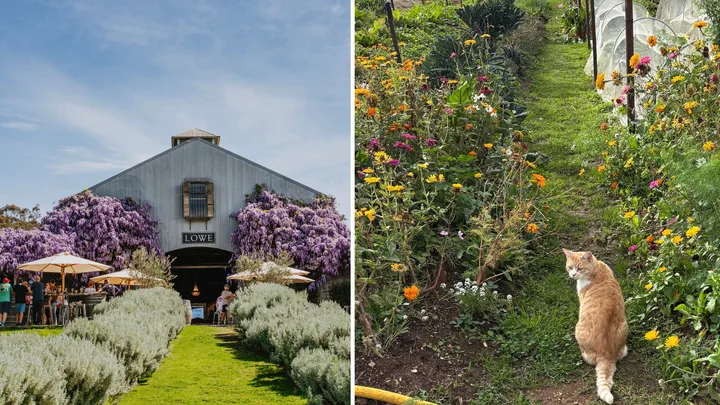
BHG editor Megan Osborne visited the Lowe Family Wine Co. in Mudgee – a farm with a biodynamic vineyard and gardens, award-winning wine, home-grown food and a friendly cat. But the most fascinating part? Learning about the food forest.
Megan speaks to Kesh Mudaly, Lowe Family Wine Co.’s biodynamic viticulturist, as they tour the property, plus Kesh shares her famous plant juice recipe.

A tour of the Lowe Family Wine Co.
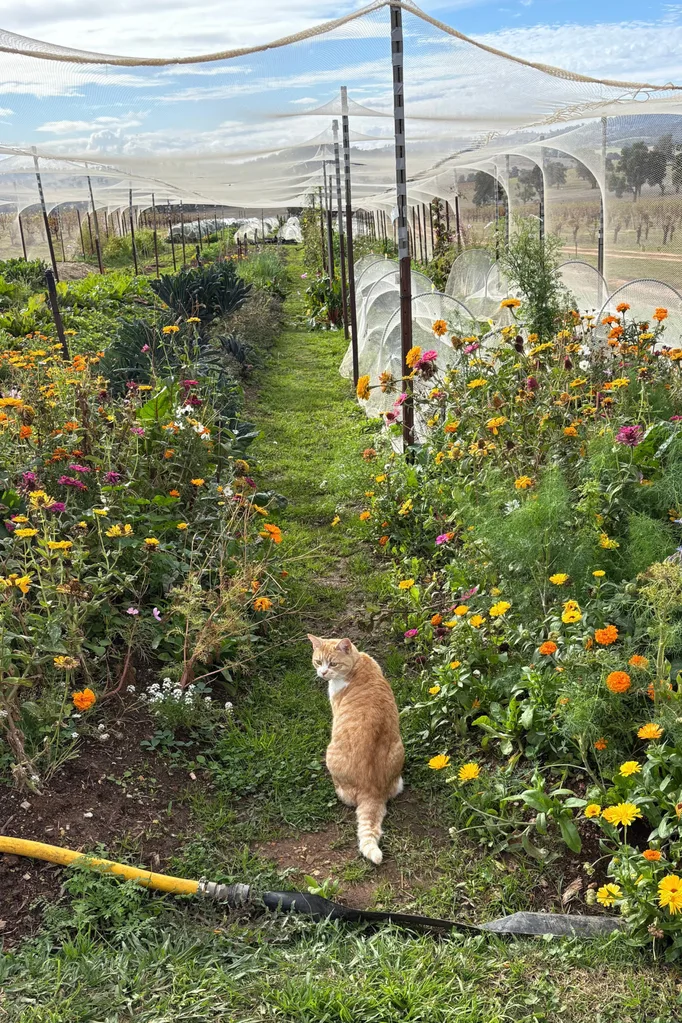
When you visit Lowe Family Wine Co. in Mudgee, NSW, you might be lucky enough to meet Marmalade. Marmalade is the resident barn cat who arrived as a stray, stayed, and now prowls the vineyard as her very own domain. On my recent visit, Marmalade joined me on a tour of the kitchen garden, playing with bugs among the flowers and sprouts.
“She catches all the pests, the rabbits and mice, and she comes into the vineyard with me to do biodynamics,” says Kesh. Marmalade should almost be paid a salary, we joke.
From the farm to table
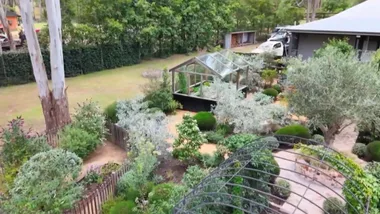
Kesh first takes me through the original garden planted for Zin Food + Wine House, the farm-to-table restaurant in the centre of the 400-hectare certified organic and biodynamic farm. It attracts plenty of patrons from Sydney, 290km to the south-east, as well as Mudgee locals.
The original garden was planted more than a decade ago as a ‘food forest’, Kesh tells me. The canopy is made up of fruit-producing trees such as mulberry, olives, peaches, apple and crabapple. The ground layer has lemon balm, yarrow, oregano, lavender and lamb’s ear, while the mid layer has shrub plants such as bay trees and roses.
What is a food forest?
“The design itself mimics how a forest works in nature,” Kesh explains. “As the leaves drop, they provide organic leaf litter for the microbes. They break it down, creating nutrients for the plants, and it gets cycled back into the system.”
When set up correctly, a food forest is quite self-sufficient, and the team don’t use any chemical fertilisers.
The Lowe Family Wine Co. estate, led by David Lowe and Kim Currie, also has orchards dotted about, growing quinces, pomegranates, figs, peaches, nectarines, plums and cherries.
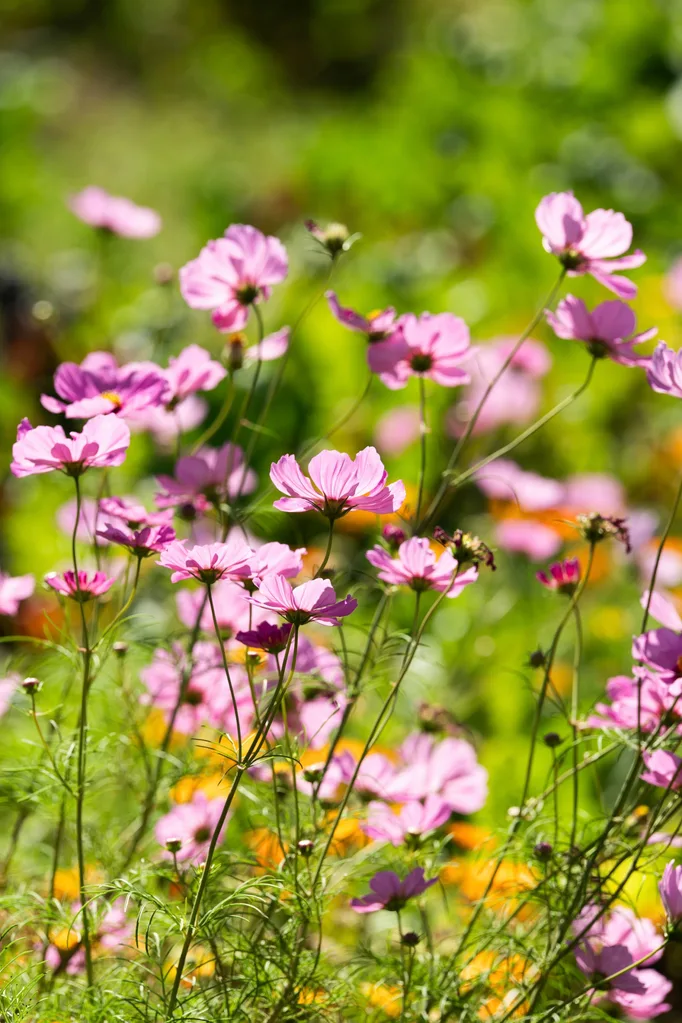
“It’s part of the biodiversity,” says Kesh. “The vineyard by itself is a monoculture, and nature doesn’t thrive in a monoculture system. Nature thrives with diversity. Diversity above ground equals diversity below ground.” Biodynamic agriculture, in principle, is a type of organic regenerative approach that focuses on soil health and avoids synthetic chemicals.
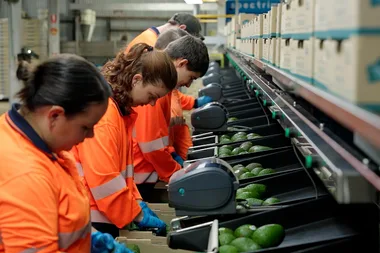

Having a variety of plants results in a diversity of microorganisms, which provide many benefits for the farm’s crops. These include promoting a better exchange of nutrients in the soil, disease fighting, and more frost and drought tolerance.
Growing the market garden
Establishing an extended market garden came from a desire to sustain Zin Food + Wine House restaurant, where the menu is made up almost exclusively from what’s grown on site. It serves seasonal produce at the whim of the garden.
The new, larger market garden sits alongside the original ‘food forest’, and is structured around large beds of vegies, fruits and herbs intentionally interplanted with multiple species to support the health of the system. Key to this are lots of flowering – albeit still edible – plants that attract both predators and pollinators.
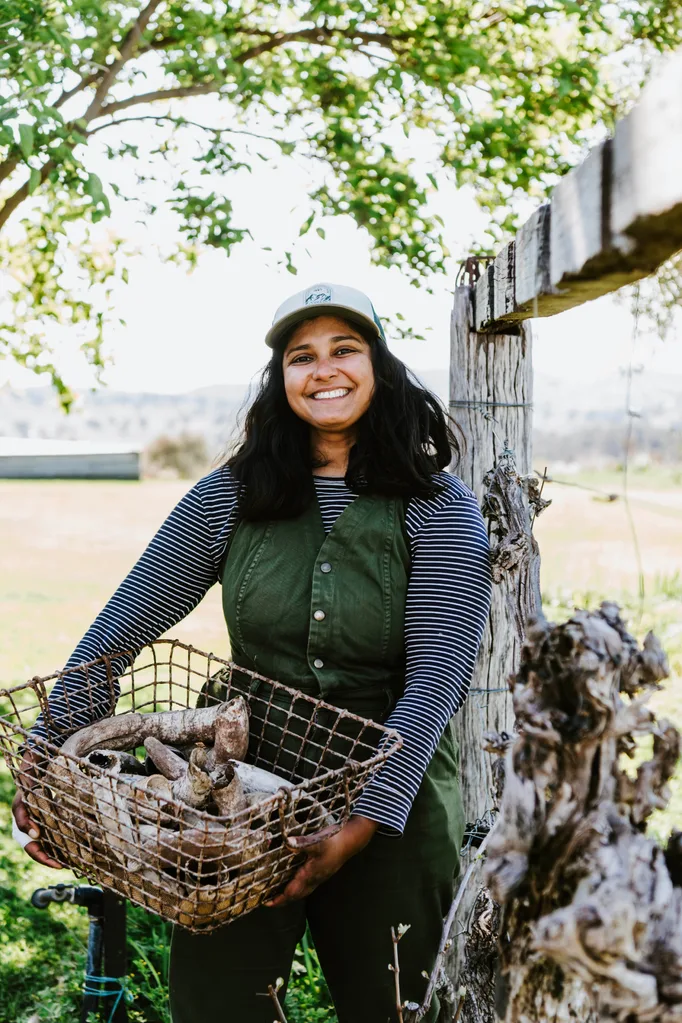
Kesh points out the varieties as we wander through, Marmalade at our heels. “Oregano, strawberries, that’s red sorrel and rhubarb… chives, warrigal greens, spinach.”
It was a project Kesh and head gardener Jonathan Andrews embarked on together. Kesh tells the story of how Jonathan used to live in Sydney and would read a market gardening book on his train ride to work every day, “just manifesting his life in the country”, she says.
Jonathan then started working in the cellar door at Lowe Family Wine Co. before moving to the garden team. Kesh joined after COVID. “So, we built this market garden, and we started one block at a time,” she says, adding a block each season.
Natural balance
Pathways between the beds alternate between clover and woodchip. Initially they were exclusively woodchip, but “woodchip is really fungal-dominant,” says Kesh, and it ended up with too much fungal dominance in the soil. For grapevines and orchards, you need a 10-to-1 fungi-to-bacteria ratio, whereas for a market garden you need a higher bacterial ratio, Kesh explains.
Now, they alternate every second row with a living green pathway. “So that’s the clover – they’re nitrogen-fixing plants. We get free nitrogen from the air, sucked in by the plant, and then fixed into the soil by soil bacteria – the rhizobia – then slowly released into the soil for the plants.”
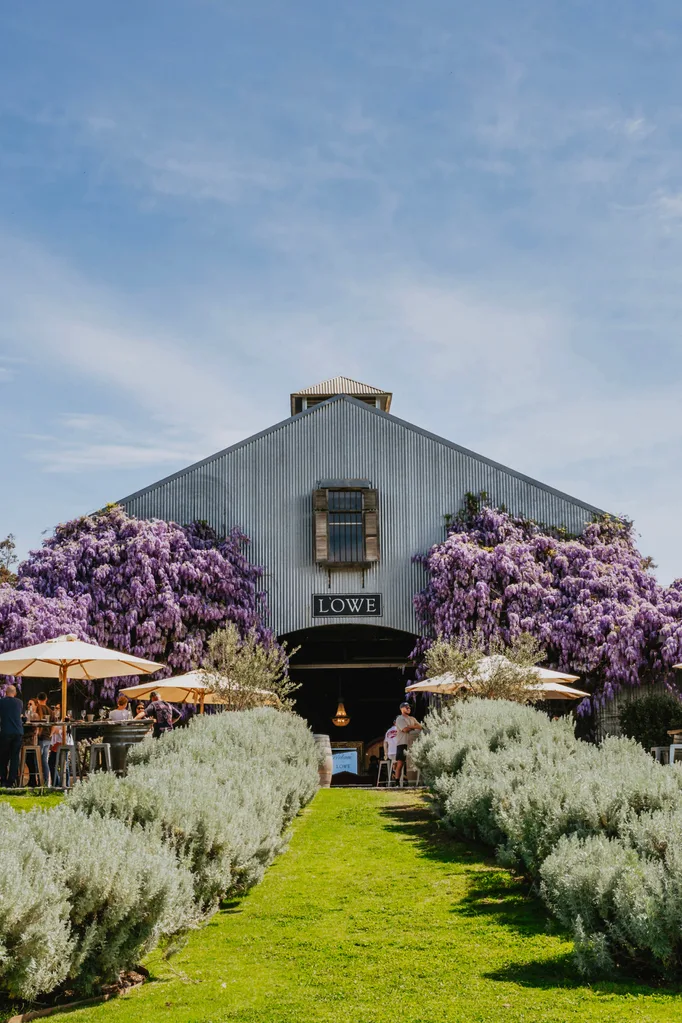
Kesh tells me that by nurturing these microorganisms she can avoid using store-bought fertilisers. She even advises against using synthetic fertilisers, claiming they can sever the relationship between plants and microbes. “Your plants end up completely reliant on you for all of their needs.” That’s something no gardener wants to hear.
Kesh makes her own bio ferments, from elements of clover and other weeds. “They stink to high heaven, but they’re a balanced source of nutrients full of microbes. And if you’re using the plant species that you’re going to feed that ferment back to, it’s ideal.” (You’ll find Kesh’s recipe at the end of this feature.)
How to manage pests
Pest control also takes a nature-first approach. As the winery is biodynamic and certified organic, there are strict rules about what can be used to combat challenges.
The team grows plants that attract predatory bugs (such as native wasps) to generate a natural pest control system. These wasps eat the caterpillars in the vineyard, removing the need to use chemical pest control. The plants that attract them include yarrow, Australian creeping saltbush, tea trees, Christmas bush, Australian wallaby grass as well as a range of flowers.
These plants also work to attract lacewing (green and brown) and ladybugs, which are natural predators of aphids and scale. But not all ladybugs are beneficial for plants.
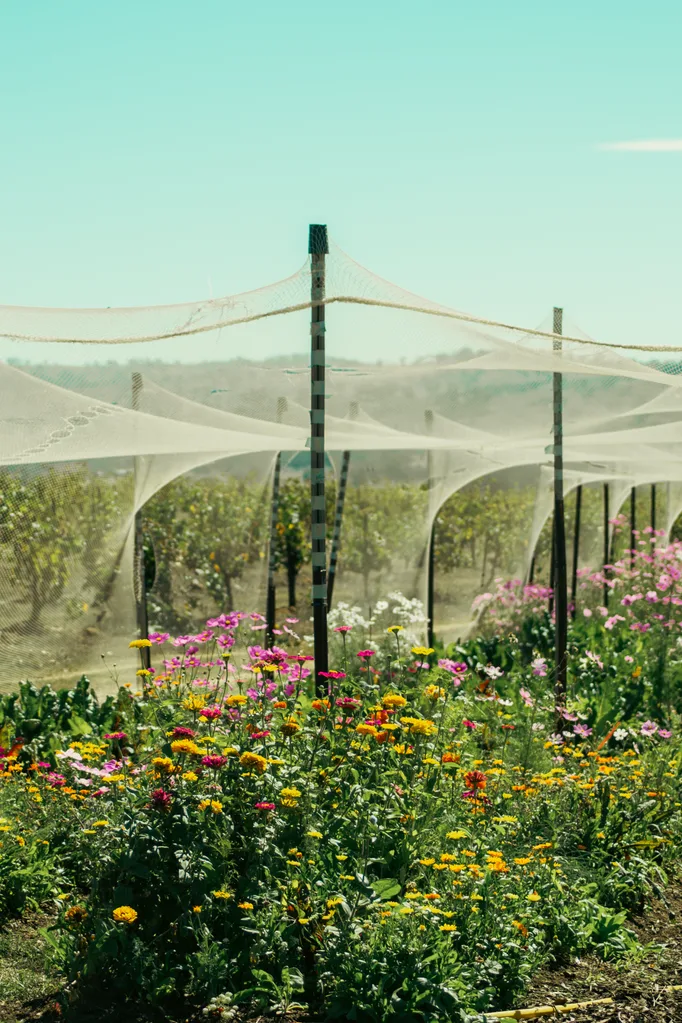
Kesh laments her frustration at the dastardly 28-spotted ladybug, a small but voracious herbivore.
“It’s all over the pumpkins, cucumbers and the cucurbits!” she exclaims. “But they have natural predators, too, and it’s all a timing thing,” she reassures me. “It’s about bringing your system into balance, so you let them come in, they start feeding on the plants, and then the predators will come in and eat those [pests]. Whereas if you spray, you kill everything, there’s nothing for the predators to eat, so then they leave.”
Attracting predator bugs does a lot of the heavy lifting pest-wise, but there’s also a ‘chicken tractor’; an old horse float repurposed into a mobile coop that’s wheeled through the orchards. The hens clean up under the trees eating remnants of fruit and dormant fruit-fly larvae, meaning no netting is needed to combat fruit fly.
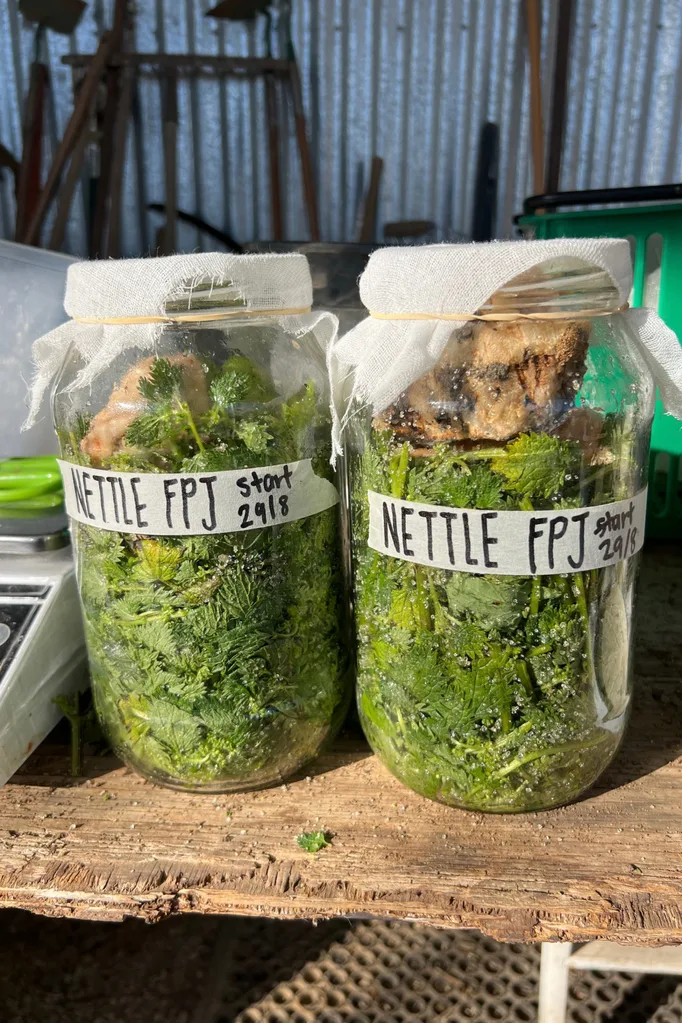
Fermented plant juice recipe
A balanced source of nutrients and microbes for plants. Recipe by Kesh Mudaly.
Ingredients
• 300g plant material
• 200g raw organic sugar
Materials
• Mixing bowl
• Scale
• Scissors
• Glass jar
• Muslin cloth
• Rubber band
•Clean rock
Method
STEP 1 Collect plant material of your choice in the early morning before or around sunrise.
STEP 2 Chop up the plant material. Weigh off 300g of chopped plant material into a mixing bowl, then add 200g of sugar and mix well.
STEP 3 Add the plant+sugar mix to a clean jar, and add a thin layer of extra sugar on top. Place a clean rock on top to initiate the fermentation process.
STEP 4 Cover the jar’s opening with muslin and secure with a rubber band.
STEP 5 Store the jar in a warm spot for 4–7 days, until the fermentation process is complete.
STEP 6 Once complete, strain out the liquid that has formed and store in a smaller glass jar, using the muslin cloth to cover the opening. The FPJ is shelf stable and can be used for many years.
STEP 7 Use at 1:500 with water as a soil drench or a foliar spray.
NOTE: If the jar is stored with a tightly sealed lid the juice will spoil.
Read more about the award-winning winery and their incredible cosmic farming here.


Share this post