
If you want a plant that will make your garden pop, climbing hydrangeas could be exactly what you’re after. These hydrangeas climb walls, fences and trees without needing a trellis — and can reach 15 metres high.
And with the right spot, they can do really well in Aussie gardens.
What is a climbing hydrangea?
Climbing hydrangeas are a bit different from the usual types. They grow roots along their stems, which let them cling to rough surfaces such as brick, stone, fences, and even tree trunks.
The most commonly available species globally and in Australia is Hydrangea anomala subsp. petiolaris, often labelled simply as Hydrangea petiolaris, which are also very easy to propagate.
Key characteristics of climbing hydrangeas
- deciduous or evergreen (species vary)
- self-clinging climbers
- large, lacecap-style white flowers
- thrive in partial shade
- lush green foliage that turns yellow-gold in autumn (deciduous types)
Climbing hydrangeas can be slow to get going, but once they settle in, you’ll notice them picking up speed year after year.
Best climbing hydrangea varieties
Here’s a list of the climbing hydrangeas available in Australia and the conditions they are best suited to.
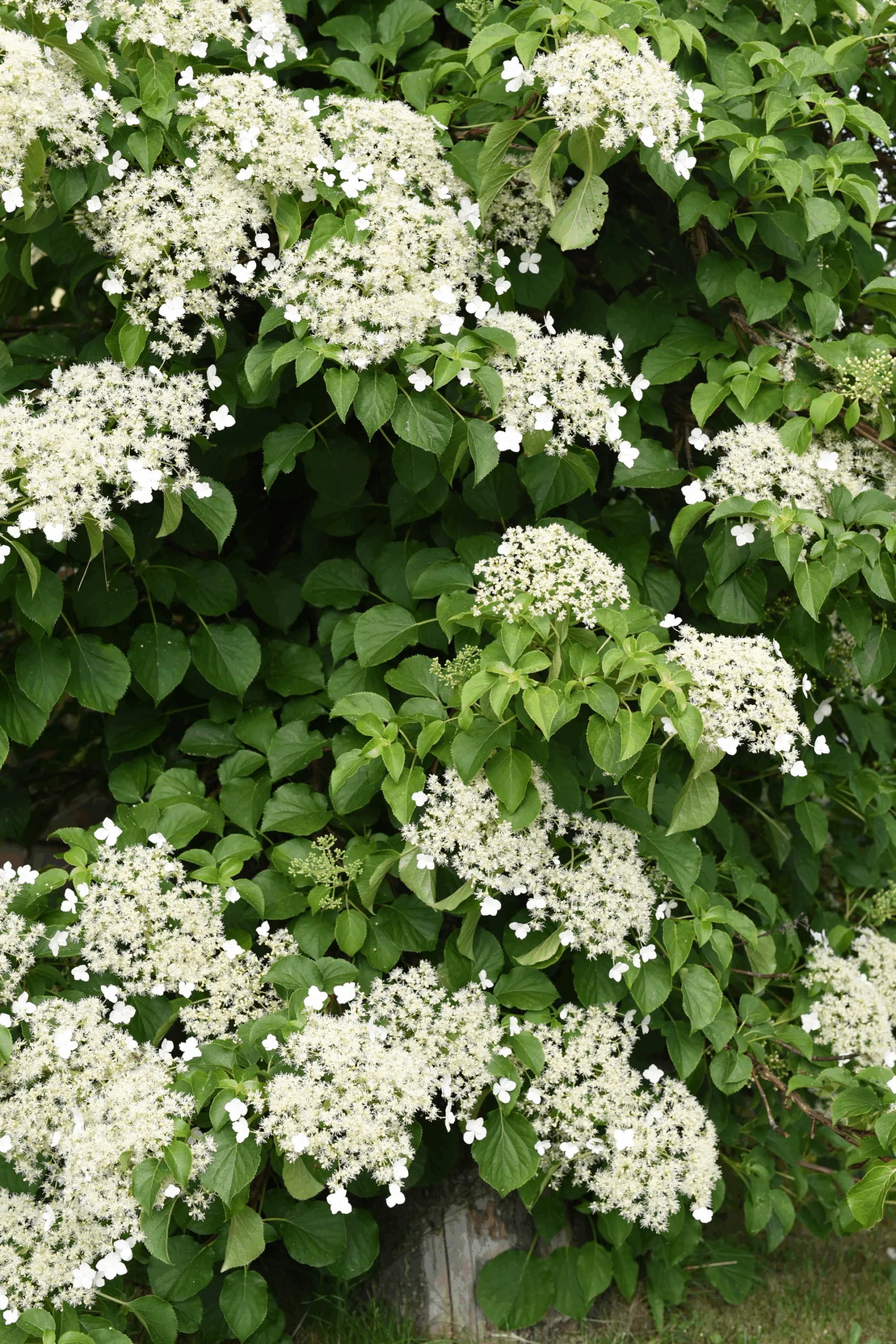
1. Hydrangea anomala subsp. petiolaris (aka the classic climbing hydrangea)
This is the classic climbing hydrangea and the one you’ll probably spot at your local garden centre. It’s a deciduous climber that produces large white lacecap flowers in late spring and summer.
Hydrangea petiolaris performs best in cooler parts of Australia, including Tasmania, Victoria, the ACT, cooler coastal areas of NSW, the Adelaide Hills and southern coastal WA. It tends to struggle in hotter or drier regions such as Queensland, the Northern Territory, inland NSW, inland SA and the dry zones of WA.
Once it’s settled in, this self-clinging climber doesn’t need a trellis and will flower reliably in partial shade. It can reach up to 10–15 metres, so it’s perfect for covering walls, fences, or even tree trunks.
2. Hydrangea seemannii (evergreen climbing hydrangea)
If you’re after an evergreen climbing hydrangea, Hydrangea seemannii is a popular pick. It’s native to Mexico, has thick, tough leaves, and creamy white flowers in summer. In Australia, it does best in mild, frost-free spots like coastal NSW, coastal Queensland (as long as it gets deep shade and plenty of water), south-west coastal WA, and the milder parts of SA.
It’s not a fan of cold mountain areas where frost can damage it, or very hot inland climates.
This one keeps its leaves all year, loves humid air, and needs protection from strong sun. Give it a sheltered spot and it’ll be right at home in a shady courtyard.
3. Hydrangea integrifolia (evergreen climber for mild climates)
Hydrangea integrifolia is another evergreen climber that grows roots along its stems. You’ll get green leaves and bunches of creamy white flowers.
In Australia, this plant grows best in coastal NSW, coastal Queensland (if it has plenty of shade), south-west WA, sheltered gardens in Victoria, and frost-free parts of SA.
Skip this one if you live somewhere with heavy frost or really hot inland weather.
4. Schizophragma hydrangeoides ‘moonlight’ (Japanese hydrangea vine)
This one isn’t technically a true hydrangea, but it’s a close relative and is often sold as a climbing hydrangea. It’s one of the most decorative climbers for shady spots and does best in cool climates like Tasmania, Victoria, and the ACT.
Schizophragma hydrangeoides has big heart-shaped leaves, silvery ‘Moonlight’ foliage, and white lacecap flowers in summer. It can climb up to 10–12 metres, so it’s great for shady spots, formal gardens, or anywhere you want something a bit special.
It can struggle in Queensland and inland NSW unless you provide adequate shade and keep the soil consistently moist.
5. Schizophragma integrifolium
Here’s another ‘false hydrangea’ with bold summer flowers. It does best in cool to mild climates with moist soil, think Tasmania, Victoria, and the cooler parts of NSW. It’s not really suited to hot inland areas.
How to plant climbing hydrangeas
First, pick your spot. Go for a partly shady area that’s protected from harsh afternoon sun, since these climbers prefer gentle light over intense heat.
Next, get your soil ready. Mix in plenty of compost so it’s moist, rich, and drains well.
When you plant, make sure to put your hydrangea about 20–30cm away from the wall or support. This gives the roots room to spread out.
Give your plant a good soak to settle the soil around the roots, then add a 5cm layer of mulch. This helps keep the soil moist and the roots cool.
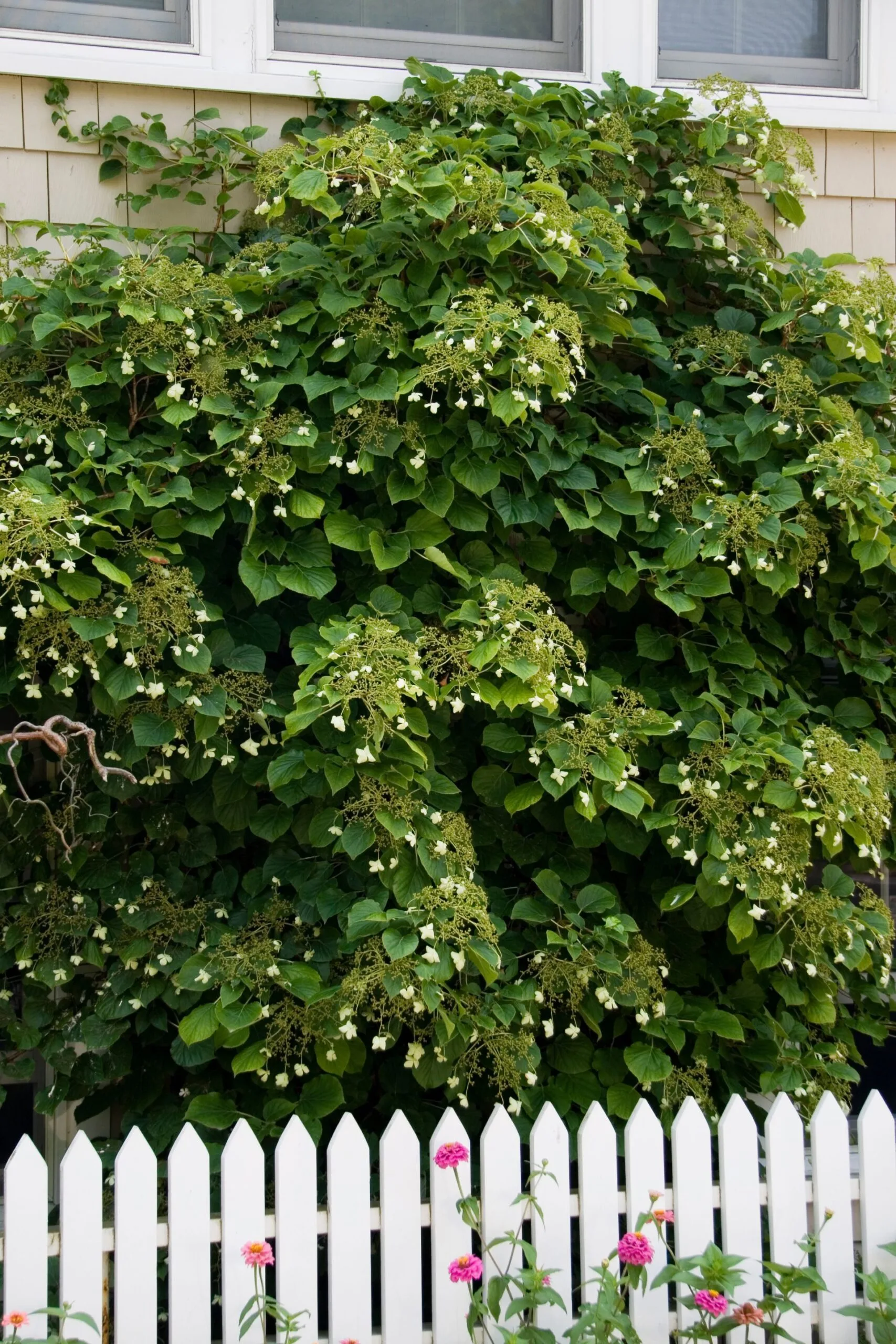
Caring for climbing hydrangeas in Australia
Looking after climbing hydrangeas in Australia is mostly about keeping the soil moist, providing shade, and protecting them from harsh weather.
Always keep the soil moist (don’t let it dry out), use a slow-release fertiliser in early spring, protect your plants from hot, dry winds and intense afternoon sun, and top up the mulch each year to help lock in moisture.
Hydrangeas are thirsty plants, so during heatwaves, give them a deep drink once or twice a week.
When it comes to pruning, keep in mind that climbing hydrangeas flower on old wood. Only give them a light trim after they finish blooming. Cut off any dead stems in winter, but don’t cut back too much or you might miss out on flowers the following year.

Related stories
Native ad body.
Native ad body.

Native ad body.