

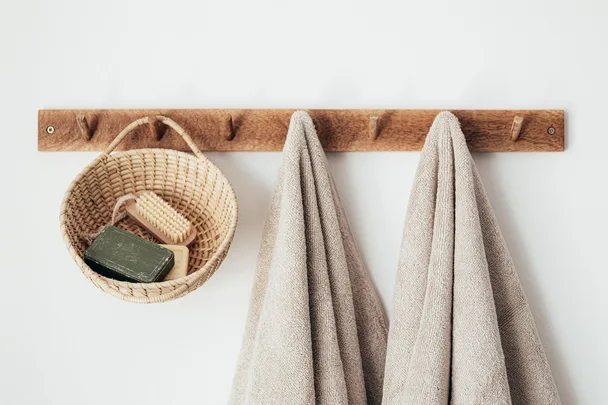
Everyone loves the feel of new towels against freshly washed skin after a shower or long soak in a bubble bath. But what is the best way to wash new towels to keep them free of lint and feeling soft and fluffy?
Here, we share the secret to washing new towels using vinegar and regular laundry detergent. And tips to keep your towels looking new for as long as possible.
Should you wash new towels?
Yes, it is always a good idea to wash new towels before use because new towels may be coated in a waxy fabric softener. The softener makes the towel look and feel great on a shop shelf but unfortunately also reduces its absorbency.
New towels also tend to shed excess fluff, so washing them before use will help prevent the towel from leaving lint all over you.
Before you start washing your towels, be sure to check the care label. In general, new towels should be washed with similar colours in warm water (about 30 to 40 degrees) for the first few washes to remove excess lint.
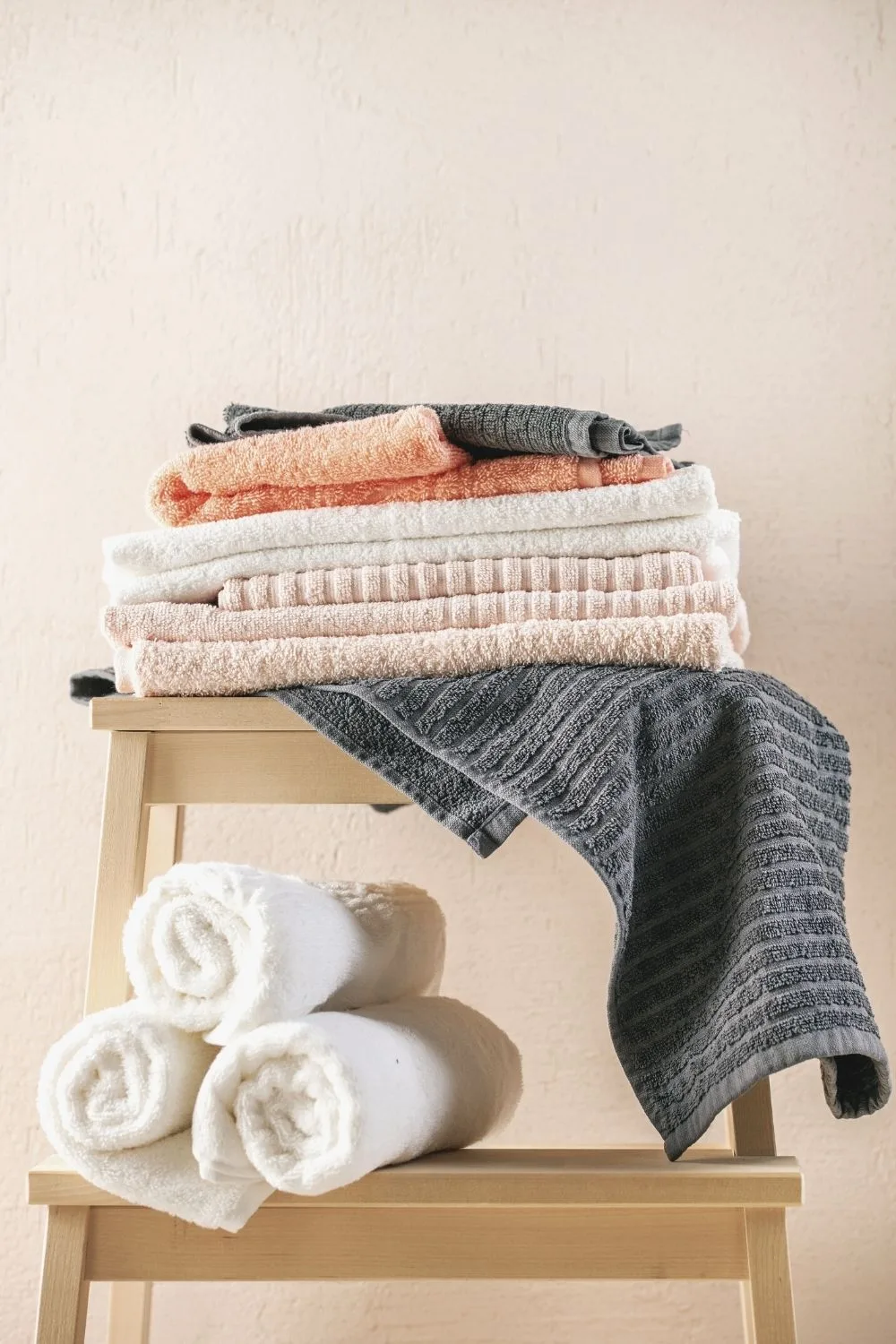
Washing new towels with vinegar
Vinegar is one of the most versatile, natural household cleaners, and it can also work wonders on your laundry.
To remove build-up from fabric softeners, simply add ½ a cup of white vinegar to the pre-wash cycle on your washing machine before washing with laundry detergent. As an added bonus, the mould- and odour-busting properties of vinegar also make it the secret ingredient for keeping towels smelling fresh.
What laundry detergent should you use to wash towels?
While you can use any laundry detergent to wash towels, the experts at Sheridan recommend an eucalyptus-based detergent.
One example of this is Koala Eco’s Natural Laundry Liquid with Lemon-Scented Eucalyptus and Rosemary essential oils. This plant-derived option will keep your towels smelling fresh without phosphates, ammonia, chlorine, or synthetic chemicals. But you can use any laundry detergent when you wash towels – just make sure you don’t use too much.
Tips for washing towels in the washing machine
- While you can wash your towels in cold water, Sheridan’s experts recommend an occasional deep wash on a warm-to-hot cycle at 40-60 degrees to remove any bacteria, oils, and odours.
- Avoid overcrowding the machine as this may reduce the effectiveness of the wash and prevent the detergent from being rinsed out completely.
- Measure the recommended amount of laundry detergent for your load, as using too much detergent is a common cause of towels feeling crunchy after washing.
Should you use fabric softener on towels?
Experts at Sheridan advise against using silicon-based fabric softeners and conditioners on your towels. Over time, these products can build up on the fibres, causing the towels to become less absorbent or develop a musty odour.
How often should towels be washed?
How often you clean your towels is a personal preference, but under normal circumstances, a towel can be used three or four times (not days) before it needs to be washed.
What is the best way to dry towels?
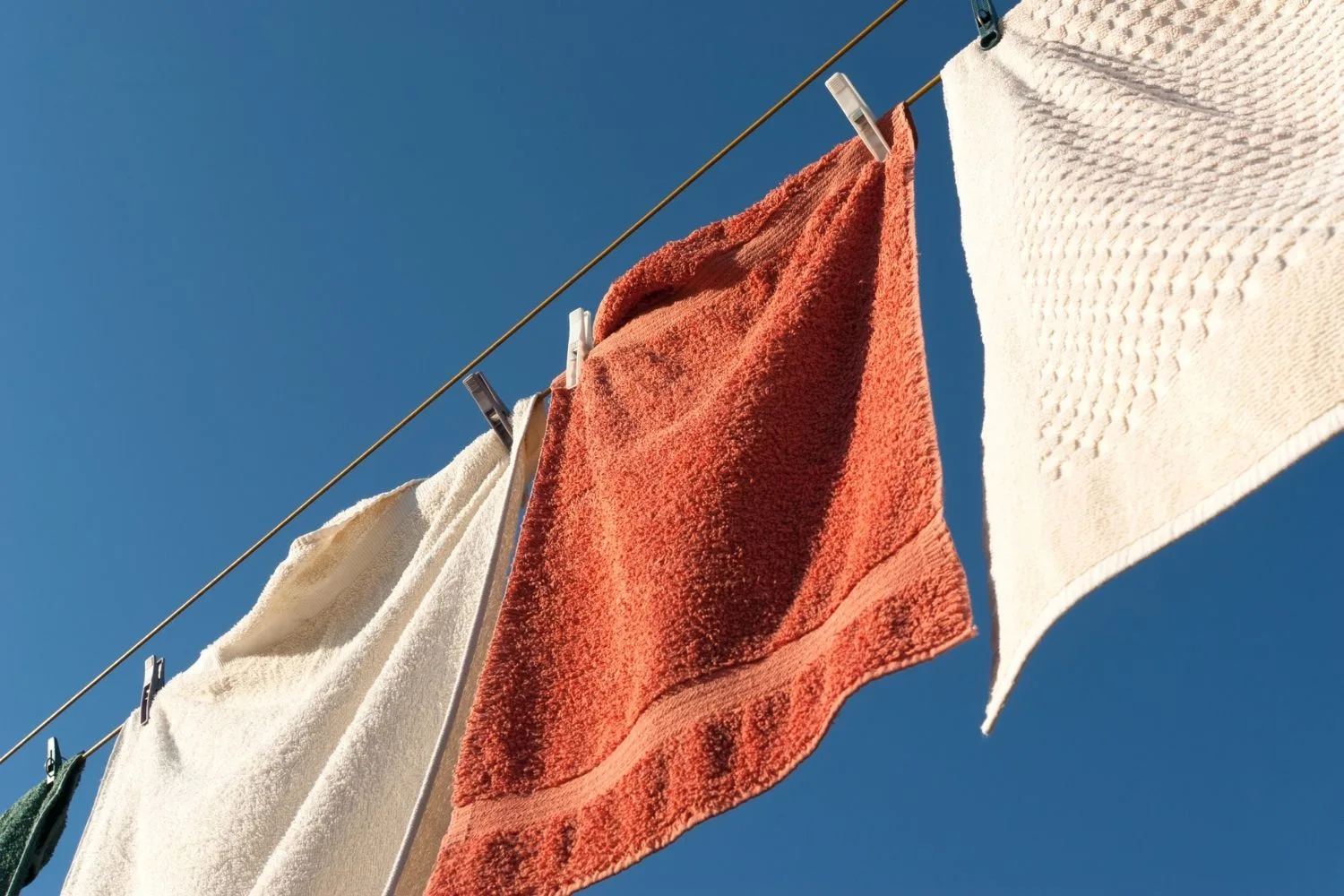
If the weather allows it, the best way to dry towels is on an outdoor clothesline. Hanging them in the sun exposes the towels to UV light, which may kill any remaining germs.
Towels dried in the sun also have a clean, “line-dried scent” that a CSIRO study found can be attributed to chemical processes that occur on the surface of the fabric when exposed to UV light. Beyond that, line drying can also help save you money on energy costs.
But some people do find that line drying towels can make them feel a bit stiff. If that’s the case, try adding vinegar to the rinse cycle.
What about clothes dryers?
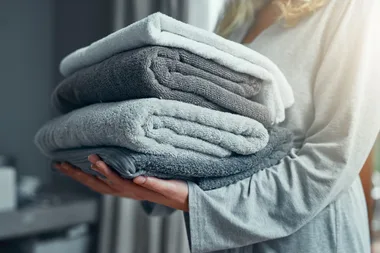
If super soft, fluffy towels are what you’re after, a clothes dryer is a reliable option. After taking the towels out of the washing machine, just give them a shake to open up their fibres.
Stick them into the dryer on a medium heat. Ensure towels are completely dry before folding them and placing them in your linen cupboard to avoid bacterial growth and musty smells.
How long should one expect towels to last?
Some say five to 10 years; others say no more than two years if you want completely absorbent, soft towels. Only you can tell when your towels need to be replaced.
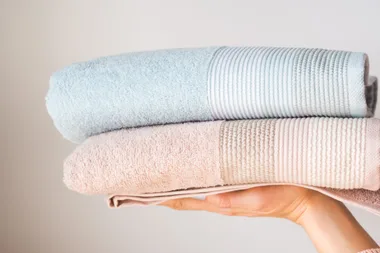
A good trick when buying new towels is to opt for lighter colours. Lighter towels have less dye than darker towels, which helps them stay fluffy and absorbent longer. Plus, lighter colours are less likely to fade, so they look newer.
Also, always follow care instructions to make your towels last longer.
New towel tip: Avoid decorative edges
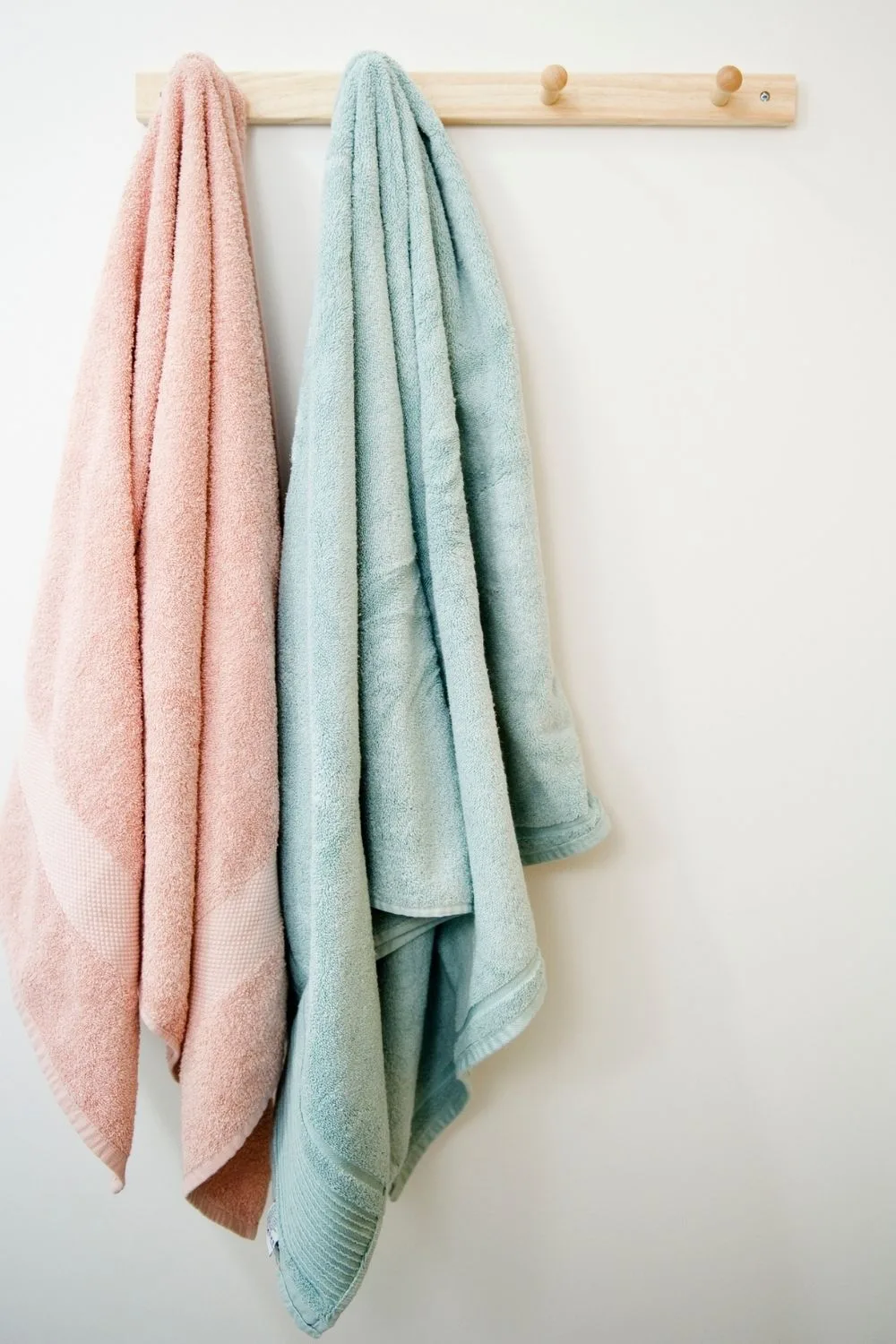
Not all fabrics are made the same, and that should be kept in mind while washing towels. Many high-quality towels feature decorative trims to add a soft design element amid the hard, shiny surfaces of the bathroom.
But if possible, use towels with speciality trims only as accents or for special occasions. This helps you limit their laundering and reduce the wear on ribbon, rickrack, lace, or other decorative elements.
What do the BHG readers say?
We asked our audience on the BHG Facebook page for their best tips on keeping towels soft and fluffy, and the responses were divided into two very different camps.
Many swear by a splash of white vinegar in the rinse cycle instead of fabric softener, arguing that softener builds up on towel fibres over time. A few readers added wool wash, bicarb soda, or a scented dryer sheet for extra softness.
Plenty of others do the opposite and dry towels outdoors, giving them a good shake before and after hanging to loosen the fibres, especially on a windy day. Interestingly, a surprising number of readers said they actively prefer their towels dry, scratchy, and “crunchy,” insisting a rougher towel actually dries the skin better and doubles as a gentle exfoliant.
But overall, the top tip mentioned is the dryer; even just a quick 10–15 minute tumble after line drying is enough to fluff towels back up.


